Family History Software Review: What Works
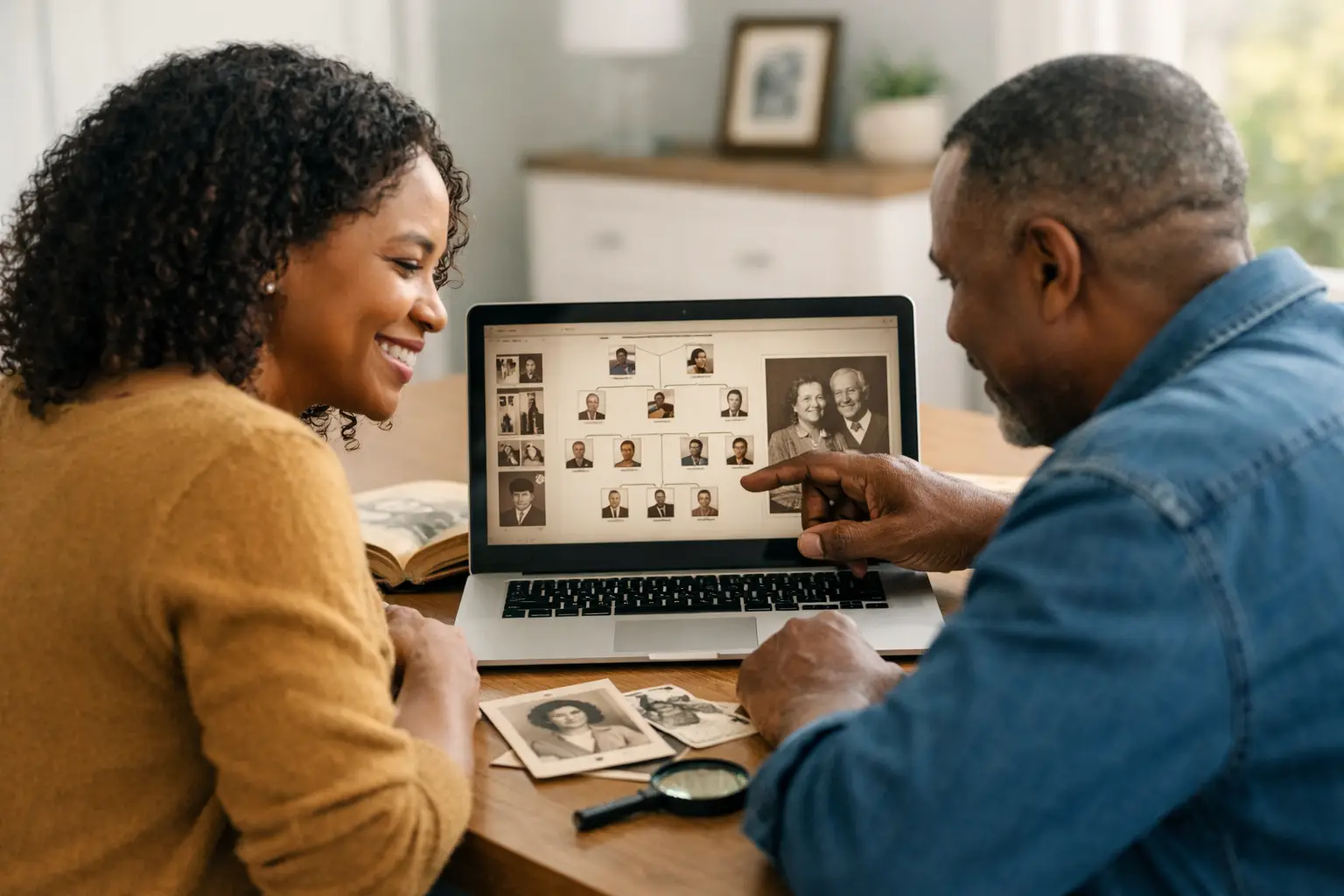
You can lose a whole weekend inside the wrong genealogy tool. A shaky leaf, a wall of hints, a family tree someone copied ten years ago, and suddenly you are further from the truth than when you started. That is why any honest family history software review has to ask a harder question than which platform has the most records. The real question is this: which tool helps you make the next correct move?
For most people, especially anyone dealing with missing records, surname changes, county shifts, or the 1870 barrier, the best software is not the one that displays the most names. It is the one that narrows confusion. It should help you identify the right place, the right time, the right archive, and the right record set before you spend money or waste effort.
What a family history software review should actually measure
A lot of reviews stay shallow. They compare interface design, tree-building features, or the size of a company database. Those things matter, but only up to a point. Family history research breaks down when software stops being useful at the exact moment you need guidance.
Good genealogy software should do four things well. It should help you search records without making you guess the right keywords. It should help you interpret what you found instead of leaving you alone with a census page or a DNA match list. It should show you where to go next when the trail goes cold. And it should respect the fact that this research is personal, not just a hobby app.
That last point gets ignored too often. If you are tracing African American ancestry, trying to reconnect relatives separated by slavery, or trying to identify a family line before emancipation, you are not looking for entertainment. You are trying to recover people who were poorly documented, renamed, displaced, or erased. Software that treats all family history like a simple tree-building exercise will fall short.
Record access is not the same as record guidance
Big genealogy platforms like to compete on database size. That sounds persuasive until you hit a dead end. Having millions of records available does not help much if the software cannot tell you which collection matters for your problem.
This is where the strongest tools separate themselves. The useful platforms do more than surface records. They direct your attention. If your ancestor appears in 1870 in one county and disappears by 1880, good software should push you toward tax lists, labor contracts, Freedmen's Bureau records, probate files, voter registrations, and nearby counties. It should not just keep offering the same census hints in a loop.
A serious family history software review should reward software that reduces noise. Too many platforms make beginners feel productive while they are mostly clicking. That is not momentum. Momentum is learning that your DNA cluster points to a specific county in Georgia, that the relevant National Archives microfilm has a Freedmen's Bank register tied to that area, and that your next step is to search two surnames with variant spellings in a tight date range.
Tree builders are useful, but they are not the research itself
Most people start with the family tree because it feels concrete. Add names, attach a few records, upload a photo, and the work looks organized. There is real value in that. Trees help you track relationships, identify gaps, and avoid repeating research.
But tree software can also create false confidence. A polished tree is not the same thing as a proven family line. If a platform is excellent at making trees look complete but weak at flagging uncertainty, you can build an attractive mistake very quickly.
The better systems make room for ambiguity. They let you hold competing possibilities, note incomplete evidence, and test theories before locking them into your permanent tree. That matters a lot in families where ages shift across censuses, first names change, or children appear under different households. In those cases, the software should help you think like a researcher, not just like a collector.
DNA features matter most when they become usable
DNA has changed family history research, but many platforms still present it in a way that overwhelms ordinary users. A list of matches, centimorgan values, and ethnicity percentages can be interesting without being useful. The gap between having DNA data and knowing what to do with it is where many researchers stall.
The strongest software turns DNA into action. It helps users understand which matches are worth focusing on, where the shared ancestry may sit, and which records could confirm the connection. That is especially valuable for people working around missing paper trails. If your documentary evidence breaks in the late 1800s, DNA can point toward family clusters, migration paths, and hidden branches, but only if the software explains those patterns in plain language.
This is one place where newer, more guided platforms have an edge over legacy services. Instead of just saying you match a person, they can suggest why the match matters and what archive path might prove it. That shift from raw data to next-step instruction is not a small upgrade. It is the difference between curiosity and progress.
Why older genealogy platforms frustrate so many people
Legacy genealogy companies still have strengths. They often offer large databases, mature mobile apps, and familiar interfaces. If your family has been well documented for generations, and you mainly want to collect records and organize a tree, they may be enough.
But they often struggle in the places where family history gets hard. They can push users toward subscriptions before they know whether the platform can solve their problem. They can bury record logic under endless hints. They can also treat every user as if they are doing the same kind of research, when the truth is very different.
Tracing a New England line with church records and probate files is not the same as tracing a Mississippi family through emancipation, military service, sharecropping records, and county boundary changes. The software should know that. If it does not, the burden shifts back to the user to become an archive expert before seeing results.
That is why product philosophy matters in a family history software review. Is the platform built to impress you with volume, or built to move you through a hard research problem? Those are not the same goal.
What beginners should look for first
If you are new to genealogy, do not start by asking which platform is the most famous. Ask which one helps you make fewer wrong turns.
You want software that gives immediate utility. It should let you test searches without heavy commitment. It should explain records clearly, not bury you in jargon. It should help you interview living relatives before memories disappear. And if it uses AI, that AI should do something concrete, like translating a DNA clue into a county-level lead or helping draft a message to a relative you do not know how to contact.
A smart beginner does not need every feature at once. You need a path. The right platform should make you feel more oriented after ten minutes, not more confused.
What intermediate researchers should expect
If you already know your way around censuses, draft cards, and vital records, your standards should be higher. You need software that respects your time. That means fewer generic hints and more specificity.
Look for tools that can sharpen location analysis, surface overlooked federal and local collections, and help you work around missing documentation. If a platform can point you to exact archive series, county targets, or microfilm references, it is doing real work. If it just gives you another broad search box, it may not justify the cost.
This is also where pricing matters. Subscription models make sense for some users, especially those doing broad record collection every month. But if your work happens in concentrated bursts, pay-as-you-go access can be a better fit. Family history research is rarely linear. Some months you need ten serious searches. Other months you need time to analyze what you already found.
A modern standard for family history software review
The best platforms now act less like static databases and more like research assistants. That is a meaningful shift. Instead of asking users to become experts in every record group before starting, they shorten the path between clue and action.
For people facing the 1870 brick wall, that kind of help is not optional. It is the difference between staring at a gap and learning where the gap can still be searched. A platform like The 1870 Project stands out because it is built around that harder reality. It does not just show records. It helps identify hub counties, interpret DNA matches, surface archive directions, and move the research forward without locking people into a subscription they may not need.
That does not mean one tool replaces every other tool. It depends on your family line, your budget, and your stage of research. Some people need a broad tree platform. Some need a specialist tool built for records barriers. Many will need both at different moments.
The smartest choice is not the platform with the loudest brand name. It is the one that gives you the next best search, the next best archive, and the next best chance of finding someone who has been missing from your family story for far too long.
Your family was here. The right software should help you prove it, one precise step at a time.