Family History Storytelling Trends That Matter
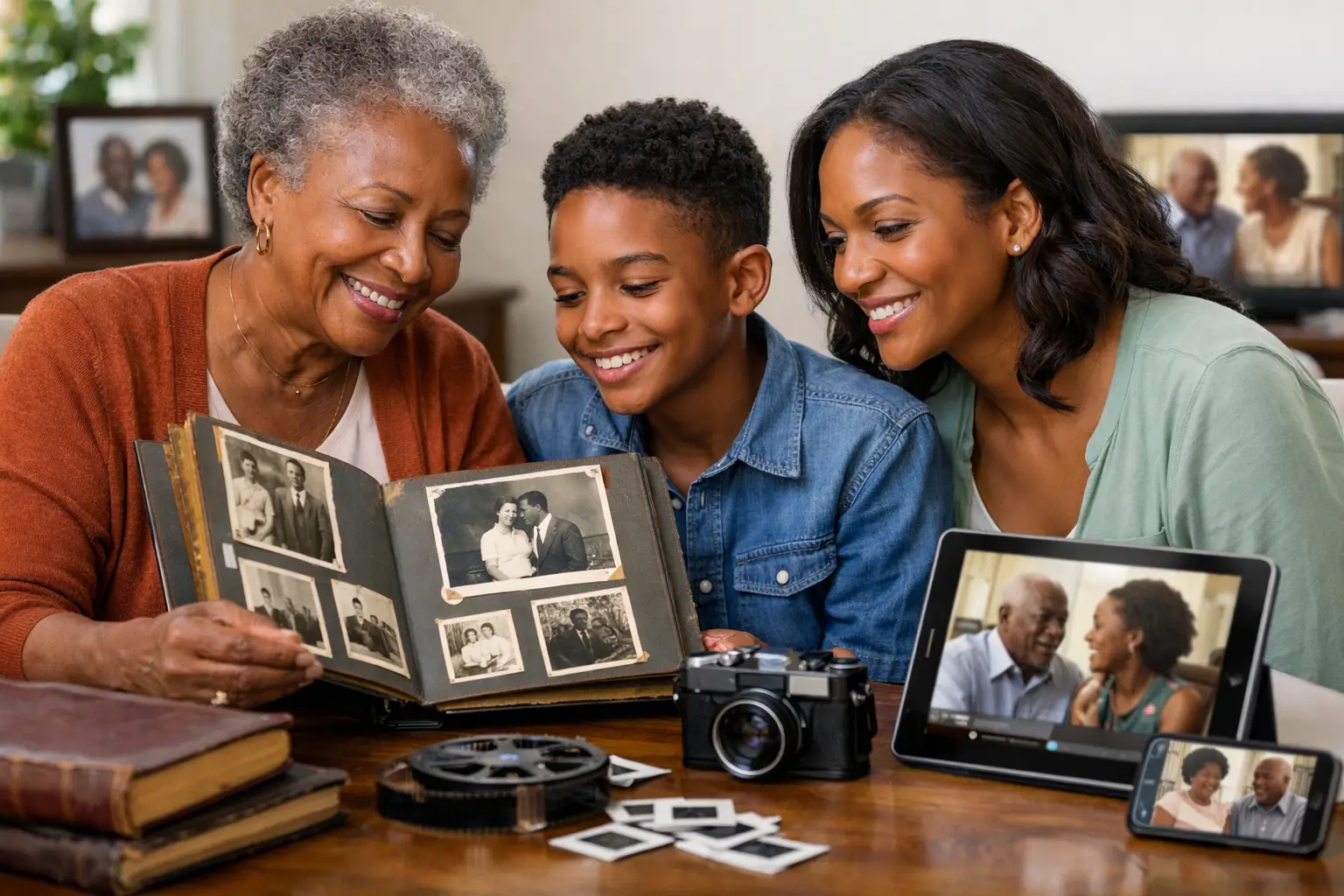
A census line can tell you where your great-grandmother lived in 1870. It cannot tell you why she chose that county, who taught her children to read, or what she carried forward after Emancipation. That gap is why family history storytelling trends are moving beyond polished family trees and toward something more urgent: preserving evidence, memory, context, and voice before they disappear.
For families confronting the 1870 brick wall, storytelling is not a decorative final step after research. It can be part of the research itself. A cousin's remembered nickname may lead to a marriage record. A story about leaving a plantation may point to a Freedmen's Bureau field office. A photo caption can identify the county where the next record is waiting.
Family History Storytelling Trends Are Becoming More Grounded
The strongest shift is simple: families want stories that can be traced back to something real. The old approach treated genealogy as a collection of names, dates, and chart branches. The newer approach asks a harder question: What did this person's life look like, and what can we responsibly say about it?
That does not mean every ancestor needs a 2,000-word biography. It means separating documented fact from family memory and historical context. If a death certificate names a birthplace, say so. If an aunt remembers that a relative was a midwife, preserve her words as an oral-history account. If no record survives but county history explains the labor, schools, churches, or migration routes available to a family, frame that as context, not proof.
This distinction matters especially for African American research. Records before 1870 often fail to name formerly enslaved people as individuals, while the records around them may document slaveholders, plantations, labor contracts, military service, or postwar assistance. Families deserve stories that acknowledge what the archive erased without inventing details to fill the silence.
A credible story can still be moving. In fact, it is more powerful because readers can see the ground beneath it.
Living Relatives Are Becoming the Archive
The most valuable family record may be sitting at the kitchen table, not in a courthouse. Families are increasingly recording interviews with parents, grandparents, great-aunts, and older cousins while they can still answer questions in their own words.
The trend is not merely to ask, “What was your childhood like?” Broad questions often produce broad answers. Better interviews follow the clues you already have. Ask why the family moved from one county to another. Ask who attended a particular church, who kept the photographs, what people called a relative whose legal name appears differently in records, and who might know the names of older generations.
Specific questions help relatives remember specific scenes. “Did anyone ever mention Greenwood, Mississippi?” is more useful than “Where did the family come from?” “Who came to Sunday dinner?” can reveal siblings, in-laws, and neighbors who become research leads.
Record the conversation with permission, then preserve the date, interviewer, speaker, and any names or places mentioned. Transcripts make a story searchable later, but do not discard the audio. A laugh, a pause before a difficult answer, a familiar turn of phrase - those are part of the inheritance too.
Short-Form Stories Are Replacing the Giant Family Book
For decades, the family-history goal was often a large printed book. Those books still have value, particularly when they include source notes and images. But they take years to complete, and many families never get past the outline.
A more useful pattern is the small, shareable story: one photograph, one document, one person, and one clear question answered. A two-page account of a grandfather's military draft registration can be read and shared. A short narrative explaining how a family moved from rural Alabama to Detroit may prompt another relative to contribute a photo or correction. Momentum builds through finished pieces.
This format also forces discipline. Instead of claiming to tell the entire family saga, you can state exactly what is known: “By 1920, Sarah Jones and her children were living in St. Louis. Her older brother remained in Arkansas. The census and city directory show two branches of the family taking different paths during the Great Migration.”
Small stories make room for uncertainty. They invite collaboration rather than pretending the research is finished.
Context-Rich Portraits Need Honest Boundaries
Generative tools are making historical visualization more accessible. Families can now create context-based portraits, narrated timelines, photo restorations, and visual family scenes from sparse records. Used carefully, these tools can help younger relatives feel connected to people who otherwise exist only as a name in a census.
But a generated portrait is an interpretation, not a recovered photograph. That line should be visible every time. If you know an ancestor's age, location, occupation, and period clothing, a historically informed image can offer a respectful visual starting point. It cannot show their exact face, personality, or lived experience.
The best practice is to label these images clearly and pair them with the record evidence that informed them. “AI-generated historical portrait based on an 1880 census entry and regional context” is honest. Presenting it as an authentic ancestor photograph is not.
The same rule applies to AI-written narratives. These tools can turn research notes into readable prose, identify missing questions, and help draft interview outreach. They should not manufacture a family past. Review every claim, keep citations or source details with the story, and edit the language until it sounds like your family, not a museum placard.
DNA Is Shifting From Ethnicity Estimates to Story Leads
DNA storytelling is becoming less about colorful ethnicity percentages and more about relationships, places, and research direction. An ethnicity estimate may spark curiosity, but it rarely identifies an ancestor by itself. Shared matches, cluster patterns, and known cousins can do much more when they are tied to census, probate, land, and military records.
The story begins when DNA answers a practical question. Which matches connect to the same unexplained surname? Which county appears across multiple match trees? Which family might be connected to a person missing from the 1870 census?
For researchers facing the 1870 brick wall, that shift is significant. DNA can point toward a hub county or a likely network of families. The next step is not endless browsing. It is checking the records created where those people lived: Freedmen's Bureau records, labor contracts, probate files, tax lists, cohabitation registers, and federal microfilm collections.
The 1870 Project is built around that next-action mindset, translating DNA match patterns into concrete archival directions rather than leaving families with a screen full of distant cousins. The goal is not more data. It is a defensible path to the next document and the next sentence in your family's story.
Privacy Is Now Part of Responsible Storytelling
Families are sharing more history online, but they are also asking sharper questions about consent. A story can be meaningful without exposing a living person's birth date, address, private adoption details, or painful family information they have not agreed to share.
Before publishing or circulating a story, distinguish between the dead and the living. Get permission for interviews, photographs, and identifiable details involving living relatives. Be especially careful with DNA information, which can reveal relationships that other relatives do not know about or do not wish to make public.
Privacy does not weaken a family narrative. It builds trust. When relatives know you will handle their memories carefully, they are more likely to share the letter, photograph, Bible page, or story that moves your research forward.
Build Stories Around the Evidence You Have Now
Waiting for every mystery to be solved is one of the fastest ways to leave a family story unwritten. Start with one person whose life matters to your family. Gather the records you can document, interview the people who remember, and write a short account that marks what is known, what is remembered, and what remains unanswered.
Then let the story guide the research. A missing birthplace becomes a search target. A remembered church becomes a county lead. A DNA cluster becomes a list of records to check. Your family was here. Each careful sentence is a way of making sure they remain visible - and giving the next generation a clear place to continue.