How to Search Freedmen's Bureau Records
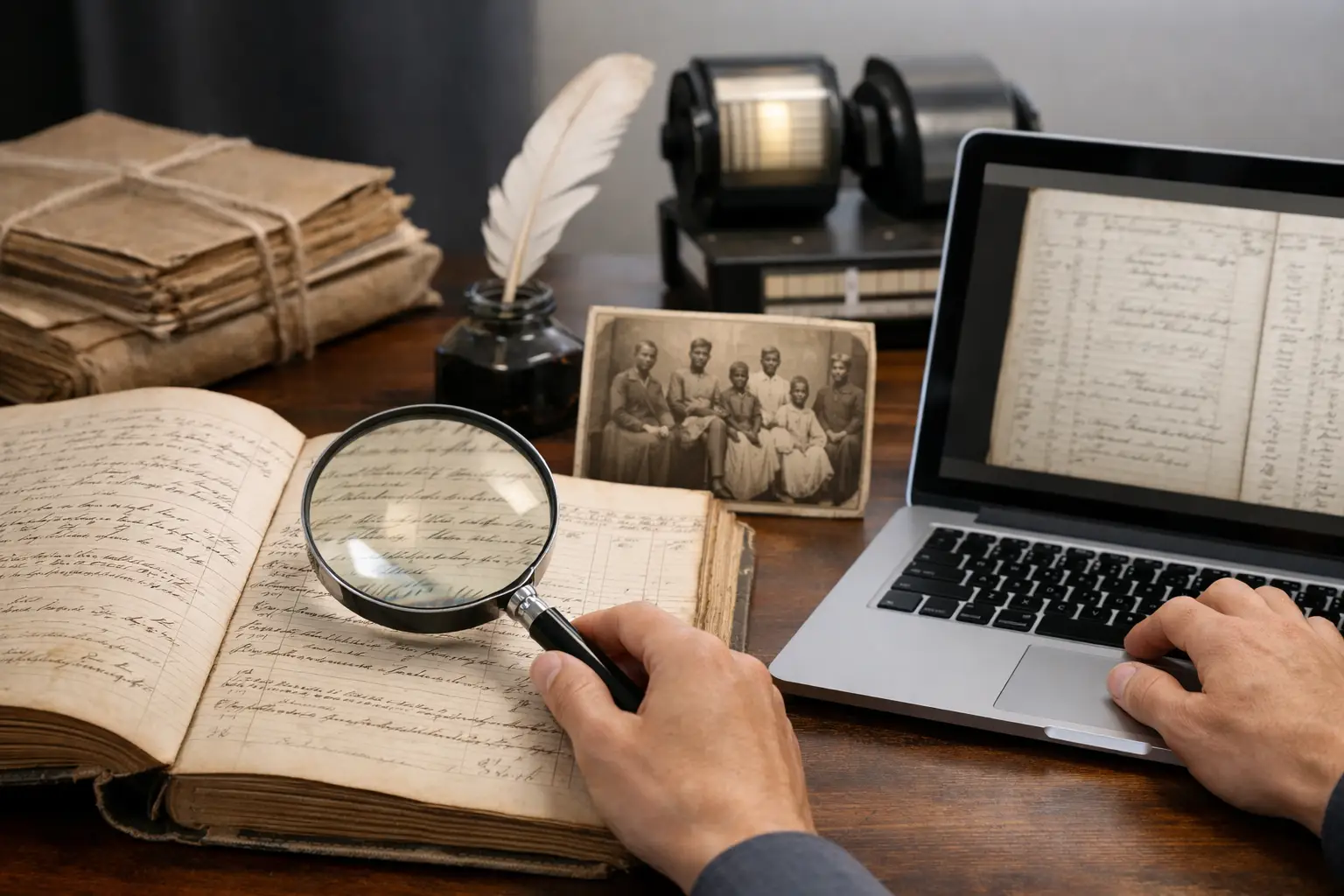
The record you need usually is not labeled the way you expect. A grandmother might appear in a labor contract, a marriage register, a ration list, or a complaint filed with a local Bureau office instead of a neat family tree entry. That is why learning how to search Freedmen's Bureau records matters so much for anyone working through the 1870 brick wall. These records can name parents, spouses, children, former enslavers, plantations, counties, and movements right after emancipation.
Why Freedmen's Bureau records matter so much
If your family story goes quiet before 1870, the Freedmen's Bureau is one of the first places to push. The Bureau operated after the Civil War and left behind records tied to daily life: labor agreements, marriages, schooling, medical care, military claims, legal disputes, rations, and abandoned lands.
That range is the opportunity and the problem. These are not one tidy set of forms. They are local, uneven, and deeply contextual. One field office may have rich registers and letters. Another may have almost nothing. So the best search strategy is not "search a name everywhere and hope." It is "identify the place, then the office, then the record type, then the people around your ancestor."
Start with the place before the person
Most beginners do the opposite. They start with a full name, get no exact match, and assume the record does not exist. Freedmen's Bureau research works better when you anchor the search in geography first.
Begin with what you know from the 1870 Census. Find the county, town, and nearby households. Pay attention to neighbors with the same surname, white landowners nearby, and migration patterns within the state. If your ancestor was in Mississippi in 1870, do not search the entire South at once. Narrow to the county and then ask which Bureau office served that area.
That local office is the key. Many records were created at the field office level, not in some broad statewide index that catches every spelling. If the county changed borders or your ancestor lived near a county line, check the adjoining counties too. Families moved for labor, marriage, safety, and kin reunification. A record might sit one county over and still be the right family.
How to search Freedmen's Bureau records without wasting hours
A focused search has an order. Start with the highest-value record groups, then widen only when the obvious paths fail.
First, look for marriage records and cohabitation registers. These can be gold for formerly enslaved families because couples who had lived as husband and wife under slavery often registered their marriages after emancipation. That can connect a woman to a maiden name, identify children, and tie a family to a specific county at a specific moment.
Next, check labor contracts and indenture records. A labor contract may list an entire family unit working on the same plantation or farm. It can also name a former enslaver or employer, which gives you a bridge backward into probate, tax, and plantation records.
Then move to rations, complaints, and letters. These sound less promising, but they are often where the human detail lives. A complaint might mention assault, wage theft, child custody, apprenticeship disputes, or efforts to recover a missing spouse. Letters from field offices sometimes identify relationships that no census ever captured.
After that, search education and hospital records if the family stayed in one area. School registers and medical records will not help every case, but when they do, they put a person in a place between census years and sometimes capture age, parent names, or residence.
Military claims and bounty applications can also matter, especially when a family had ties to United States Colored Troops service. If you already have evidence of military service, the Bureau records may overlap with pension and service files in useful ways.
Search for clusters, not just one name
Names in these records are often spelled phonetically, abbreviated, or written by clerks who barely knew the family they were recording. That makes exact-name searching unreliable.
Search for clusters instead. Use a spouse's first name. Use children's names. Search by surname plus county. Search for a likely former enslaver's surname if you have reason to suspect one. Search for the household next door in 1870. Search for a church, plantation, or town name that appears in oral history.
This is where many breakthroughs happen. A man who never appears under his own full name may still show up as "Ben," attached to a wife and two children whose names match the 1870 household. A woman may appear under a previous surname or no surname at all. A child may be listed with a guardian or employer rather than parents.
If you find one likely record, do not stop there. Mine every associated name on the page. Witnesses, employers, agents, neighbors, and former enslavers often create the path to the next source.
Know what each record type can actually prove
The biggest mistake in Bureau research is expecting every record to prove parentage. Some will. Many will not.
A marriage register may prove a couple's relationship and location. A labor contract may prove residence, group membership, and economic ties. A complaint may prove family conflict, apprenticeship issues, or movement between counties. A ration list may simply place a person in a community at a certain date.
That does not make the weaker record less useful. Genealogy before 1870 often works by accumulation. One record gives a county. Another gives a former enslaver. Another reveals a wife. Together, they point to estate papers, bills of sale, probate inventories, plantation journals, and local court records.
In other words, the Bureau rarely finishes the story by itself. It gives you the next best move.
What to do when you cannot find an exact match
No result does not always mean no record. It can mean the record was never indexed, the office papers were sparse, the name was mangled, or your family used a different surname in the first years after emancipation.
When that happens, pull back and test your assumptions. Was the family in the same county in 1867 that they were in 1870? Did they adopt the surname of a former enslaver, a previous husband, a stepfather, or no fixed surname at first? Was the person you are chasing a child who may appear under another household head?
It also helps to work sideways through relatives. Search siblings, in-laws, possible parents, and known associates. Search the same county for rare first names. Look at the whole community, not just your direct line.
If you use DNA in your research, this is the moment to combine it with archival work. Shared matches clustered in one county can tell you where to press harder and which surnames deserve attention. That is exactly the kind of dead end The 1870 Project is built to shorten. Instead of handing you a wall of records, it helps point you toward the county, record group, and archive trail most likely to move your case forward.
A practical workflow for Freedmen's Bureau research
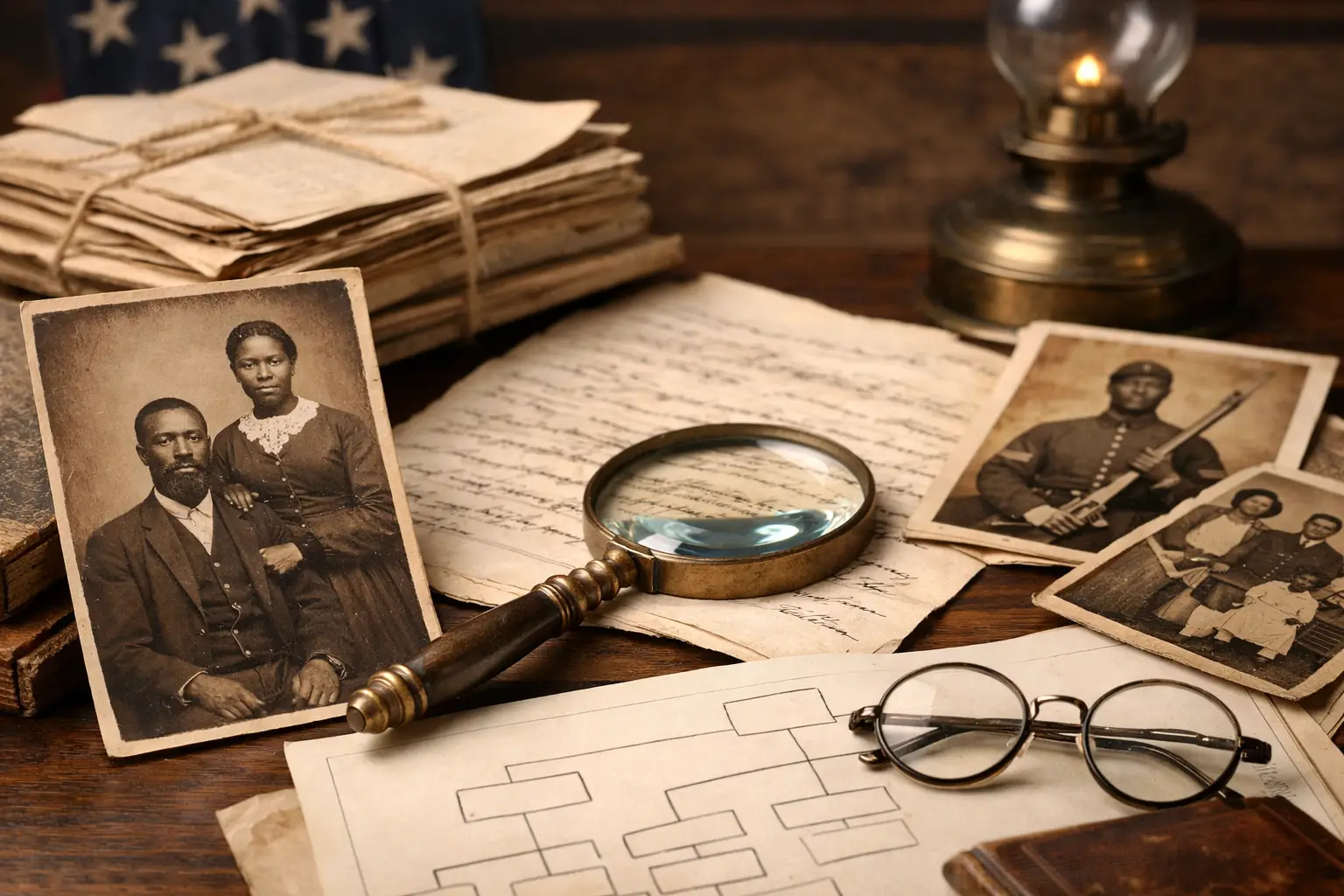
Here is the cleanest way to approach it. Start with the 1870 household and map the county, neighbors, and likely migration path. Then identify the Bureau office serving that area. Search marriage and cohabitation records first, then labor contracts, then complaints and ration lists. Track every surname that repeats around the family. Build a timeline from 1865 to 1870, even if some entries are only probable. Then use the names and locations you find to expand into probate, land, court, tax, and military records.
This order works because it respects how these records were created. They were not designed for modern genealogists. They were administrative records of people trying to survive freedom's first years.
The emotional part no one should skip
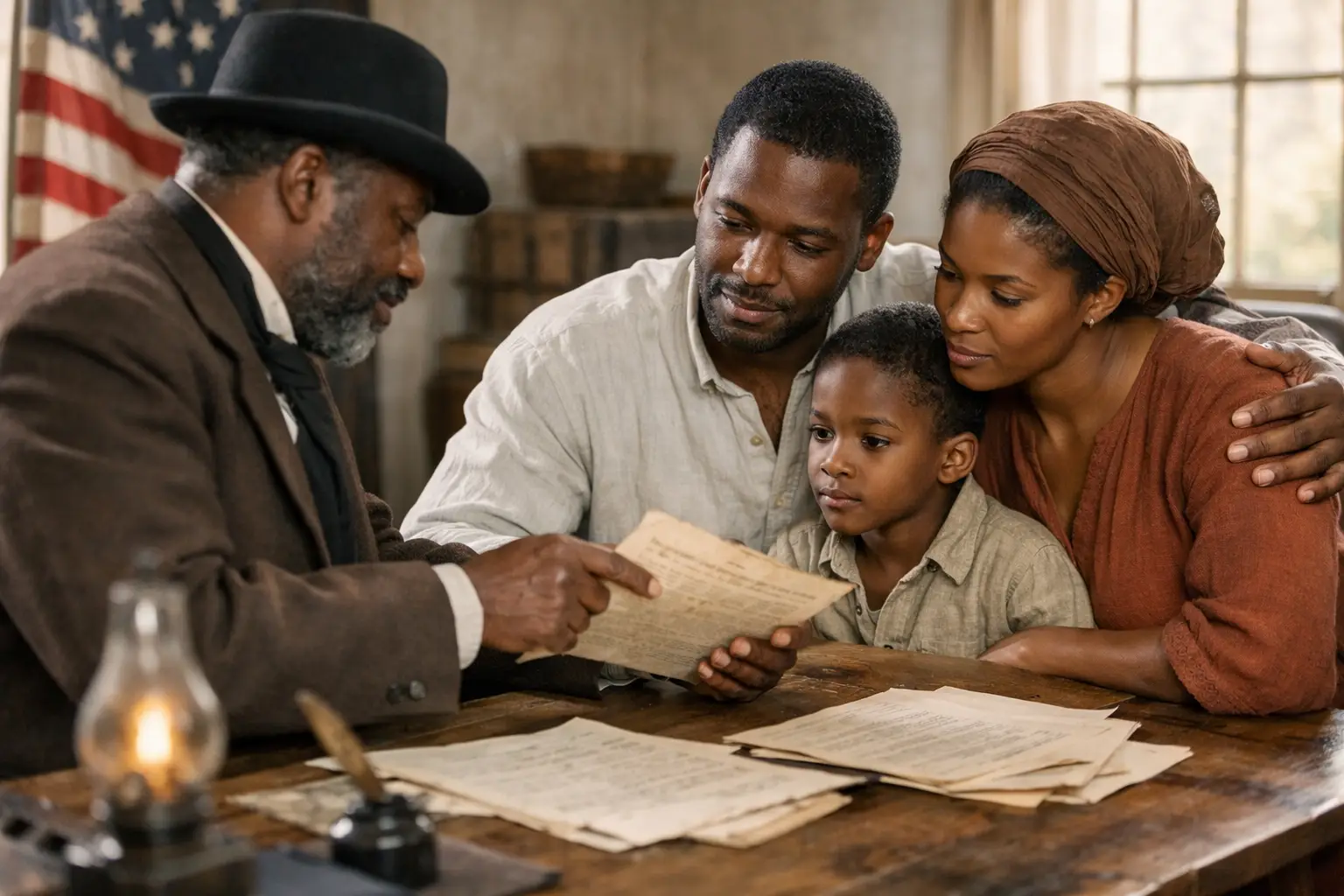
Freedmen's Bureau records are not just technical sources. They are often the first federal paper trail where formerly enslaved people appear as workers negotiating wages, couples formalizing marriages, parents fighting for children, and families naming their own relationships.
That means the search can be emotional. You may find evidence of violence, separation, coercive apprenticeship, or impossible choices. You may also find a marriage made official after years together, a mother naming her children, or a father insisting on pay for his labor. Those moments matter. They are not footnotes. They are your family insisting on being recorded.
Work carefully, but keep moving. One page can change the shape of a whole lineage. Your family was here. The records are scattered, uneven, and sometimes stubborn, but they are not beyond reach.