AI Genealogy Search Free: What Actually Helps

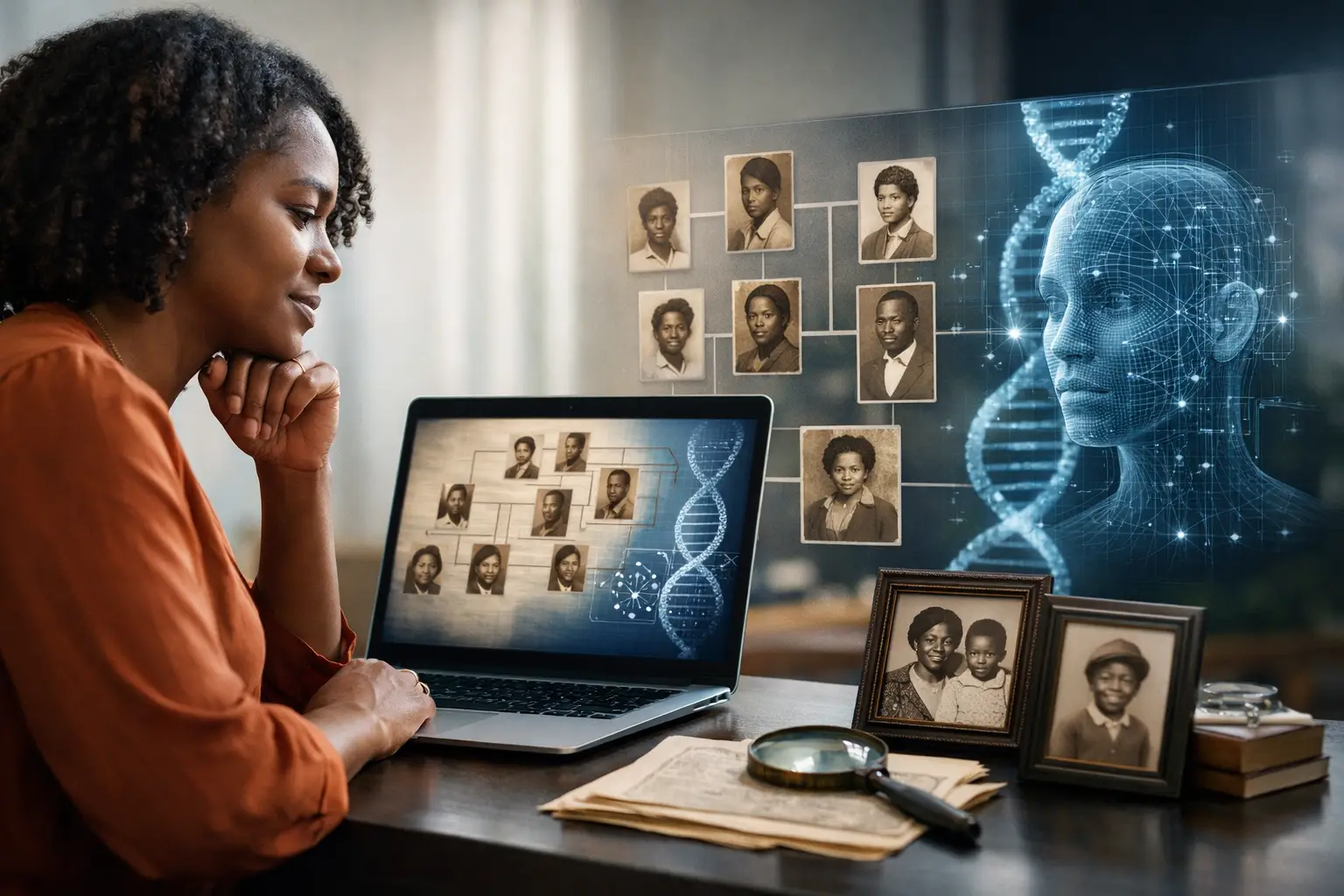
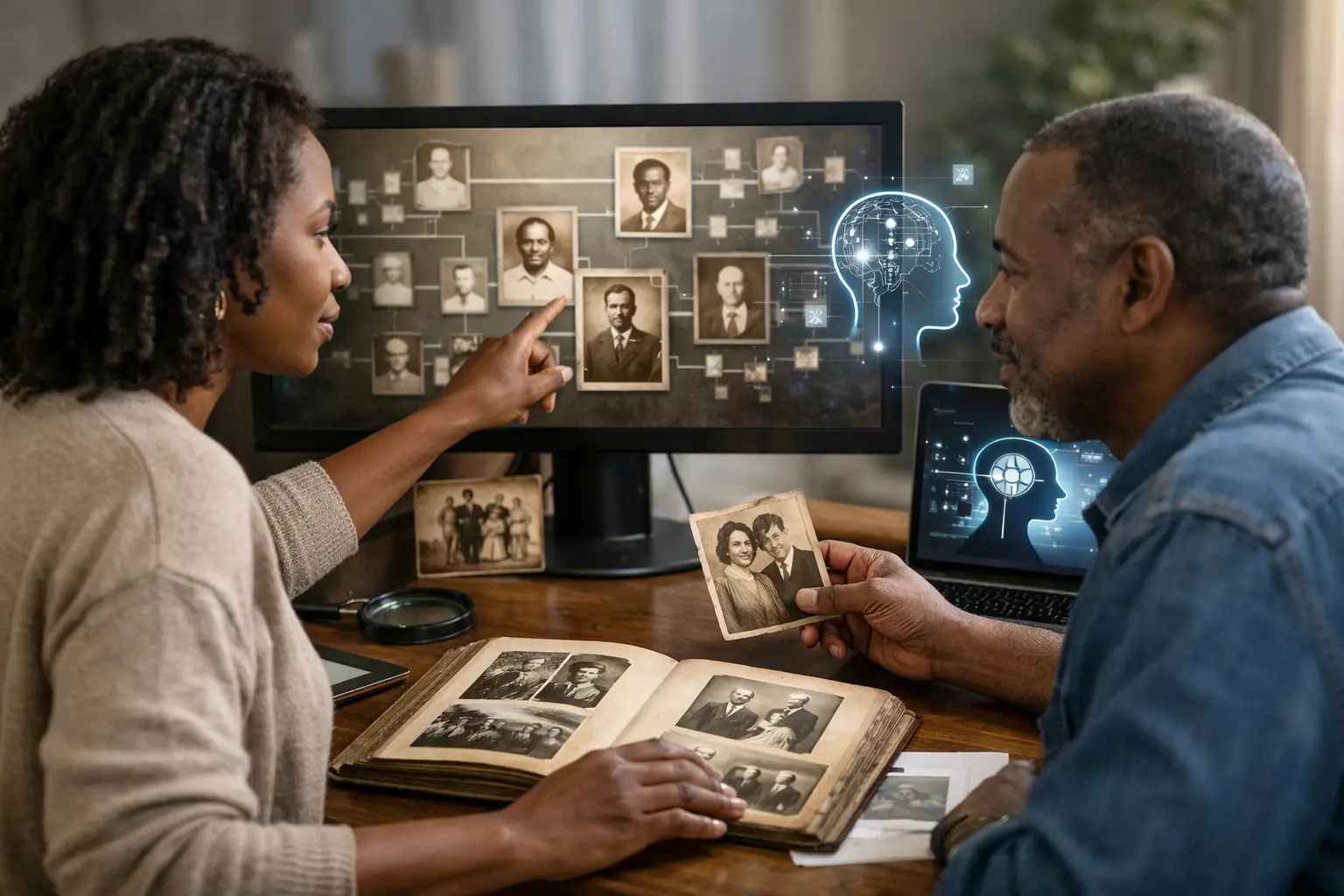
Most people do not need another giant list of records. They need one useful lead. That is the real promise behind ai genealogy search free tools - not more noise, but a faster path to the next document, county, archive, or family clue that actually matters.
If you have already spent hours clicking through census pages, surname indexes, and shaky family trees, you know the problem. Traditional genealogy platforms often give you volume. They do not always give you direction. That gap gets even worse when you are tracing African American ancestry through the 1870 census barrier, sorting out DNA matches you cannot interpret, or trying to preserve family knowledge before an older relative is gone. Free AI can help, but only when it is built for research, not just chat.
What an ai genealogy search free tool should really do
A useful genealogy tool does more than search names. It narrows possibilities, explains why a record matters, and tells you what to try next. If an AI system simply rewrites your question in polished language, that is not research help. It may sound smart, but it does not move your work forward.
The better approach is practical. You enter what you know - a name, a county, an approximate birth year, a cluster of relatives, maybe a DNA match - and the system helps connect that information to real source paths. That can mean identifying a likely county of origin, surfacing post-Civil War records worth checking, or translating a DNA lead into archive-ready search directions.
This matters because genealogy is rarely blocked by lack of effort. It is usually blocked by uncertainty. People do not know whether to search a neighboring county, a federal collection, a local deed book, a Freedmen's Bureau labor contract, or a probate file. A strong AI tool reduces that uncertainty.
Why free matters in family history
Genealogy is full of expensive detours. You pay for a subscription, then another subscription, then a newspaper archive, then DNA tools, and somehow you are still staring at the same dead end. Free access matters because it lets people test a path before committing more time or money.
That is especially important for families researching records shaped by slavery, migration, name changes, and inconsistent documentation. If your ancestors were omitted, misspelled, or recorded under another household, you should not have to pay upfront just to find out whether a search path has any promise.
A good free experience should give immediate value. Not a teaser. Not a locked dashboard. Real movement. That might be a cross-database search, a narrowed county target, a suggested archive collection, or a clearer interpretation of how one clue connects to another.
Where free AI genealogy helps most
The strongest use case is not replacing research judgment. It is accelerating it. AI performs best when the problem is messy but not impossible.
If you are early in the process, free AI can help organize known facts, flag missing pieces, and identify which person in your tree needs proof first. That alone saves time, because many researchers lose months chasing the wrong generation.
If you are at a records barrier, AI can be even more useful. For example, a surname with no obvious 1860 trail might still appear in labor records, tax lists, military files, voter registrations, or county-level material that does not show up in a casual search. A smart system can point you toward the collection type most likely to break that wall.
DNA is another area where AI can help, but only with discipline. Many tools tell users that a match is "possibly related" without giving usable next steps. That is not enough. You need a translation layer that turns match patterns into places, families, and archives. When AI can say, in effect, these matches cluster around this county and these households, go search these records next, it becomes practical instead of decorative.
The limits of ai genealogy search free tools
Free AI is not magic, and genealogy punishes overconfidence. If the underlying records are weak, fragmented, or indexed badly, no system can invent proof. It can suggest, rank, and infer. It cannot replace evidence.
That is why the best tools are transparent about trade-offs. A county suggestion may be highly likely, not certain. A likely parent pair may fit timeline and geography but still need probate or land evidence. A DNA-based direction may tell you where to look next, not settle the relationship by itself.
This distinction matters. Family history is emotional work. People want answers, especially when they are trying to recover names and lines that were stripped from the record. False certainty does real damage. A better tool respects the stakes and stays grounded in source logic.
How to tell if a free AI genealogy tool is actually useful
Start with one question: does it reduce your next step from broad to specific?
If the output says to search "historical records" or "look at census documents," that is weak guidance. You already knew that. If it says to check a specific county after 1865, examine a Freedmen's Bureau field office, compare adjacent households in 1870, or pull a particular federal microfilm series, now you have something you can act on.
The second test is whether the tool handles incomplete information well. Many family historians do not begin with a full name and exact date. They begin with fragments - a church story, a military rumor, an aunt's memory of a migration, a death certificate with one wrong parent. Free AI should help structure those fragments instead of rejecting them.
The third test is whether the tool respects privacy. Family research often involves living relatives, sensitive DNA results, and painful histories. A platform that offers useful work without forcing an immediate subscription or a long onboarding process is often more aligned with what researchers actually need: clarity first, commitment later.
AI genealogy search free and the 1870 brick wall
This is where generic tools usually fail. The 1870 census is the first federal census in which many formerly enslaved people appear by name. Before that, the paper trail often becomes indirect, scattered, or buried in records most beginners never think to search.
An ai genealogy search free approach is valuable here only if it understands that the goal is not just to find a name match. The goal is to build a path across a historical rupture. That often means combining post-1870 census households with county history, labor contracts, estate records, Freedmen's Bank entries, military service files, and DNA clusters that point backward.
This is also where product design matters. Researchers do not need vague encouragement. They need a system that can say: your people were likely in this place, under these conditions, tied to these surnames, and these are the records worth pulling next. That is the difference between a research assistant and a search box.
One platform built around that principle is The 1870 Project. Its focus is not simply on returning hits. It is on giving you the next best research action - including exact archive directions, county targets, and, when DNA is involved, concrete clues that help make a match usable.
What beginners should do first
Begin with the last relative you can prove, not the one you most want to find. That sounds less exciting, but it is how real progress happens. Confirm names, ages, spouses, children, and places. Then look for patterns in movement, neighbors, and repeated given names.
After that, use free AI to tighten the search, not replace it. Ask for likely counties, missing record types, timeline gaps, and relationship hypotheses that can be tested. If you have DNA matches, use them to identify shared geography and family clusters rather than chasing every individual match.
If you can still talk to older relatives, do that now. AI can help you draft better questions and organize what you learn, but it cannot recover a memory after it is gone. Names of siblings, church affiliations, military service, old homeplaces, and burial locations often become the bridge to records later.
What the best outcome looks like
The best result is not an AI-generated story with no evidence behind it. It is momentum. You move from confusion to a specific action. You stop guessing which database matters. You know what county to search, which record group to inspect, which surname cluster deserves attention, and what proof is still missing.
That is what free AI should deliver in genealogy: not fantasy, not filler, and not another paywall wrapped around uncertainty. Your family was here. The records may be difficult, uneven, and scattered, but difficult does not mean gone. The right next step can change everything.