The Future of AI Genealogy Research Is Specific
A census page can tell you where a family lived. It rarely tells you what to do when that family disappears from the record trail. The future of AI genealogy research will not be defined by tools that produce more names, prettier trees, or longer lists of possible matches. It will be defined by whether they can tell you the next best move when the records get thin.
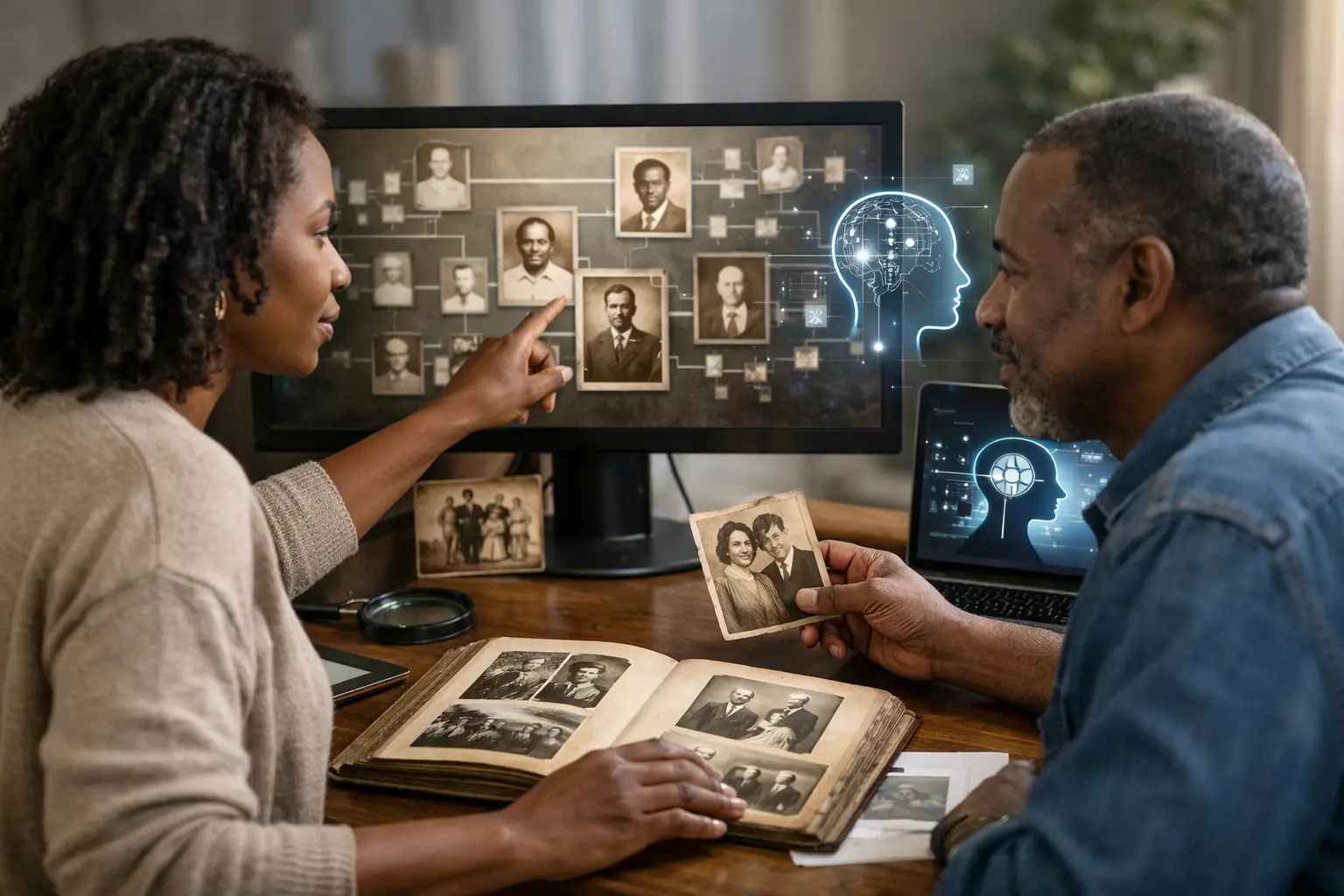
For many families, that moment arrives at 1870. For African American researchers, the first federal census after Emancipation is often a starting line, not a finish line. Before it, enslaved people were frequently excluded from the records that name them. The work becomes a careful reconstruction through counties, plantation records, Freedmen’s Bureau files, probate documents, military records, local history, and the memories still held by living relatives.
AI can make that work faster. Done well, it can also make it more precise. But it must earn trust by showing its reasoning, respecting uncertainty, and sending researchers toward real evidence.
The Future of AI Genealogy Research Will Be Judged by Direction
Traditional genealogy search asks you to enter a name, then hands you a wall of results. That is useful when a person had a distinctive name, stayed in one place, and appeared consistently in indexed records. It breaks down when a surname changed, an age shifted from census to census, a county line moved, or the person you need was listed only by age, sex, and race.
The better question is not, “What records mention this name?” It is, “What source is most likely to move this family back one generation?”
That is where AI has a serious job to do. It can compare dates, places, household members, migration patterns, and DNA match clusters at a scale no individual researcher can maintain in their head. Then it can turn that analysis into a clear recommendation: search this county’s 1866 Freedmen’s Bureau labor contracts; review this probate file; look for this surname among neighboring households; request this National Archives microfilm publication.
Specificity matters because genealogy is not a trivia game. Every vague suggestion costs time, money, and momentum. A useful system should not say, “Try searching Freedmen’s Bureau records.” It should say which field office, which county, which date range, and, when possible, which microfilm series to examine.
AI Must Interpret Evidence, Not Invent Ancestors
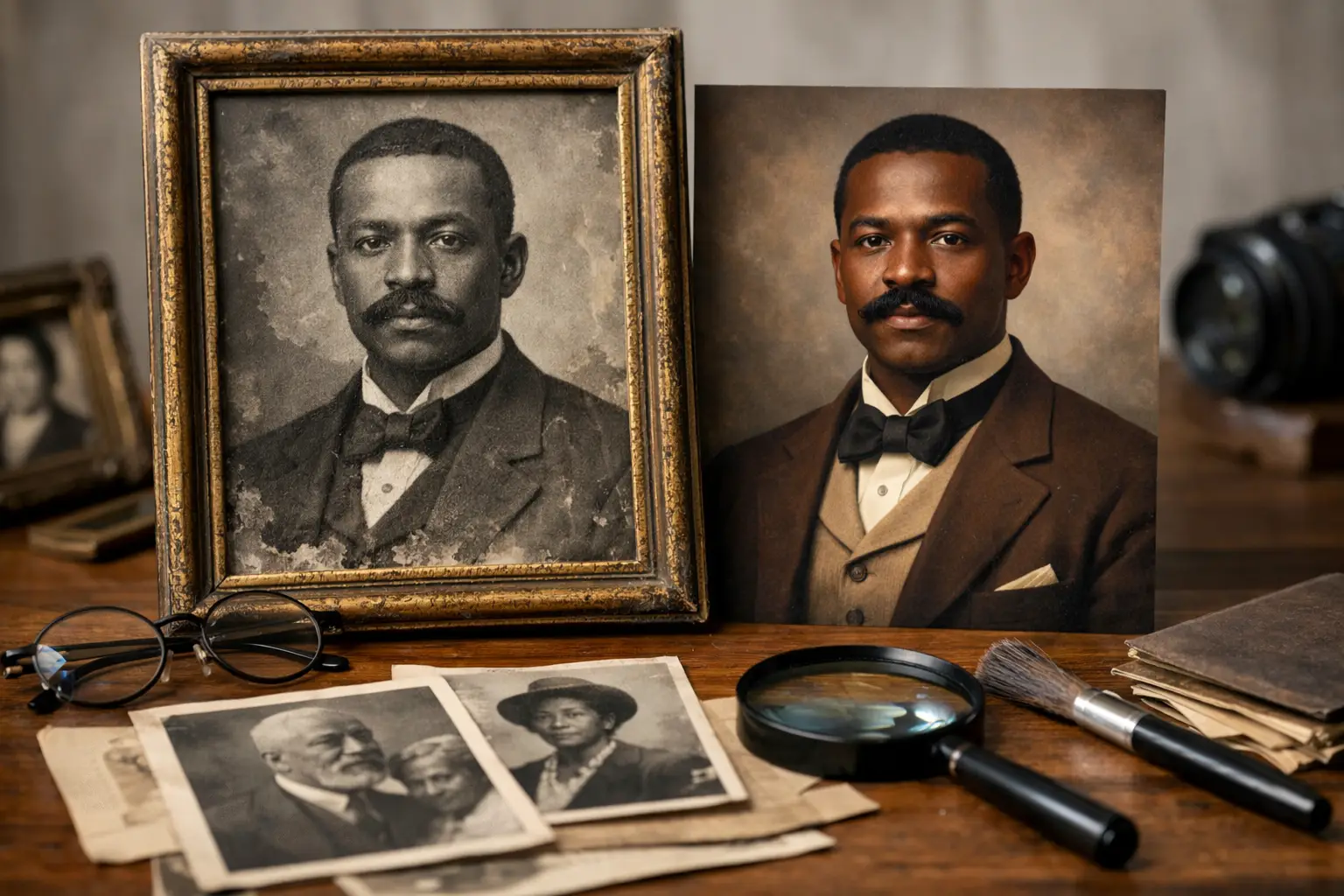
Generative AI is good at language. It can summarize a pension file, explain an unfamiliar legal term, draft a letter to a distant cousin, and organize a timeline from scattered documents. Those are meaningful strengths. They become dangerous when a polished paragraph makes an unsupported conclusion sound like fact.
A family tree has to remain an evidence-based argument. AI should distinguish between what a record proves, what it suggests, and what remains unknown. If two men with the same name appear in adjacent counties, the system should not quietly merge them because the result looks tidy. It should surface the conflict: one man is documented with a wife named Eliza, the other with a wife named Mary. The question is not resolved yet.
This is especially important for families affected by slavery, forced migration, immigration, adoption, tribal displacement, and name changes. Missing records are not permission to fill gaps with confident fiction. They are a reason to widen the search, test competing possibilities, and preserve uncertainty until evidence narrows it.
The best AI genealogy tools will show the path behind a recommendation. They will identify the records considered, explain why a county is a likely research hub, and make it easy for a researcher to verify the source. Confidence should come from transparent method, not a confident tone.
DNA Will Become a Research Map
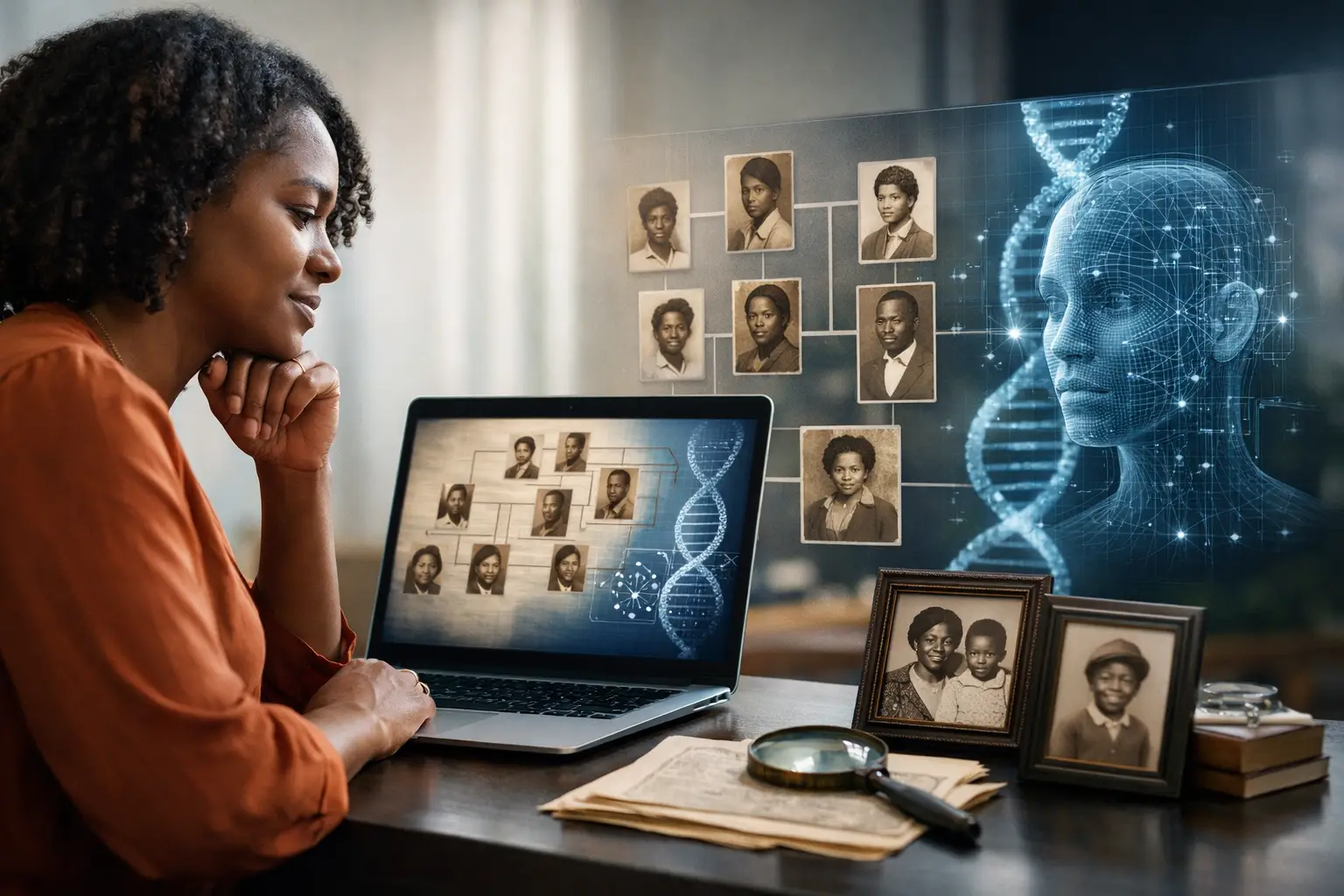
DNA is often treated as a mystery box: hundreds or thousands of matches, unfamiliar centimorgan totals, and a growing sense that somebody else must know how to interpret it. AI can change that by translating DNA from a list of relatives into archival directions.
A cluster of matches may point toward a shared grandparent line, but it can also reveal something geographic. If several matches trace back to the same group of counties, that pattern can help identify where to search for a family before 1870. If those matches connect to descendants of an enslaver’s family, the next step may be probate, deed, tax, estate, or plantation-related records in that location.
DNA does not replace documents. It prioritizes the right documents. That distinction matters. A match can support a hypothesis, expose a mistaken parentage claim, or point to a community that has been overlooked. It cannot, by itself, tell the complete story of a person’s life.
The 1870 Project approaches this problem as a direction problem. Its DNA Decoder is designed to translate match patterns into practical research leads, including likely counties and the federal record sets to check. That is the standard the next generation of genealogy technology should meet: less interpretation theater, more actionable evidence trails.
Living Relatives Are an Archive AI Can Help Preserve
The future is not only about scanned records. It is also about the people who still remember who raised whom, which church the family attended, why a grandfather used two surnames, or where the old homeplace stood.
Many researchers delay those conversations because they do not know what to ask, worry about sounding intrusive, or assume the answers will be vague. AI can lower that barrier by preparing respectful outreach messages and interview questions based on the gaps in a family timeline. It can also help turn a relative’s reply into research clues: a nickname, a town, a church, a military unit, an employer, or a family separation that explains why records appear disconnected.
Still, family stories need care. Memory can preserve details that no archive captured, but it can also combine events across generations. The right approach is to honor the story, record who shared it and when, and use it as a lead to test against documents. AI should help families ask better questions, not flatten their memories into automated fact claims.
The Hard Part Is Not Search. It Is Context.
Historical records are full of language and systems that can confuse even experienced researchers. A person might appear in a census with a different birthplace, in a deed under a variant spelling, and in a military record with an abbreviated name. A county may have been created after the event you are researching. A record may sit under the name of an enslaver, employer, guardian, spouse, or neighbor rather than the person at the center of your search.
AI can recognize these patterns and explain them in plain English. It can flag that a search should include surrounding counties, alternate spellings, and associated families. It can identify that the right archive may be federal rather than local, or that a record set has not been indexed and requires a manual browse strategy.
That context is what turns a search engine into a research assistant. The goal is not to automate the human out of family history. The goal is to remove the busywork that keeps people from doing the meaningful work: evaluating evidence, understanding history, speaking with relatives, and deciding which story their family record can honestly support.
Privacy Will Separate Helpful Tools From Harmful Ones
Family history is personal. DNA data is even more personal. Researchers need to know what information is being used, how long it is retained, whether it trains outside systems, and who can access it. Vague promises are not enough.
The most trusted genealogy platforms will make privacy choices clear and give users control over sensitive material. They will avoid treating family data as raw fuel for unrelated products. They will also recognize that some discoveries carry real emotional weight: misattributed parentage, unknown siblings, adoption, violence, and histories shaped by slavery or displacement.
A good AI tool should be direct without being careless. It should give a researcher language for difficult discoveries, identify when a conclusion needs more proof, and keep the user in control of what gets shared with family members.
What Researchers Should Expect Next
The strongest systems will combine record search, DNA interpretation, historical geography, family interviews, and writing support in one guided workflow. They will not demand that beginners learn every archive system before receiving help. They will explain the next action, why it matters, and what result would confirm or challenge the lead.
That does not mean every brick wall will fall. Some records were never created. Others were destroyed, withheld, or recorded with too little detail to establish an identity. AI cannot restore a document that no longer exists. It can, however, help researchers stop repeating dead-end searches and start following the surviving evidence with greater discipline.
Your family was here, even when the first record that names them is late, damaged, or incomplete. The next step is not more noise. It is the right county, the right record group, the right question for a relative, and a reason to keep going.