AI Genealogy Search Review for Real Research
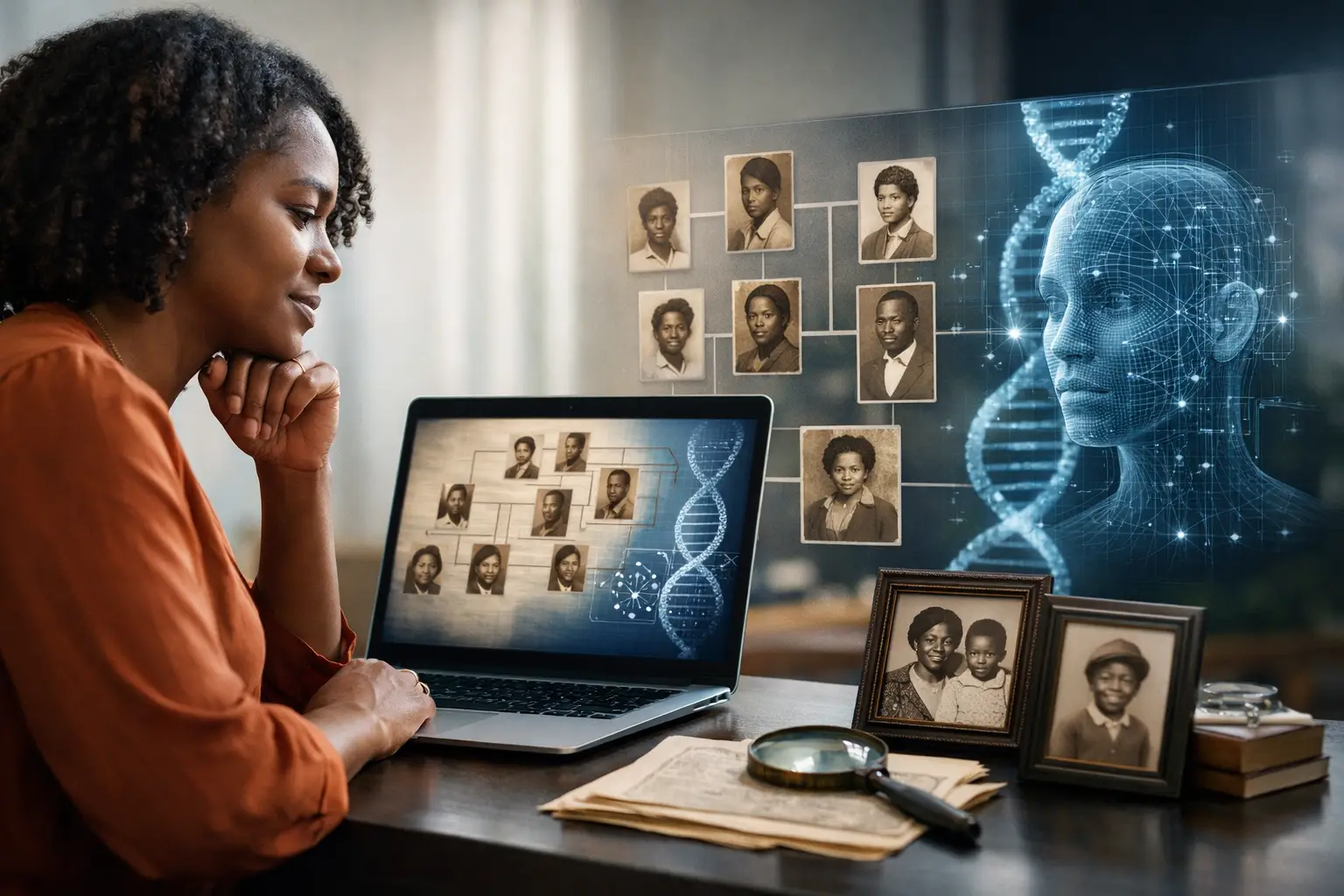
A name in the 1870 Census can feel like a door opening. The same family disappearing before it can feel personal. This AI genealogy search review looks at the question that matters when records run thin: can artificial intelligence help you find an ancestor, or does it simply give old search results a new coat of paint?
The useful answer is more specific than either promise. AI can save serious time when it turns a vague question into a research action: a county to investigate, a surname variation to test, a DNA cluster to study, or a federal record series to request. It is far less useful when it produces confident stories without showing the evidence underneath. For families navigating the 1870 brick wall, that distinction matters.
What an AI genealogy search should actually do
A standard genealogy search engine returns records that may contain a name, place, or date you entered. That is helpful, but it leaves the hardest work with you. Which of five men named William Johnson is yours? Why did a mother appear under a different surname? What record was created before the first federal census that consistently counted formerly enslaved people by name?
A good AI genealogy tool should not pretend those questions have one-click answers. It should reduce the next decision. It can read the details you already have, recognize likely connections and gaps, then recommend the most promising source or search strategy. The output should be concrete enough to act on, not a paragraph of genealogy advice that sounds wise but changes nothing.
That means asking for evidence. If an AI suggests a birthplace, parent, or spouse, it should identify why: a shared household, a recurring county, an age pattern, a probate mention, a marriage bond, or a DNA match relationship. A hypothesis is valuable. A hypothesis presented as fact can send years of research in the wrong direction.
AI genealogy search review: where it helps most
AI is strongest at the work that exhausts researchers without requiring it to replace judgment. Names are messy. Census takers misspelled them, clerks used initials, and families changed how they identified themselves after migration, marriage, emancipation, or immigration. An AI assistant can generate sensible variants and connect clues across records much faster than manual trial and error.
It can also help organize a crowded research problem. Say you know your great-grandmother lived in Arkansas in 1900 but cannot identify her parents. A useful system can separate what is documented from what is assumed, flag the counties where her household and possible relatives recur, and point you toward marriage, death, land, probate, tax, church, or Freedmen's Bureau records worth checking next.
DNA is another area where AI can be genuinely practical. A match list is not a family tree. It is a collection of shared DNA amounts, usernames, partial trees, and possible relationships. The right tool can help group matches, spot repeated places and surnames, and translate a cluster into a focused archival question. Instead of telling you that you have "many possible cousins," it should help answer where to search for the common family.
For African American research, that precision is especially valuable. Before 1870, an ancestor may appear only indirectly in the records of an enslaver, a labor contract, a bank record, a military file, a court case, or a Freedmen's Bureau document. The research path often begins with a known postwar household and works backward through location, associates, and record context. AI can accelerate that path. It cannot skip it.
What AI cannot know from a search box
There is a real risk in genealogy AI: fluent language can make uncertainty disappear. A tool may write a moving narrative about an ancestor's life based on a birth year, a county, and broad historical facts. That narrative may be useful as a way to imagine context, but it is not proof that the ancestor experienced each event described.
The same caution applies to family trees online. Trees are leads, not sources. If AI imports a relationship from an unsourced public tree, it can multiply an error at impressive speed. Always separate a record-backed conclusion from a possibility, and preserve the citations, images, and reasoning that support your work.
AI also cannot access records that were never created, never preserved, or remain unavailable digitally. A missing pre-1870 name is not a failure of your search terms. Sometimes the next step is a county courthouse, a state archive, a historical society, a church collection, or a NARA microfilm series. The best technology helps you get there prepared.
The features worth judging in an AI genealogy tool
Start with the quality of the next action. Does the tool merely summarize what you typed, or does it tell you which archive, record type, county, and date range to investigate? A recommendation such as "search Freedmen's Bureau records" is broad. A recommendation tied to a bureau field office, a locality, and a relevant record group is research-ready.
Next, look at how it handles DNA. You should not need to become a genetic genealogist before receiving useful direction. A practical DNA feature explains what a match cluster may mean, identifies the shared geographic pattern, and turns that pattern into archival targets. It should be clear about what the data supports and what still needs verification.
Privacy deserves equal attention. DNA information and family stories are personal. Read whether the company claims ownership of uploaded material, whether your data is used to train systems, and whether you can control or remove it. Convenience is not a fair trade for losing control of your family's information.
Finally, consider the price structure. Subscription platforms can make sense for researchers using large record collections every week. But many people need concentrated help with one stubborn person, one cluster of DNA matches, or one family story they want to preserve. Credit-based access can be a better fit when you want to pay for a defined research task rather than another recurring bill.
A more useful standard than "Did AI find my ancestor?"
The wrong test is whether an AI tool instantly reveals a hidden ancestor. That is a dramatic promise, and genealogy rarely works that way. The better test is whether it creates momentum without creating fiction.
Did it help you distinguish fact from family lore? Did it identify the county where your people were actually living? Did it point to an exact record collection, or even a federal microfilm reference, instead of leaving you with a general suggestion? Did it help you write a thoughtful message to an older relative while there is still time to ask?
Those are meaningful results because family history advances through connected clues. A death certificate may name parents. A cousin's reply may preserve a maiden name. A DNA cluster may lead to a county. A county may lead to a labor contract, a pension file, or a probate record that brings a person back into view.
The 1870 Project is built around this more practical standard. Its approach combines archival search, DNA-assisted direction, family-member interviewing, and historical storytelling, with an emphasis on giving researchers a specific next move. For a DNA question, that can mean flagging likely counties and the federal record sets to check rather than handing you another unexplained match list.
Use AI like a research partner, not an oracle
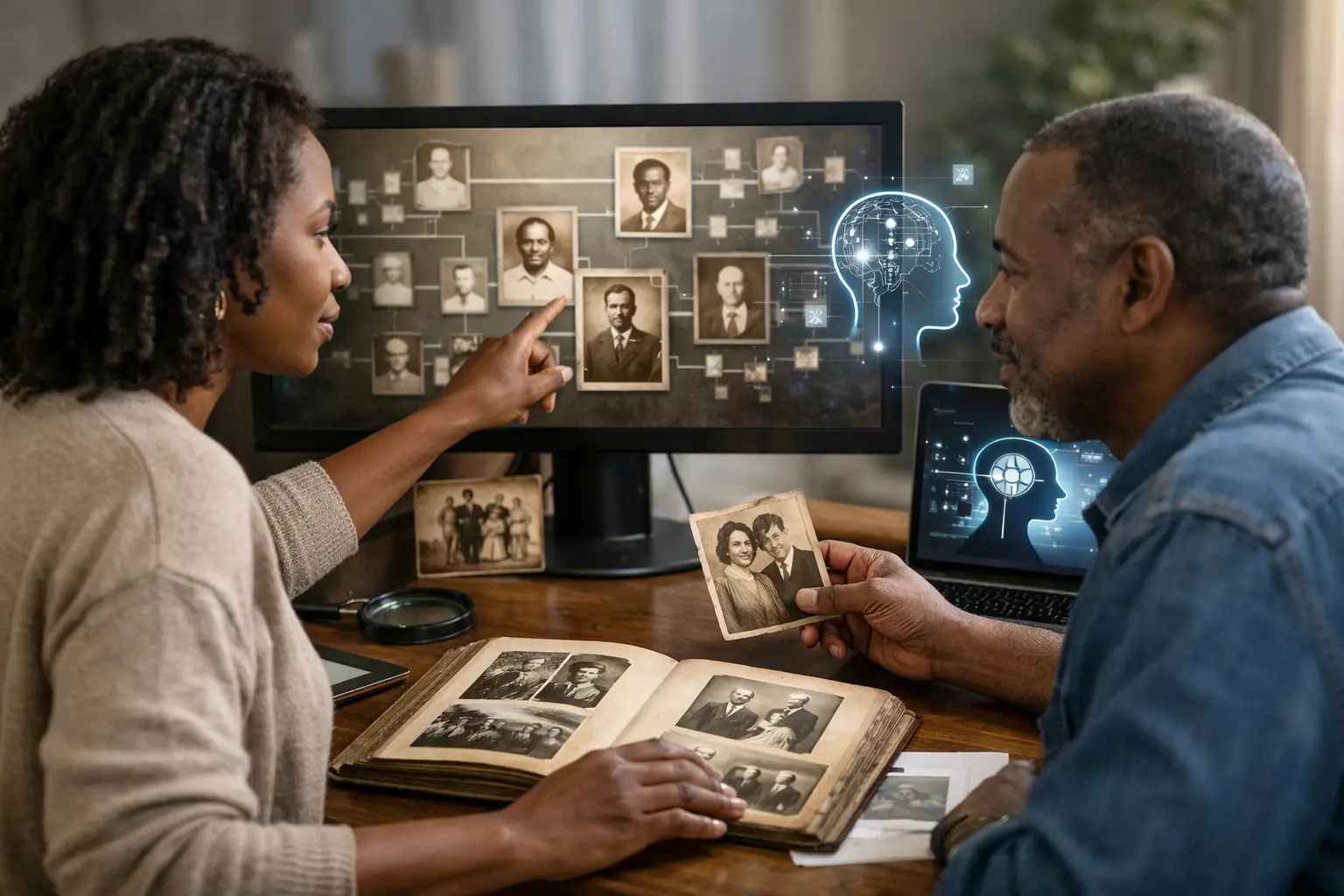
Bring your best starting facts: full names and nicknames, estimated dates, places, known relatives, old photographs, obituaries, funeral programs, military papers, and stories from living family members. Even a small detail, such as a church name or a railroad town, can narrow a search dramatically.
Then keep a simple research log. Record what the AI suggested, which sources you checked, what each record actually said, and why you accepted or rejected a connection. This protects you from repeating searches and gives future relatives a clear path through the evidence.
Most of all, use the speed of AI to make room for the human part of genealogy. Call the aunt who remembers a nickname. Ask who owned the Bible in the family photograph. Save the story in her own words. Records can be difficult to find. Once a living memory is gone, no search engine can retrieve it.