Freedmen Bureau Marriage Records Guide
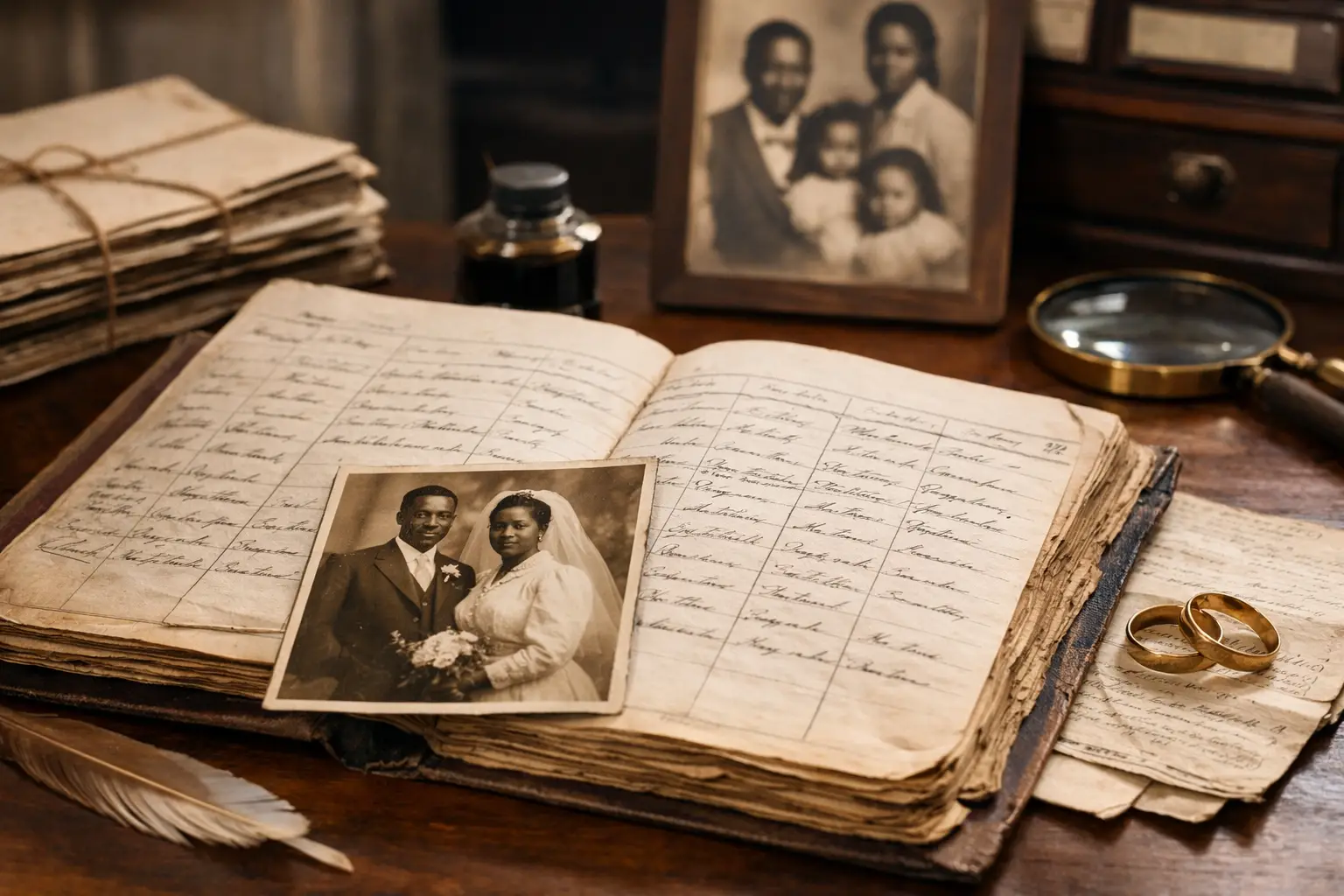
A marriage entry can do what three censuses cannot. For many families tracing formerly enslaved ancestors, one line in a Freedmen’s Bureau register names a couple, gives a county, ties them to a plantation or former owner, and places them in a community just as slavery was ending. That is why a freedmen bureau marriage records guide matters so much when you are stuck at the 1870 brick wall.
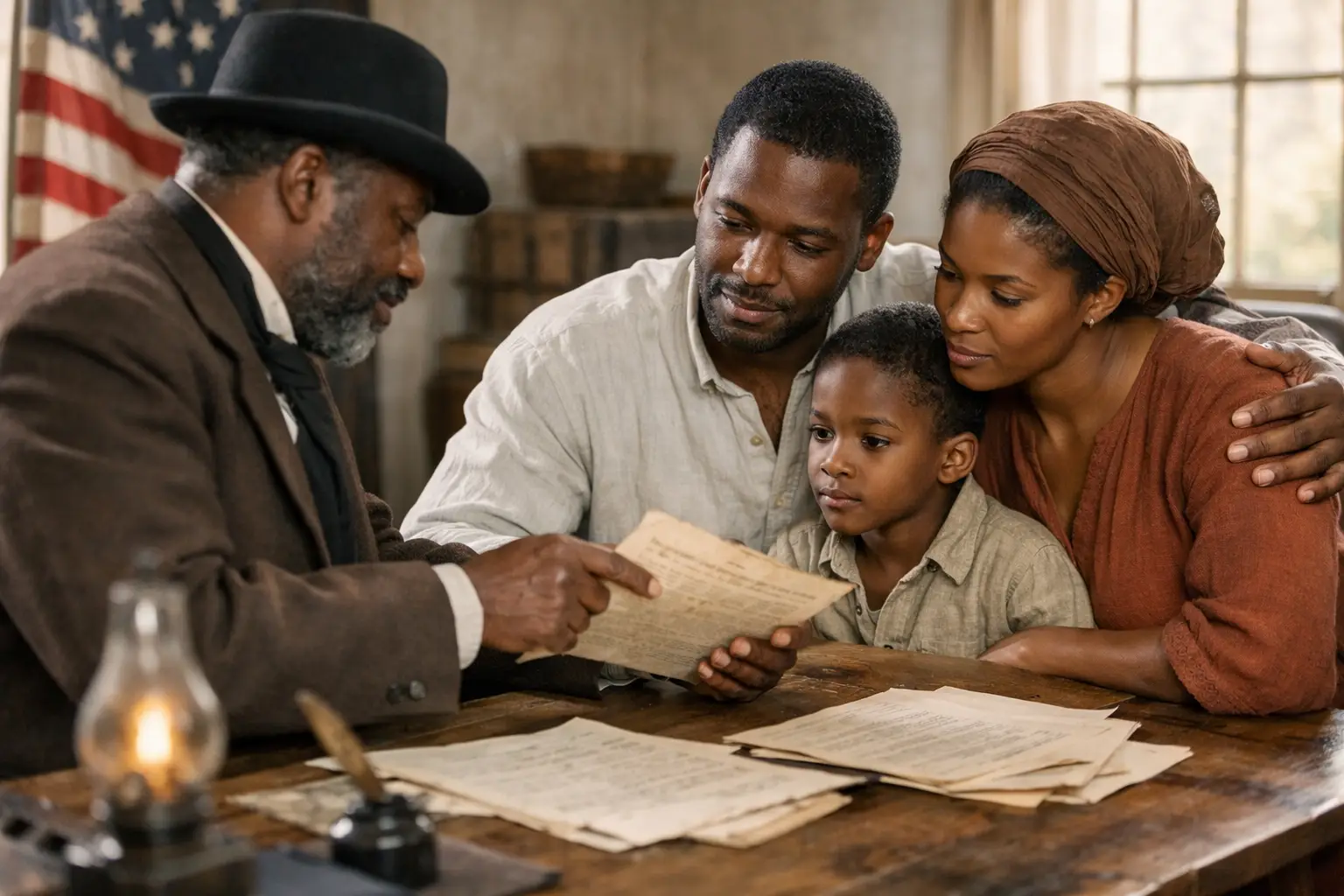
These records were created in a narrow but powerful window, mostly in the South after the Civil War, when Bureau agents recorded marriages that slavery had denied legal recognition. Some couples were newly marrying. Others had lived as husband and wife for years and were finally registering long-standing unions. Either way, the records can preserve family structure at the exact moment many researchers lose the trail.
Why Freedmen’s Bureau marriage records matter
If you have only searched the 1870 and 1880 censuses, you are seeing your family after emancipation reshaped the paper trail. A marriage record can pull you closer to what came before. It may confirm a spouse’s maiden name, identify children, narrow the county of residence in the 1860s, or show whether a relationship began during slavery.
That last point matters. A couple who registered a long-term union in 1866 or 1867 may have been together for a decade or more before the record was made. So the date on the page is not always the beginning of the marriage. It may be the first time the government wrote it down.
That changes how you interpret everything around it. If a register says a couple had cohabited since 1852, you are no longer just looking for two people in 1870. You are now asking where they were in 1852, who enslaved them, and what plantation or county records might mention them as a family unit.
What you may find in a Freedmen Bureau marriage records guide search
Freedmen’s Bureau marriage records are not uniform. Some offices kept detailed registers. Others recorded only basic information. Expect variation by state, field office, and date.
Still, these records often include the names of bride and groom, date and place of registration or ceremony, county, names or counts of children, and notes on how long the couple had lived together. Some entries include the names of former enslavers, military officers, ministers, or witnesses. A few mention previous spouses or whether one partner had died.
That mix is what makes them so useful. Even when the record is sparse, it can give you one precise next step. A county name points you to probate, deeds, tax lists, labor contracts, or church records. A note about children helps distinguish one couple from another. A former enslaver’s surname can open plantation papers and estate files.
Where these records were created and why coverage is uneven
This is the part many researchers miss. The Bureau did not create one national marriage database with perfect coverage. Records were kept by local offices, and surviving sets differ widely.
Some states and counties have rich marriage registers. Others have almost none. In one area you may find formal registers of solemnized and registered marriages. In another, you may find only scattered certificates, reports, or cohabitation records handled under state law rather than by the Bureau itself.
So if you do not find your ancestors right away, that does not mean they were not married or that the family story is wrong. It may mean the right office did not survive, the couple registered under a different jurisdiction, or the names were recorded phonetically.
That is where strategy beats volume. You do not need fifty random results. You need the right county, the right field office, and the right spelling possibilities.
How to search Freedmen’s Bureau marriage records without wasting hours
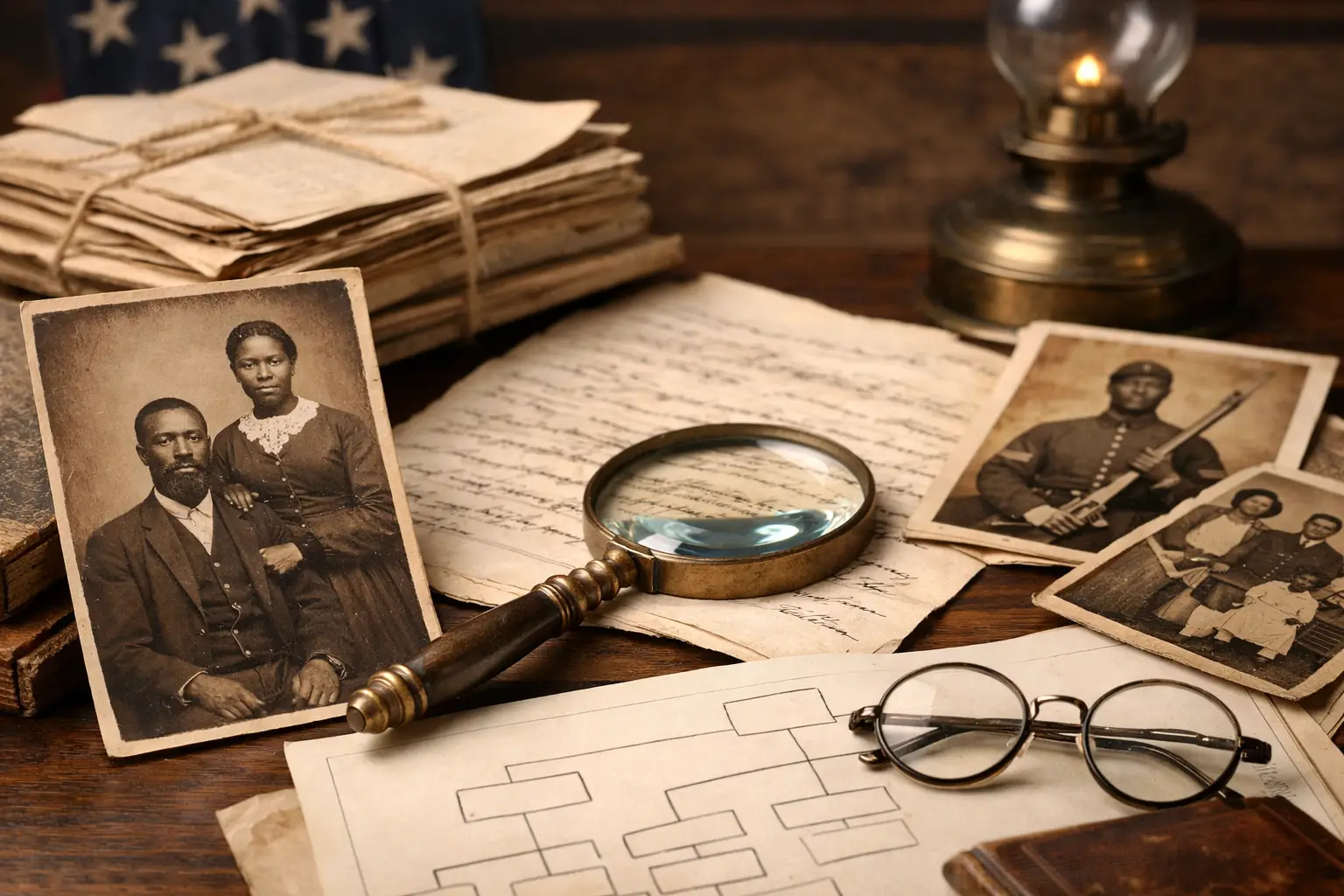
Start with what you know from 1870, but read it like a map, not a finish line. Identify the couple you believe you are tracking, then study the household, ages, birthplace patterns, neighbors, and nearby families with the same surname. The goal is to define a likely county and a circle of connected people.
Next, search for both partners using flexible name variations. Expect first names to shift, surnames to change, and ages to drift. A woman may appear under a prior surname, a chosen surname, or the surname later used by her children. Men who adopted a former enslaver’s surname were not always consistent in the first postwar years.
Then widen the search beyond exact matches. Search by county first if possible. Search by spouse’s first name paired with a surname variation. Search by children’s names if the record set allows it. If you know the church or military post nearby, keep that in view because some records were tied to local officials and congregations rather than standard county systems.
Finally, compare every plausible record against the family timeline. Do the ages fit well enough? Does the county line up with where the children were born? Does the cohabitation period make sense with the oldest known child? Good genealogy is often pattern recognition, not one perfect record appearing on command.
A practical reading method for each marriage record
When you find a record, slow down. Most mistakes happen after the discovery, not before it.
Read the entire page, not just the indexed line. Neighbors on the same page may be kin. Witnesses may share surnames with your family. The officiant may point you to a church. If the register is arranged by district or subdistrict, note that too. Bureau geography can tell you which field office generated related labor, ration, complaint, or education records.
Pay attention to phrases like living together since, cohabiting since, or recognized as man and wife. Those words can push your timeline back into slavery years. A record made in 1866 may contain evidence reaching into the 1840s or 1850s.
Also track negative clues. If a couple appears in a marriage register but not together in 1870, ask why. One spouse may have died. The household may have split across county lines. Children may be living with grandparents. A marriage record is not just proof of a union. It is a launch point for rebuilding the family around it.
Common problems and what they usually mean
The biggest problem is assuming all postwar marriage records are Bureau records. Some are state cohabitation registers or county marriage books created during Reconstruction. They are still valuable, but they follow different rules and may be stored in different places. Treat them as part of the same research path, not as interchangeable documents.
Another common problem is overtrusting indexes. Indexes help, but they flatten messy handwriting and local spelling. If you suspect the right county, browse the actual register when possible. A surname like Carter may appear as Cader, Carder, or Cotter depending on the clerk and the image quality.
The third problem is stopping at the couple. Do not. Use the record to build a cluster of relatives and associates. Formerly enslaved families often reconstructed themselves across nearby households after the war. The marriage register may name one couple, but the real evidence sits in the extended network around them.
What to do after you find the marriage record
This is where momentum matters. A good find should create the next five searches.
Use the county and date to check labor contracts, Bureau complaints, rations, voter registration, and local court records. Search the 1870 census for nearby households that share the couple’s surname or the maiden surname you just found. If the record names a former enslaver, pivot immediately to probate, estate inventories, deeds, and plantation papers in that county.
If you have DNA matches, compare them against that county and those surnames. This is often where scattered matches start making sense. A marriage record grounds the family in one place at one time, which makes DNA far more useful. Instead of wondering which of twenty counties matters, you can focus on the county your ancestors actually named through their own record trail.
That is also why guided research tools can help. The strongest genealogy workflow is not just search more. It is search smarter, then move fast on the clue you found. Platforms like The 1870 Project are built around that exact problem: turning one record into the next best archive, county, and film trail instead of leaving you buried in results.
The real value of this work
A Freedmen’s Bureau marriage record is not a formality. It is often one of the first legal acknowledgments of a family that already existed, already endured, and already knew who they were before the state bothered to write it down.
Your family was here. If you find their marriage record, treat it like evidence and like testimony. Then follow it where it points, one county, one household, one name at a time.