Southern Claims Commission Genealogy Explained
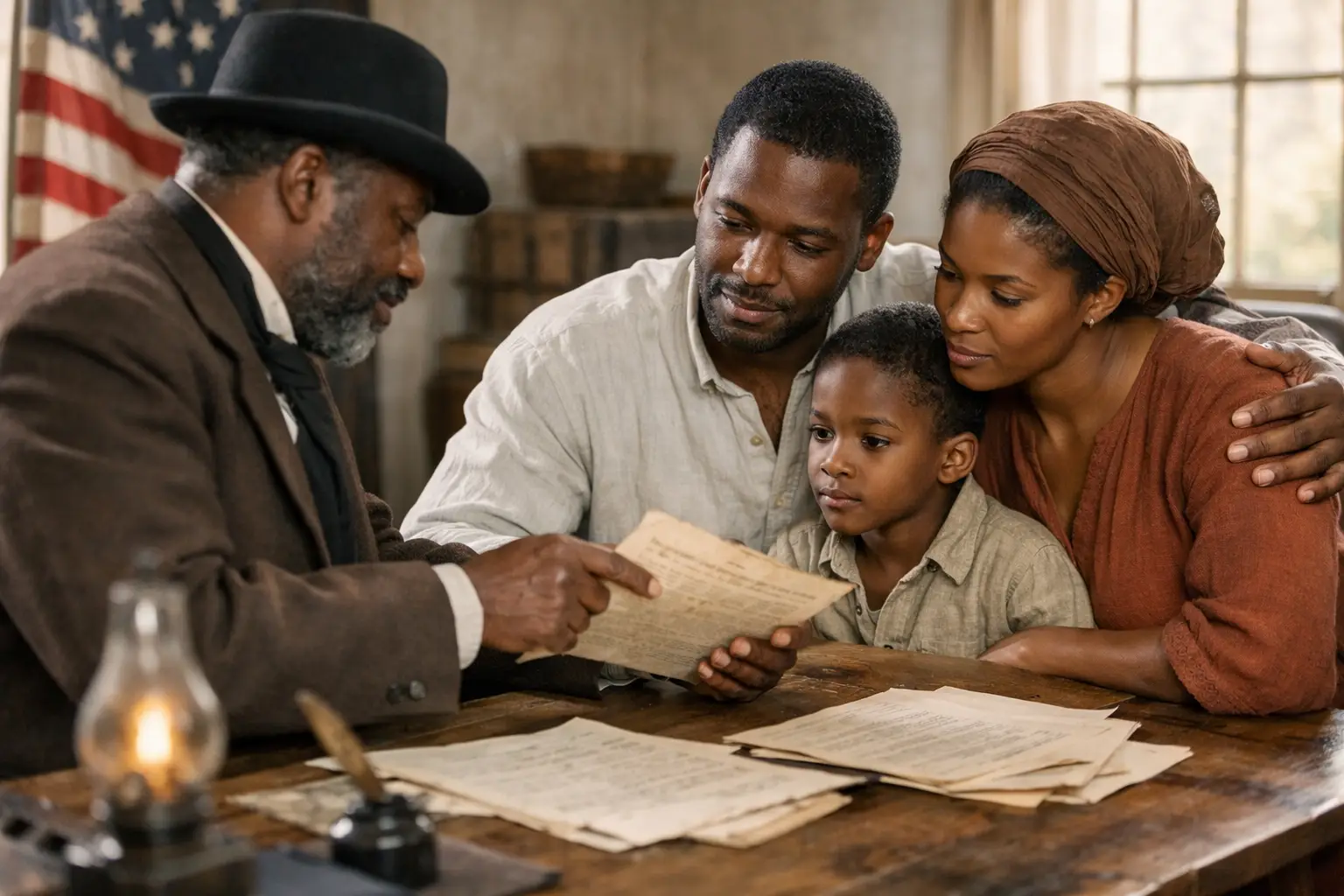
A Southern Claims Commission file can put your ancestor in a room, under oath, answering questions about neighbors, relatives, work, crops, livestock, and the war that disrupted all of it. For families facing the 1870 brick wall, that is far more valuable than another name on an index. These files can preserve the voices of people who were rarely given space in the official record.
The catch is that Southern Claims Commission genealogy is not a quick surname search. A claim may be filed by a landowner rather than the person you seek. A witness may be identified by a first name, a nickname, or a relationship without a surname. And a rejected claim can be just as useful as an approved one. The goal is not simply to find a payment. It is to recover a network of people and turn that evidence into your next precise search.
What the Southern Claims Commission recorded
Congress created the Southern Claims Commission in 1871 to review claims from people in former Confederate states who said Union forces had taken or used their property during the Civil War. To receive compensation, claimants had to show that they had been loyal to the United States and that their property had been taken for Union use.
The Commission investigated aggressively. It asked claimants and witnesses detailed questions about loyalty, property, dates, military activity, household members, neighbors, and local reputation. That scrutiny produced testimony unlike a standard census entry. A file can name the person who owned the horse or corn, but it may also name the people who saw soldiers take it, worked the farm, lived nearby, or knew the claimant before and after the war.
For African American research, this matters because formerly enslaved people often appeared as witnesses. Their testimony may identify a former enslaver, a plantation, a spouse, parents, children, siblings, or a specific community. It can also reveal an earlier surname, especially when a witness explains where they lived before emancipation.
Do not assume every file involves an African American claimant or witness. Many do not. But a claim filed by a White landowner can still be an important record for a Black family if the testimony names workers, tenants, neighbors, or people formerly enslaved on that property.
Why rejected claims can be genealogical gold
A denied claim is not a research failure. The Commission rejected many claims because it doubted loyalty, questioned the value of property, found conflicting testimony, or decided the property was not taken by Union forces. Those disputes often generated more questioning and more names.
A successful claim may contain a straightforward inventory and several witness statements. An unsuccessful one can contain competing stories from neighbors, former soldiers, and local officials. For genealogy, the richer file is not always the one that produced a payment.
Read for relationships, not just the claim amount. When a witness says, “I knew him when he lived on the Johnson place,” that phrase can point you toward a pre-1870 location and a possible former enslaver. When testimony says someone was “the daughter of Mary” or “married to Thomas after freedom,” record every detail exactly as written. Those fragments can connect households across the 1870 and 1880 censuses, Freedmen’s Bureau records, marriage records, and probate files.
How to search Southern Claims Commission records
Start with what you know, but search wider than your direct ancestor. Look for a surname in the county where your family lived in 1870, then check surrounding counties. Civil War-era community boundaries, post offices, and county lines do not always match the place names your family used later.
Search for these people in addition to a direct ancestor: a possible former enslaver, a landowner listed near your family in 1870, a neighbor with an unusual surname, and known in-laws. If your ancestor is absent from the claimant index, they may still appear inside a case file as a witness.
When you find a likely claim, capture the claimant’s full name, county, state, claim number, and whether the claim was allowed or disallowed. Those details matter because federal archival records are organized around case files, not around every person mentioned in testimony. The National Archives holds Southern Claims Commission records in Record Group 217, including files that have been preserved on federal microfilm publications. Knowing the exact claim number is what moves you from a promising index result to the actual evidence.
Do not stop at a transcript or summary. Original testimony can preserve wording that an index omits. A transcription may say “laborer.” The image may say “my wife’s brother, Peter, who had lived with us since the surrender.” That is the difference between a vague clue and a new branch of the family.
Build a witness map as you read
Create a simple research table for every person mentioned. Record the spelling used in the file, role in the case, residence, relationship language, former residence, and any reference to military service or enslavement. Keep a separate column for the source page or testimony question where the detail appears.
Then map those names against the 1870 census. Look for clusters, not just exact matches. If three witnesses all describe a farm near the same creek, locate nearby households in 1870. If a woman appears under a different surname in the claim, test whether she may be a married daughter, widow, or someone using a surname adopted after emancipation.
This is where many searches stall: researchers treat a claim as a one-person record. It is better understood as a community record. The people who testified knew one another for reasons. Your job is to identify those reasons.
Turn testimony into the next archive search
Every useful detail should produce a next action. If testimony names a plantation or former owner, search that surname in local probate, deeds, tax lists, and estate records. If it names a wartime county, look for Freedmen’s Bureau field office records serving that place. If it identifies a Union unit or occupation, use that context to narrow dates and locations.
A statement such as “she belonged to Dr. Harris before the war” should not become a conclusion by itself. “Belonged to” reflects the language of slavery, not a documented family relationship. Treat it as a lead, then test it against the 1860 slave schedule, probate inventories, wills, division-of-estate records, and postwar labor contracts. The strongest genealogy is built from converging evidence, not one powerful sentence.
Names require the same caution. A witness called “Aunt Lizzie” may be a relative, a respected elder, or neither. Ages can be wrong. Counties can be confused. Testimony was recorded by clerks and may contain spelling errors. Still, the record gives you something better than a guess: a historically grounded place, time, and social circle to investigate.
For a faster path, The 1870 Project can help translate scattered clues into targeted research actions - such as the most likely county, connected surnames, and the federal records worth checking next. The point is not to hand you a longer list of possibilities. It is to tell you where the evidence is most likely to move.
Common mistakes that hide the family story
The first mistake is searching only approved claims. Always look for disallowed files and related testimony. The second is searching only your ancestor’s post-1870 surname. Formerly enslaved people could adopt, change, or share surnames after emancipation, so location and associates often matter more than an exact surname match.
The third mistake is treating the claimant as the center of the story. The claimant matters, but the witnesses may be your real target. Read every deposition, including people whose names appear only once.
Finally, do not overlook women. A claim may identify a woman through a husband’s name, but her testimony can preserve her maiden name, prior residence, children, and knowledge of family events. Search both married and possible maiden surnames, then follow her across census households and local records.
Your family was here. A Southern Claims Commission case may not hand you a finished pedigree, and it may raise as many questions as it answers. But when a witness names a place, a kinship tie, or a life before freedom, you have more than a record. You have a direction - and a reason to keep going.