3 Simple Tricks When Your Family Search Hits a Wall
Have you ever typed a grandparent's name into a search box and found nothing? It can feel like their history just vanished.
Most of the time, your family's records are not gone. They are just hiding behind a small spelling change or an approximate age.
In our test searches across East Texas, three simple tricks helped unlock families between the 1950s and 1870. You can use these same steps for your family today.
1. Try Adding or Dropping the Letter "S"
In the 1900s, census workers went door to door and wrote down names the way they sounded. If a family's last name was Vance, the worker might have written Vances. If the name was Haze, they might have written Hayes or Hays.
Even within the same family, a last name on a 1950 farm census can gain or lose an "s" on a later city headstone. That one letter can hide a record for years.
What you can do:
- Search your family's last name both ways, with an "s" at the end and without it.
- Try spelling the name the way it sounds out loud.
2. Give Birth Years a 5-Year Window
Many people born before the 1940s never had a birth certificate. Ages in census pages and on headstones are often off by three to five years.
For example, if family stories say a grandfather was born in 1907, his headstone or census line might say 1902. Searching only for 1907 will miss him completely.
What you can do:
- Never lock your search to a single birth year.
- Check five years earlier and five years later than the year you were told.
3. Look for a Mother's Maiden Name
If you are looking for your grandmother when she was a child, her married last name will not work. When she was eight years old living with her parents, she was listed under her birth (maiden) name.
What you can do:
- Check a marriage record, her death certificate, or the death certificate, obituary, or Social Security record of one of her children. Those records usually list the mother's maiden name.
- Once you have her maiden name, search for her as a child (around age 8 or 10) to find her parents in the same household.
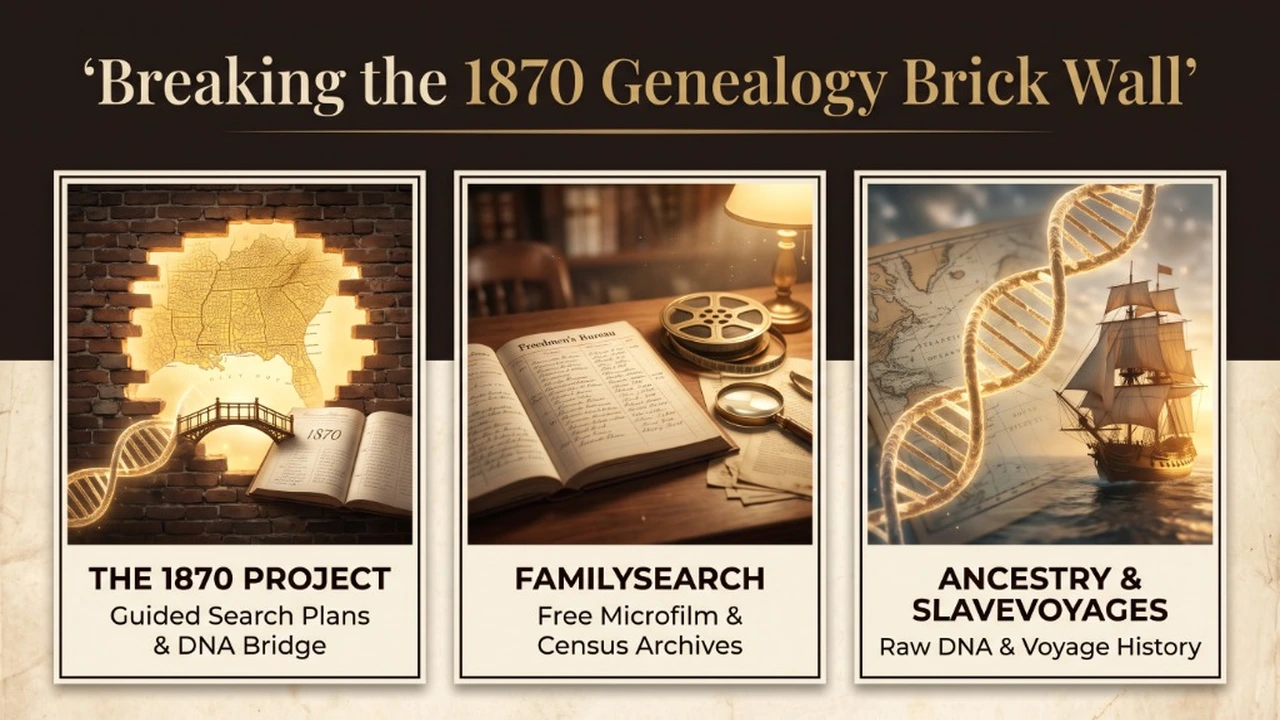
How The 1870 Project Helps
You do not have to keep track of every step alone:
- Discover (2 credits): Gives you pre-filled search links to check for your ancestor across major record sites, plus any possible community tree matches we find.
- DNA Decoder (50 credits): Start with one ancestor you know and your DNA regions to get a step-by-step census and record ladder walking back toward 1870.
- Our Story: Helps you keep the ancestors and details you uncover organized in one place.
We are actively working on The 1870 Project and improving our tools and guides every week. Thank you for trying us out and trusting us with your family's story!
Common Questions
Why can't I find my grandmother in the census when she was a child?
She was listed under her maiden name before she got married. Check a marriage record, death certificate, or a child's death or Social Security record to find her maiden name first.
What if I don't know the exact year my ancestor was born?
Leave the birth year blank or search a five-year window. Starting with the 1940 or 1950 census is a great way to find a listed age and work backward.
Can DNA percentages alone find my great-grandparents' names?
No. DNA regions show where your ancestors lived hundreds of years ago, while census and state records give you the names of your parents, grandparents, and great-grandparents.