How to Break the 1870 Brick Wall in Your Family
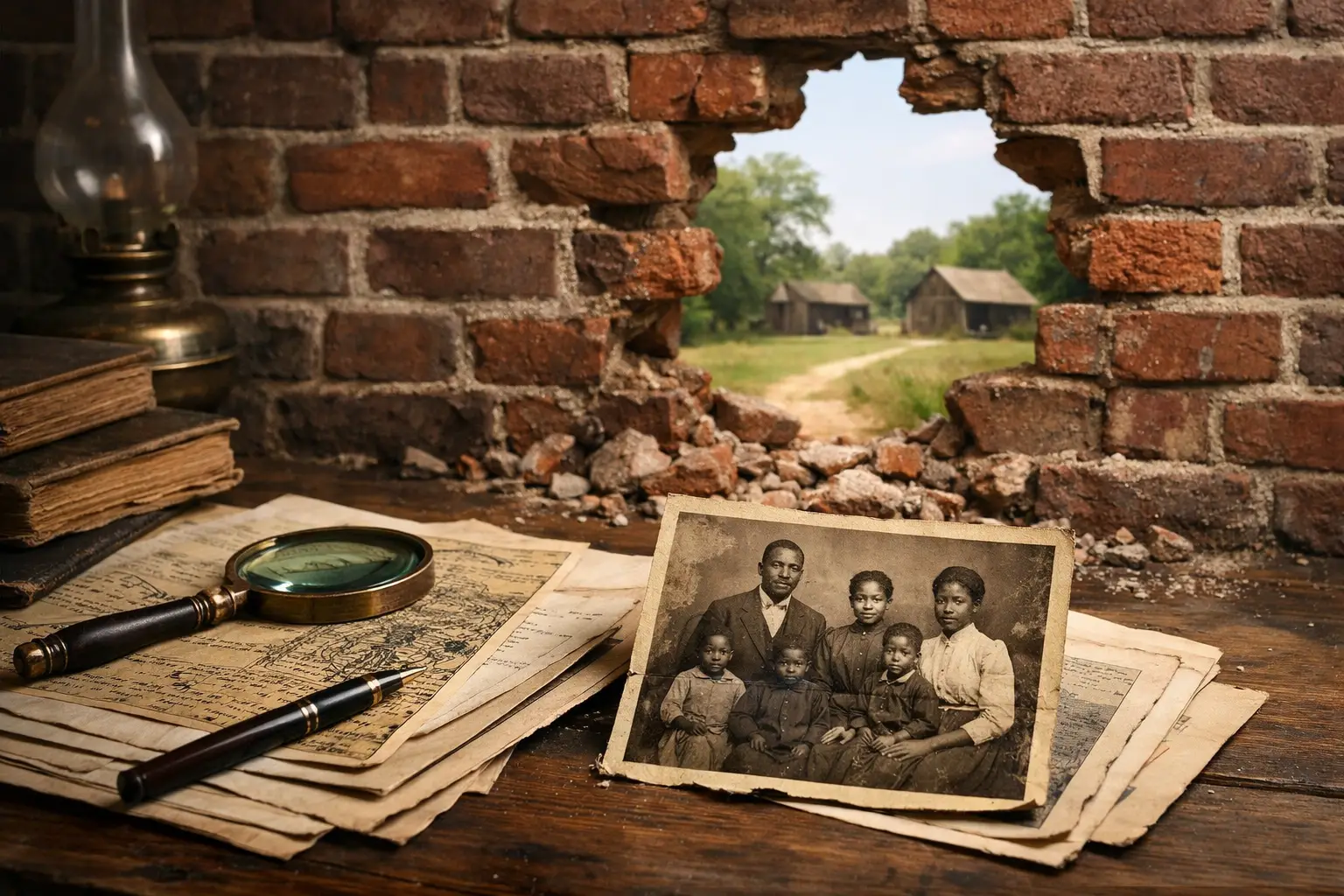
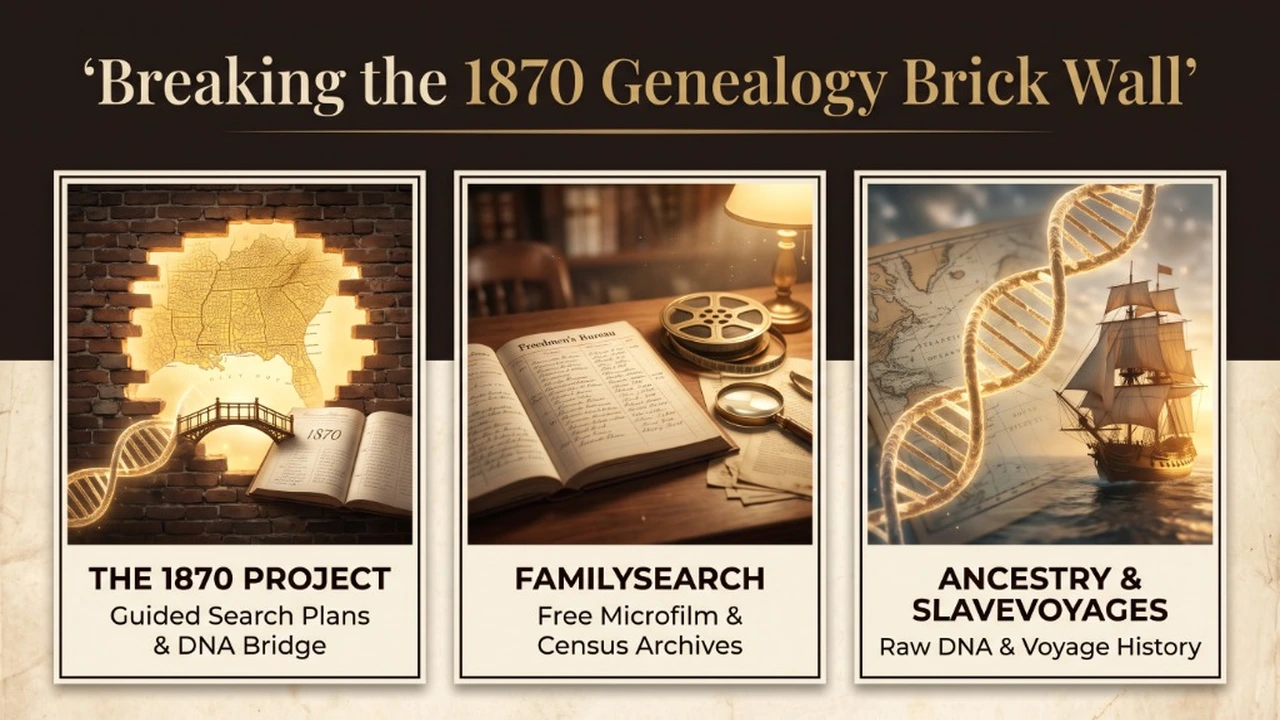
The 1870 Census may be the first place your ancestor appears by name, but it should not be the last place your research makes sense. If you want to know how to break the 1870 brick wall, stop treating 1870 as a single missing-record problem. It is an identity problem. Your job is to connect the named person in 1870 to the people, places, and institutions that documented their life before Emancipation.
For many African American families, this is where the paper trail becomes painful. A grandfather who appears as a 25-year-old farmer in 1870 may have been recorded only as an age, sex, and color in an enslaver's 1860 slave schedule. His parents may have lived on another property, used a different surname, or been separated by sale. The answer rarely arrives in one dramatic document. It is built from proof that keeps pointing back to the same county, household, and former enslaver.
Your family was here. The records are simply asking better questions.
Start With the Whole 1870 Household
Do not begin by searching backward from a name alone. Begin by extracting every detail from the 1870 household and its immediate neighbors. Record the full name exactly as written, age, birthplace, occupation, real and personal estate value, literacy marks, household members, and the county, township, and post office.
Then look sideways. Who lives next door? Who shares an uncommon surname? Are several Black households clustered near a White landowner, merchant, or plantation family? A neighbor is not automatically a former enslaver, but proximity can reveal a postwar community that already existed before 1865.
Follow that person forward before you force the line backward. Find the family in 1880, 1900, 1910, and later censuses. Compare birthplaces, marriage lengths, children, parents, occupations, and migration patterns. A person called Ellen in 1870 may be Eliza in 1880 and "Aunt Liza" in a granddaughter's death certificate. The later records help you separate one same-named person from another.
Build a simple identity profile as you go: estimated birth year, possible spouse, children, parents, county, and every surname used. This prevents a common mistake: attaching your ancestor to the first promising plantation or slave schedule result.
How to Break the 1870 Brick Wall by Finding the Place
County is often more valuable than surname. Before emancipation, records were created locally: in county courthouses, churches, military offices, plantation papers, and federal field offices. If you cannot name the county where your ancestor lived in 1870, your next best search action is usually to establish it, not to search every record collection for a familiar surname.
Study county boundaries, too. A family may appear to move when the county line moved around them. Check adjoining counties, especially when a census district sits near a border or when relatives appear across state lines after the Civil War.
Once you have a likely county, identify the White families and institutions connected to that place. Review land records, tax lists, probate files, estate inventories, wills, deeds, court minutes, and local histories. Large estates can be useful, but do not ignore smaller slaveholding households. Many enslaved people were held in groups of fewer than ten, and their names may surface in estate divisions, debt cases, guardianship files, or bills of sale rather than in a plantation archive.
The 1850 and 1860 slave schedules can help you test a theory, but they do not name most enslaved people. Use them as evidence of age patterns, sex, location, and household size. If your 1870 ancestor was about 20 in 1870, look for a person of roughly age 10 in the right county in 1860. That is a clue, not proof. The proof comes when several records connect the same people.
Search the Records Created During Freedom's First Years
The years from 1865 through the 1870s produced records that often bridge the gap between slavery and freedom. These are not background reading. They can name spouses, children, former enslavers, former places of residence, and disputes over wages or labor.
Freedmen's Bureau records are a strong starting point. Look for labor contracts, marriage records, complaints, rations, hospital registers, school records, apprenticeship matters, and letters received by local field offices. A labor contract may identify the employer, the workers in a family group, payment terms, and the plantation or county where they lived.
Also search Freedman's Bank records. Depositor applications can be extraordinarily revealing because they may name parents, siblings, spouses, children, birthplace, former residence, and the person for whom an applicant previously worked. Not every family used the bank, so a missing result means only that this path did not produce a record.
Do not overlook cohabitation or "colored marriage" registers where they exist. Couples who had considered themselves married during slavery sometimes formally recorded their unions after emancipation. These records can provide dates, places, prior surnames, and family relationships unavailable anywhere else.
Military records can also move a line backward. If an ancestor, brother, or possible father served in the United States Colored Troops, enlistment papers, service files, pension applications, and widow's claims may identify age, birthplace, residence, family members, and physical description. Pension files are especially valuable because they often contain affidavits from neighbors who knew the family before the war.
Let DNA Narrow the Archive, Not Replace It
DNA is most useful when it changes what you search next. A long match list by itself can create more confusion than momentum. Start with your closest matches, identify the shared ancestors in their trees when possible, and group matches who connect to the same county or prewar White family.
Pay attention to clusters, not just the largest centimorgan number. If multiple DNA matches trace to descendants of one slaveholding family in the same county as your 1870 ancestor, that pattern can focus your courthouse, probate, and estate research. It may point to a former enslaver, an earlier enslaved community, or a related branch that stayed behind.
DNA does not prove a specific relationship without documentary support. Endogamy, cousin marriages, incomplete trees, and misattributed parentage can complicate the evidence. Treat DNA as a precision tool: it tells you where to look, whose records deserve attention, and which county history may hold the next answer.
The 1870 Project can translate DNA-match patterns into concrete research directions, including likely counties and the federal record sets to check. That matters because "search more records" is not a plan. A county and a record series are a plan.
Preserve Living Memory Before It Disappears
The best pre-1870 clue may be sitting at a family reunion, not in a database. Ask older relatives about nicknames, maiden names, churches, cemeteries, family land, military service, migrations, and stories about "the old home place." Ask who raised whom. Ask whether anyone was known by a different name.
Keep the questions specific and gentle. Rather than asking, "What do you know about our ancestors?" try, "Did Grandma ever say which county her people came from?" A relative may not know dates, but they may remember a church name or a town near the county line. That single detail can turn a national search into a manageable local one.
Save interviews, label photographs, and write down who supplied each story. Family memory is evidence with limits, but it is evidence worth preserving. It can tell you where to test a record trail that would otherwise remain invisible.
Build a Case, Not a Guess
A breakthrough happens when your evidence starts agreeing. Your ancestor's 1870 age fits a person in a nearby 1860 slave schedule. A Freedmen's Bureau contract names the same employer. A pension affidavit places the family in the same community. DNA matches descend from people tied to that estate. No single clue carries the entire case, but together they make the conclusion stronger.
Keep a research log that records what you searched, where you searched, what you found, and what the result changes. Include negative searches. Knowing that a family does not appear in one county's marriage register can keep you from repeating work and may point you to a neighboring jurisdiction.
The 1870 brick wall is not proof that your family history ended there. It is a signal to stop searching in a straight line. Work from the household, locate the county, follow the institutions of emancipation, use DNA to focus the archive, and preserve the names your family still carries. One precise next step can bring a person who seemed lost back into the story.