1870 Census Search That Actually Moves You Forward
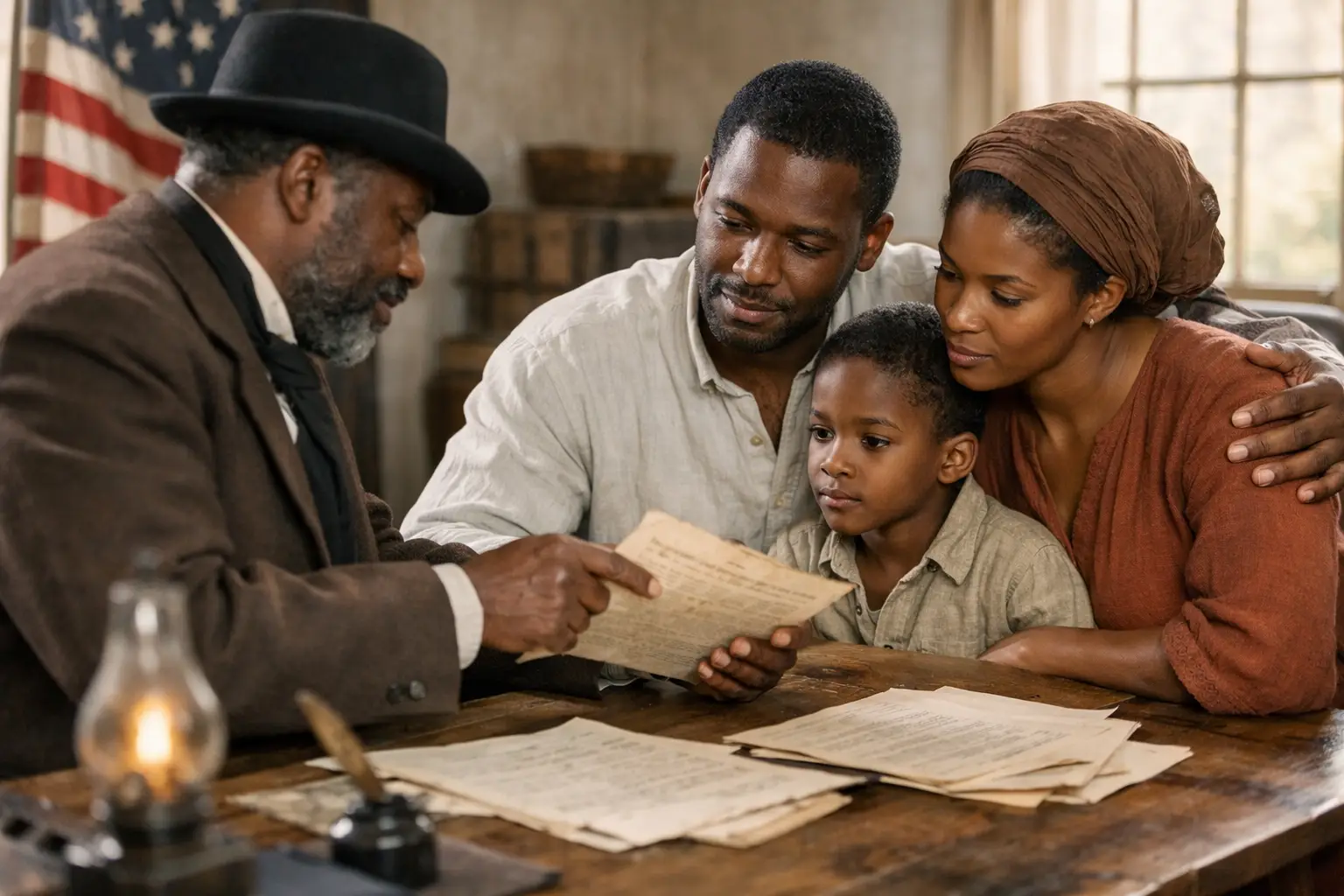
One line on an 1870 census page can change your whole family story. A first name, an age, a birthplace, a county - sometimes that is the first federal record where a formerly enslaved ancestor appears as a free person by name. That is why an 1870 census search matters so much. It is not just about finding a household. It is about finding the first stable point you can trust, then using it to move backward and outward.
For many families, especially African American families, 1870 is where the paper trail finally starts to speak clearly. Before that, the records often become fragmented, indirect, or buried inside labor contracts, probate files, tax rolls, and Freedmen's Bureau records. If your search feels stuck, the problem is usually not effort. It is sequence. You need the right next move.
Why the 1870 census search matters so much
The 1870 Census was the first federal census taken after the Civil War and emancipation. For people tracing formerly enslaved ancestors, it is often the first census where Black family members are named individually in a household. That alone makes it foundational.
But the value goes beyond names. The record can give you an age range to estimate a birth year, a birthplace to narrow earlier searches, an occupation that points to local labor systems, neighbors with the same surname, and a county that becomes your research center. If you are trying to break through the 1870 brick wall, this is rarely a one-record task. It is a county task, a cluster task, and often a surname-change task.
That is where many searches go sideways. People find a possible match, save it, and stop. A better approach is to treat the census entry as a launch point. Once you know where a person was in 1870, you can start checking Freedmen's Bureau field offices, voter registration lists, tax records, plantation papers, and probate records tied to that same place.
How to do an 1870 census search without wasting hours
Start with what your family already knows, even if it sounds incomplete. A grandmother's story about "South Carolina," a middle name passed down, or the memory that someone was a blacksmith can matter more than a guessed birth year from an online tree.
Names in 1870 were not always recorded the way your family uses them now. Enumerators wrote what they heard. Spellings changed. Ages drifted. Surnames were sometimes newly chosen, recently changed, or inconsistently used across records. If your exact search returns nothing, that does not mean your ancestor is missing. It often means the record is hiding behind bad handwriting, phonetic spelling, or indexing errors.
Search broad first, then tighten. Try a first name with a birth range and state. Then test a county if you have one. If the surname is unusual, search with and without it. If the surname is common, the county becomes more important than the name.
Race, birthplace, and neighbors can help confirm identity when the name alone cannot. If you find a household with the right first names and ages but the surname looks wrong, do not dismiss it too quickly. Look at nearby households. Look at occupations. Look at whether the household remains in the same county in 1880. Genealogy is often won through patterns, not perfect matches.
What to look for after you find the record
The first mistake is treating the census page like a finish line. It is a map.
Read the full household carefully. Write down every person, every age, every birthplace, and every occupation. Pay attention to people living next door. In Reconstruction-era records, neighbors were often relatives, former enslavers, in-laws, or migration partners. A widow next door with the same birthplace may matter as much as the person you searched for.
Then compare the 1870 household to 1880. Ten years later, relationships to the head of household were recorded more clearly. That can help you sort children, stepchildren, and extended kin. If a man appears in 1870 with a woman and several children, 1880 may tell you whether that woman was his wife, whether an elderly adult in the home was a parent, or whether a child had a different mother.
Finally, anchor the county. County is often the real answer you need from an 1870 census search. Once you know the county, you can pursue records that were never designed for easy online discovery. That includes local court minutes, marriage records, deed books, tax lists, and federal collections tied to a specific Bureau office or district.
Common reasons an 1870 census search fails
Sometimes the record is there and the search still misses it. Indexes are imperfect. Handwriting can be brutal. A person listed as "Isom" may be indexed as "Lsom." "Bettie" may become "Betsy," "Elizabeth," or something unrecognizable.
Sometimes the family moved right after emancipation. If you are searching only the place where later generations lived, you may be looking one county too late. Migration between 1865 and 1870 was common. People moved for family reunification, labor contracts, safety, and land access.
And sometimes the family name changed in ways that make modern assumptions unreliable. A surname could reflect a former enslaver, a later husband, a chosen postwar identity, or a name used only briefly. That is why rigid exact-match searching tends to fail the families who most need answers.
If you are researching a formerly enslaved ancestor, another hard truth applies. You may need to stop searching just for the person and start searching the whole network around them. That means probable relatives, nearby households, white landowning families in the same district, and local records created in the first five years after the war. The census gives you the first pin on the board.
1870 census search strategies for African American ancestry
For African American family history, the 1870 Census is often the hinge between oral history and archival proof. That makes accuracy more important than speed.
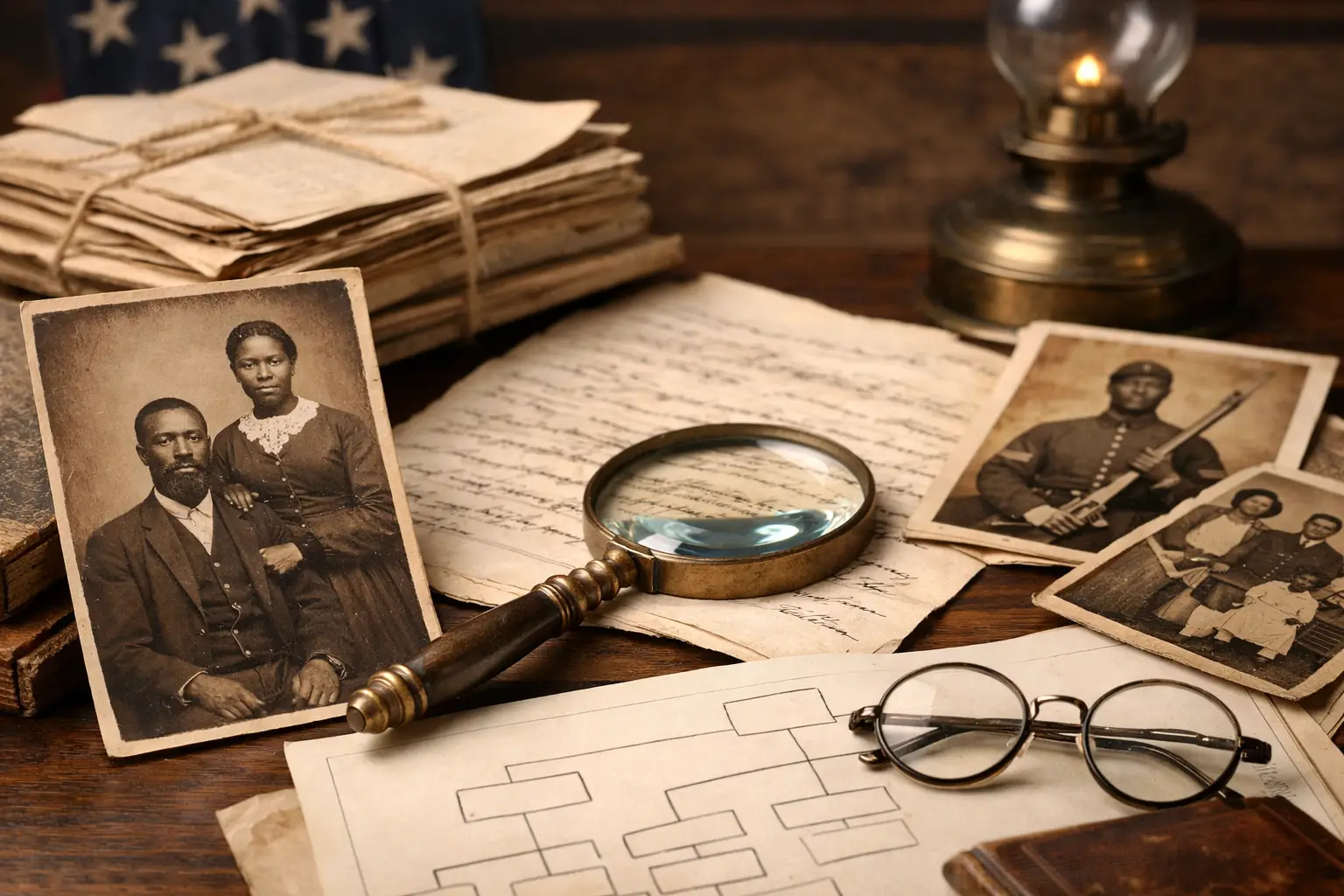
Start by building a small identity profile from the census entry. Include estimated birth year, birthplace, spouse or partner, children, occupation, county, and immediate neighbors. Then ask the next research question: what records were created for Black residents in that exact place between 1865 and 1875?
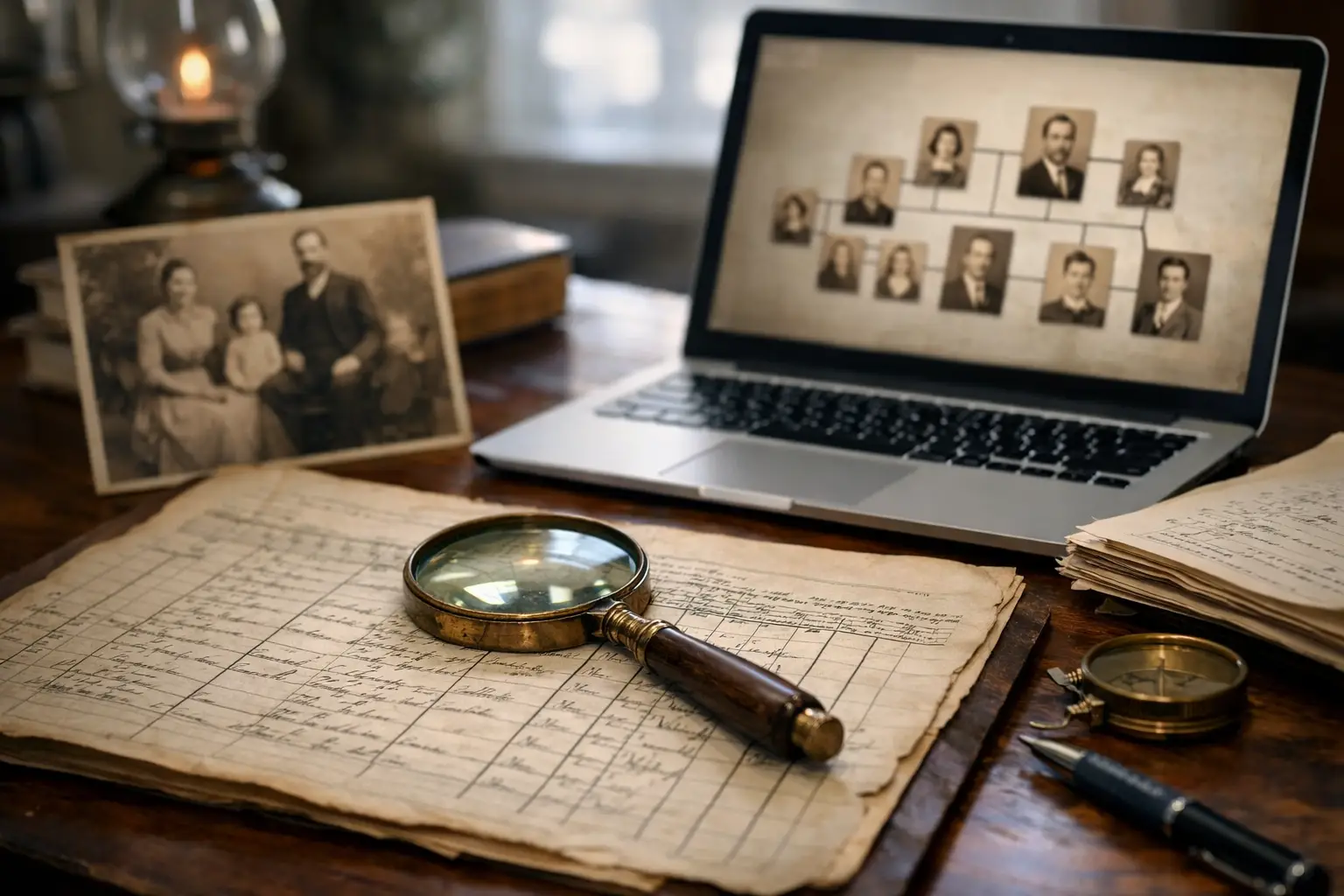
That is where many platforms leave you on your own. They hand you a pile of records and expect you to know which archive matters next. A smarter workflow gives you the county, the record type, and the specific federal source to check next. If DNA is part of your research, it should not stay trapped as a match list. It should point you toward counties, family clusters, and records that can be searched in the archive.
This is also where living relatives still matter. If an older family member remembers a surname variation, a church name, or a story about siblings being separated, that detail may be the bridge between the 1870 household and the pre-1870 records you need. Family interviewing is not extra credit. It is evidence gathering.
When one result is enough - and when it is not
Sometimes a solid 1870 match is enough to move forward. If the name, age, birthplace, spouse, and county all line up, you likely have a reliable anchor. At that point, your next move is not more searching on the same page. It is targeted follow-up in 1880, local marriage records, Bureau records, and county-level archives.
Other times you will find three plausible households and none feels certain. That is normal. In those cases, resist the urge to force certainty too early. Build mini-profiles for each candidate and test them against later records, relatives, and geography. Good genealogy is not about pretending ambiguity does not exist. It is about reducing it with evidence.
The same rule applies to technology. AI can save you hours if it narrows your search and tells you what to do next. It is less useful if it simply produces more guesses. The best tools do not replace judgment. They sharpen it. That is the standard we built for at The 1870 Project: not more record clutter, but the next best action: likely counties to search and the record sets to check.
Your family was here. If the trail starts in 1870, start there with patience, flexibility, and a willingness to follow the county as much as the name. One census line may not tell you everything, but it can tell you where to go next - and that is how brick walls begin to break.