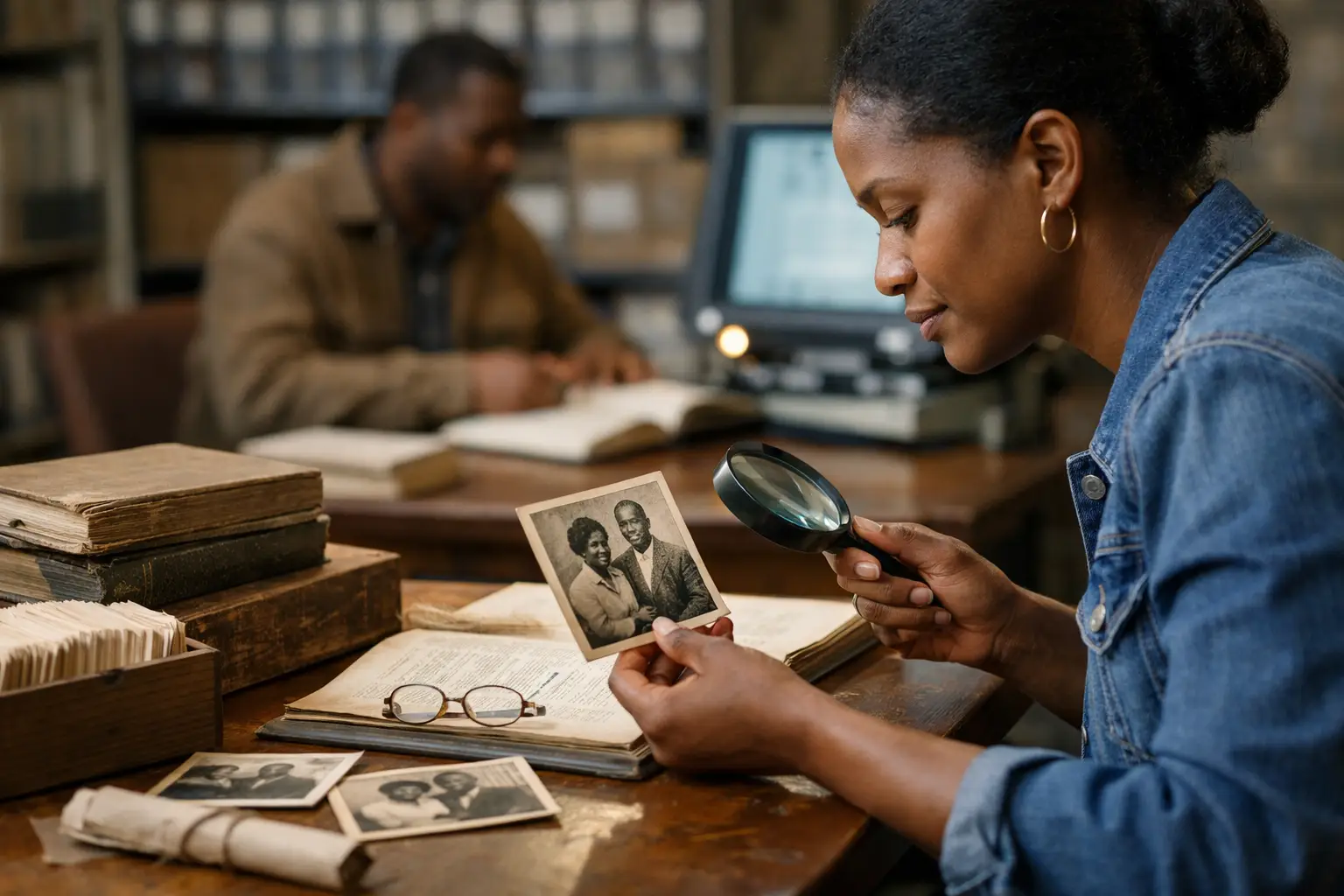
African American Genealogy Success Example
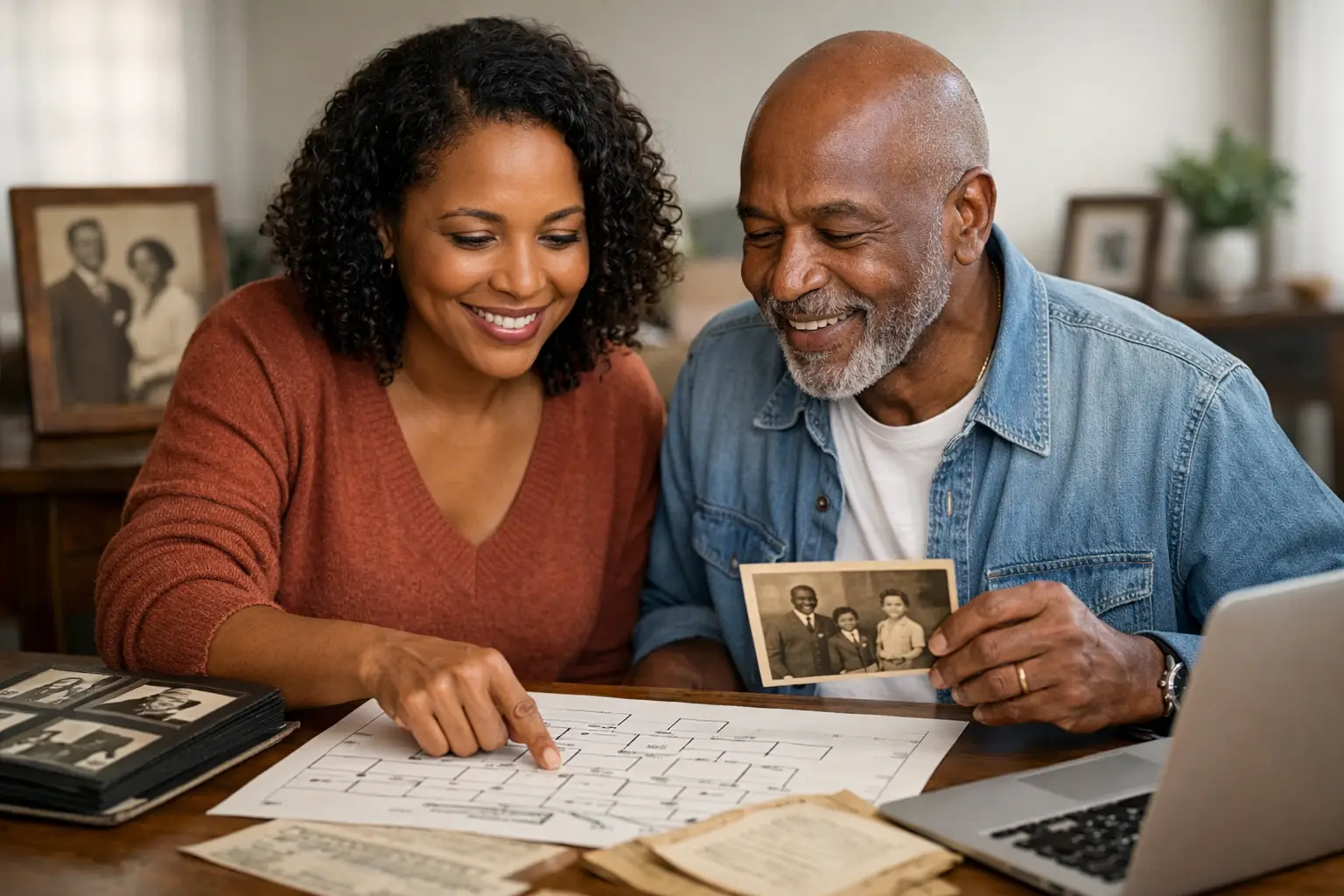
A family story can sit one record away for years. Then one clue - a neighbor’s surname in 1870, a DNA match in the right county, a grandmother’s half-remembered name - changes everything. That is what makes an African American genealogy success example so useful: not because one case solves every family, but because it shows how breakthroughs actually happen when records are thin and the trail before emancipation starts to disappear.
For many Black families, the real challenge is not getting started. It is reaching the point where the paper trail narrows around 1870 and older records stop naming people in ways that are easy to track. Traditional genealogy platforms often respond with more record hints, more leaves, more noise. What people need instead is direction. Which county? Which bureau office? Which probate book? Which DNA match matters first?
One African American genealogy success example that feels familiar
Consider a realistic case based on the kinds of patterns researchers see every day. A woman starts with what many people have: a known great-grandmother named Sarah Johnson, born around 1888 in Mississippi, and a death certificate for Sarah’s son that lists his mother only as Sarah J. No maiden name. No confirmed parents. Family lore says Sarah’s people had once lived on a plantation near Vicksburg, but nobody knows the owner’s name, and every Johnson in the county seems possible.
This is where many searches stall. Johnson is common. Census ages shift. Black families often moved after the Civil War and again in the early 1900s. If you search too broadly, the record set becomes a swamp.
The first useful move is not chasing every Sarah Johnson in Mississippi. It is tightening the frame. In the 1910 and 1920 census, Sarah appears with the same cluster of relatives and near several households with the surname Carter. That matters. Black families often migrated in kin and neighbor groups, and those repeating surnames can be stronger than a shaky age estimate.
By going backward from Sarah through the 1900 census, the researcher finds a Sarah Johnson, born in March 1887, living in Warren County with a probable mother, Eliza, and two younger siblings. Again, Carter households are nearby. That does not prove identity, but it creates a working hypothesis: Sarah likely grew up in Warren County, and the Carter families may connect by blood, marriage, or shared enslavement history.
How the breakthrough usually happens
The next step is where strong African American research separates itself from generic genealogy. Instead of stopping at census records, the researcher shifts to post-Civil War records created in the same place. Freedmen’s Bureau labor contracts, marriage records, voter registrations, and county probate material are all candidates. The trick is knowing where to look first.
In this example, a labor contract from 1866 in Warren County names an Eliza Carter and her children working on land formerly tied to a white landowner named Johnson. That alone does not explain Sarah’s later surname, since Sarah was born after the war. But it does explain why Carter and Johnson families keep appearing together. One generation may have used the surname tied to a former owner, while another retained or alternated with a different family name in the years after emancipation. That kind of surname instability is common, and missing it can derail a search for years.
Now the case starts to move. A Freedmen’s Bureau marriage register shows Eliza Carter marrying Henry Johnson in 1872. Suddenly the puzzle makes sense. Sarah, born later, would naturally appear as Johnson. Her mother’s earlier records could still be under Carter. Without that marriage record, the leap from Carter to Johnson looks like a dead end. With it, the family line becomes trackable.
This is also where DNA can stop being abstract and become practical. A cluster of DNA matches with roots in Warren and Claiborne counties, several descending from Carter lines and one from a white Johnson family, supports the same geographic and surname pattern. DNA does not replace records. It narrows the lane. It tells you which county cluster deserves your next hour, and which surname combination is worth testing in probate and plantation-linked collections.
What makes this a real success, not just a lucky find
A strong African American genealogy success example is never about one magical record. It is about stacking imperfect evidence until the pattern becomes hard to ignore. In this case, the success came from five pieces working together: repeated neighbor surnames in census records, a stable county focus, a postwar labor contract, a Freedmen’s Bureau marriage entry, and DNA matches pointing to the same local network.
That matters because many researchers assume they need a single document that says, in plain language, who enslaved whom and how every generation connects. Sometimes that exists. Often it does not. More often, the truth is reconstructed from location, community, naming patterns, household structure, and federal or county records created in the fragile years right after emancipation.
There is a trade-off here. If you move too fast on circumstantial evidence, you can attach the wrong family. If you demand perfect proof before taking the next step, you may never move at all. Good genealogy lives between those extremes. You form a hypothesis, test it against new records, and keep only what survives scrutiny.
Why the 1870 wall breaks for some families and not others
The 1870 Census is the first federal census to name formerly enslaved African Americans, which is why it matters so much. But the census alone rarely tells the whole story. Success usually comes from treating 1870 as a launch point, not a finish line.
Researchers who break through tend to do three things well. They stay local, they follow clusters, and they use every record type created in the same place and decade. If a family is in Warren County in 1870, the best next clues are often also in Warren County - bureau offices, tax lists, labor contracts, cohabitation records, probate files, and local court materials. Chasing a statewide search before exhausting the county usually creates more confusion than progress.
Cluster research is just as important. Formerly enslaved families often remained near each other, married into familiar lines, witnessed each other’s marriages, and appeared together in labor agreements or on the same land. The people next door are not background. They are evidence.
And then there is DNA. Used badly, it is a pile of matches and centimorgans with no direction. Used well, it can identify hub counties, surname groups, and white collateral lines worth checking in probate, estate, and plantation-linked records. That is often where the pre-1870 trail starts to take shape.
The practical lesson in this African American genealogy success example
If your search feels stuck, the answer is usually not more random searching. It is a more precise next move. Start with the person you know in 1900 or 1910. Pull every nearby household with repeating surnames. Lock the county. Then look for the records created there between 1865 and 1880, especially Freedmen’s Bureau material, marriage records, labor agreements, and probate files connected to white families who appear in the same orbit.
Interview older relatives before you assume the archive has everything. A single remembered nickname, church name, cemetery, or migration route can save weeks. Family memory is not perfect, but neither are records. The strongest work usually comes from letting each correct the other.
If DNA is part of your research, do not ask only, Who is this match? Ask, Where do these matches cluster? Which county repeats? Which surname appears across both Black and white lines? That shift turns DNA from curiosity into a research map.
This is exactly why newer tools are changing the experience for beginners and intermediate researchers. Instead of dumping more records in your lap, they can point you to the next best archive, the likely county, even the federal microfilm series that deserves your attention. The 1870 Project was built around that principle because momentum matters. When a family has been hard to find for generations, you do not need more noise. You need the next smart move.
Your family was here. The records may be fractured, the names may shift, and the path may not be linear. But success often starts the same way - one county, one cluster, one record that finally makes the rest of the story visible. Keep going long enough to let the pattern appear.