How to Search NARA Microfilm Without Wasting Hours
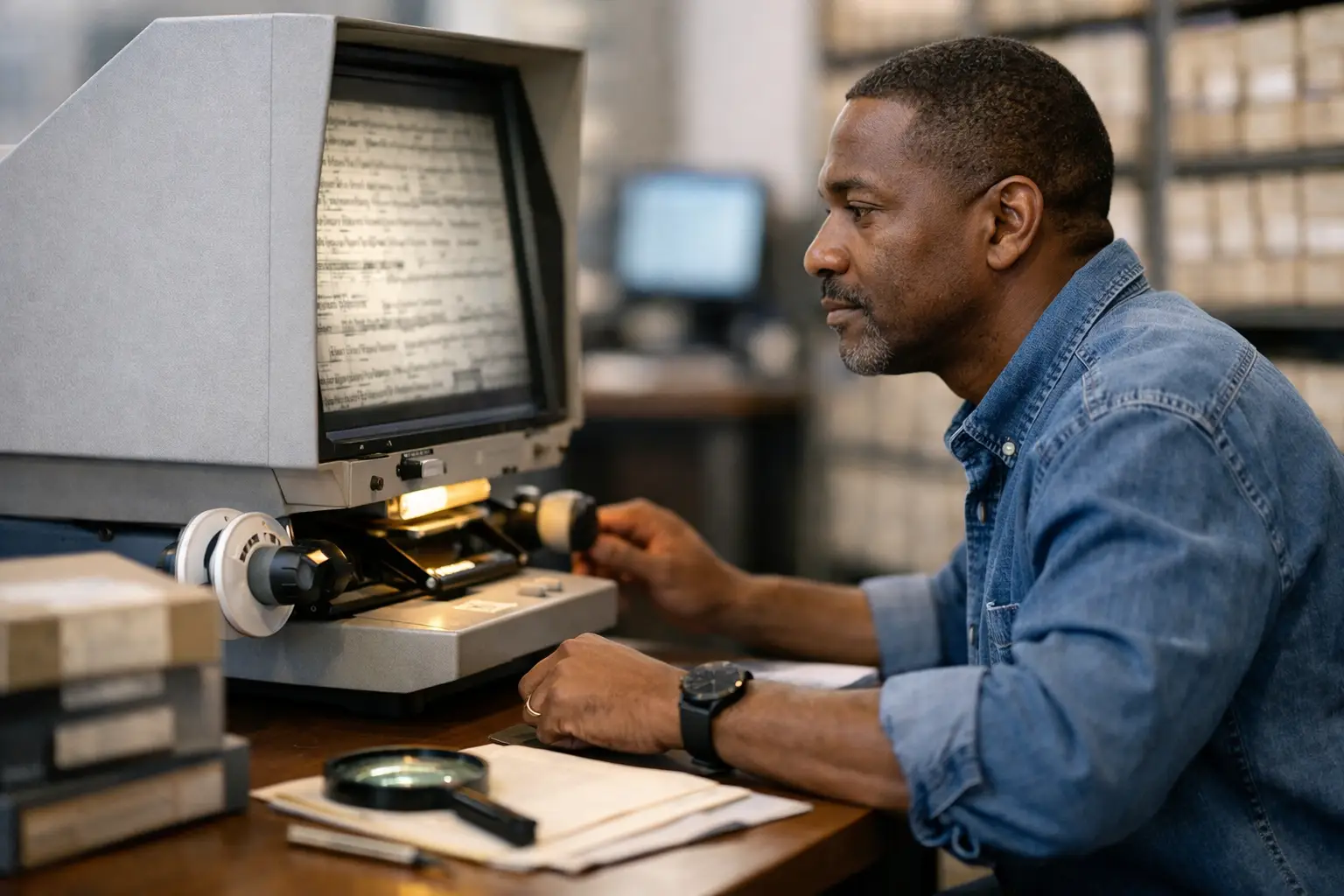
A NARA microfilm search should not begin with a random surname in a giant catalog. It should begin with one answerable question: where was your ancestor, when were they there, and which federal office had a reason to record them? That is how to search NARA microfilm without spending hours opening the wrong rolls, chasing every similar name, or mistaking a catalog entry for the record itself.
For families facing the 1870 brick wall, this matters even more. An ancestor may appear under a new surname after Emancipation, in a different county than expected, or in records created by a military office, labor agent, pension bureau, or federal court rather than a census enumerator. Your family was here. The work is to identify the federal paper trail that can prove it.
Start with a research target, not a surname
Before you open the National Archives Catalog, write a compact research target. Include the ancestor's likely name, an estimated age, a place at the county level if possible, and a date range. Then state what you are trying to learn.
For example: “Identify the parents or former enslaver of Sarah Johnson, born about 1852, living in Lowndes County, Alabama, by 1870.” That is much stronger than “search Sarah Johnson.” It tells you which record groups may matter: 1870 census schedules, Freedmen's Bureau field office records, labor contracts, marriage records, Southern Claims Commission files, or pension applications connected to relatives.
Names are only one search field, and often the least stable one before 1870. Place, age, associates, military service, occupation, and a known child can narrow a search when a name cannot.
Understand what a NARA microfilm number means
A microfilm citation usually has several parts. Each part points to a different level of the archive.
A Record Group identifies the federal agency that created or received the records. A microfilm publication number identifies a specific filmed series, often beginning with a letter such as M or T. A roll number identifies the reel within that publication. The record's title, county, date, and volume or frame may be needed to reach the right image.
Think of it this way: Record Group tells you who made the record. The publication tells you which filing cabinet. The roll tells you which drawer. The page or image tells you where your ancestor may be hiding.
The common mistake is stopping at a publication number. If a research note says “M593,” you have identified the 1870 federal population census microfilm publication, not your ancestor's page. You still need the state, county, township or district, and often the correct roll. A useful citation records all of those details, plus the household page once you find it.
How to search NARA microfilm in the catalog
The National Archives Catalog is best used to identify a record series and understand its coverage. It is not always the fastest place to search every individual name. Many NARA microfilm publications have been digitized elsewhere, while others remain available only through archives, partner sites, or on-site research access.
Begin with the record type and location, then add a name only when the series is likely name-indexed. Searches such as “Freedmen's Bureau Lowndes Alabama,” “Civil War pension Johnson Alabama,” or “1870 census Lowndes County” are usually more productive than a bare-name search.
When you find a promising catalog description, read past the title. Confirm these points:
- the date range covers your ancestor's life
- the geographic coverage includes the right state and county
- the records were created by an office likely to document the event you need
- the description identifies a microfilm publication and roll arrangement
- digital availability and access notes tell you where the images can be viewed
Catalog language can be technical, but it gives you the map. Look for phrases such as “arranged by state and county,” “alphabetical by surname,” “field office,” “register,” or “case file.” These words tell you whether you can move directly to a roll or need an index first.
Search for the office that created the record
If your ancestor lived in a former Confederate state after the Civil War, the local Freedmen's Bureau field office can be more revealing than a national search. Bureau records may contain labor agreements, complaints, school records, hospital registers, rations, apprenticeship matters, marriages, and correspondence. The correct office might be in a nearby city rather than the ancestor's home county, so study county boundaries and transportation routes.
For a Union veteran or widow, pension files can contain family testimony, marriage evidence, birth dates, prior residences, and affidavits from neighbors. For an ancestor who filed a property-loss claim after the war, Southern Claims Commission records can preserve names, relationships, and witness statements that never appear in a census.
The lesson is simple: search the reason a federal agency would have encountered your ancestor. That approach produces better leads than asking one database to solve an entire family line.
Use an index as a pointer, not proof
Indexes are valuable, but they are not the original record. A transcriber may have read a faded surname incorrectly, missed an initial, or indexed a household under the name of a neighbor. This is especially common with handwritten records and with people whose names changed across slavery, marriage, migration, or military service.
When an index points to a roll, verify the image yourself. Read the people above and below the entry. Note witnesses, employers, neighbors, bondsmen, and people with the same birthplace. In genealogy, the people around your ancestor are often the evidence that makes a hard identification credible.
If a roll is unindexed, do not assume it is useless. First learn how the series is arranged. A county-by-county series can be searched efficiently once you know the county and year. An alphabetized register may require only a few minutes. A case-file series may demand an index, a claim number, or a separate finding aid before you touch the reel.
Build a citation before you move on
The fastest researchers are not those who open the most images. They are the ones who can return to a record without starting over.
For each useful image, save the ancestor's name as written, the record title, federal agency or Record Group, microfilm publication number, roll number, location, date, page or image number, and a short note explaining why it belongs to your family. Capture the household or surrounding entries when they provide context.
Also record negative results. If the 1870 census roll for a specific county does not contain the family, write that down. A documented absence can point to a migration, a different spelling, a nearby county, or a record taken under another household head. It prevents you from repeating the same search six months later.
Turn one microfilm find into the next search
A good microfilm record rarely ends the search. It creates a new, more precise question.
A 1870 census household may reveal a birthplace that directs you to a prior county. A Freedmen's Bureau labor contract may name a plantation, employer, spouse, or child. A pension affidavit may identify a marriage location and the couple's earlier surname. Pull every detail that can become a new search term, then follow the strongest one first.
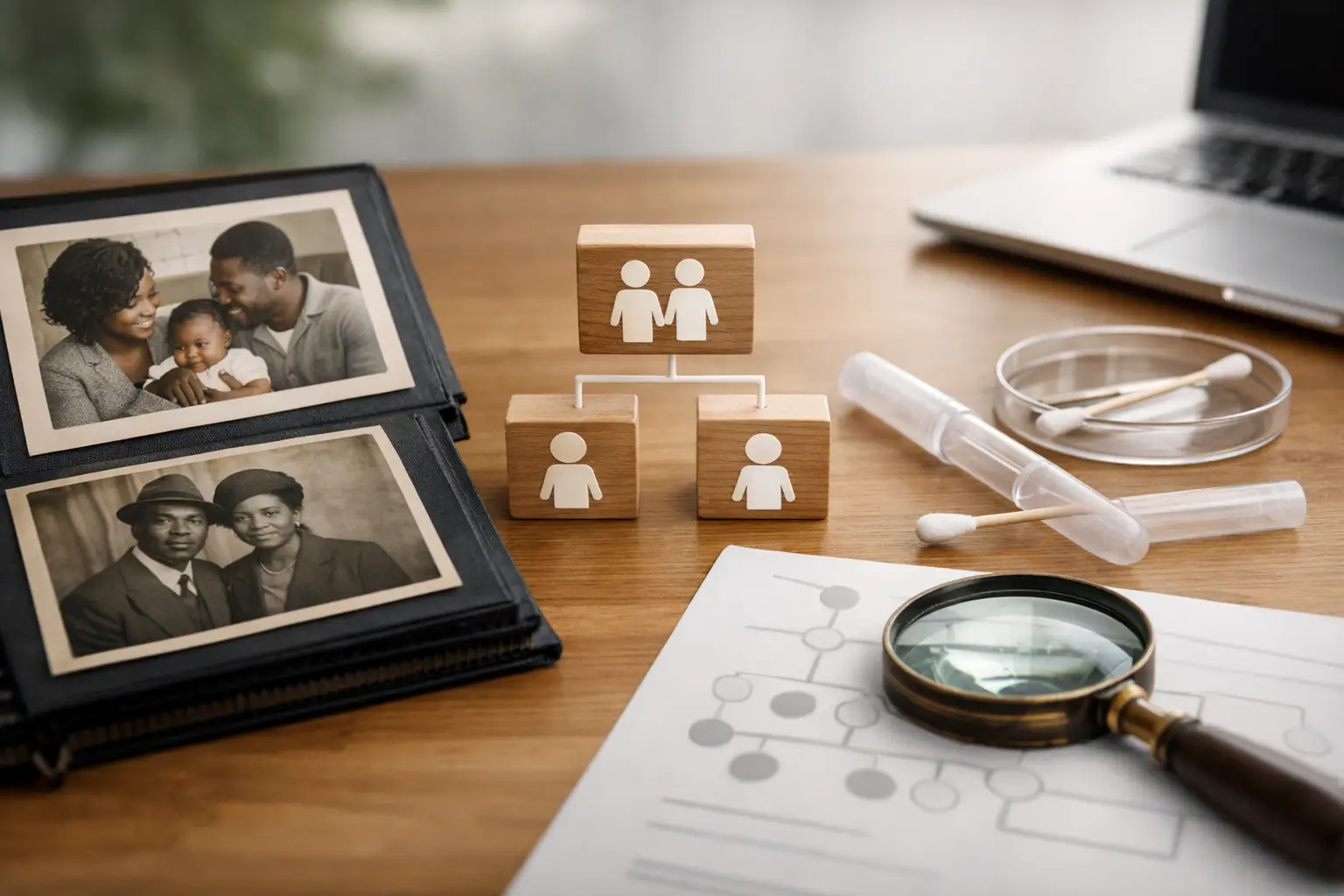
This is where DNA can help when documents alone go quiet. Shared matches clustered around one county or surname can strengthen a geographic hypothesis, then direct you back to the federal records created there. The 1870 Project's DNA Decoder is built for that handoff: it translates match patterns into concrete archival directions, including likely counties and, where it applies, the state's Freedmen's Bureau microfilm number, rather than leaving you with a confusing match list.
Know when microfilm is not the next best move
NARA does not hold every record your family needs. A birth, marriage, deed, probate file, church register, plantation account book, county court record, or state census may sit in a state archive, county courthouse, historical society, or local library. Federal microfilm can identify the place and people that make those local records searchable.
It also depends on your goal. If you need to prove parentage, a census may be only a clue. If you need to establish a military pension claim, an affidavit or service record may carry more weight. Do not force every question through census rolls just because they are familiar.
The best next search is the one that can change what you know. Start with a place, a time, and a record-creating agency. Get the publication and roll, verify the image, and let the names around your ancestor show you where to look next. Every correctly identified reel turns a family story from possibility into evidence.