Ancestor Portraits That Feel Like Family
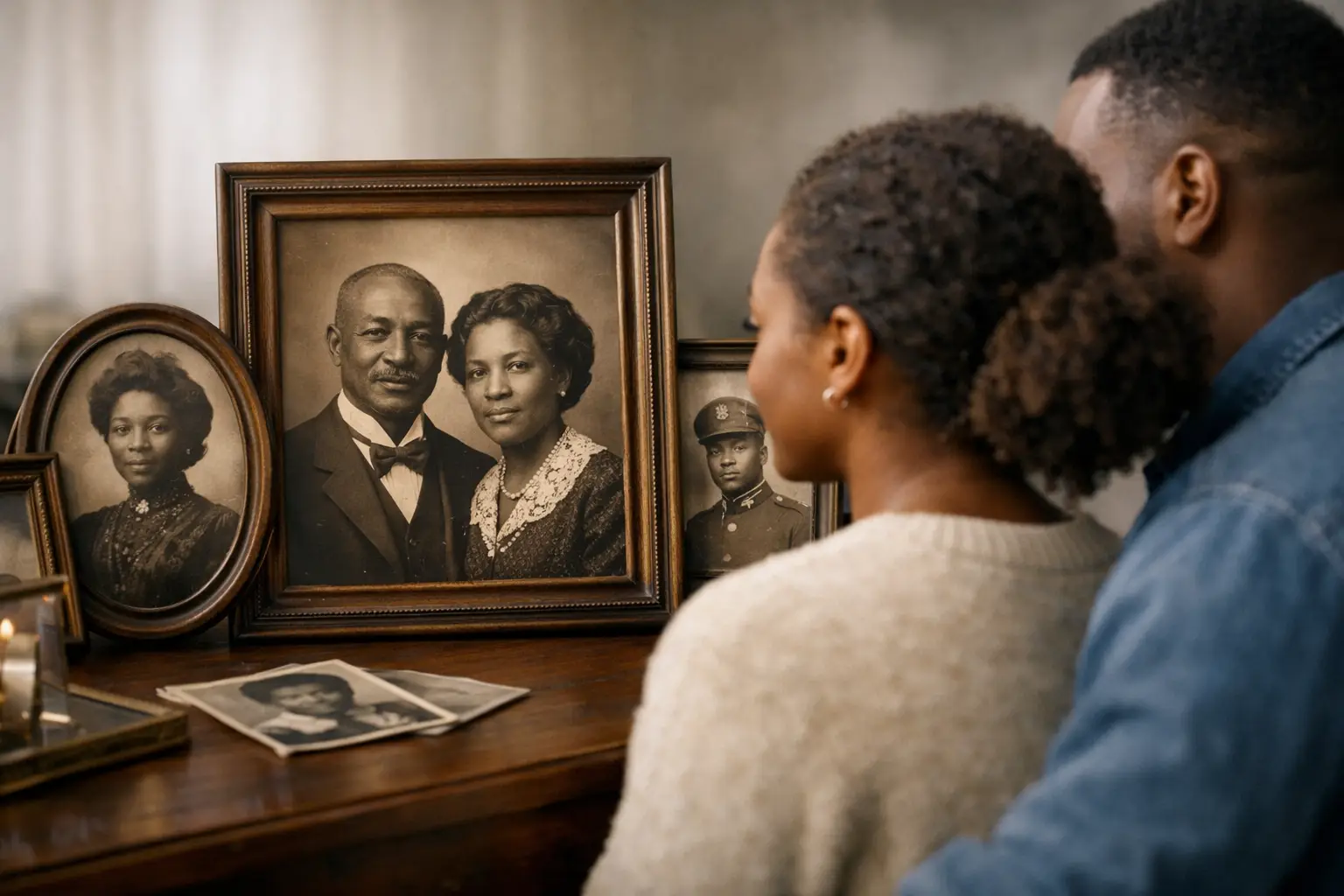
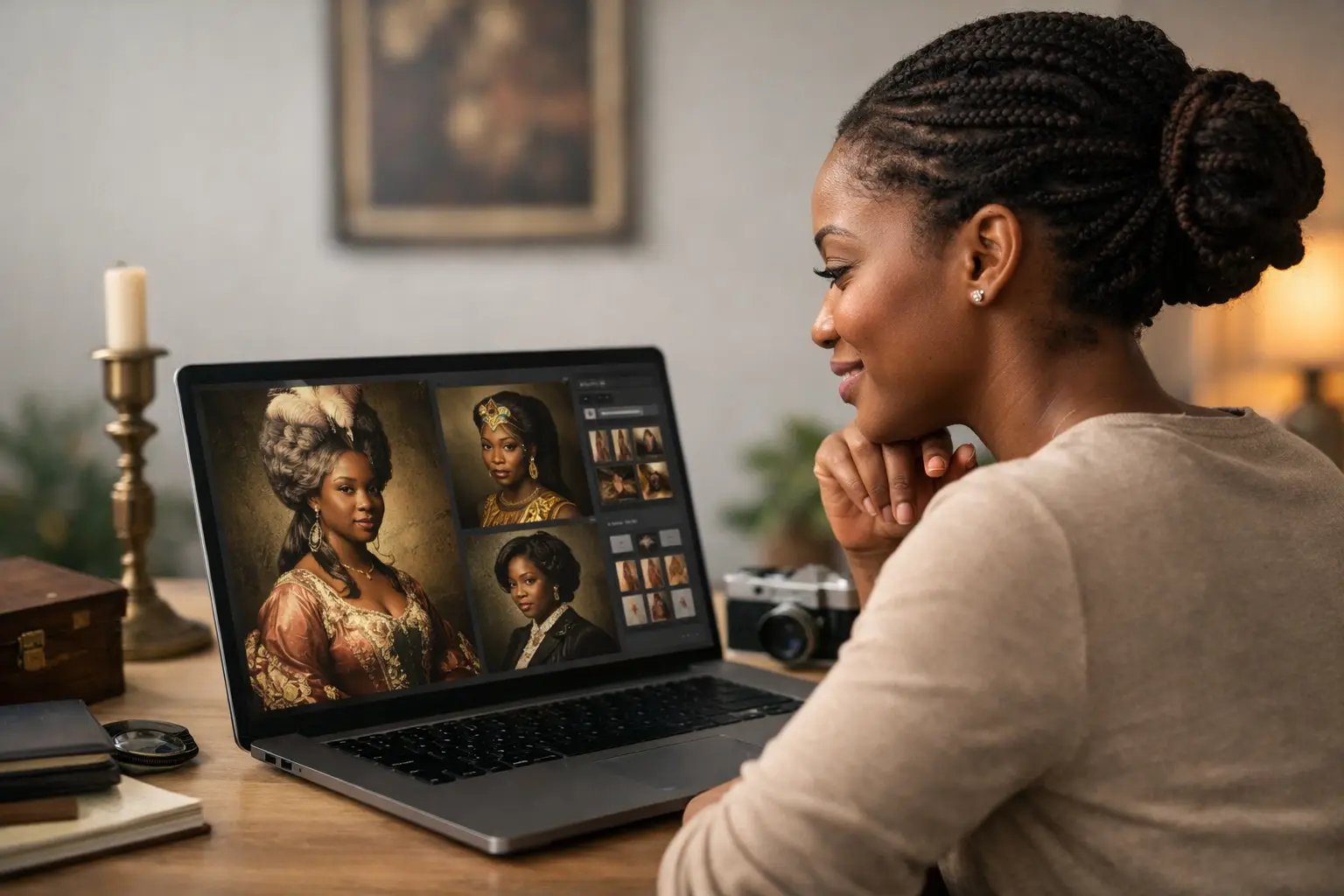
A census line can tell you your great-great-grandmother was 32, living in Warren County, and keeping house with four children. It cannot show you the set of her jaw, the kind of dress she may have worn on a Sunday, or the expression her daughter might have recognized instantly. That is why ancestor portraits matter. Done well, they do not replace research. They give it a face.
For many families, especially those tracing African American ancestry through the 1870 brick wall, that face carries real weight. Records can be fragmented, names can shift, and pre-1870 documentation can thin out fast. When a family has spent years looking at ledgers, schedules, and index cards, seeing an ancestor represented as a full human being can feel less like decoration and more like recovery.
What ancestor portraits are really for
The strongest ancestor portraits are not fantasy pieces. They are visual interpretations built from evidence, time period, geography, family structure, and material culture. That distinction matters.
A good portrait can help a family connect emotionally to someone they have only known as a name on a chart. It can also prompt better questions. Was he old enough to have served in a US Colored Troops regiment? Would she likely have worn a headwrap, a bonnet, or neither in that county and decade? Did a blacksmith in Reconstruction-era Georgia present himself differently from a farmer in coastal South Carolina? Once you start asking those questions, the portrait is doing useful work.
That said, ancestor portraits have limits. If no photograph exists, no generated image can claim to show exactly what your ancestor looked like. Hair texture, skin tone variation, clothing quality, jewelry, tools, and posture all require interpretation. The honest goal is not certainty. It is historically grounded plausibility.
The difference between moving and misleading
This is where many genealogy visuals go wrong. They become polished too quickly. A generic "vintage" face gets attached to a specific ancestor, and the family walks away with something attractive but inaccurate.
The better approach is slower and more disciplined. Start with the evidence you actually have. Age, birthplace, county, census year, household members, occupation, military records, church affiliation, migration route, and any surviving oral history all matter. Even one detail can change the image. A woman listed with domestic work in an urban household may have dressed differently from a woman farming with family in a rural setting. A man in a border state in 1870 may reflect different military or labor influences than one in Mississippi or Virginia.
For descendants of formerly enslaved people, the stakes are even higher. Too many public depictions flatten Black ancestors into broad historical stereotypes. A meaningful portrait should resist that. It should be built from local context, post-Emancipation realities, family evidence, and dignity. Your people were not background figures in history. They were workers, parents, veterans, church members, land buyers, widows, craftsmen, teachers, and survivors.
How to build ancestor portraits from evidence
The process works best when the portrait comes after at least a first round of research, not before it. You do not need a full life story, but you do need enough context to avoid guessing blindly.
Start with the records that place them in time and place
Begin with the simplest anchors. Find the person in the 1870 and 1880 censuses if possible, then work outward. Look at county, age range, household composition, occupation, and nearby families. If your ancestor disappears before 1870, Freedmen's Bureau records, Freedman's Bank records, labor contracts, marriage records, probate files, tax rolls, and military service files may provide the missing context.
This is where precision beats volume. Ten irrelevant hints do less for a portrait than one confirmed county and one probable occupation. Place shapes appearance. Climate, labor, class, religion, and local textile availability all affect how someone likely presented themselves.
Use family memory carefully
Relatives often preserve details no archive can. "She always wore her hair pinned up." "He was light-skinned with gray eyes." "Our people were very formal in church clothes." Those memories are valuable, but they should be handled as clues, not automatic facts.
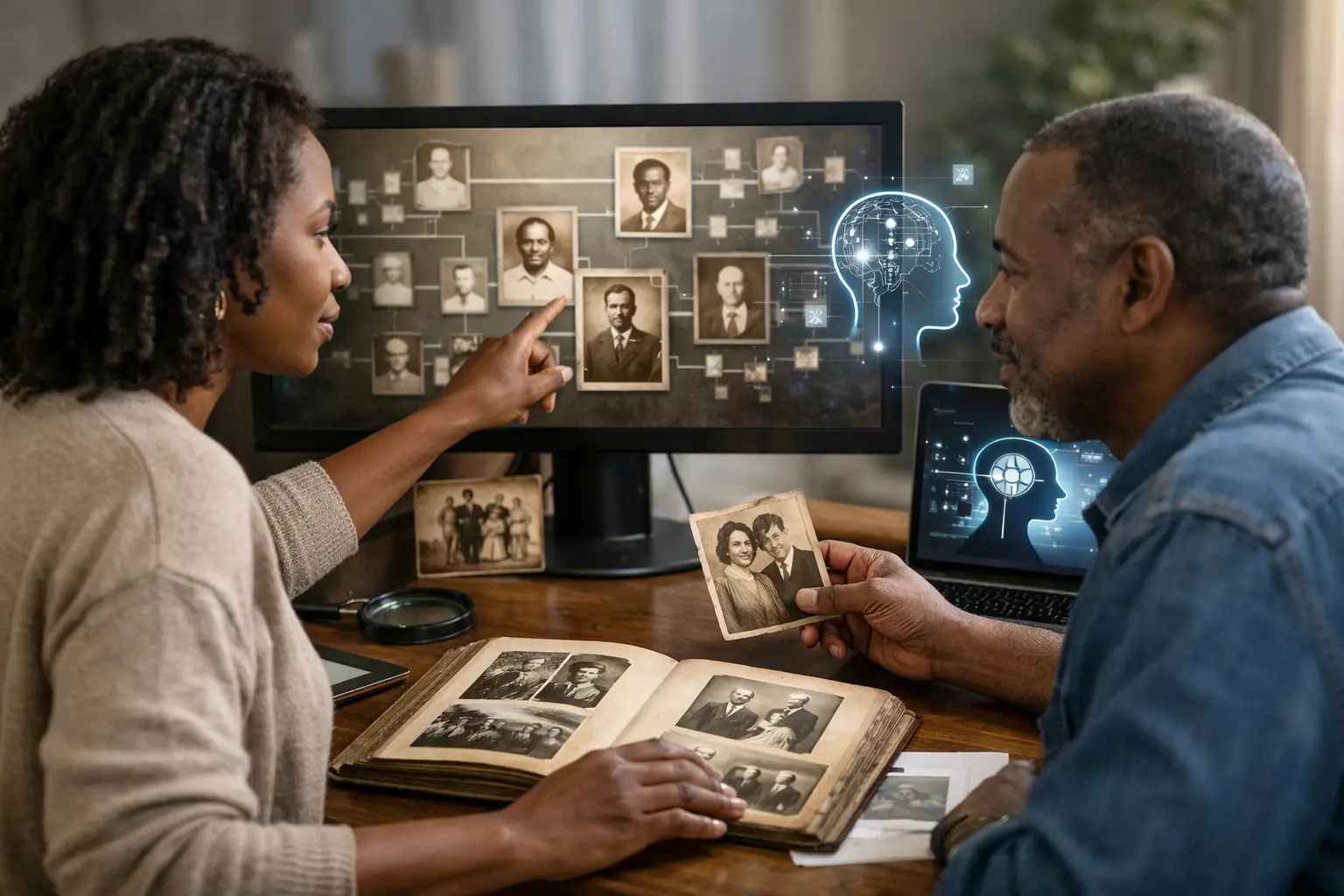
Interviewing older relatives can sharpen a portrait dramatically, especially when they describe inherited features, dress customs, or stories tied to a place. The trick is to separate what was directly remembered from what was repeated over generations. Both matter, but they are not the same kind of evidence.
Let historical context fill gaps, not override facts
Once you know where and when your ancestor lived, you can make informed visual choices. A portrait of a woman in 1872 Louisiana should not borrow details from 1890s Chicago just because the clothing looks elegant. A farmer in Tennessee should not appear in a studio-perfect suit unless you have reason to think that setting fits.
Historical grounding includes more than clothing. It includes posture, tools, domestic interiors, hairstyles, and signs of labor. Hands matter. Shoes matter. The difference between a studio portrait look and an everyday life portrait can change the emotional truth of the image.
Why ancestor portraits hit so hard for family researchers
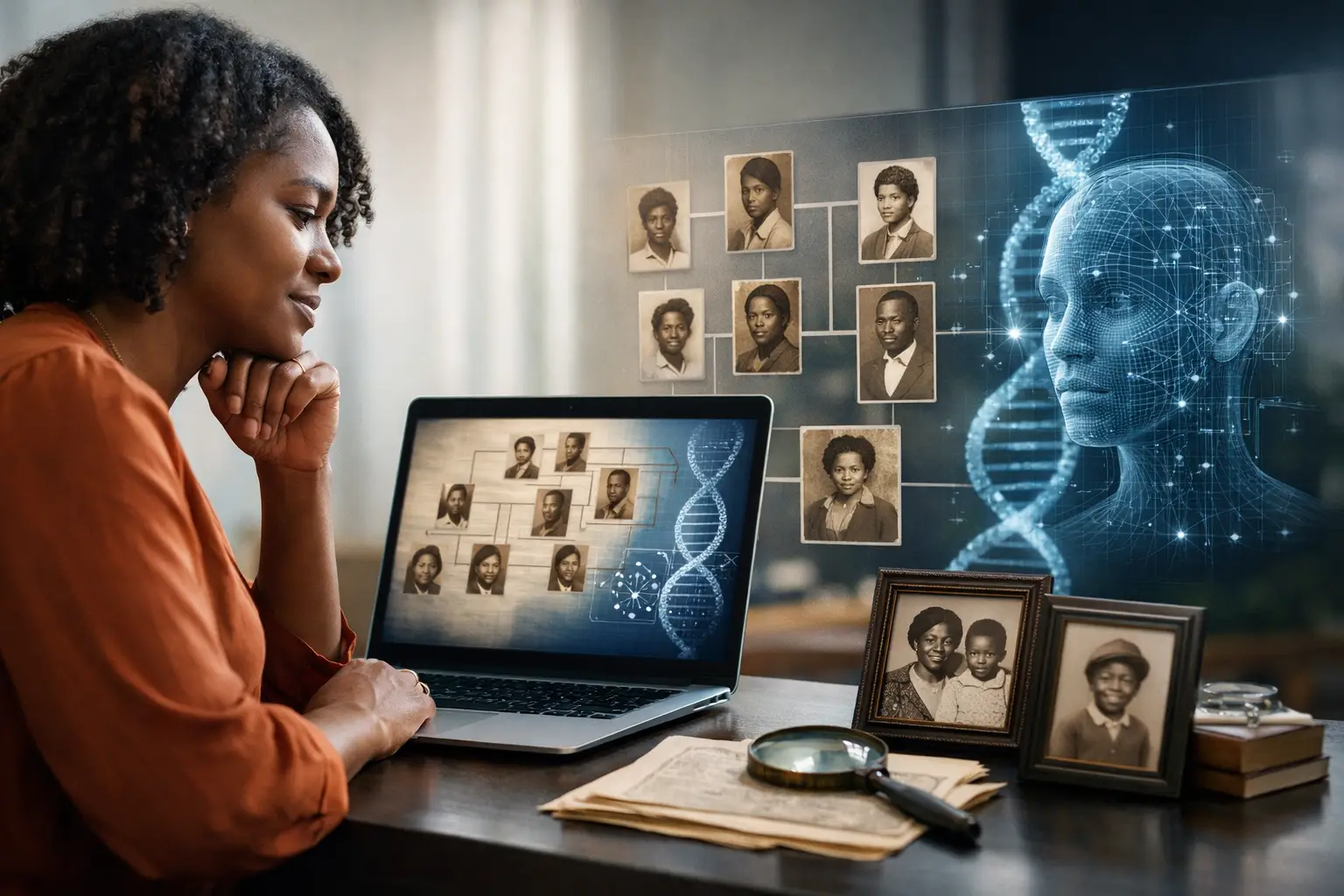
Genealogy is often treated as a document problem. In reality, it is also an identity problem. People are trying to answer who their family was, what they survived, and how they moved through a country that often failed to record them fairly.
That is especially true for African American researchers facing the record rupture around 1870. One year your ancestor appears by name. The years before that may push you into plantation records, military claims, labor contracts, estate divisions, or county court records that were never built to preserve personhood. When a portrait is created from careful research, it can restore some of that stolen visibility.
It also helps younger family members care. A child may not sit still for a lecture about Reconstruction-era migration patterns. They will look at a portrait and ask, "Who is that?" That question opens the door to everything else.
Ancestor portraits and the research workflow
The smartest use of ancestor portraits is not at the end of the process as a sentimental add-on. It is inside the workflow.
A portrait can help you test assumptions. If the visual brief says your ancestor was in rural Alabama in 1870, but your records actually place him in a growing port city by 1872, you may catch a mismatch in occupation, clothing, or setting. The act of building the image can expose weak spots in the tree.
It can also bring focus to what you still need. If you cannot decide whether an older man should appear as a veteran, that may point you toward pension files or service records. If you do not know whether a household had modest property or lived as tenant farmers, tax and land records become more urgent.
Used this way, ancestor portraits are not fluff. They are a pressure test for your evidence.
What to look for in a good portrait tool or service
Accuracy starts with inputs. If a system asks only for a name and a date, expect a generic result. A stronger process uses location, era, family context, and social history to shape the image. It should also make room for uncertainty instead of pretending every detail is confirmed.
Privacy matters too. Family historians are often handling sensitive names, living-relative stories, DNA clues, and difficult histories. Any tool that touches your family data should treat it with care and make the boundaries clear.
And speed matters, but not more than specificity. The right platform does not just hand you a pretty face. It helps you anchor that face in records, counties, archives, and the next research action. That is where a tool like The 1870 Project fits naturally - not as entertainment, but as part of a more exact family recovery process.
A better way to think about ancestor portraits
If you expect a portrait to deliver certainty, you will ask too much of it. If you treat it as evidence-based remembrance, it becomes far more useful.
The point is not to manufacture a past that feels convenient. The point is to stand close enough to the records, the oral history, and the historical setting that your ancestor can re-enter the family story as a person instead of a placeholder. Sometimes that means a portrait that looks refined. Sometimes it means one marked by labor, scarcity, or displacement. Both can be honorable. Both can be true to the life your family actually lived.
Your family was here. Their image may not have survived, and the paper trail may be broken in all the places that matter most. Even so, with careful research and grounded interpretation, an ancestor portrait can do something powerful. It can help the next generation see that these were not abstract names lost to history. They were your people, and they still deserve to be recognized.