Archival Search for Genealogy That Finds More
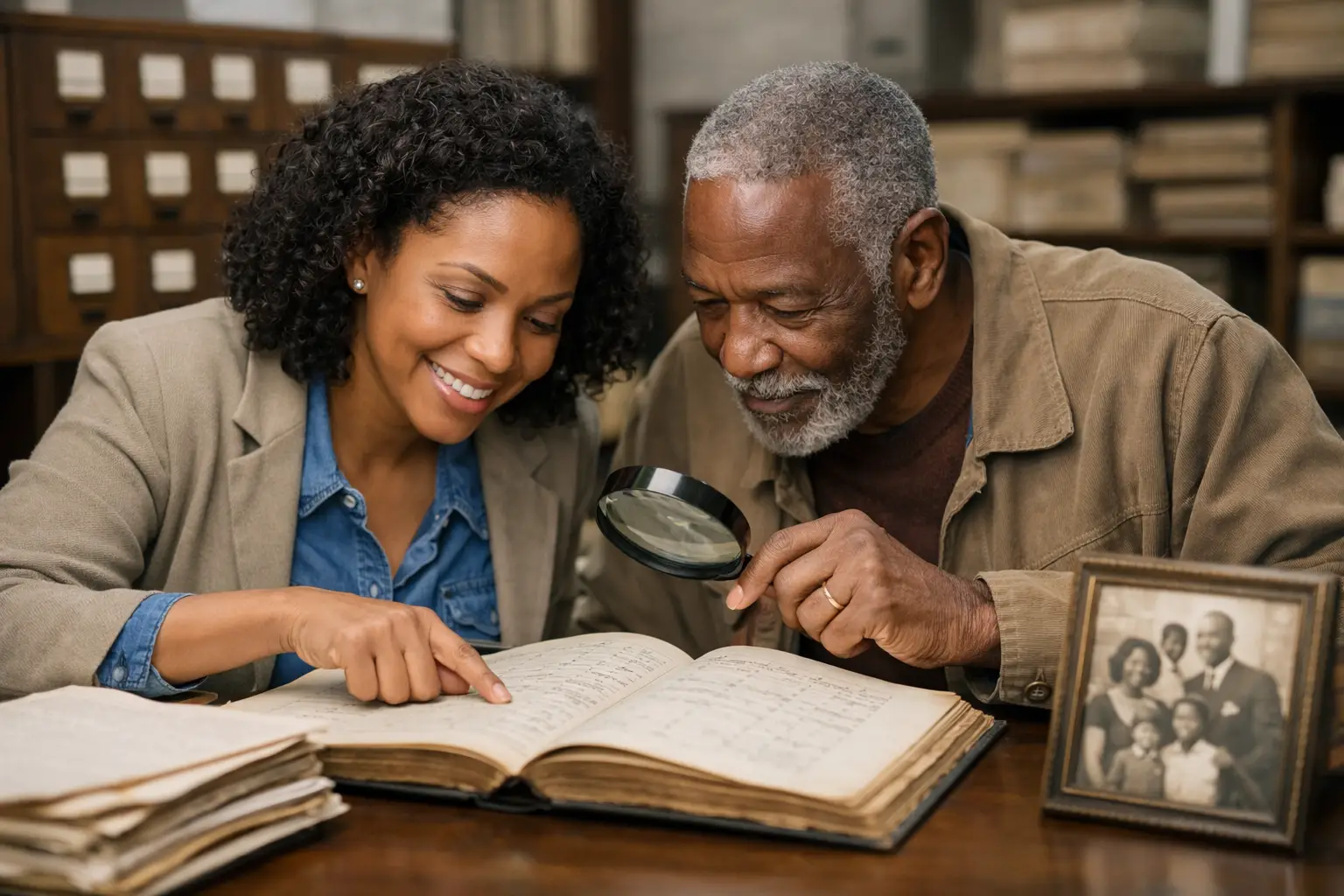
A family name in a search bar can only take you so far. Real archival search for genealogy starts when you stop asking, “Do they show up?” and start asking, “Which office created the record, in which county, during which years, and why?” That shift is where stalled family history starts moving again.
For many researchers, especially those tracing African American ancestry through the 1860s and 1870s, the problem is not a lack of records. It is a lack of direction. Census indexes are useful, but they flatten the work. Archives are different. They preserve the paper trail created by people living actual lives - labor contracts, bank records, marriage returns, military service files, probate packets, tax rolls, plantation records, court minutes, church registers, and local government documents that never show up in a broad commercial search the way you need them to.
What archival search for genealogy really means
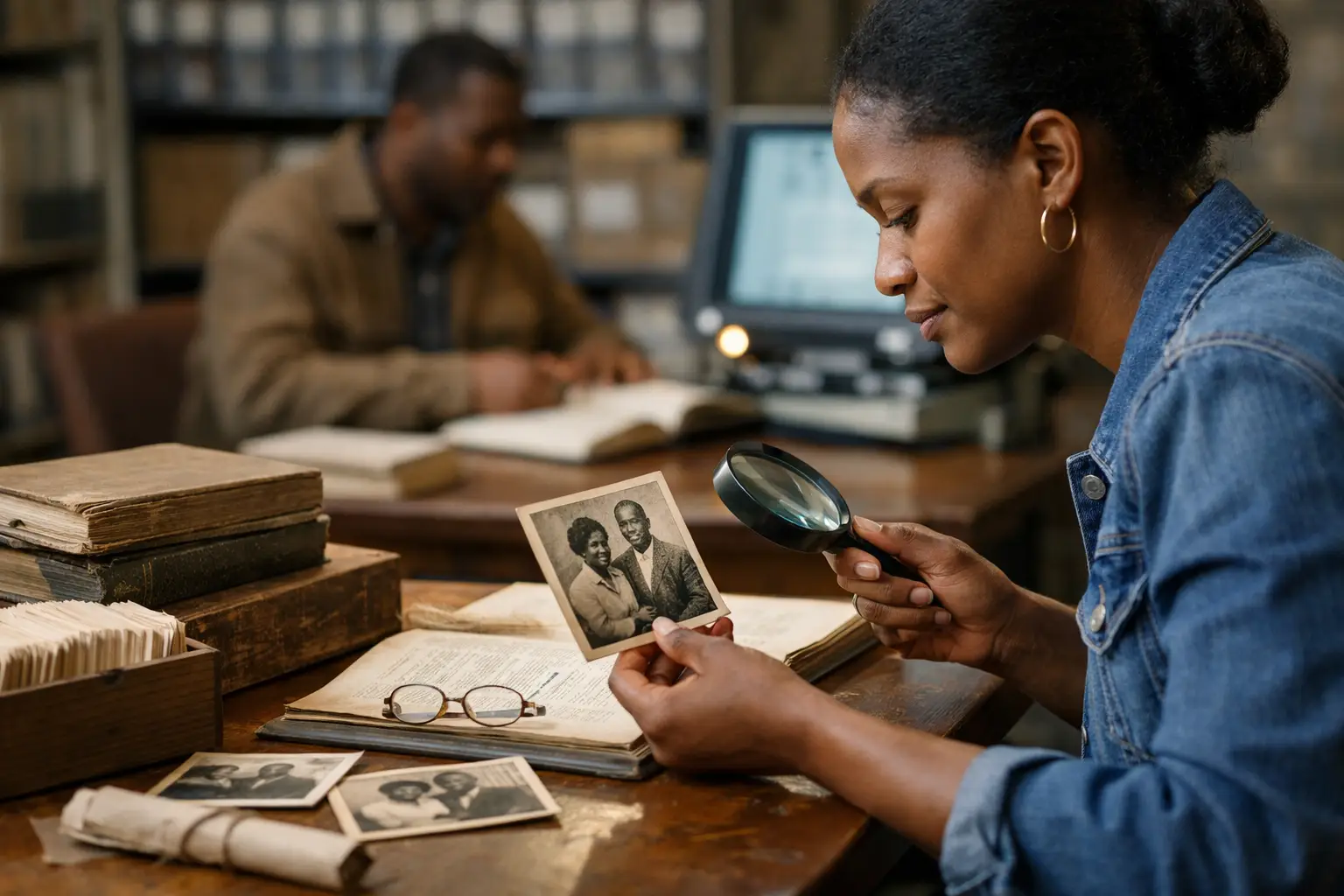
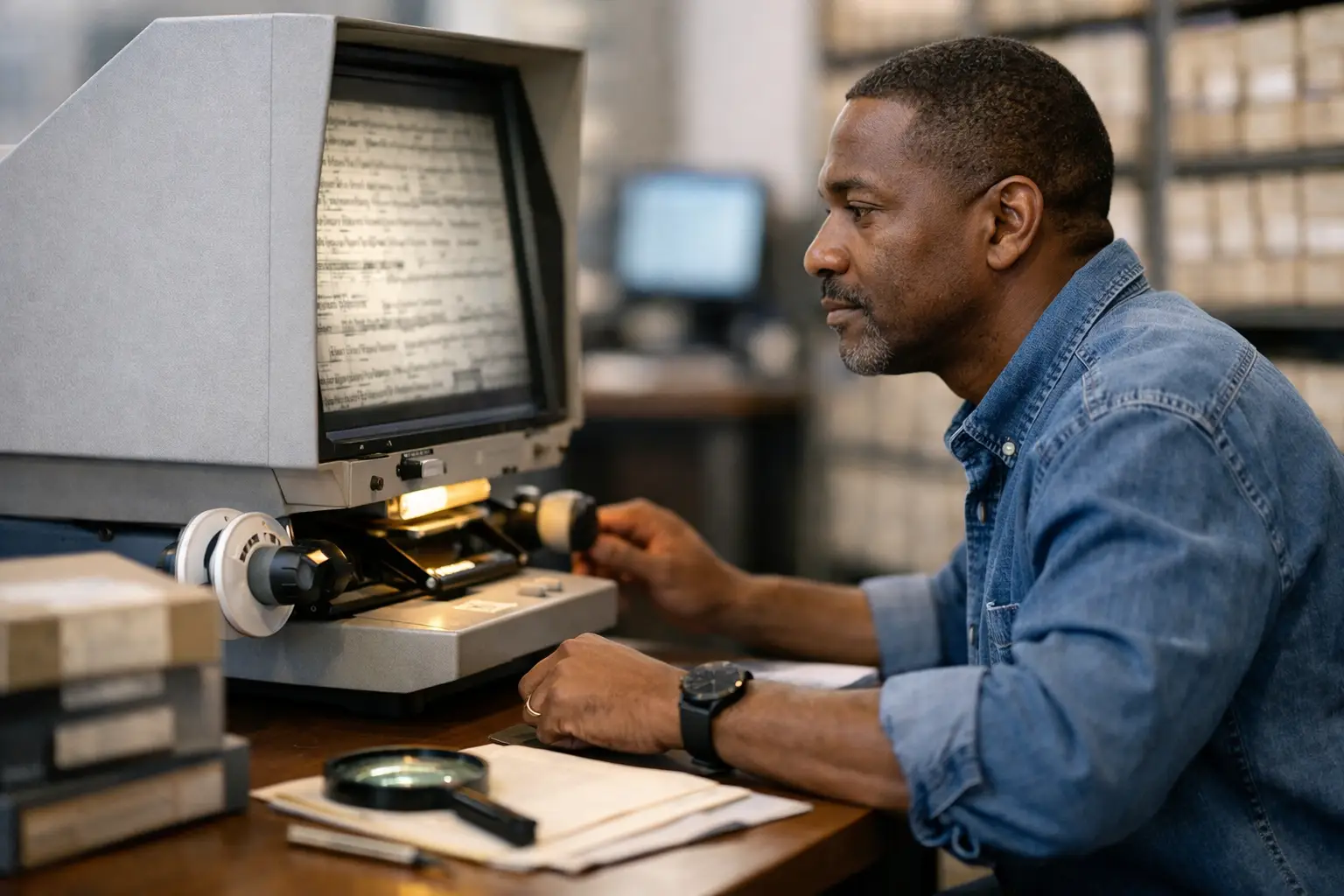
Archival research is not just “searching more databases.” It means tracing your ancestor through the records generated by governments, churches, employers, courts, schools, and aid agencies. Those records often live in state archives, county courthouses, university special collections, the National Archives, and local historical repositories. Some are digitized. Many are not. Some are indexed badly. Others are not indexed at all.
That is why archival search for genealogy requires a different mindset than casual family tree building. You are not hoping a platform guesses correctly. You are narrowing a person to a place, a date range, and a record-creating institution. Once you know those three things, your odds improve fast.
This matters most when your family line hits a records barrier. For descendants of formerly enslaved people, the 1870 Census is often the first full federal census where an ancestor appears by name. Before that, you may need to work sideways through Freedmen’s Bureau labor records, Freedman’s Bank files, US Colored Troops service records, county court materials, plantation papers, cohabitation records, and probate files connected to enslavers and neighboring households. The archive is where those connections live.
Why broad searches fail when archives succeed
A typical genealogy site is built to return matches. An archive is built to preserve context. That distinction changes everything.
If you search for a common name like Mary Johnson or William Brown across massive databases, you will get volume, not clarity. The archive asks better questions. Which Mary Johnson was in Lowndes County, Alabama, between 1866 and 1874? Was she associated with a Freedmen’s Bureau field office? Did she marry under a new surname after emancipation? Did she appear in a labor contract, a bank application, or a county court dispute? Suddenly the search is not broad. It is precise.
There is a trade-off here. Archival work can be slower at the beginning because it asks you to build a case, not collect hints. But that slower start often saves weeks of wasted clicking. A targeted county-level search beats a thousand-name index every time when the record trail is thin.
Start with place before you start with paper
Most research stalls because people search for a person before they confirm the place. In archival work, place comes first.
Begin with the last solid record you trust. That may be the 1900 Census, a death certificate, a draft card, or an obituary. From there, work backward and pin the family to a county, not just a state. Counties determine courthouses, tax offices, probate jurisdictions, marriage books, deed records, and many post-war records that matter for identity reconstruction.
If your ancestor moved, do not assume the county stayed the same. County lines changed. Families crossed state borders for work, marriage, land, and safety. Some records were filed in the county where an event occurred, not where the family lived. A good archival search follows those practical realities.
For African American genealogy, this is where many breakthroughs happen. Once you identify a likely county in 1870, you can start checking nearby plantations, Bureau offices, Black churches, labor contracts, and probate estates tied to local white families with matching surnames or close proximity in the census. Your family was somewhere specific. The records were created somewhere specific too.
Build an archive-first search plan
The strongest genealogy researchers do not jump from record to record randomly. They build a sequence.
Start with federal census records and any state census substitutes available. Add vital records if the state kept them early enough. Then move into county records such as marriage books, deeds, probate files, tax rolls, and court minutes. After that, layer in federal collections like military pensions, service records, homestead applications, and Reconstruction-era sources.
For post-Civil War African American research, Freedmen’s Bureau and Freedman’s Bank records deserve special attention, but they are not magic by themselves. Their value depends on whether they point you to a residence, family group, former enslaver, employer, regiment, or county office. A single bank register entry can reveal parents, siblings, spouse, children, birthplace, and migration patterns. A labor contract can place a whole family on a plantation in a specific month. That is archival gold because it creates a timeline.
The best plan is not the biggest one. It is the one that tells you the next best search action.
How to read archival records like evidence
A record is not an answer. It is a clue with a source, purpose, and bias.
Census data can be wrong because the enumerator guessed, the neighbor answered, or the family avoided disclosure. Death certificates may contain secondhand information. Probate packets can be rich, but they may privilege property over kinship. Freedmen’s Bureau records are invaluable, but they reflect the administrative logic of federal officers, not the full lives of the people they documented.
That does not make these records weak. It means you should read them in combination. If an age varies across three records, compare the timeline. If a surname changes, ask whether it changed after emancipation, remarriage, migration, or military service. If a person disappears, do not assume death first. Consider county boundary changes, prison records, labor migration, domestic service, or informal name variants.
This is where beginners often need the most help. Not more record images. Better interpretation.
DNA can sharpen archival search for genealogy
DNA is often treated like a separate lane from paper records. That is a mistake. Used well, DNA narrows archival possibilities.
A cluster of matches concentrated in one county can point you toward the right courthouse, church network, or plantation region before you know the exact relationship. Shared matches across two neighboring counties may explain why your ancestor seems to vanish in one place and appear in another. A likely connection to a specific white family can redirect your archival work into probate, deed, and estate records that would otherwise look irrelevant.
The key is translation. Most people do not need more centimorgan charts. They need to know what those matches mean for the next archive search. That is the difference between being overwhelmed and making progress. Tools such as The 1870 Project are built around that exact problem - turning DNA clues into concrete archival directions, including likely counties and the federal record sets to check.
Common mistakes that waste time
The biggest mistake is treating archives like giant keyword buckets. Many record groups were never designed for name-first searching. They were organized by county, office, military unit, plantation, field office, date, or case number.
Another common mistake is skipping local records because federal records feel easier to access. But county probate, deed, tax, and court materials often carry the identity evidence that national indexes miss.
Researchers also lose time by searching one spelling only. Names shifted constantly. So did ages, birthplaces, and racial designations. Search wide, but think narrow. Keep the geography and timeline tight even when the name varies.
Finally, do not confuse a missing index entry with a missing record. Indexes fail all the time. Handwriting was hard. Clerks were inconsistent. Metadata is often incomplete. Sometimes the answer is in the image set, the unindexed volume, or the neighboring county.
What progress actually looks like
A successful archival search is not always a dramatic reveal on the first try. Sometimes progress is smaller and more powerful than that. You identify the county where a family likely lived in 1867. You find a labor contract that places three siblings together. You spot a probate estate that connects a surname to a plantation owner. You locate a military file that names a wife and child. Piece by piece, a line that looked broken starts to hold.
That is how genealogy becomes real. Not because a platform flooded you with hints, but because the record trail began to make sense.
If your family history has gone quiet around 1870, or any other hard boundary, do not assume the trail is gone. It may simply be waiting in the right county book, the right field office roll, the right courthouse packet, or the right archive box. Your family was here. The job is to search where their lives actually left a mark.