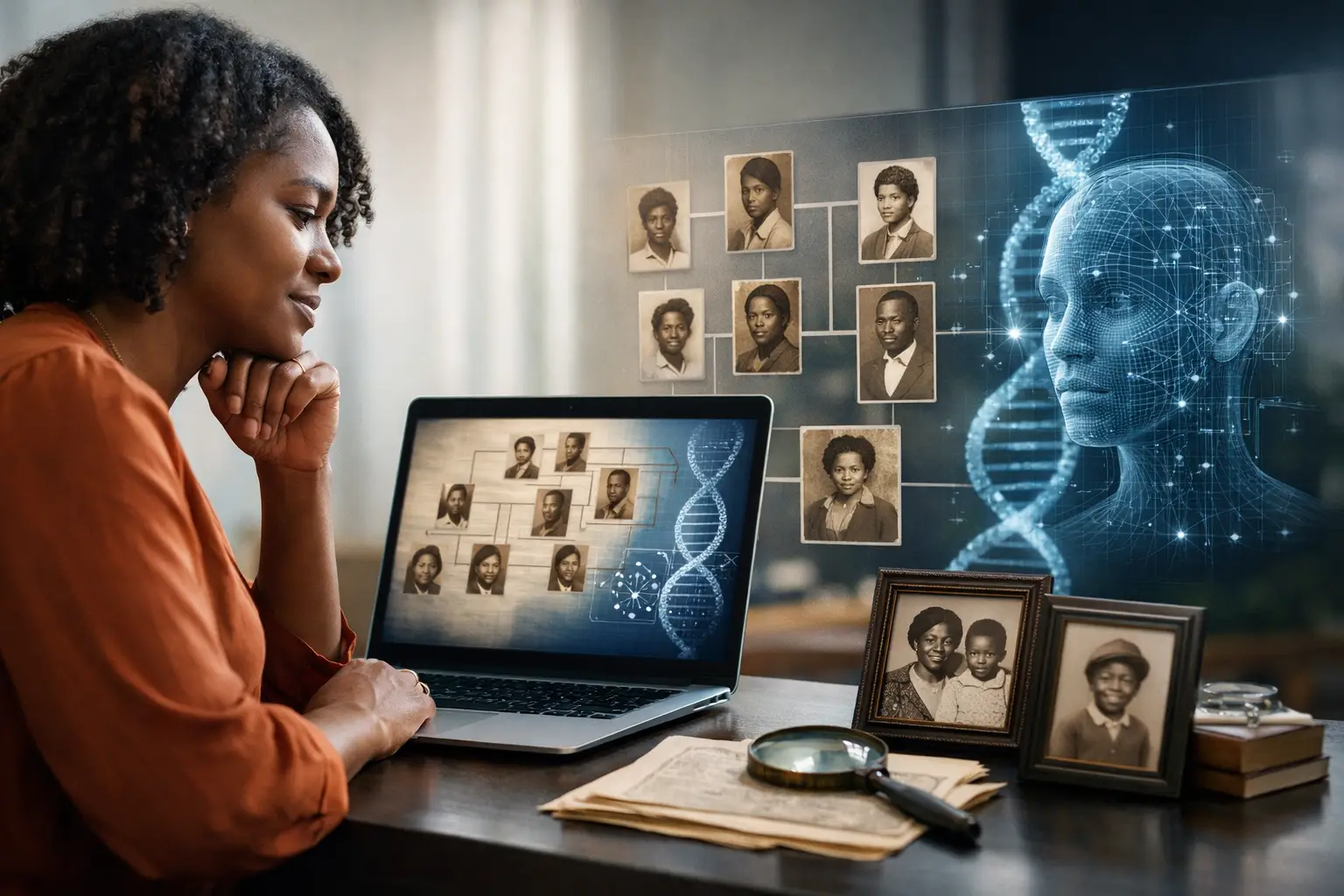
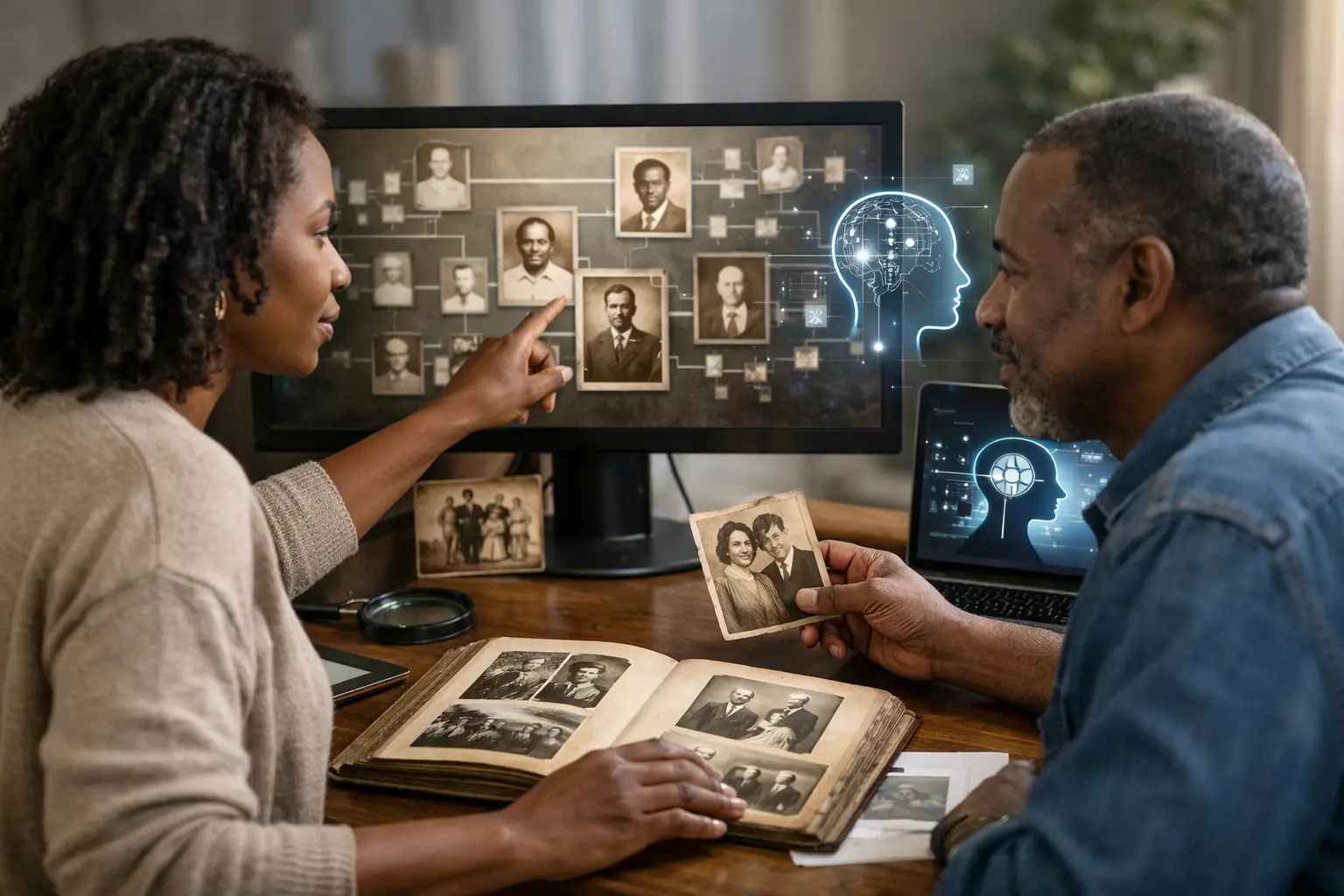
Best AI for Genealogy Research in 2026

Most genealogy tools can find records. Far fewer can tell you what to do next when the records stop making sense. That is the real test when you are looking for the best ai for genealogy research - not who has the flashiest chatbot, but which tool gives you a usable next step when you hit a name change, a county line shift, or the 1870 brick wall.
AI is starting to matter in family history for one reason: genealogy is not just search. It is interpretation. A census entry, a Freedmen's Bureau labor contract, a probate index, and a cluster of DNA matches do not solve anything on their own. They only matter if someone can connect them into a research path. Good AI shortens that gap. Bad AI just writes pretty summaries around weak evidence.
What makes the best AI for genealogy research?
The strongest AI genealogy tools do four jobs well. First, they narrow search chaos. If you have ever typed the same ancestor into five databases with three different spellings, you know the problem. Second, they interpret evidence, especially DNA and partial records. Third, they help you capture living family knowledge before it disappears. Fourth, they turn findings into something clear enough to share with relatives who do not care about deed books and census schedules.
That means the best tool depends on the kind of wall you are facing. If you already know your line and want cleaner writing, almost any AI assistant can help. If you are trying to identify an enslaver surname, a migration county, or the federal archive series most likely to hold your ancestor, the field gets much smaller very quickly.
The main types of AI genealogy tools
General AI assistants
Broad AI tools can help with transcription, summarizing handwritten notes, drafting research plans, and turning timelines into readable family narratives. They are useful, but they have a ceiling. They do not know your evidence unless you feed it in carefully, and they can sound more certain than they should. In genealogy, that is dangerous. A confident wrong answer can waste weeks.
These tools are best for organization and writing support. They are less reliable for source-specific guidance, archive strategy, or complex identity problems where multiple people share the same name.
AI built into legacy genealogy platforms
Some established genealogy services now use AI to surface hints, cluster records, or improve search relevance. That can save time if your family is already well documented in common databases. For straightforward lines, this works well enough.
The trade-off is that hints are still shaped by the records those platforms already hold and the business model around keeping you inside a subscription ecosystem. If your problem lives between databases, across county jurisdictions, or inside underused federal collections, those tools often stop at suggestion instead of strategy.
Specialized AI genealogy platforms
This is where the category gets interesting. A specialized platform can take a narrower problem and solve it better. Instead of saying, here are 82 possible records, it can say, start in this county, check this bureau office, and pull this NARA microfilm series. That is a different level of help.
For researchers tracing African American ancestry, especially before and just after Emancipation, specialization matters even more. The gap is not effort. The gap is knowing where the next credible clue is most likely to be hiding.
Where most AI tools fail
Many tools are good at presentation and weak at proof. They can draft a life story from a census page, but they cannot explain why two men with the same name in neighboring counties are probably different people. They can summarize a DNA match list, but not translate that list into an archive search plan.
That is why a lot of users feel productive without actually moving forward. They leave with cleaner notes, maybe even a polished ancestor profile, but no answer to the question that matters: what record should I search next?
This is especially true around the 1870 barrier. The first post-Emancipation census is often the first federal census where formerly enslaved ancestors appear by name. Before that, the trail can break hard. A generic AI tool cannot fill that gap by sounding smart. It needs historical context, record-set awareness, and a method for turning small clues into targeted searches.
Best AI for genealogy research by use case
Best for finding the next search action
If your biggest problem is not lack of records but lack of direction, the best AI is the one that gives you precision. That means likely counties, likely collections, likely record custodians, and ideally exact federal series or microfilm references. This is where product design matters more than marketing language.
A tool like The 1870 Project stands out because it is built around momentum. It does not just return records. It translates scattered evidence into the next best move, whether that means a county-level search, a Freedmen's Bureau path, a DNA-based location clue, or a federal archive reference you can actually use. For users who are tired of broad hints and endless record lists, that difference is substantial.
Best for DNA interpretation
DNA is where many genealogy journeys stall. People get match lists, centimorgan numbers, and shared match clusters, but they do not know how to turn them into archives. General AI can explain DNA concepts. That is not the same as solving a case.
The best AI for DNA-assisted genealogy research helps bridge interpretation and action. It should not just define terms like half cousin or triangulation. It should help you infer likely family groups, migration paths, and where records tied to those groups are most likely held. If a platform can move from match evidence to hub counties and exact NARA microfilm numbers, that is far more useful than generic DNA education.
Best for preserving living family history
Not every breakthrough comes from a courthouse. Sometimes it comes from the aunt who remembers three siblings, two nicknames, and the church they attended after the war. AI can help here too, but only if it is practical.
The better tools draft outreach messages, suggest follow-up questions, and help interpret family replies that are partial, emotional, or inconsistent. This matters because beginners often do not know how to ask for family information without overwhelming relatives. A strong AI guide keeps that process human while making it easier to capture names, places, and stories before they are lost.
Best for storytelling after the research
There is nothing wrong with wanting a beautiful family story. In fact, sharing findings is often what keeps research alive across generations. AI can help turn timelines and records into readable narratives and historically grounded portraits.
But this should come after evidence, not instead of it. The best storytelling tools are built on documented facts and clear historical context. The weaker ones fill gaps with guesswork. If you use AI for storytelling, make sure the line between proof and interpretation stays visible.
How to judge an AI genealogy tool before you trust it
Start with one hard question: does this tool reduce ambiguity, or just rephrase it? If it gives you general advice you could have gotten from a forum post, it is not doing enough. If it tells you where to search, why that source matters, and what clue you are looking for in that source, now you are getting somewhere.
Privacy matters too. Family history includes living people, sensitive DNA information, and painful historical realities. A no-subscription, credit-based model can be appealing because it lowers commitment and gives users control, but the bigger issue is whether the company handles personal information with care and clarity.
You should also watch for overconfidence. Good genealogy AI should leave room for uncertainty. It should tell you when a conclusion is likely, when it is possible, and when more evidence is needed. Family history is full of near matches and false trails. Honest tools respect that.
So, what is the best AI for genealogy research?
If you want help writing summaries, organizing notes, or generating interview questions, several AI tools can do the job. If you want actual research movement, especially through difficult American record problems, the answer is narrower.
The best ai for genealogy research is the one that turns evidence into action. Not more noise. Not prettier noise. Action. For many researchers, that means choosing a specialized platform over a general assistant, especially when the challenge involves African American ancestry, post-Civil War records, DNA interpretation, or federal archives that most platforms barely surface.
Your family was here. The records may be scattered, mislabeled, buried in microfilm, or split across counties, but that does not mean the trail is gone. The right AI should not replace your judgment. It should give you traction when the paper trail gets thin and help you keep going while the names are still within reach.