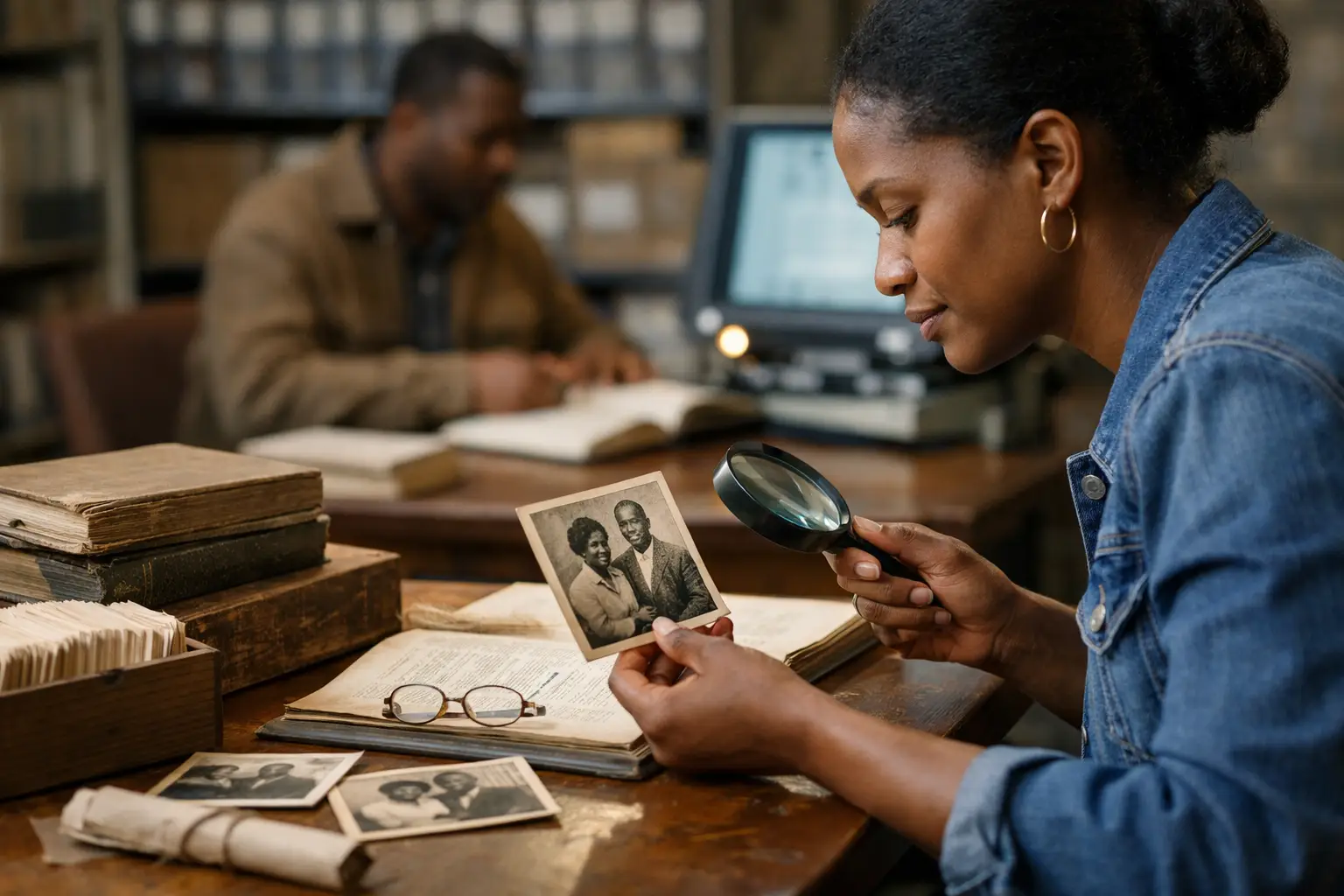
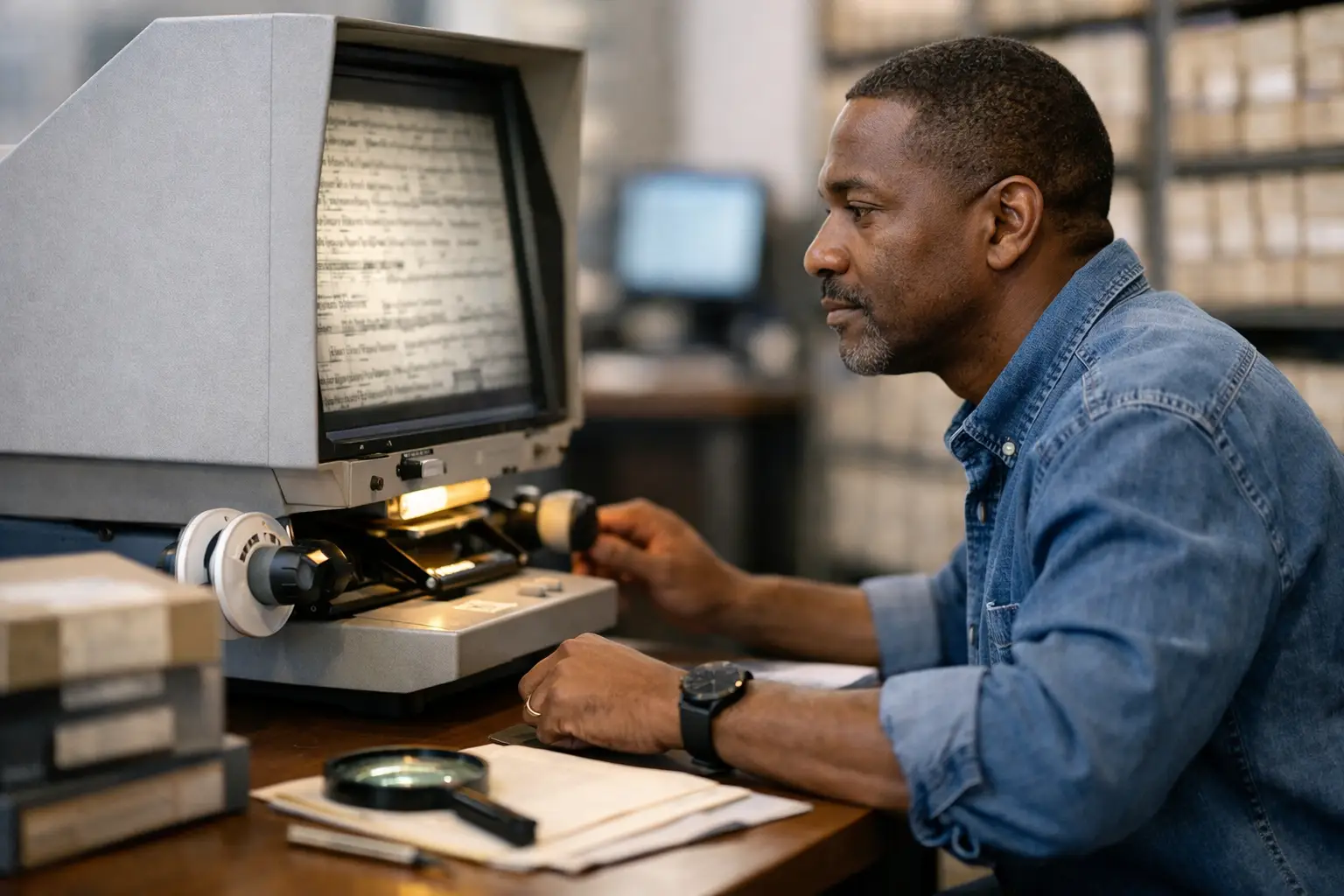
Best Evidence for Parentage in Genealogy

A parent-child connection is not proven because one online tree says it is. It is proven when the records, the place, the timeline, and sometimes the DNA all point to the same family. The best evidence for parentage genealogy is rarely a single document. It is a carefully built case that can answer a simple question: why should anyone believe this person was the child of these parents?
That standard matters most where the paper trail is thin. For African American families, the 1870 Census may be the first federal census where an ancestor appears by name after Emancipation. For other families, a missing birth record, a changed surname, an informal adoption, immigration, or a county-line change can create the same problem. Your family was here. The work is finding the records that show how they belonged together.
What Counts as Strong Parentage Evidence?
The strongest evidence comes from a source created close to the event by someone with direct knowledge. A birth certificate naming parents can be powerful, but even that is not automatic proof. Ask who supplied the information, when it was recorded, and whether the record is an original or a later copy.
Genealogists usually weigh evidence by its quality and by how well it fits everything else. A death certificate may name a person's parents, but the informant might have been an adult child who never knew the deceased's grandparents. A census lists a household, not necessarily a biological family. A family Bible may be invaluable, but entries written decades later deserve more caution than entries made at the time of each birth.
The goal is not to find a document that feels convincing. The goal is to assemble evidence that survives scrutiny, including evidence that seems to conflict.
The hierarchy is useful, but context decides
These sources often provide the best starting points for a parentage case:
- Original birth registrations, delayed birth certificates, baptismal records, and contemporary family Bible entries
- Probate files naming heirs, guardianship papers, estate divisions, and wills
- Deeds that identify heirs, distribute inherited land, or release a claim to an estate
- Military pension applications, especially files containing affidavits from relatives and neighbors
- Court records, marriage records, and Social Security applications that identify parents or next of kin
None of these records is flawless. A probate file can prove a legal heirship but may exclude a child who died young, was born outside marriage, or was estranged. A birth record may reflect an adoptive, step, or presumed father. Strong research does not force every family into a modern definition of parentage. It identifies what relationship the evidence actually supports: biological, legal, social, or unknown.
Why One Record Is Usually Not Enough
A census is a clue, not a conclusion. If a 12-year-old child appears in the home of a couple in 1880, the adults may be parents, grandparents, aunt and uncle, employers, or unrelated boarders. The same caution applies when a surname matches. Surnames travel through marriage, enslavement, adoption, migration, and choice.
Instead, test the household against a timeline. Does the child appear with the same adults in earlier or later censuses? Is the age plausible? Do probate papers name the child? Did the family live near people who later served as witnesses on a marriage license or informants on a death certificate? Did the alleged father own or sell land that passed to the child?
Parentage proof gets stronger when independent records agree on details that would be difficult to explain by coincidence. A daughter named in a will, living near the same siblings in census records, and appearing in a DNA cluster tied to the father's family is far more persuasive than any one of those facts alone.
The Best Evidence for Parentage Genealogy Before 1870
For formerly enslaved people, the problem is often not that the family did not exist. It is that the records were created by institutions that did not consistently record family relationships. That makes postwar records especially valuable because they may preserve connections reaching back into slavery.
Start with the person you can identify confidently in 1870, then work forward and sideways before moving backward. Track every spouse, child, sibling, neighbor, employer, landowner, and migration companion. The people living nearby can be the bridge to an earlier county, plantation, or kin network.
Freedmen's Bureau records can name parents, children, spouses, former enslavers, workplaces, and prior residences. Labor contracts may list whole family groups. Marriage records may document couples whose unions began during slavery. Rations lists, hospital records, school records, complaints, and labor disputes can place a family in a precise location during the years when surnames and households were taking shape.
Do not stop at a broad database search. A parentage clue becomes useful only when you know where to look next. The relevant county, field office, record series, and federal microfilm publication can matter more than a page of loosely related search results. The 1870 Project is built for that kind of precision, helping turn a DNA lead or a known ancestor into a practical archive path.
Use DNA as Corroboration, Not a Shortcut
DNA can be the evidence that breaks a brick wall, particularly when documents use incomplete names or never name a father. But a DNA match is not self-explanatory. A shared-match list can show that two people likely descend from the same ancestral couple, yet it cannot tell you which documentary relationship is correct without more work.
Start by separating matches into clusters. If several matches descend from the known children of one couple, and your unknown ancestor fits the right place and generation, that cluster can support a parentage hypothesis. Then look for records that test it: probate files, deeds, obituaries, church registers, pension files, and census neighbors.
Pay close attention to the amount of shared DNA, the age and generation of each match, and whether the group connects through more than one child of the proposed parents. One close match can be decisive, but it can also reflect a half relationship, endogamy, or an unexpected parentage event. Multiple matches from distinct branches of the same family are usually more informative.
For endogamous communities or communities with repeated cousin marriages, total shared DNA can look closer than the actual relationship. In those cases, chromosome segments, documented trees, geography, and repeated connections become more valuable than a single predicted relationship label.
Build a Proof Case Before You Add Parents
Treat every proposed parentage claim as a working hypothesis. Write it down in one sentence: “John Carter, born about 1858 in Warren County, was the son of Elias Carter and Mary Johnson.” Then list the evidence for and against it.
Look for contradictions early. If John was born in a county where Elias never appears, do not dismiss that problem. If Mary was recorded in another household at the time, investigate it. A conflict may reveal two men of the same name, a remarriage, a migration you missed, or the fact that the relationship is not biological.
A practical proof case has four parts. It identifies the target person precisely, cites each relevant record, explains how the records connect, and resolves meaningful conflicts. You do not need formal academic language. You do need a clear chain of reasoning that another family member can follow.
Save images or full citations for every record, not just a transcription copied into a tree. Note the county, date, informant, household members, witnesses, and neighbors. Those details often become the breakthrough later, when a deed names “the heirs of” a person you did not know belonged to your line.
Interview Living Relatives While You Still Can
The most valuable parentage evidence may be sitting at a family reunion, not in an archive. Ask older relatives who raised whom, what names people used before marriage, where the family lived, and which cemetery or church they attended. Ask about cousins who were “like siblings,” children sent to live with relatives, and adults called Aunt or Uncle without a biological connection.
Memory can be wrong, but it provides research targets that records can confirm or correct. Record the exact wording when possible. “Mama said her father came from Dinwiddie County” is not proof, but it is a map.
When the evidence points in one direction, do not wait for a perfect document that may never exist. Build the most honest case the records allow, label uncertainty where it remains, and keep the door open for new evidence. Every carefully proven connection restores more than a name. It gives your family a place in its own history.