Best Records After Civil War for Finding Family
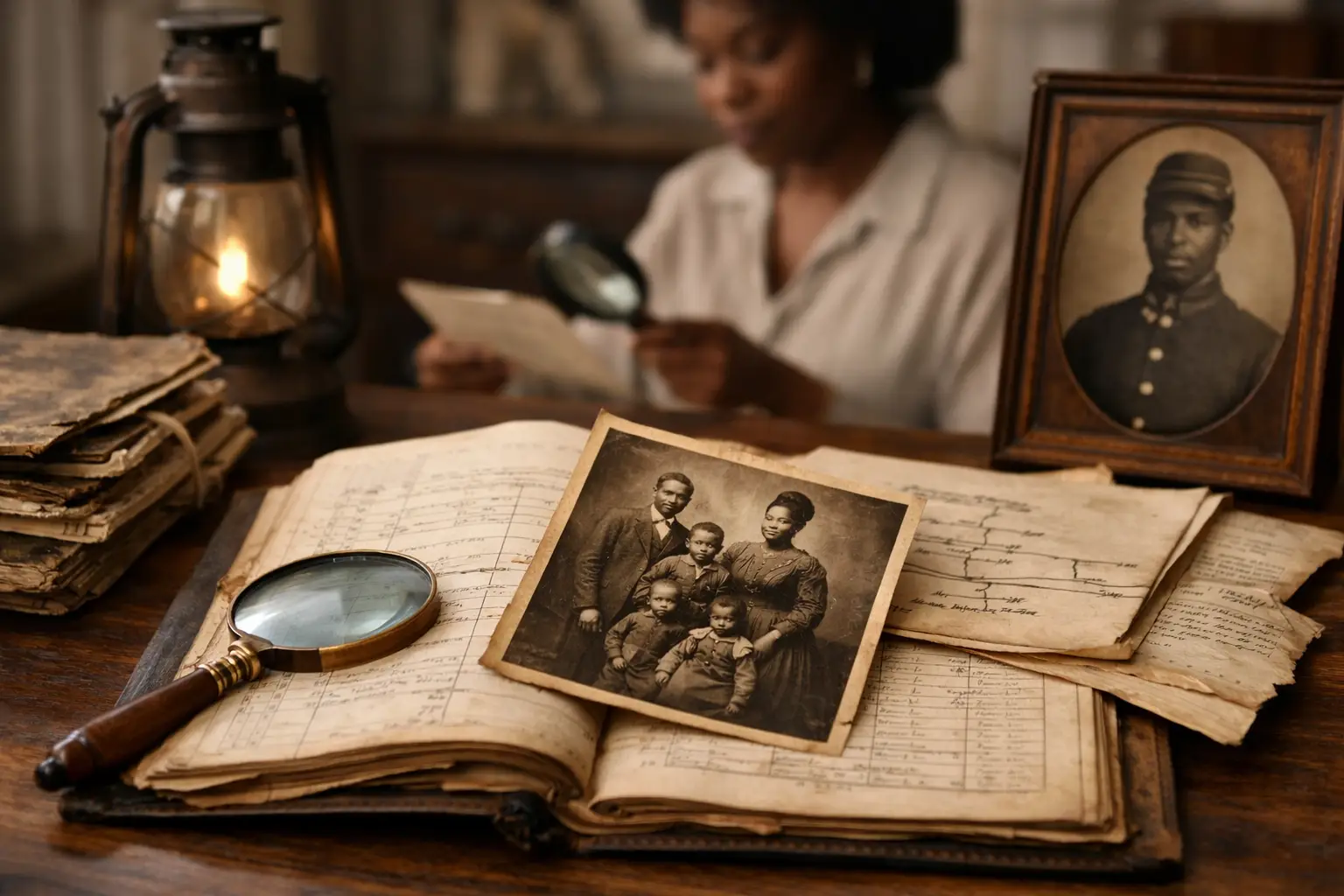
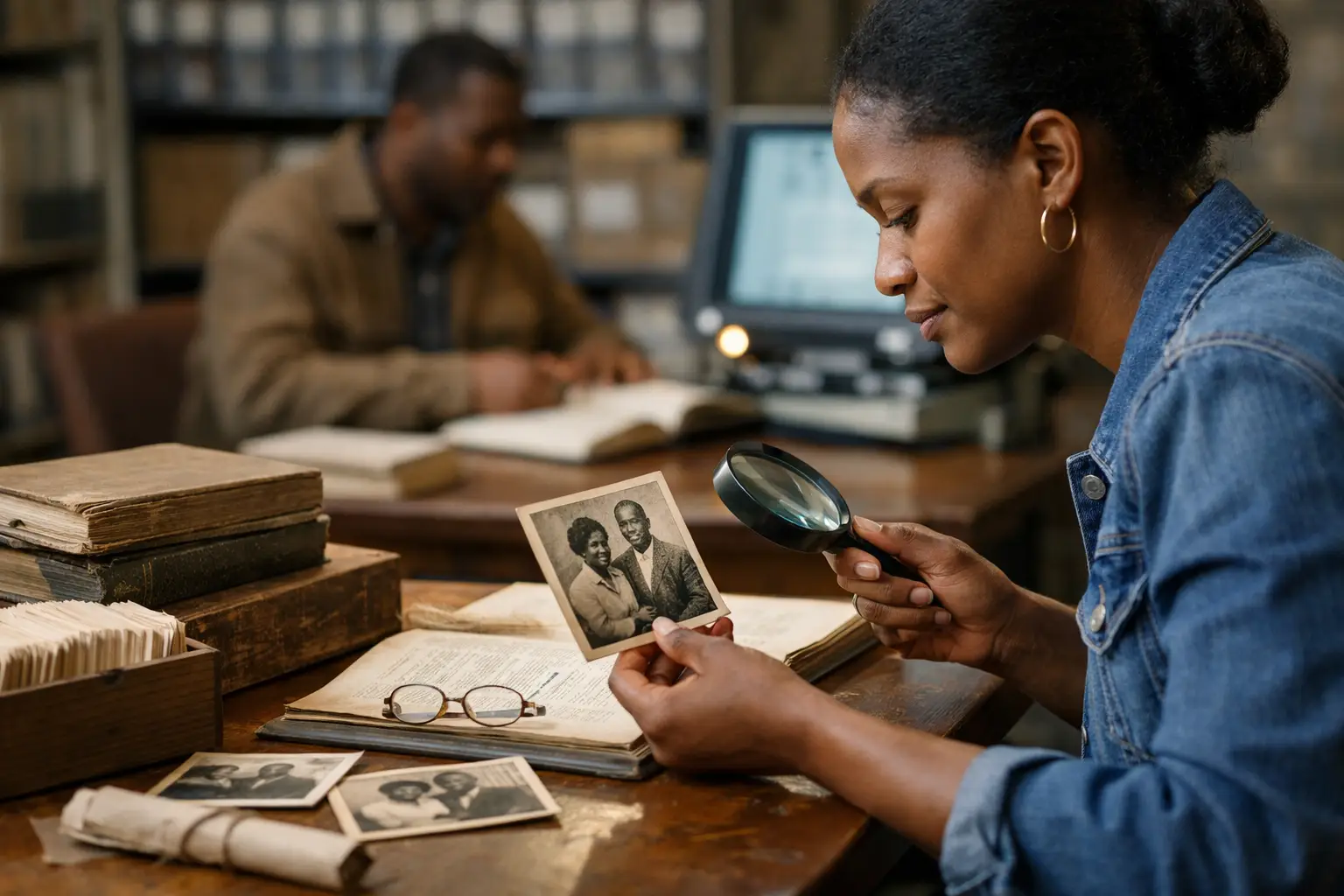
The best records after the Civil War do more than place a name on a page. They can reconnect a person to parents, siblings, a former enslaver, a birthplace, or the first piece of land their family held after freedom. For many families, especially African American families facing the 1870 brick wall, the question is not whether records exist. It is which record can move you backward with proof.
Start with the record most likely to name a relationship, a location, or a former identity. A census entry alone rarely carries all three. The strongest research comes from following one clue into the next county, court, military file, church register, or federal microfilm series.
Best Records After the Civil War to Search First
The 1870 and 1880 federal censuses
The 1870 Census was the first federal census to list formerly enslaved people by name. That makes it indispensable, but it is a starting point, not a finish line. Record the entire household, every nearby household with the same surname, birthplace patterns, occupations, and the value of real and personal estate. Neighbors matter because emancipation did not erase community ties. Extended family members often lived next door, shared land, witnessed marriages, or appeared together in later probate files.
Then move immediately to 1880. That census adds each person's relationship to the head of household and reports the birthplaces of both parents. A woman listed as a niece, mother-in-law, or boarder can turn an assumed connection into a researchable family line. Compare ages and birthplaces across both years, but allow for inconsistency. Ages were often estimated, and enumerators made mistakes.
If you cannot find a family in 1870, do not stop at a statewide search. Search by first name, approximate age, birthplace, spouse, children, and likely counties. Names could be misspelled, newly chosen, or recorded under a different surname. The right search is often geographic before it is alphabetical.
Freedmen's Bureau records
Freedmen's Bureau records are among the most revealing postwar sources because they documented the practical work of freedom: labor, family reunification, legal disputes, schooling, rations, medical care, and marriages. A labor contract may identify a plantation, an employer, a spouse, children, and the place where a family lived just after the war. A complaint register may preserve a voice and conflict that never reached a county courthouse.
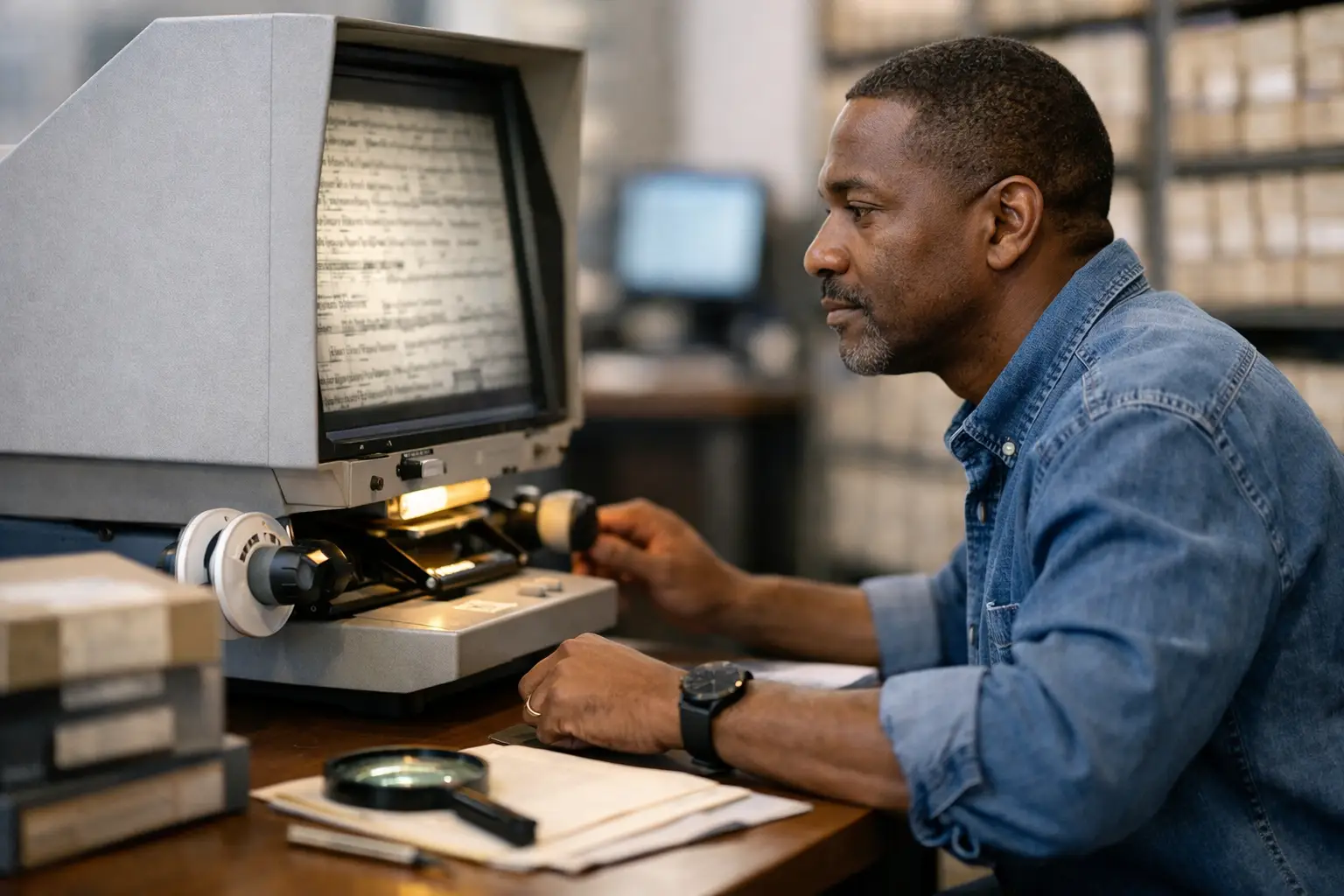
These records are organized by field office and locality, not by a simple national index. That is why identifying the right county is so valuable. One family may have dealt with a Bureau office across a county line rather than the office closest to their home. Look for offices serving the places named in census records, military files, and marriage records.
The records can be uneven. Some locations have rich surviving material; others have little. Still, a single entry can identify a former enslaver or a prewar residence, giving you a defensible path before 1870.
Freedman's Bank records
Freedman's Bank deposit registers can read like a family interview conducted within a few years of emancipation. Many applications named parents, spouses, children, siblings, birthplaces, residences, occupations, and former enslavers. Not every formerly enslaved person used the bank, and an absence proves nothing. But when an account exists, it can be one of the clearest bridges between a postwar name and an earlier life.
Treat every relative named in the register as a separate lead. A depositor's mother may be living in another county. A sibling's married surname can lead to a marriage record. A former owner named in the file may direct you to probate, estate, deed, tax, or plantation records created before emancipation.
Marriage records and cohabitation registers
Legal marriage records after the war often document unions that had existed for years under slavery but had not been recognized by the state. In many Southern states, officials created cohabitation registers, marriage certificates, or delayed marriage records to formalize those relationships. These can state how long a couple had lived together, where they lived, and sometimes the names of prior spouses.
Search both county-level records and state collections. Marriage licenses can also reveal bondsmen, witnesses, ministers, and locations. Those names are not filler. A witness may be a brother, a sister, a parent, or a trusted member of the same prewar community.
U.S. Colored Troops service and pension files
If an ancestor or a close relative served in the U.S. Colored Troops, pursue the service record and pension application. Pension files are especially powerful because applicants had to prove marriages, births, deaths, disabilities, and service. Testimony from neighbors, former comrades, midwives, ministers, and relatives can supply details no census ever captured.
A widow's pension application may describe when and where she married the soldier, list children, and explain family movements after the war. A dependent parent's claim can identify an older generation. These files take patience, but they are built around evidence of kinship - exactly what a brick-wall research problem needs.
Land, tax, probate, and court records
Freedom changed where families could live, work, and own property, but the paper trail is scattered. Deeds show buyers, sellers, neighbors, and land descriptions. Tax lists can place a person in a county between census years. Probate records may name heirs across generations. County court minutes can document apprenticeships, contracts, disputes, guardianships, and estate settlements.
Do not assume your ancestor had to own land to appear. They may have rented, worked a crop, served as a witness, paid a small tax, or been named in a lawsuit. Search for the family cluster, not only the person you hope to find. A land deed involving a known sibling may identify the parent you have been seeking.
Build a Chain, Not a Pile of Records
The fastest way to lose momentum is to collect dozens of records without asking what each one proves. For every document, write down three things: the exact place, every named person, and the next record it suggests. If an 1880 census says your ancestor's parents were born in Virginia, that is not yet a conclusion. It is a direction. If a Freedman's Bank entry names a former enslaver in a specific county, that is a much sharper direction.
Work backward from the most certain person. Confirm them in 1880, then 1870. Identify their marriage, adult children, siblings, military connections, and land transactions. Only then use that evidence to target Freedmen's Bureau offices, Freedman's Bank registers, county courts, and prewar estate records.
Keep a research log that includes negative results. If a county's marriage book has no entry, note the volume and years searched. If a surname appears in three neighboring counties, record the pattern. This prevents repeated dead ends and makes a new clue easier to evaluate.
DNA can also help when the paper trail points to several possible families. A group of DNA matches with roots in the same county can strengthen a location hypothesis, particularly when census and Bureau records suggest the same place. DNA does not replace documentary proof, but it can tell you where to aim next. The 1870 Project's DNA Decoder is designed for that moment: translating match patterns into likely hub counties and specific archival directions rather than another unexplained match list.
When the Record You Need Is Not Where You Expect
Post-Civil War research is full of jurisdiction problems. County boundaries changed. A family may have married in one county, worked in another, and used a Freedmen's Bureau office in a third. They may have moved after a crop failure, violence, military service, or a chance to reunite with relatives. Search the surrounding counties and the places connected to employers, regiments, churches, and adult children.
Also search under variations of the surname. Some formerly enslaved families adopted the surname of a former enslaver; others chose a name used by a father, stepfather, or admired public figure. Siblings did not always make the same choice. The evidence must lead you, not an assumption about what the family name should have been.
Your family was here. The postwar records may be imperfect, but they were created at the moment people claimed legal marriages, reunited children, signed contracts, served their country, bought land, and named their own households. Follow those acts closely. One precise county, one named relative, or one line in a pension affidavit can turn a wall into a doorway.