Best Tools for African American Genealogy
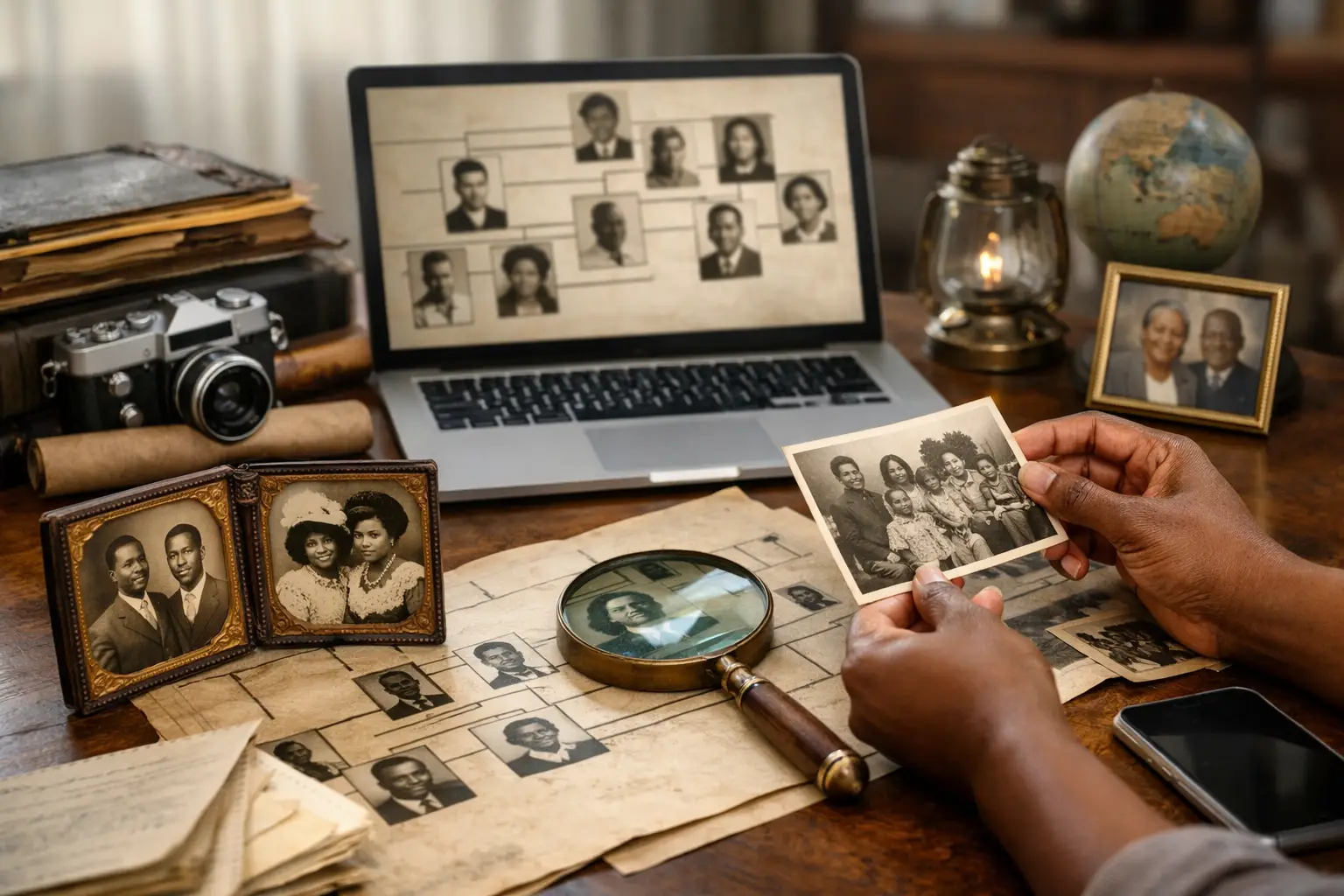
A name on the 1870 Census can feel like a finish line - until you try to find that same person before Emancipation. The best tools for African American genealogy do more than return a stack of possible records. They help you connect a known family in 1870 to the county, enslaver, community, military service, land, and kin networks that can carry the search further back.
That distinction matters. Formerly enslaved people were frequently recorded under different names, in different households, or in records that do not appear in a standard surname search. A useful tool gives you a next move, not another dead end.
Start with the records closest to 1870
The 1870 Census is often the first federal census where formerly enslaved African Americans appear by name. Treat it as the anchor for every earlier search. Capture the full household, not just your direct ancestor: spouses, children, older adults, nearby families with the same surname, and neighbors born in the same state.
Then work forward and backward through the 1880, 1900, 1910, and later censuses. Later records can reveal birth months, migration patterns, marital history, parents' birthplaces, literacy, home ownership, and whether a family stayed close to the same community. Those details narrow the right county long before you open a Civil War-era record.
Large genealogy databases are useful for census images, indexed vital records, trees, and historical documents. FamilySearch can be especially valuable for its free catalog and digitized collections. Paid services such as Ancestry and Fold3 may offer broader access to census images, military files, newspapers, and probate material. Their trade-off is cost and volume: they can put thousands of records in front of you without telling you which one changes your case.
Search creatively. Use first names only, initials, nicknames, approximate birth years, neighboring counties, and alternate spellings. A transcription error is common. A record that does not appear under the surname you expect may still appear under a parent's first name, a spouse's name, or the name of a white household nearby.
The best tools for African American genealogy find the right county
County-level research is where many family stories become documentable history. Once you know where a family lived in 1870, look beyond census indexes to local records: marriage licenses, death certificates, deeds, tax lists, probate files, court minutes, church registers, cemetery records, and school records.
The county is not just a location field. It is a research engine. If your great-great-grandmother lived in Lowndes County, Alabama, in 1870, the next question is not simply who were her parents. Ask which plantations, estates, labor contracts, Freedmen's Bureau offices, churches, and courts operated there between 1860 and 1870.
This approach can also expose migration. A family that appears in Arkansas in 1880 but was born in Mississippi may have moved with relatives, employers, or a larger community after the Civil War. Trace the cluster. The people living next door may be cousins, in-laws, former plantation neighbors, or witnesses to a marriage.
County histories and local libraries can help, but use them carefully. Many older local histories center landowners and omit Black families. Read them as maps to places, estates, and institutions, not as complete accounts of who mattered there.
Use Freedmen's Bureau records as family records
Freedmen's Bureau records are among the most powerful sources for the years immediately after the Civil War. They can include labor contracts, marriage records, rations, complaints, school reports, hospital registers, apprenticeship cases, and correspondence. A single document may identify a spouse, child, former enslaver, employer, residence, or a conflict that explains why a family moved.
The challenge is that these records are not always easy to search by a modern surname. They are organized by office, state, county, record type, and date. That is why knowing the correct county and a realistic date range matters so much.
Do not overlook Freedman's Bank records either. Depositor applications can name relatives, birthplaces, residences, and employers. Not every ancestor used the bank, and an absence proves nothing, but a match can provide a dense family snapshot that few other records preserve.
Military pension files, United States Colored Troops service records, Southern Claims Commission files, and postwar marriage records can be equally revealing. They often name witnesses and family members because the government required people to establish identity, relationships, service, or loss. Those witnesses are research leads, not background characters.
Let DNA point to documents, not replace them
DNA testing can identify living cousin networks and suggest which branch of a family to investigate. It is particularly useful when paper records stop at 1870, a surname changes, or several families share the same names in one county.
But a list of DNA matches is not a research plan. The strongest use of DNA is to combine match clusters with documented places. If several higher-confidence matches trace to the same county in Virginia, Georgia, or South Carolina, that county becomes a focused archival target. Build a simple match group around shared ancestors, shared locations, and repeated surnames. Then test each theory against census, probate, land, and Bureau records.
Avoid treating ethnicity estimates as proof of a specific ancestor or tribe. Estimates can shift as testing companies update their reference panels. Shared matches, family trees, segment evidence where available, and documentary records are more useful for proving relationships.
The 1870 Project takes a more practical approach to this problem: its DNA Decoder translates match information into archival directions, including likely counties and, where it applies, the state's Freedmen's Bureau microfilm number. That is the standard DNA tools should meet. They should tell you where to look next.
Preserve living memory before it disappears
The most irreplaceable genealogy tool may be a conversation with the oldest person in your family. Ask for names, but also ask who raised whom, where people were buried, which church they attended, what town they left, and who came to family reunions. A relative may not know a legal birth date, yet remember that Aunt Lottie was born near the old mill, married a man called Red, and had a brother who went north to Detroit. Each detail can become a record search.
Prepare specific questions and record the conversation with permission. Afterward, separate what is known from what needs verification. Family stories sometimes compress generations or change over time, but they often preserve places, relationships, and names that records alone would never reveal.
Photographs, funeral programs, obituaries, Bibles, reunion booklets, military papers, and handwritten recipes deserve the same care. Scan them, label the people and places, and write down who supplied the information. A photo without a name is a clue waiting to be lost.
Choose tools that create momentum
No single platform contains every answer. A broad database helps you locate indexed records. An archive catalog helps you find unindexed material. DNA helps you identify kinship networks. A county map helps you stop searching the wrong place. Family interviews preserve the evidence no archive can recreate.
The right choice depends on your next question. If you need a death date, prioritize vital records and obituaries. If you are trying to cross the 1870 brick wall, prioritize a verified county, nearby households, Freedmen's Bureau material, probate records, military files, and DNA clusters. Do not pay for another general search before you know what evidence would actually move the case.
Your family was here. The record may be misfiled, unindexed, written under another name, or waiting in a county ledger instead of a search bar. Keep following the people, places, and relationships around your ancestor until the next document gives the family a clearer voice.