Freedmens Bureau Records Research Guide
If your paper trail seems to vanish right before 1870, a solid Freedmens Bureau records research guide can change the whole direction of your search. These records are often where families reappear by name, relationship, labor contract, school attendance, military service, complaint, or ration claim. For many researchers tracing formerly enslaved ancestors, this is not a side path. It is the path.
The mistake most people make is searching the Bureau like it was one neat, nationwide index with one obvious answer. It was not. The Freedmen's Bureau operated through local field offices, and the records reflect that. Your results depend less on typing a name into a box and more on knowing where your family was, what was happening there, and which office might have created a record.
How this Freedmens Bureau records research guide works
Start with geography, not just names. If you do not know the county, get as close as you can. A state alone is usually too broad. Bureau records were created at the field office level, and those offices served specific counties, towns, plantations, and military districts. If your ancestor appears in the 1870 census in one county, begin there, then check nearby counties because families crossed county lines for work, marriage, schooling, and military matters.
This is where many searches stall. A person may be indexed under a different spelling, a first name only, or a surname that changed after emancipation. The county gives you a frame when the name does not cooperate. It also helps you identify which record groups matter most. In one place, labor contracts may be rich. In another, marriage registers or complaints may be the real gold.
What the Freedmen's Bureau actually recorded
The Bureau was created in the aftermath of the Civil War to assist formerly enslaved people and poor Southern refugees. That broad mission produced a wide range of records, and each type can reveal something different about a family.
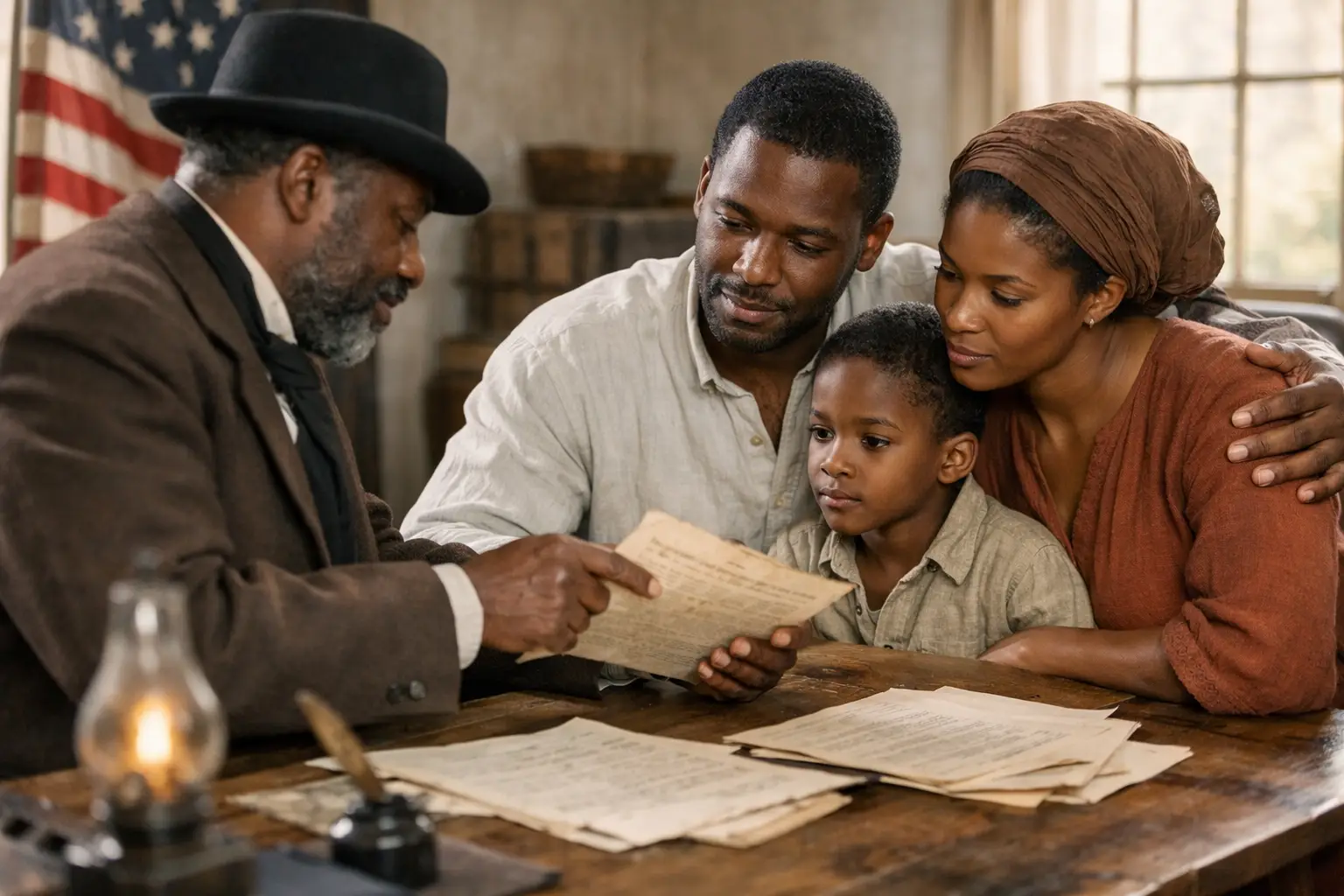
Labor contracts can place a person on a plantation, name an employer, identify a spouse or children, and sometimes show whole family groups working together. Marriage records are especially powerful because they often formalized long-standing unions that had existed under slavery but were not legally recognized. A marriage register may connect a couple directly to a pre-1870 identity and sometimes note where they had lived before.
Ration records and complaints tell a different kind of story. They can show illness, poverty, violence, disputes over wages, child custody, apprenticeship conflicts, or attempts to reunite family members. School records may identify children and parents. Hospital records, transportation orders, and letters sent or received can all create small but decisive connections.
That variety is the strength of the Bureau and the challenge. There is no single "best" record set for every family. It depends on what your ancestor was doing, where they lived, and what problem brought them into contact with the office.
The record groups most likely to name your people
If you are choosing where to focus first, prioritize records that tend to include names and relationships. Marriage records are often the most direct. Labor contracts come next, especially when they list wives, children, ages, or plantation associations. Complaints and court-related records can be surprisingly rich because they describe conflicts in detail. Education and hospital records are less discussed, but in some places they are the very records that prove a family's presence.
Look closely at witnesses, employers, ministers, teachers, and neighboring families too. In African American genealogy, the person you need is not always named in the first document you find. Sometimes the breakthrough comes from tracing the cluster around them.
A practical search strategy that saves time
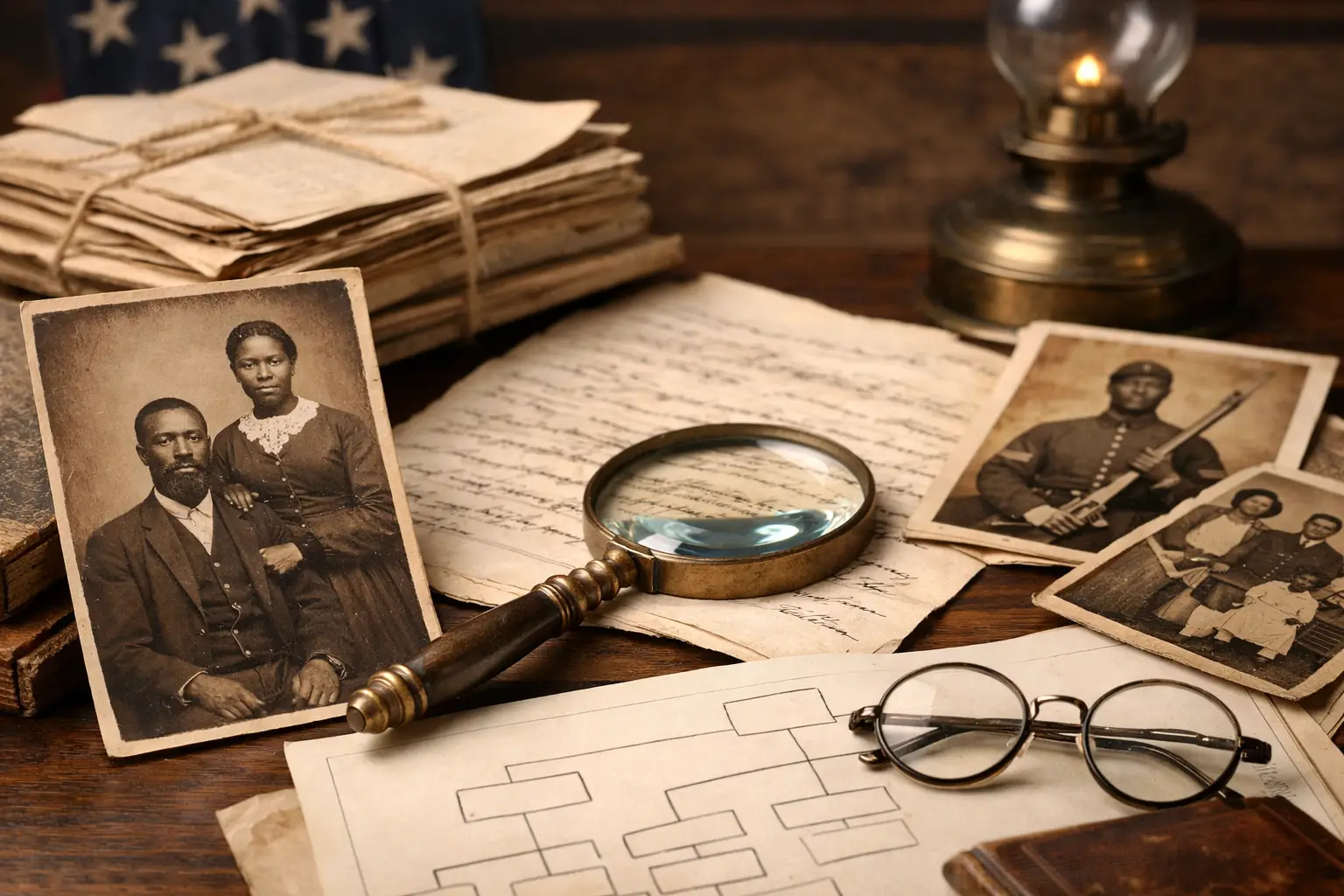
Begin with the 1870 census and pull every clue out of it. Not just names and ages. Study neighbors, occupations, property, birthplace patterns, and the nearest white households with matching plantation surnames. Then check the 1880 census, marriage records, death records, military records, and local deeds if available. Your goal is to build a tight profile before entering Bureau material.
Next, identify the likely field office. This matters because the Bureau's paperwork was organized by place and office function, not by the way modern users wish it had been. If your ancestor lived in rural Mississippi, for example, the relevant office may not be the county seat you expect. It may have been attached to a subdistrict, nearby town, or military post.
Once you have the office, search for your ancestor with spelling flexibility. Try first name only. Try surname variants. Try known associates. If the family used a former enslaver's surname in 1870, consider whether they might appear under another surname, no surname, or a different phonetic spelling in earlier records.
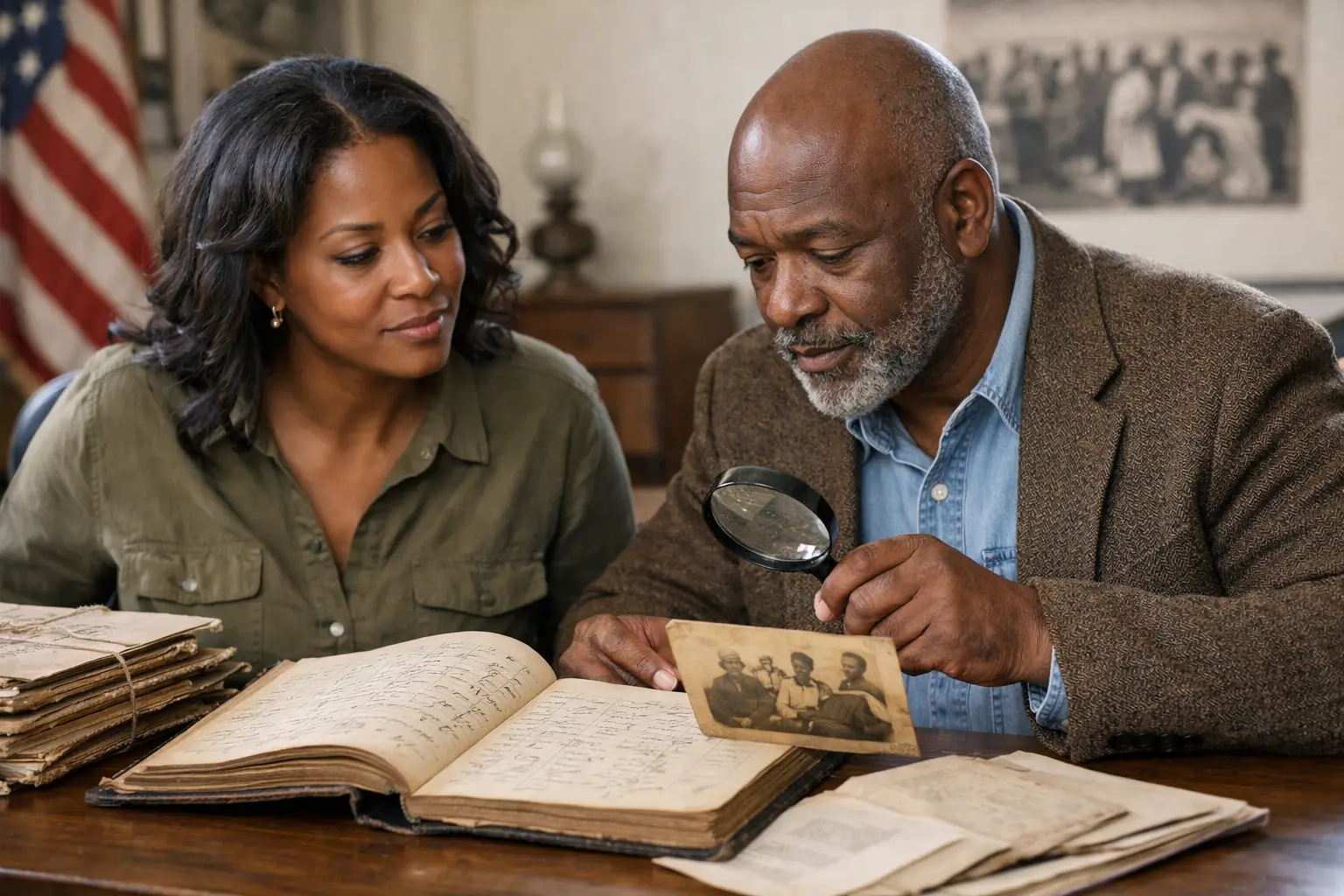
Then read beyond the index entry. Indexes are useful, but they flatten context. The image may include neighboring entries, handwritten notes, plantation names, former owners, or witnesses who belong to the same family network. That is often the clue that points you backward.
When the name search fails
A failed name search does not mean the record is not there. It may mean the indexing is thin, the handwriting is rough, or the record is filed under a place or employer rather than the person you want. In those cases, browse by office and record type. Yes, it takes longer. It also finds people who never surface in a clean search result.
This is one place where precision beats volume. You do not need a thousand records. You need the next right one. If you can narrow the county, likely field office, and probable record category, your odds improve fast.
How to read clues inside Freedmens Bureau records
Do not stop at the obvious facts. A labor contract that names an employer may point you to probate files, plantation records, tax rolls, or the 1860 slave schedule linked to that landholder. A marriage record may identify a minister whose congregation appears in later church records. A complaint about withheld wages may place a family on a specific plantation in 1865, which helps bridge the gap between slavery and freedom.
Pay attention to repeated surnames and given names. Track witnesses across documents. Note whether a family stayed in one place or moved after emancipation. Many families relocated for safety, wages, or reunion with relatives. That movement can make one county seem wrong when it is actually only one step in a larger migration story.
Dates matter too. A record from 1866 may capture a family before a surname settled. By 1870, the same household may appear under a different last name or in a different county. That is not inconsistency. It is history on the page.
Trade-offs to expect in Bureau research
Freedmen's Bureau records are powerful, but they are not complete and they are not evenly useful in every state. Some offices created rich documentation. Others left thinner trails. Some records survive well. Others are fragmented, hard to read, or poorly indexed.
There is also an emotional trade-off. These records often document coercion, hunger, violence, unpaid labor, and family separation. They can be painful to read. But they also show agency - marriages formalized, wages demanded, children enrolled, relatives searched for, lives rebuilt. The archive does not just record suffering. It records survival.
A better way to choose your next step
If you are staring at scattered census pages, uncertain counties, and a pile of possible surnames, guessing your way through Bureau records gets expensive in time and energy. What helps is a system that translates clues into action: likely counties, connected households, field offices, and the exact archive path most worth checking next.
That is the gap The 1870 Project is built to close. Instead of handing you a giant record list and wishing you luck, it helps turn DNA matches, county patterns, and family clues into concrete research directions. When the problem is the 1870 brick wall, momentum matters.
A good Freedmens Bureau search is not about searching harder. It is about searching smarter, in the right place, with the right expectations. Your family was here. The records are often closer than they look. Start with the county, follow the office, read the witnesses, and let one small document lead you to the next.