Genealogy Without Subscription: What Works

Monthly genealogy fees add up fast, especially when all you got last time was a shaky hint, a blurry census image, and another dead end. Genealogy without subscription is not only possible - for many families, it is the smarter way to research because it forces you to focus on evidence, not endless record browsing.
That matters even more if your trail runs into the hardest parts of American history. If you are tracing African American ancestors near 1870, or trying to make sense of a grandparent's story that never made it onto paper, paying for access does not ensure progress. What moves research forward is knowing which record set matters next, which county to search, which surname variation to test, and when DNA can point you toward the right archive.
Why genealogy without subscription can work better
Subscription platforms sell scale. They give you millions or billions of records and expect you to sort through them. That works for some researchers, especially when a family stayed in one place and left a clean paper trail. But many families did not.
Records shifted across counties. Names were misspelled or changed. Formerly enslaved people often appear in the documentary record with painful gaps before the first post-Emancipation census. Native, Latino, immigrant, and rural families can hit similar problems when archives are fragmented or indexed poorly. In those cases, more records do not automatically mean more answers.
A no-subscription approach works when it replaces volume with direction. Instead of asking, "What can I access this month?" you ask, "What is the next best search action?" That change sounds small, but it saves time, money, and emotional energy.
What genealogy without subscription really requires
Free research is not effortless research. The trade-off is simple: you may save money, but you need a clearer method.
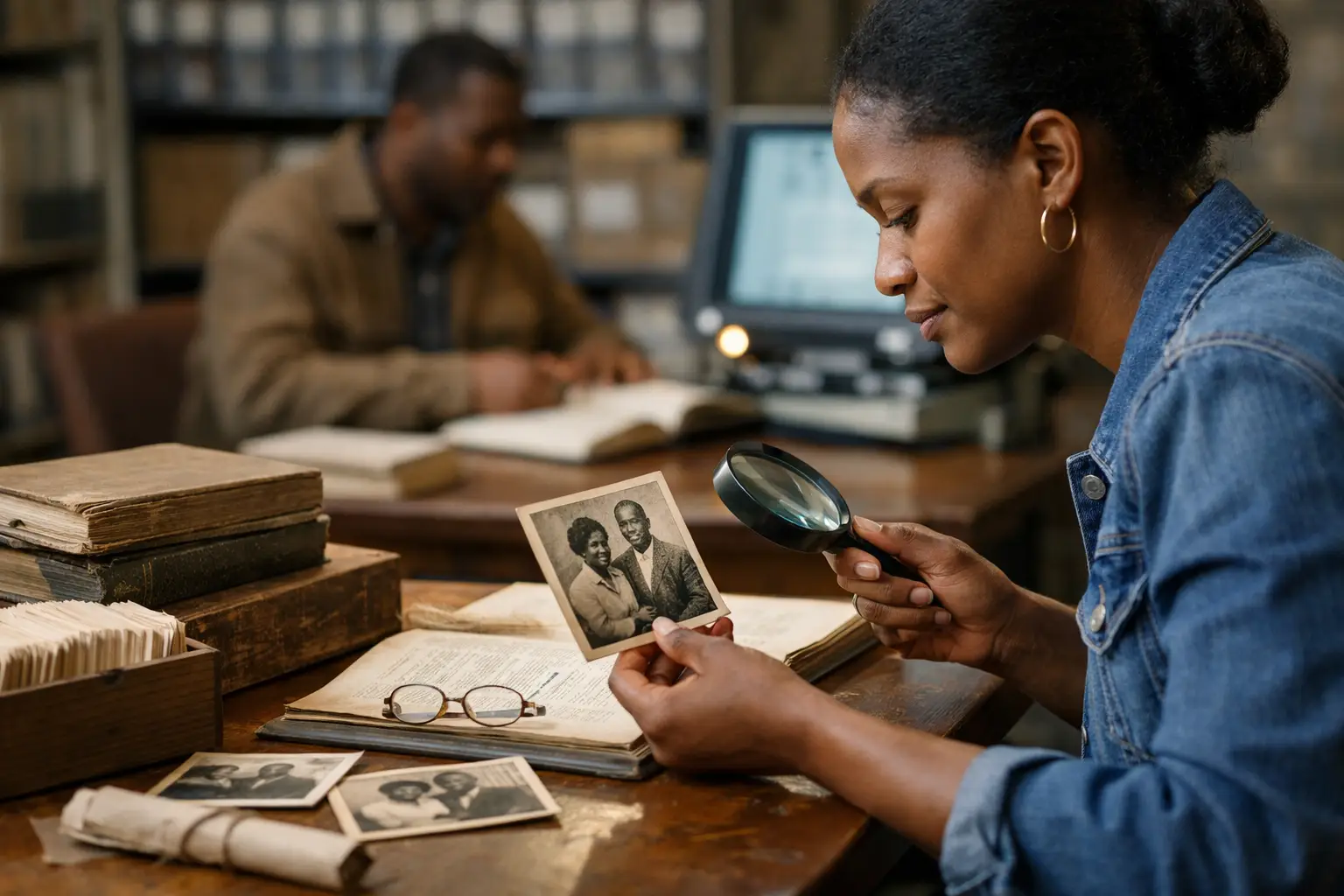
Start with what you can prove at home. Death certificates, obituaries, funeral programs, military papers, family Bibles, old photos, and saved addresses still beat random online hints. Interview living relatives early, even if you think they only know fragments. A cousin's memory of a church, a farm road, or a nickname can become the clue that unlocks the right county or household.
Then build a timeline before you search widely. Put each known fact in order - birth, marriage, migration, military service, land ownership, death. Gaps become visible fast. If a person appears in Georgia in 1880 but a child was born in Alabama in 1874, you now have a narrower search problem. That is real progress.
Free records are useful, but only if you search them strategically
A lot of genealogy advice treats free databases like a scavenger hunt. Search everywhere, click everything, hope something sticks. That is how people lose weekends.
The better move is to search by record purpose. Census records help place a family in time and space. Vital records help prove relationships. Military and pension files can connect generations. Probate, deeds, tax rolls, and court records often reveal family structure when formal birth records do not. Newspapers can supply names, occupations, migrations, and church ties that never appear elsewhere.
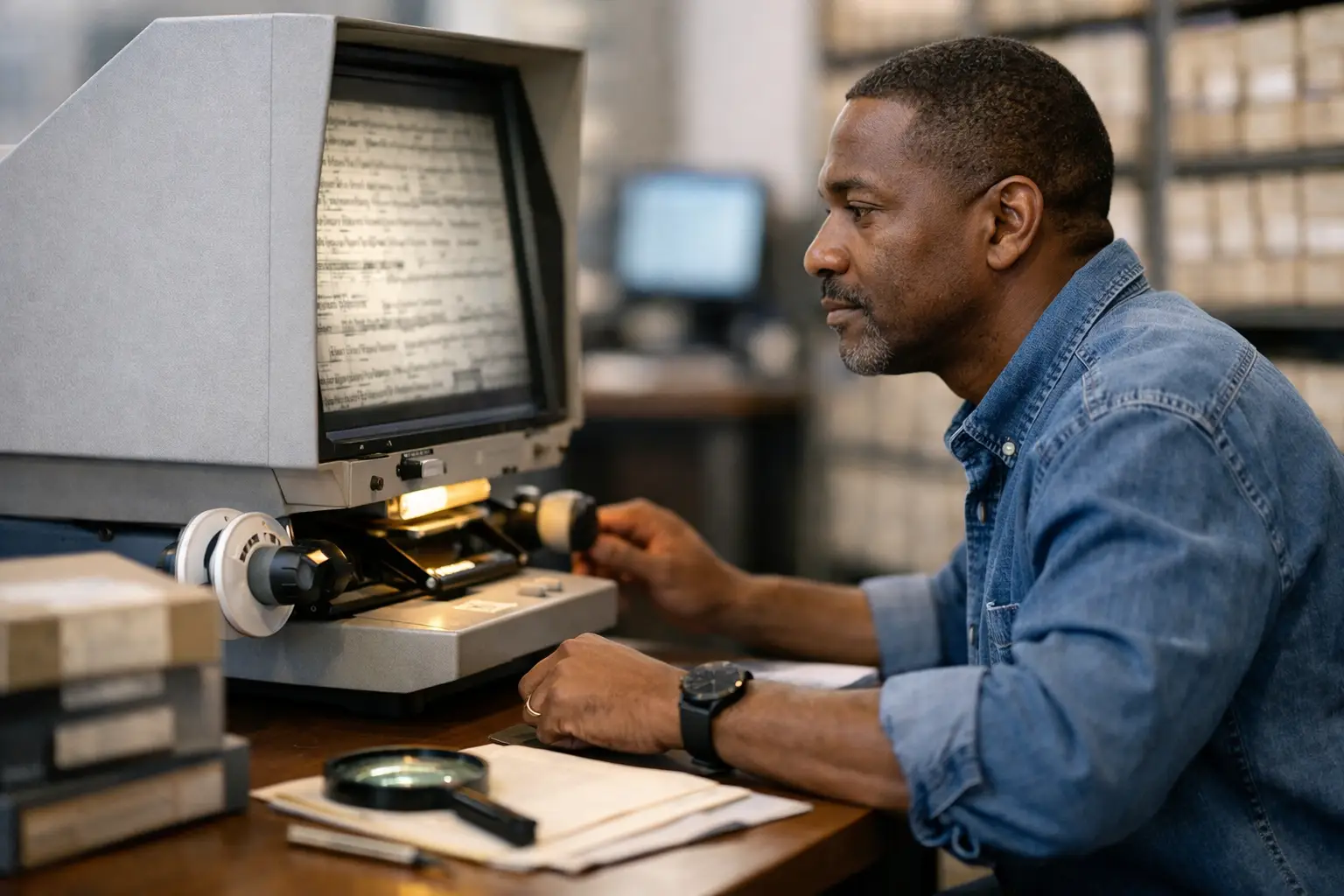
For African American genealogy, this becomes even more precise. If your line disappears before 1870, the next step may not be another general family tree search. It may be Freedmen's Bureau labor contracts, marriage records, complaints, education records, bank documents, or county-level probate tied to a former slaveholding family. That is where many researchers stall - not because records do not exist, but because the right collection was never identified.
DNA can help with genealogy without subscription
DNA is often treated like a reveal. It is really a map, and maps only help if someone reads them correctly.
You do not need a monthly membership to use DNA well. What you need is a way to translate matches into research actions. Shared matches can point to clusters. Clusters can suggest a county, migration path, or collateral surname. From there, archival work becomes more targeted.
This is where many researchers waste money. They see a promising DNA match, but they do not know whether that match points to eastern North Carolina, a Reconstruction-era community in Mississippi, or a family that moved from Virginia after the Civil War. Without interpretation, DNA stays vague.
Used properly, DNA can narrow your next search to a place, a record group, or even a specific federal microfilm series. That is a very different experience from staring at match lists and hoping a family tree is accurate.
The biggest mistake in genealogy without subscription
People confuse free with random.
If you bounce between census records, family trees, message boards, and courthouse indexes without a plan, you can spend months collecting names that do not belong to your line. Then the cleanup takes longer than the search.
A better standard is proof, not possibility. Every new person should connect to an existing fact through age, location, household structure, associates, land, military service, church affiliation, or DNA evidence. Sometimes the answer is probably right. Sometimes it is only plausible. Those are not the same thing.
That distinction matters most when records are thin. Around the 1870 brick wall, many families are dealing with common names, inconsistent ages, and sudden surname appearance after Emancipation. One bad assumption can send the whole tree into the wrong county, the wrong plantation, or the wrong branch.
How to make faster progress without paying monthly
The key is not finding more records. It is reducing the number of bad searches.
Work one person at a time. Identify the last person you can prove with confidence. Then ask a narrow question: where were they in 1880, who lived next door, what church did they attend, who witnessed the marriage, what county handled the probate, which military district covered that area, who appears in shared DNA clusters? Each question should produce the next archive, not just another browser tab.
If you are stuck, switch from direct ancestors to the people around them. Siblings, in-laws, neighbors, ministers, employers, and landowners often leave a stronger paper trail. For formerly enslaved families, tracing the FAN club - friends, associates, neighbors - is often the difference between a dead end and a breakthrough.
It also helps to think in jurisdictions, not just names. County boundaries changed. Records moved. A family may have lived in one place physically but appear in another place administratively. If you search only the modern county, you can miss the record entirely.
When free is enough, and when you need guided help
Sometimes genealogy without subscription is enough on its own. If your family has uncommon names, strong oral history, and stable locations, free tools and disciplined searching can take you very far.
But some cases need interpretation, not just access. If your ancestor appears suddenly in 1870 with no clear prewar identity, if DNA matches are confusing, or if records point to multiple counties and surnames, guidance matters. Not because the records are hidden behind a fee, but because the route through them is not obvious.
That is why newer genealogy tools are starting to move away from the old subscription model. Instead of charging you every month to wander through giant databases, they focus on giving you the next move - the right county, the right archive, the right film number, the right relative to contact. The 1870 Project was built around exactly that idea: no subscription, no endless browsing, and more precision when the paper trail gets hard.
Genealogy without subscription is also about ownership
There is another reason people are moving away from monthly genealogy plans: control.
Family research is personal. It involves living relatives, private memories, and sometimes painful history. Many people do not want to keep paying just to revisit their own work. They want the ability to search, save, pause, interview relatives, and come back when they are ready.
That matters for practical reasons, but also emotional ones. Family history is not a streaming service. It does not move on a billing cycle. Some weeks you are deep in courthouse records. Other months you are sitting with an aunt, asking about names she has not spoken aloud in years. A better research model respects that pace.
The strongest genealogy without subscription workflow is simple: gather what your family already knows, document what you can prove, use free search tools strategically, bring in DNA when the paper trail thins, and get targeted help when the next step is unclear. Your family was here. The records may be scattered, misindexed, or buried in the wrong county, but they left traces. The job is not to search everything. The job is to follow the right trail next.