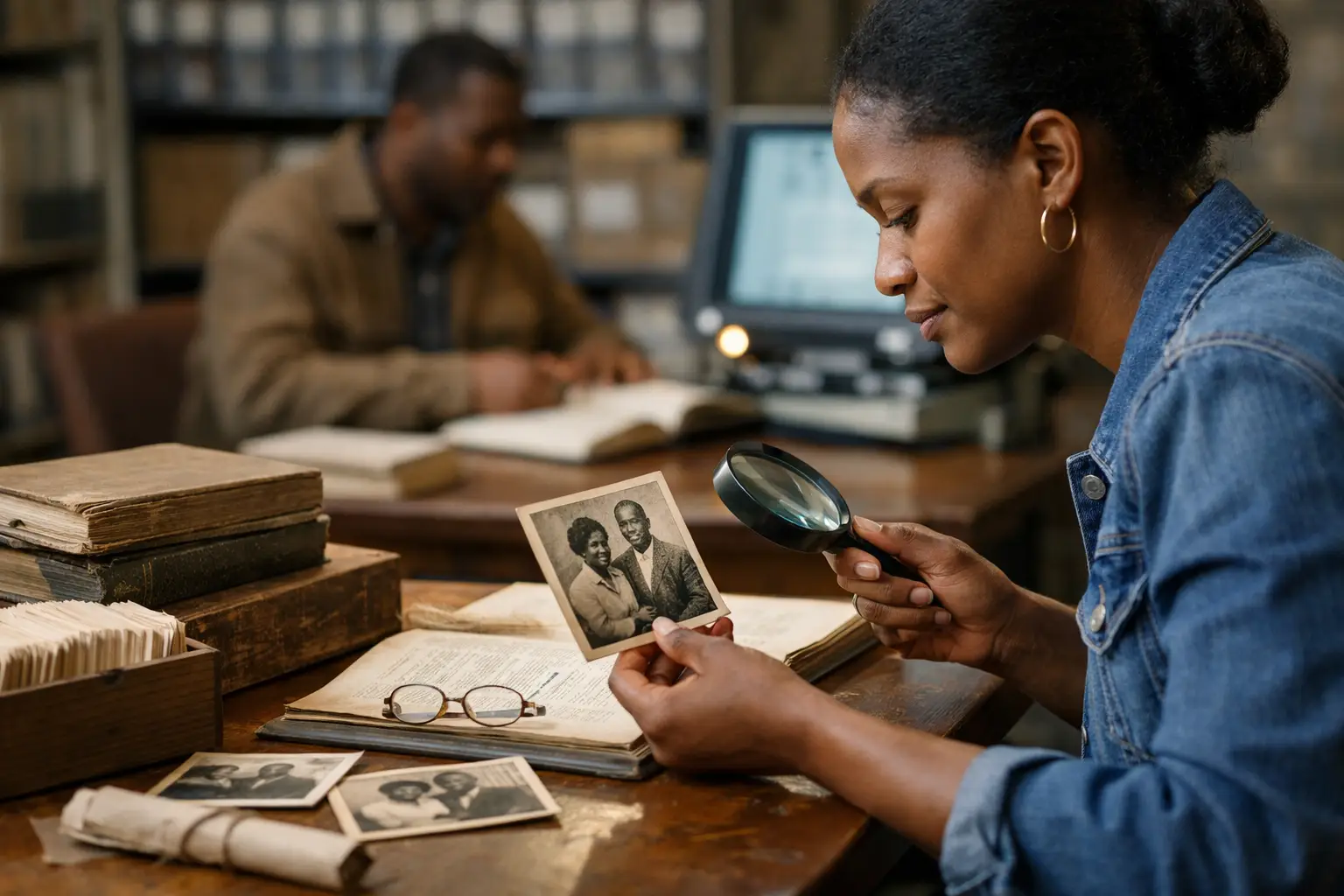
A Guide to Archival Research Workflow
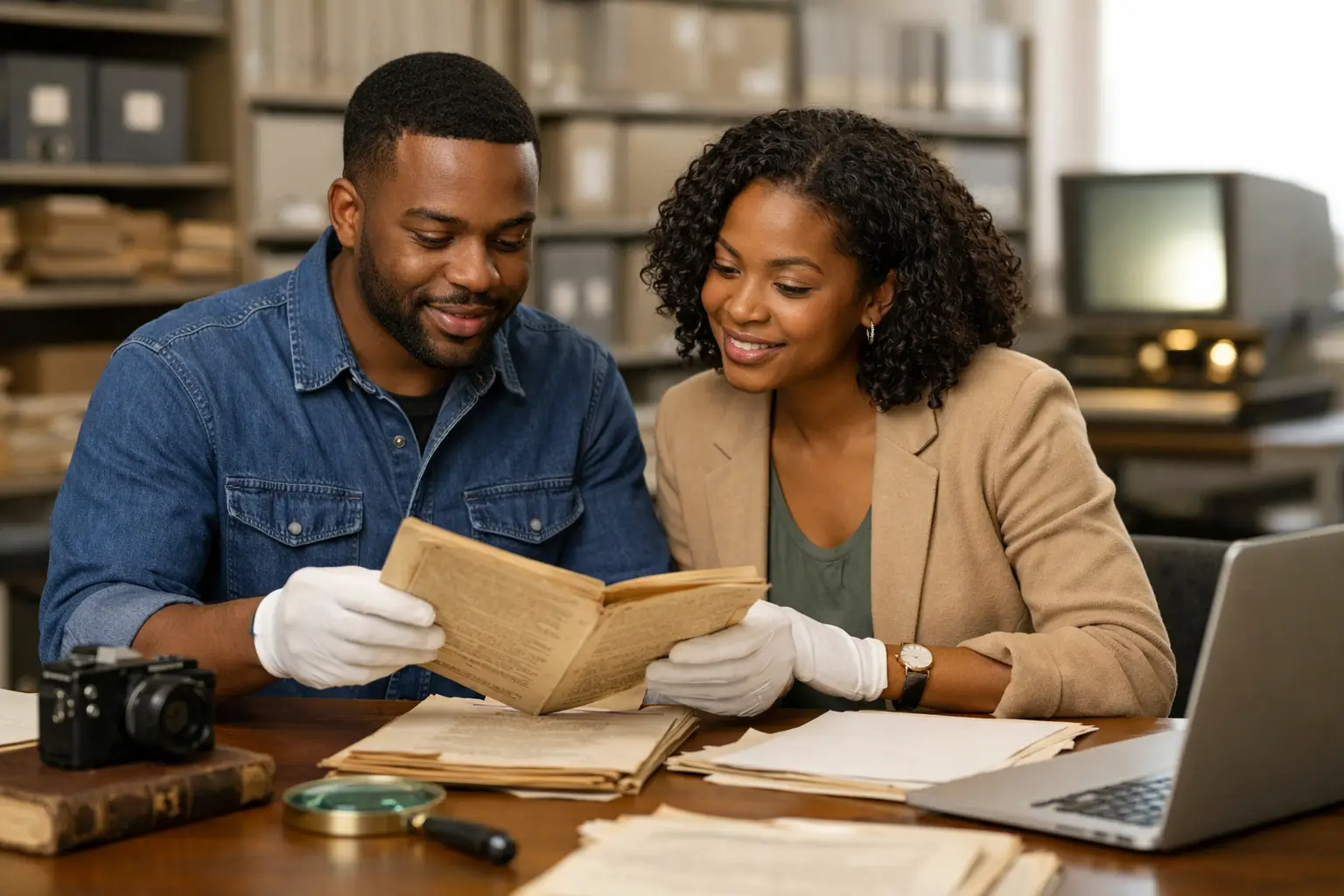
Most family history research does not fail because the record is gone. It fails because the search gets messy. One census screenshot lives on your phone, a surname variation sits in a notebook, and a promising county lead disappears under ten open tabs. A good guide to archival research workflow fixes that. It gives you a repeatable way to move from clue to record to next action, especially when your family line hits the hard places - 1870, Reconstruction, migration, name changes, and archives that do not explain themselves.
If you are tracing African American ancestry, that workflow matters even more. Records around slavery and emancipation were not created for modern family historians, and they rarely line up in a neat chain. You need a process that protects your time, captures evidence carefully, and tells you what to search next when the obvious records stop.
What a guide to archival research workflow should actually do
A useful workflow is not a fancy spreadsheet or a color-coded research board. It is a decision system. It should help you define the question, identify the right archive or record set, document what you found, and turn each result into the next search action.
That last part is where many researchers stall. They find a document, save it, feel a brief rush, and then stop because they are not sure what it means. A deed names neighbors. A Freedmen's Bureau labor contract names a plantation. A death certificate gives a parent with a partial surname. Those are not end points. They are directional signals.
Good archival research is less about collecting and more about sequencing. The order matters. If you start with broad databases before pinning down county, time frame, household cluster, and record type, you can spend hours reviewing the wrong people.
Start with one research question, not ten
The cleanest archival workflow begins with a single target. Not "find everything on the Johnson family." Not "trace the line back to slavery." Start smaller and sharper: Who was Martha Johnson's mother in Lowndes County, Alabama, between 1870 and 1885? Which county held the probate records for Isaac Turner after his death around 1868? Did the same man appear in a USCT record and the 1870 census in one hub county?
Specific questions force useful choices. They narrow geography, reduce record noise, and make conflicting evidence easier to spot. They also help you decide when DNA is relevant and when paper records should lead.
This is especially important near the 1870 brick wall. If you try to solve the entire family line at once, you will mix identities. If you solve one relationship, one county, or one postwar cluster at a time, the line starts to move.
Build your archival research workflow around evidence, not hope
Hope says, "Maybe there is a plantation record somewhere." Evidence says, "This family appears in 1870 in Wilkinson County, two households away from a white family with the same surname, and a Freedmen's Bank entry names a former owner in the same region." One of these leads to action.
Your workflow should begin with what is already proven or strongly supported. That usually means recent records first, then moving backward with control. Census records, death certificates, marriage records, military files, cemetery data, obituaries, oral history, and DNA match patterns all help establish a base.
Then you extract every clue, not just the obvious names and dates. Look for witnesses, neighbors, employers, churches, regiment numbers, post offices, election districts, and land references. Archives are often organized by jurisdiction and function, not by your ancestor's name. A county clue can be worth more than a surname.
The five-stage archival workflow that keeps momentum
1. Frame the question and define the time-place box
Write down the person, the relationship you are testing, and the smallest likely date and place range. If the answer could only exist in one of three counties between 1865 and 1875, say that clearly. This box tells you which archives matter and which ones can wait.
2. Inventory what you already know
Pull together existing records and family knowledge before searching for more. This includes screenshots, oral history notes, DNA clues, old letters, funeral programs, and prior searches. The goal is not perfection. The goal is to stop repeating work and spot patterns.
3. Match the question to the right archive class
Not every question belongs in a general-name database. Parentage might be better answered by probate, cohabitation records, church registers, pension files, or Freedmen's Bureau materials. Migration may show up in military service, labor contracts, railroad employment, or county court minutes. If you are researching formerly enslaved ancestors, county-level records and federal Reconstruction-era records often carry more value than broad family tree hints.
4. Search in a deliberate order
Start with indexed records if they can quickly confirm identity or place. Move next to browse-only collections, county books, microfilm publications, and manuscript materials. Save your search terms and variants as you go. If a surname shifts spelling across records, that is not unusual. Treat it as a pattern to test, not a reason to abandon the line.
5. Log findings and assign the next move immediately
Every document should produce a next action. If a marriage record names a minister, search the church. If a pension application mentions a county move, search the destination tax list. If a Freedmen's Bureau complaint identifies a plantation site, map the nearby 1870 households and surname cluster. Research momentum comes from converting each find into the next search path while the evidence is still fresh.
Where archival workflows usually break
The first weak point is over-searching the wrong collection. Many people spend too long in one database because it feels familiar. But if the record group was never likely to answer the question, more searching will not fix that.
The second is poor note discipline. You do not need academic formatting, but you do need enough detail to return to a source without starting over. Record the archive, collection, volume or microfilm reference, page or image number, date accessed, and why it matters. Future you will be grateful.
The third is treating DNA and archives as separate worlds. They are not. DNA can narrow which county cluster matters, which surname network deserves attention, or which line should be tested first. Archive records then do the hard work of proving the relationship on paper. Used together, they are far more efficient than either one alone.
A guide to archival research workflow for 1870 brick wall cases
When the paper trail thins before 1870, workflow matters more than volume. You are often not looking for one magical record. You are building a case from postwar traces. Start with the 1870 household, then widen to the cluster around it - same surnames, adjacent families, likely former enslavers, church communities, labor sites, military service, and migration paths.
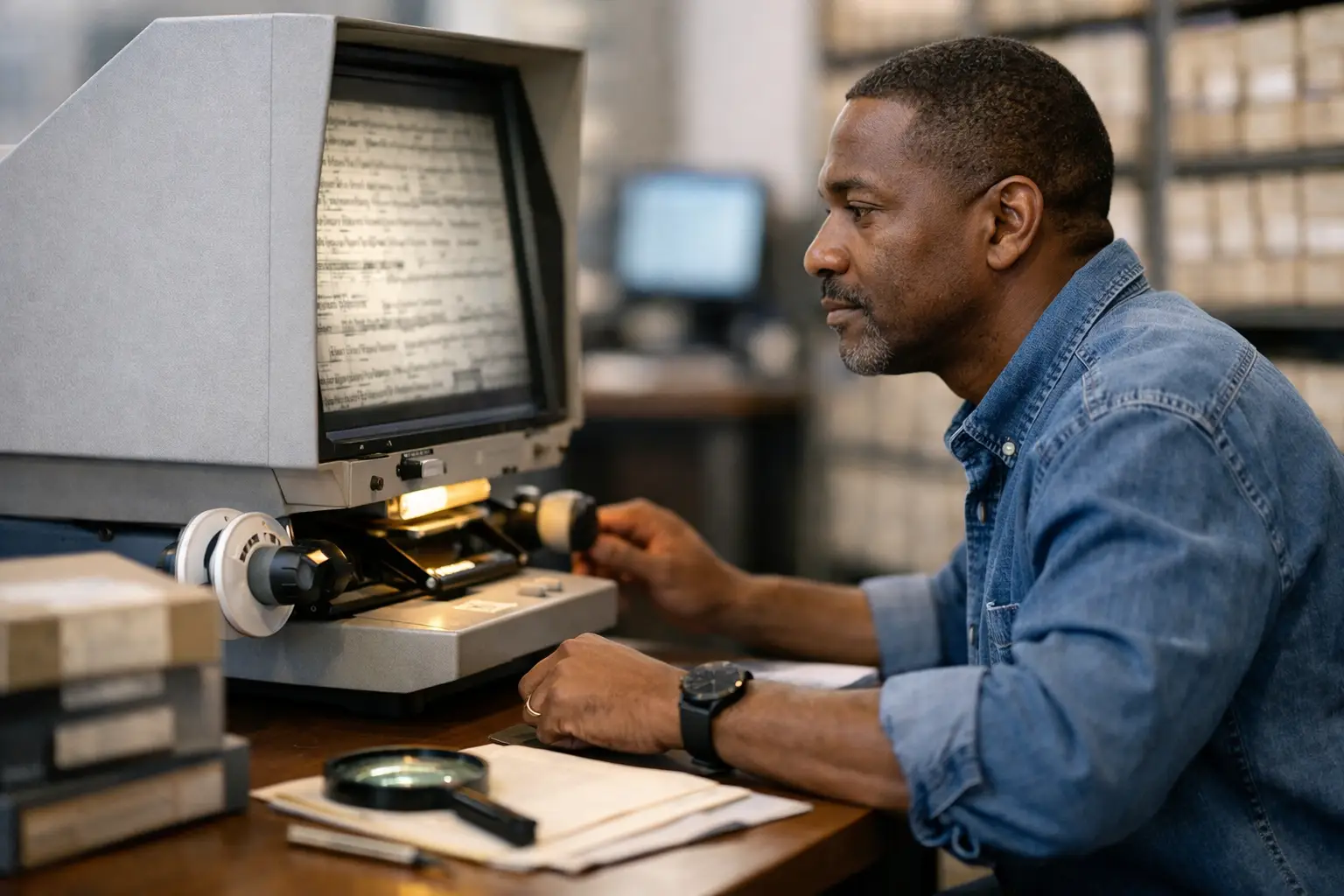
From there, move into Reconstruction-era records that can anchor identity: Freedmen's Bureau field office records, labor contracts, marriage records, rations, complaints, education records, Freedmen's Bank applications, USCT service and pension files, county court records, probate packets, and tax lists. The right record depends on place. A Mississippi county and a Virginia county may require very different paths.
This is where precision changes everything. If a tool can point you toward a hub county, a federal microfilm publication, or a likely archive branch instead of handing you a pile of shaky hints, your workflow stays intact. That is the real value of guided research. The 1870 Project is built around that idea - less wandering, more exact next steps.
Keep the workflow human
Archival research is technical, but family history is personal. Do not separate those two facts. Interview relatives while you search. Ask about names that repeat, churches attended, burial places, military stories, and who kept the Bible, the photos, or the funeral cards. Memories are imperfect, but they often contain the county, nickname, or kinship clue that makes an archive search finally click.
Just be careful with memory evidence. Use it as direction, not proof. A relative's story that "our people were from near Vicksburg" may turn into the key county lead. It may also be off by forty miles and one generation. That does not make it useless. It means it belongs inside the workflow, where it can be tested against records.
The best workflow is the one you will repeat
Some researchers love detailed logs. Others need a simpler running document with dates, searches tried, results found, and next steps. Either can work. What matters is consistency. Your archival workflow should reduce friction, not create more of it.
If your process leaves you with clearer questions, better county targets, and fewer random searches, it is working. If it keeps turning documents into the next usable action, it is working. And if it helps you stay with the search long enough to find the people who seem to disappear from the record, it is doing what family history research is supposed to do.
Your family was here. The records are rarely neat, but they are not silent. A strong workflow helps you hear what they are saying next.