A Guide to Post Emancipation Records
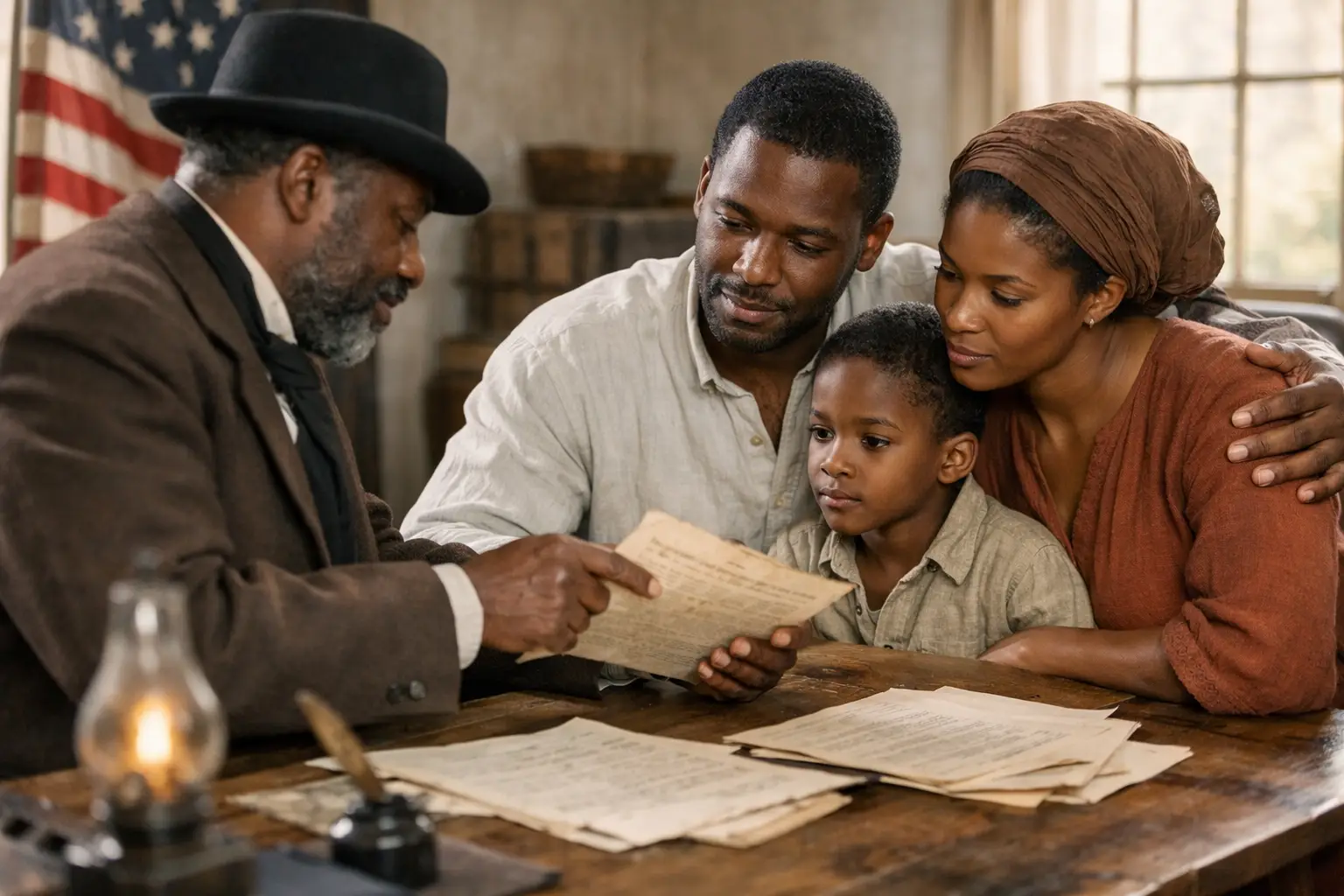
If your family line seems to appear out of nowhere in 1870, that is not a failure in your research. It is the shape of the records. A good guide to post emancipation records starts with that truth: formerly enslaved people were documented differently, inconsistently, and often by institutions that cared more about labor and control than identity. That is exactly why the years after the Civil War matter so much. They hold the first clues that begin to reconnect names, families, places, and movement.
For many researchers, the mistake is looking for one magic record. There usually is not one. What works is building a chain of evidence across the first years of freedom, then using those clues to move backward and sideways at the same time. Post-emancipation research is less about collecting documents and more about finding the next best lead.
What post emancipation records actually include
When people say post emancipation records, they often mean Freedmen's Bureau documents. Those records are essential, but they are only one part of the picture. The stronger approach is broader. You are looking at the records created between roughly 1865 and the 1880s that captured newly free people as workers, parents, spouses, soldiers, church members, land buyers, criminal defendants, witnesses, voters, and citizens.
That means federal records, state records, county records, and private collections can all matter. In one county, a labor contract may be your breakthrough. In another, a marriage register or tax list may do more. It depends on where your family lived, who formerly enslaved them, whether they moved after the war, and which local offices kept records consistently.
Start with 1870, but read it like a researcher
The 1870 census is often the first federal census where formerly enslaved ancestors appear by name. That makes it the anchor, not the finish line. Pull the whole household, nearby households, and the neighborhood around them. Pay attention to ages, birthplaces, occupations, real estate, personal estate, and the surnames of adjacent families.
Those nearby names can matter as much as the ones inside the household. Families often stayed close to kin, former enslavers, or others from the same plantation community. If your ancestor is living next to a white household with the same surname, that may be coincidence, but it may also point to the enslaver family or a postwar work arrangement. Treat it as a clue, not a conclusion.
The same is true for birthplace. If a person says they were born in Virginia but is living in Mississippi in 1870, that gap may reflect forced migration before the war. The post-emancipation records you need might sit in more than one state.
The Freedmen's Bureau is powerful, but it is not uniform
Any serious guide to post emancipation records has to make room for the Bureau of Refugees, Freedmen, and Abandoned Lands. These records can include labor contracts, marriage records, rations, complaints, hospital registers, school records, indenture disputes, and letters mentioning named individuals. Some of these documents are rich with relationships. Others give you just enough to identify a county, an employer, or a spouse.
The catch is that Bureau coverage varies by place and by office. Some field offices produced detailed records. Others left sparse paper trails. Names may be misspelled. Ages shift. A person may appear under a first name only in one document and a full name in another.
That is why locality matters. Do not search the Bureau as one giant collection and hope for a perfect hit. Search by county, nearby towns, field office, and known associates. If you know where a family lived in 1870, work outward from that point instead of searching the entire South at once.
Freedman's Bank records can give you family structure fast
Freedman's Savings and Trust Company records are some of the most revealing postwar records available. A single bank entry might name a depositor's parents, siblings, spouse, children, birthplace, residence, and employer. For many families, this is the first record that lays out relationships in one place.
Still, use caution. Not every detail was provided by the account holder directly, and not every clerk recorded names accurately. A bank record can open a door, but it should be tested against census entries, marriage records, and local records. The best use of these records is not to treat them as perfect, but to use them to generate precise follow-up searches.
County records often solve what federal records cannot
Federal collections get attention because they are more searchable. County records are often where the real work gets done. Marriage registers, cohabitation records, deed books, tax rolls, court minutes, probate files, bastardy bonds, apprenticeship records, and voter registration lists can all place a person in a community with enough detail to connect generations.
Cohabitation records are especially important in former slaveholding states that recognized marriages after emancipation. A couple who had been living as husband and wife for years may have registered their union after the war, sometimes naming how long they had been together and where they lived.
Court records can be uncomfortable reading, but they are often packed with names. Labor disputes, custody cases, minor criminal charges, and civil claims may mention relatives, employers, neighbors, and former enslavers. If your ancestor had little property, the courthouse may still have documented them because conflict creates paper.
Military records can reconnect families and locations
If an ancestor or likely relative served in the United States Colored Troops, military and pension records can be foundational. Service files place a man in time and space. Pension files can go much further, naming wives, children, former residences, marriages, and witnesses who knew the family before the war.
These files are not quick reads, and they are not always easy to interpret. But they are often worth the effort because they force the government to ask relationship questions that other records ignored. A widow's pension application, for example, may require proof of marriage and testimony from people who had firsthand knowledge of the couple's life.
Churches, schools, and aid societies fill in the human picture
Not every breakthrough comes from a government office. Churches documented baptisms, marriages, membership transfers, and discipline. Mission schools and aid societies kept teacher reports, student lists, and correspondence. Mutual aid groups and fraternal organizations sometimes preserved membership data when civil offices did not.
These records can be harder to locate and less standardized. That is the trade-off. They take more effort to find, but they may preserve the exact community ties you need. If a federal search is producing fragments, local Black churches and postwar school activity in the same county may reveal the family network behind those fragments.
How to use this guide to post emancipation records in the right order
The smartest sequence is usually not glamorous. Start with the 1870 and 1880 census, then build a locality profile. Identify county, township, neighbors, likely former enslaver surnames, and migration clues. After that, check Freedmen's Bureau material and Freedman's Bank entries tied to that place. Then move into county marriage records, deed books, tax lists, court minutes, and military or pension files where relevant.
If you hit a dead end, do not just search wider. Search deeper around the same people. A brother-in-law, a widow next door, or a pension witness may carry the clue your direct ancestor's records do not. Genealogy after emancipation often works through clusters, not isolated individuals.
This is also where better tools matter. The 1870 Project is built for exactly this problem. Instead of dropping you into a pile of databases, it helps point to the next useful record set, county, and archive path so you can keep moving.
Common mistakes that slow people down
The biggest mistake is assuming the surname is stable. Many freed people kept, changed, or alternated surnames in the years after emancipation. Another mistake is searching only for exact ages. Ages in postwar records can drift by several years.
A third problem is treating state lines as fixed research boundaries. Families crossed them before and after the war, often under pressure. Finally, many researchers ignore associates. That is costly. Former enslavers, neighbors, military comrades, and marriage witnesses can all point to the record your ancestor never signed.
What progress really looks like
Progress in this work is often incremental. One record gives you a county. Another gives you a spouse's first name. Another places a family near a plantation surname. That may not feel dramatic, but it is how real lineage gets rebuilt.
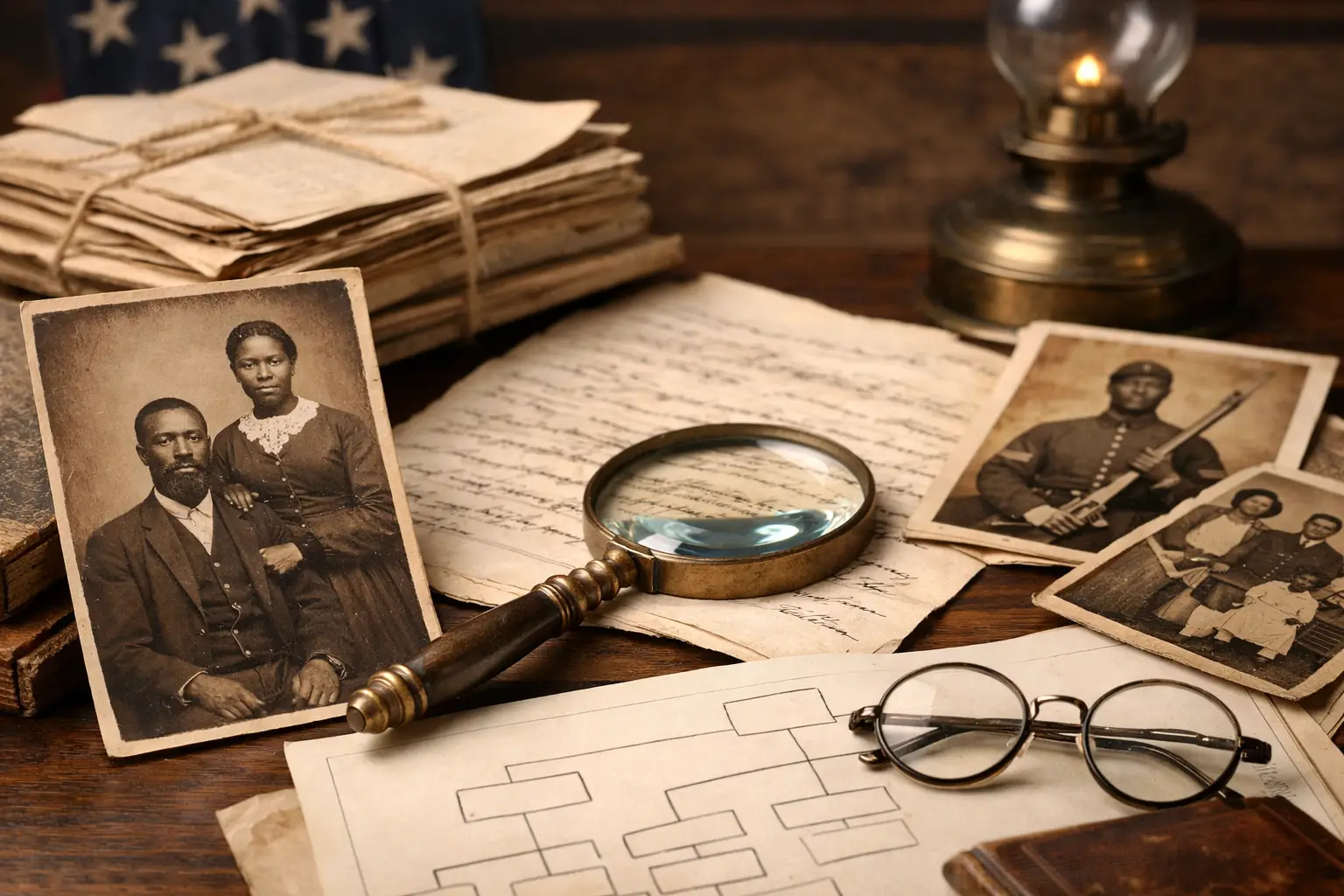
Your family was here. The paper trail may be broken, scattered, or buried in the wrong county under the wrong spelling, but it exists in pieces. The job is to turn those pieces into direction, then keep following the trail until names become people again.