How to Find My Ancestors Faster

Most people do not start family history with a neat chart and a clear plan. They start with a name that may be misspelled, a grandparent who only remembers half a story, and a question that keeps coming back: how do I find my ancestors when the records seem to disappear right when the trail matters most?
That question gets sharper if your family line runs into slavery, migration, name changes, county splits, or records that were never indexed well in the first place. The good news is that you do not need perfect information to make progress. You need the next best move. Good genealogy is less about collecting every record and more about choosing the right record, in the right place, at the right time.
If you want to find my ancestors, start backward
The fastest way to lose momentum is to jump straight to the 1700s. Start with yourself, then your parents, then grandparents, and move back one generation at a time. That sounds basic, but it is where most research either becomes solid or starts to wobble.
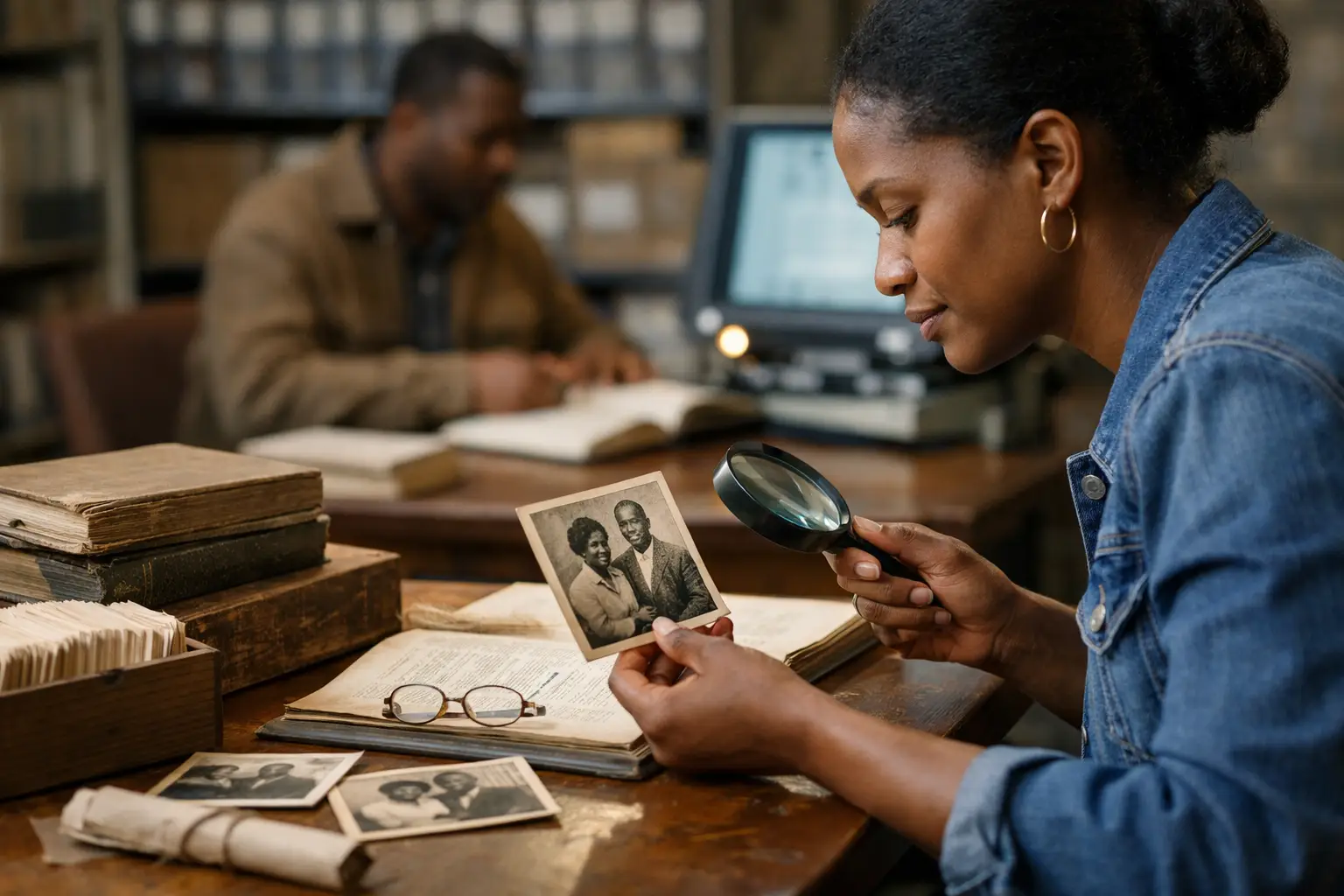
Gather the records that place each person in a specific time and place. Birth certificates, death certificates, marriage records, obituaries, funeral programs, church programs, city directories, military draft cards, and census entries all help. The real goal is not just to prove a name. It is to build a timeline.
A timeline tells you where someone lived, what county they were in, who lived nearby, what their occupation was, whether they owned land, and which institutions touched their lives. Those details matter because records were created locally. If you do not know the county, the church, or the military unit, you are often searching too broadly to get a useful result.
Why people get stuck when they try to find my ancestors
Most brick walls are not really brick walls. They are indexing problems, location problems, or identity problems.
An indexing problem happens when a record exists but was transcribed badly. A surname like Johnson becomes Johnston. A first name like Harriet becomes Hettie. A birthplace gets shortened or guessed. If you search too literally, you miss the person you need.
A location problem happens when families crossed county lines, state lines, or racial lines in the records. A person may have lived on one plantation, married in another county, appeared in a neighboring district census, and been buried under a different surname. The family stayed put. The paperwork did not.
An identity problem is the hardest one. Two men with the same name lived in the same county. A widow remarried and children appear under a stepfather's surname. A formerly enslaved family chose a surname after Emancipation that does not match the last slaveholder in the county. This is where beginners often assume there is no record, when the real issue is that the identity has to be reconstructed from several records together.
The records that move research forward fastest
If your goal is speed and accuracy, some records pull more weight than others. Federal census records are the backbone because they place households in time, but they are only the beginning. Death certificates can name parents. Marriage licenses can reveal previous surnames. Draft registrations can confirm age and county. Probate files expose family relationships that no census ever explains.
For African American families, the 1870 census is often the first large-scale federal census where formerly enslaved ancestors appear by name. That makes it a starting line, not an ending line. To move before 1870, you often need to connect that household to Freedmen's Bureau records, Freedman's Bank records, labor contracts, cohabitation records, tax lists, plantation papers, military service files, county court records, and probate material tied to white families in the same area.
This is also where precision matters. Searching "James Carter Georgia" is too loose. Searching a known county, approximate birth year, spouse name, nearby households, and postwar labor records is a strategy. The difference is huge.
How to find my ancestors with DNA without getting lost
DNA can help, but only if you use it as a research tool instead of a magic answer machine.
A DNA match list on its own is just a crowd. The real value comes from pattern recognition. Are your strongest unknown matches clustered in one county? Do several of them descend from the same white family in the 1850s? Are there repeated surnames across matches who do not know how they connect to each other? That is where DNA becomes directional.
The mistake many people make is chasing the closest match first. Sometimes the better move is studying a cluster of second and third cousins whose trees point to the same place. That cluster can tell you which courthouse, church, slaveholding family, or migration route to investigate next.
This is exactly why modern genealogy tools need to do more than show you centimorgans. They should translate DNA into archive actions. If a DNA pattern suggests a hub county and a specific federal microfilm series, that is useful. It gives you a path you can follow today instead of another week spent guessing.
Family interviews are not optional
If an elder in your family is still here, talk to them now. Not eventually. Now.
People often think interviews are just for sentimental details, but they are also research assets. A great-aunt may remember that a grandfather used a middle name at work, that the family attended a specific Baptist church, that cousins moved to St. Louis after the war, or that one branch called a woman by her maiden name long after she married. Those clues can solve records that would otherwise never line up.
Keep the questions narrow at first. Ask where people lived, what names they used, who lived next door, what church they attended, where they were buried, and which relatives stopped speaking to each other. Family conflict leaves a paper trail just as often as family harmony does.
And write it down carefully. Memories are imperfect, but they are often directionally right. The point is not to treat every story as proven fact. The point is to gather leads before they vanish.
What to do when the trail stops at 1870
The 1870 barrier is where many family historians feel the air go out of the room. That reaction makes sense. Before 1870, formerly enslaved people were rarely recorded in ways that make modern searching easy. But this is not where the work ends. It is where the method changes.
When you hit 1870, stop asking only, "Can I find my ancestors by name?" Start asking, "Who controlled the land, labor, money, and legal records around them?" Study the entire community. Look at white households nearby in 1870 and 1860. Compare surnames, property patterns, probate files, labor contracts, and postwar disputes. Search the county, not just the surname.
This is slower than typing one name into a giant database, but it is often what breaks the case open. Formerly enslaved families were part of documented economic systems, military occupation systems, church networks, and courthouse systems. If the person is hard to see directly, follow the system around them.
A better way to find my ancestors online
A lot of genealogy websites give you more records than you can use and less guidance than you need. That is why people end up with fifty open tabs and no proof.
A better approach is guided research. Search widely, yes, but then narrow quickly. Let the evidence tell you the next best source. If a census suggests a county, search deeds and probate there. If DNA points to a cluster, trace those families together. If an interview reveals a church, go after church minutes, baptisms, and burial records. Momentum comes from sequence.
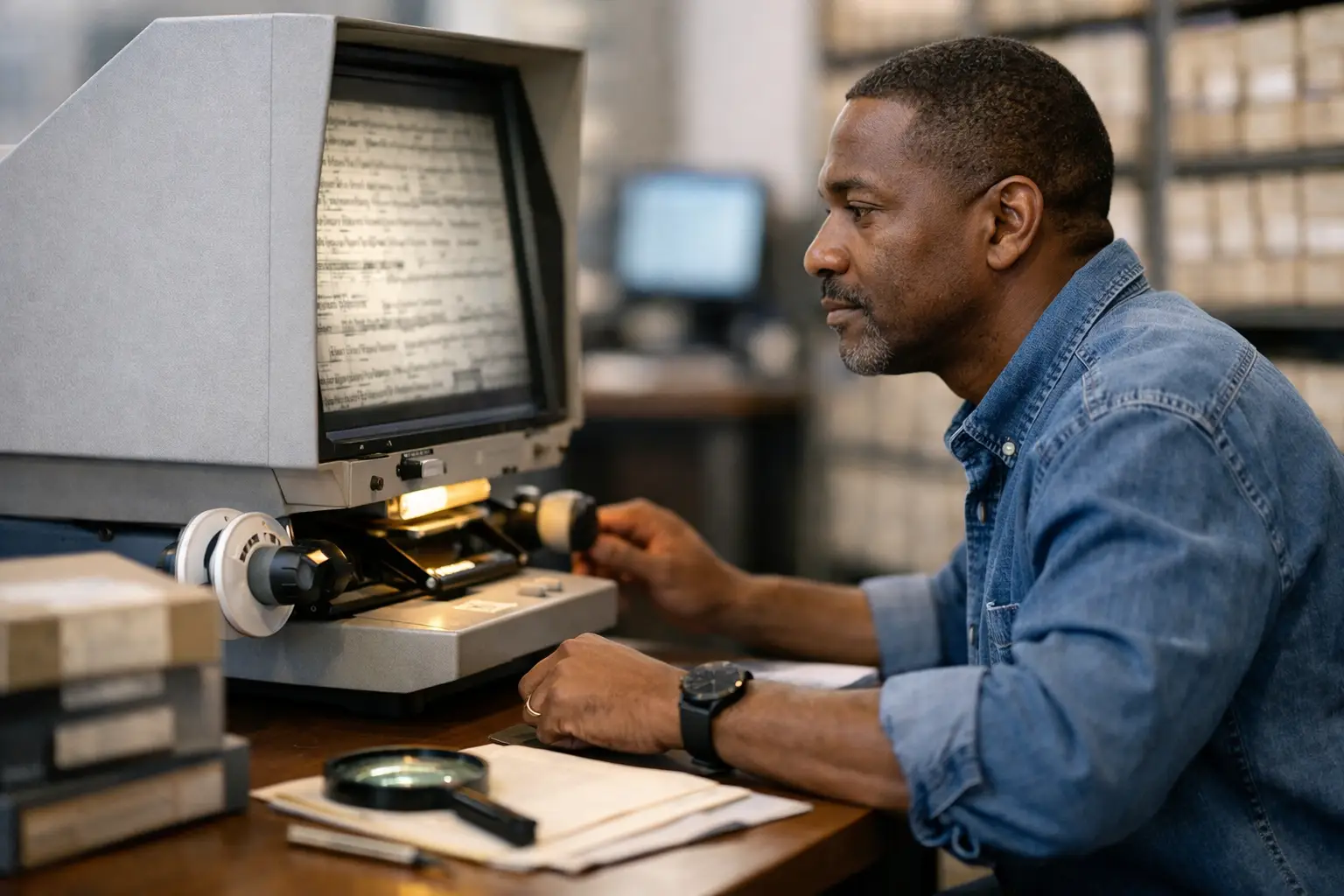
That is the difference behind tools like The 1870 Project. Instead of dumping endless hints on you, the strongest systems tell you what to do next - which county matters, which archive series fits, even which microfilm number is worth pulling. That level of direction saves time, but more than that, it keeps the search human. You are not just collecting records. You are recovering people.
The truth is that family history is rarely solved by one lucky search. It is solved by stacking clues until a life comes back into view. Your family was here. The records may be scattered, mislabeled, or buried inside the wrong county and the wrong surname, but they were here. Keep following the evidence, keep asking better questions, and do not mistake a hard trail for a dead one.