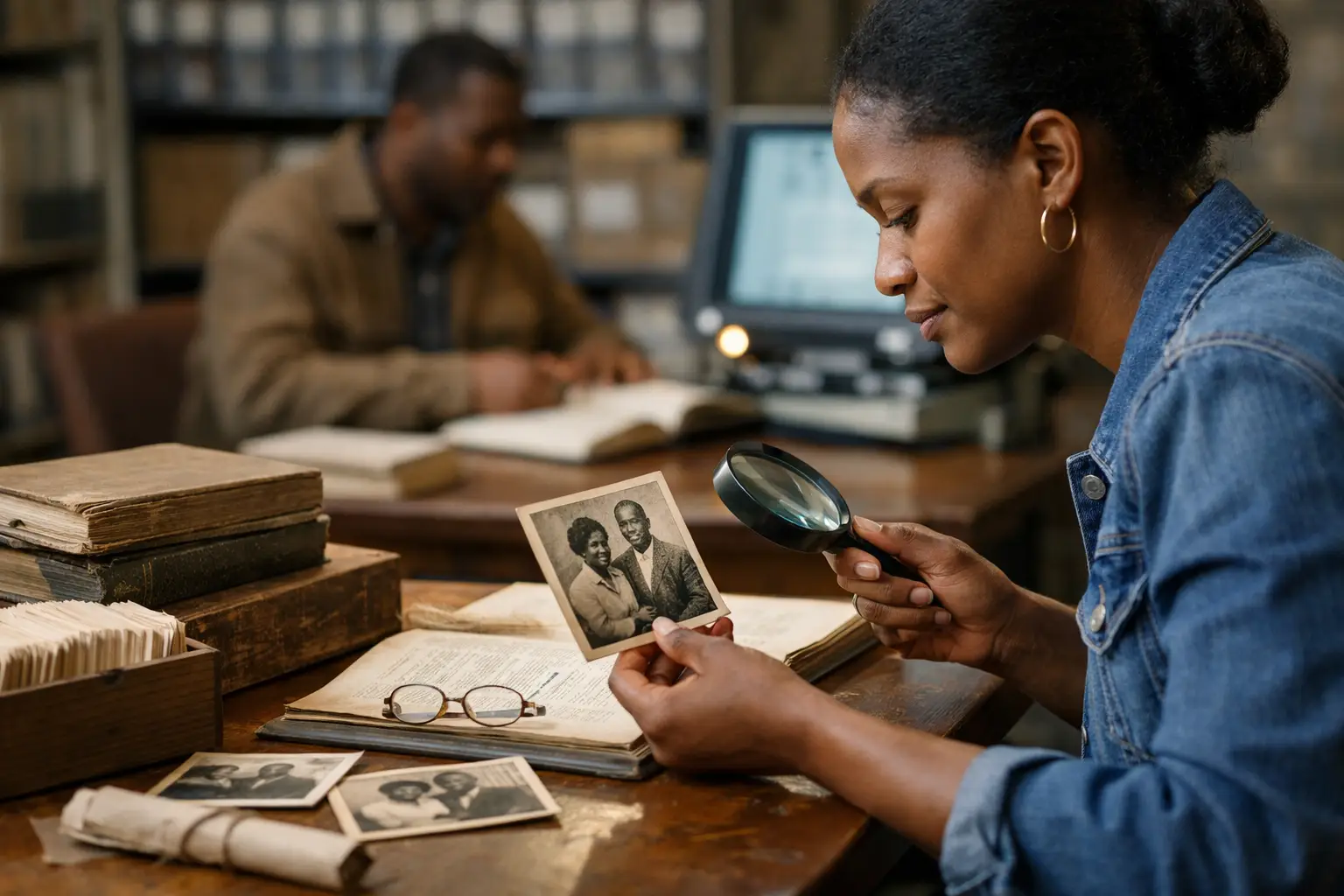
How to Start Post Civil War Genealogy
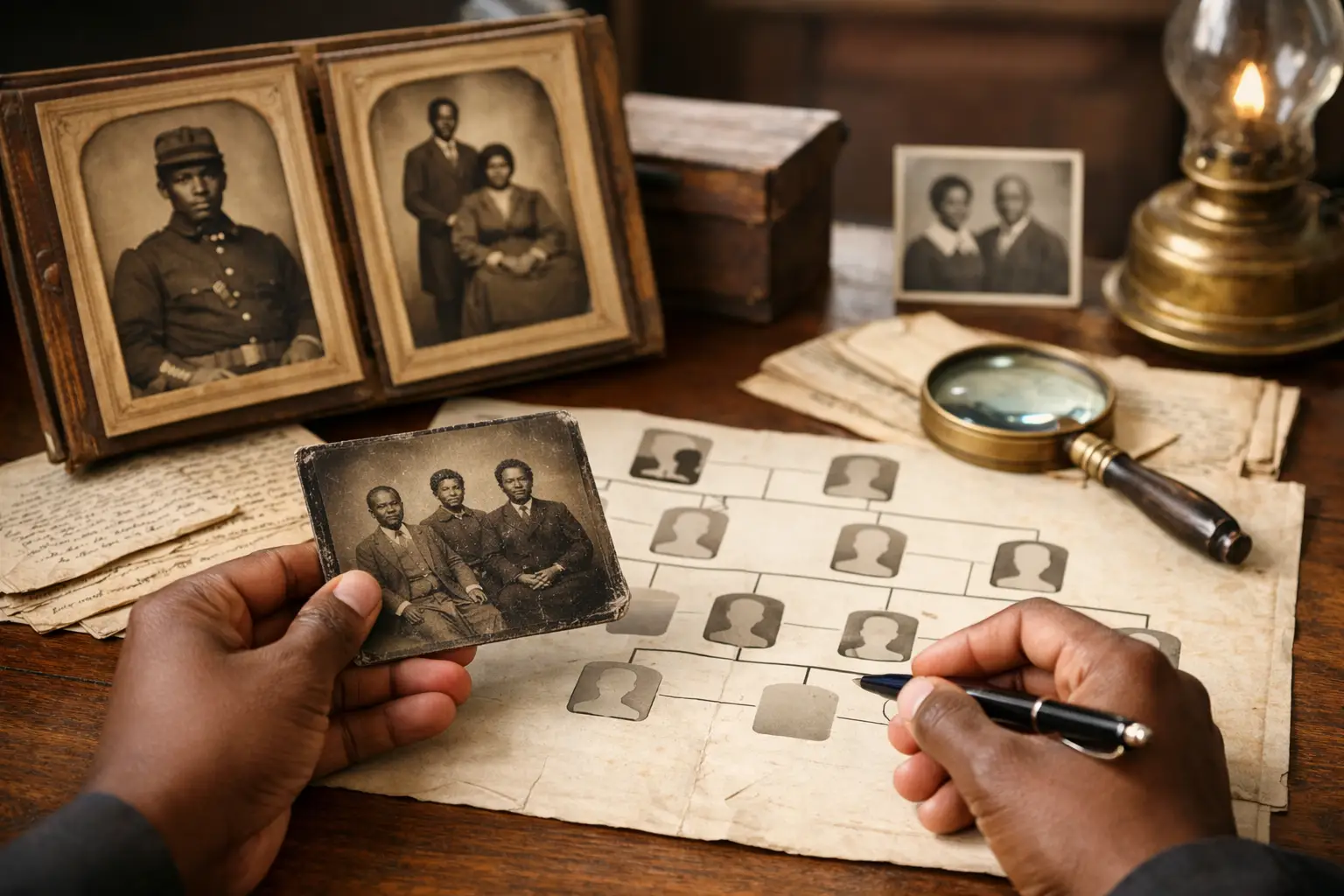
A lot of family history research stalls for the same reason: 1870 is the first clear federal census entry you can find, and everything before it seems to vanish. That is exactly why post Civil War genealogy matters. If you start with the years right after the war instead of reaching backward too fast, you can often identify the county, community, surname changes, military ties, and labor relationships that point to the earlier generation.
This is especially true for African American families. For many formerly enslaved people, the first stable paper trail begins after Emancipation. But the same logic helps other researchers too. Veterans moved, widows filed claims, families acquired land, and counties recorded marriages, taxes, and probate in ways that can reveal where a family came from and what happened next.
The mistake is treating 1870 as the end of the trail. In practice, it is often the beginning of a much narrower and more useful search.
What post Civil War genealogy really means
Post Civil War genealogy is not just research set between 1865 and 1880. It is a method. You use the records created in the aftermath of war, emancipation, migration, and rebuilding to identify the people, places, and institutions connected to your family.
That distinction matters because not every useful record will say exactly what you want. A marriage register may not name parents. A labor contract may not state a birthplace. A pension file may describe a wound but not an enslaver. Still, when several records point to the same county, same neighbors, same age pattern, or same military unit, they create direction. Good genealogy is often built that way - not from one perfect record, but from several records that agree.
Start with the first household you can prove
If you are tracing a family line that becomes visible in 1870, begin there and build outward before moving backward. That sounds obvious, but many researchers skip over the disciplined part and start searching broad databases for a desired ancestor name. That usually creates noise, not progress.
Take the 1870 census entry you trust most and study the full household. Look at ages, birthplaces, occupations, real estate value, personal estate value, and nearby households. The neighbors matter. So do naming patterns. A child named after an older person nearby can be a clue. A cluster of families born in the same state or county can signal migration together.
Then move to 1880 if possible, and back-check with 1867 to 1869 local records where available. The goal is not just to confirm identity. The goal is to place your family inside a real postwar community.
Why the county matters more than the name
Names change. Spellings drift. Ages move around. Counties are often steadier than all three.
If you can identify the exact county where a family lived in 1870, your chances improve dramatically. That county becomes the center for tax rolls, deed books, marriage records, probate, voter lists, court minutes, school records, and local newspaper notices. For African American research, it can also connect you to Freedmen's Bureau field offices, labor contracts, rations records, hospital registers, and complaints that mention former enslavers, plantations, or kin.
A strong county hypothesis can do more than a shaky full-name search across the entire country.
The records that usually move the case forward
In post Civil War genealogy, some records consistently produce better leads than others.
Federal census records from 1870 and 1880 are foundational, but do not stop there. Marriage records are often excellent because they can place people early in freedom, sometimes before a family appears together in federal schedules. Death records can help too, though their quality depends heavily on who gave the information.
Military records matter far beyond battlefield history. United States Colored Troops service records, pension applications, widow claims, and dependent files can be rich with ages, residences, marriages, children's names, and affidavits from neighbors. White veterans' pension files can be just as valuable for broader family reconstruction. If your ancestor or a close relative served, that file may hold years of postwar movement in one place.
Land and tax records are underrated. A deed may show a purchase from a former enslaver, a migration from one county to another, or the first moment a newly free family gained legal control over property. Annual tax records can keep a man in place between census years and sometimes distinguish two men with the same name.
For African American families, Freedmen's Bureau and Freedman's Bank records can be decisive. But they require careful reading. A bank record may list a birthplace, a spouse, a mother, siblings, or former owner. A labor contract may reveal an employer whose probate or plantation records become the bridge into slavery-era research. These records are powerful, but they are uneven. Some counties have a lot. Others have almost none.
When DNA helps and when it doesn't
DNA can accelerate post Civil War genealogy, but only if you use it to answer a narrow question. If you simply collect matches without a plan, the result is another pile of names.
The better use is directional. Do your strongest shared matches cluster in one county? Do they descend from a few interconnected surnames? Are there white matches whose paper trails stay rooted near your Black ancestors in 1870? That kind of pattern can suggest hub counties, migration routes, and candidate families worth testing in the records.
DNA is less useful when the documentary work is too thin. If you have not yet built the 1870 to 1880 household clearly, the match list will often be harder to interpret than the records themselves. Paper and DNA work best together, not in isolation.
Post Civil War genealogy for formerly enslaved ancestors
This is where research becomes both more difficult and more precise.
After the Civil War, formerly enslaved people entered the record in new ways - through marriages recognized by the state, labor agreements, military service, schooling, voter registration, and disputes handled by federal agents. Those records can carry fragments of pre-1870 identity that do not appear anywhere else.
The challenge is that freedom did not create one clean paper trail. Some people stayed in place. Others moved quickly to reunite with family, seek wages, or leave dangerous conditions. Surnames could change within a single decade. A child in one household in 1870 may appear under another surname by 1880.
That is why relationship mapping matters. Track siblings, spouses, in-laws, godparents, witnesses, and neighbors. If one person leaves a better record than your direct ancestor, follow that person. A brother's pension affidavit or a sister's marriage entry may identify the family network more clearly than your ancestor's own documents.
If you hit the 1870 brick wall, do not assume the trail is gone. More often, the trail is sideways before it is backward.
A faster research workflow that actually works
The most effective postwar research is sequential, not random. Prove the 1870 household. Identify the county. Build the family cluster. Check local marriage, land, tax, probate, and court records. Add military and pension records if relevant. Then compare the paper trail with DNA clusters and oral history.
That last part matters more than many people admit. Interview the oldest living relatives now, even if they only remember fragments. A repeated first name, a church affiliation, a story about moving after the war, or a rumor about military service can narrow your search in ways databases cannot.
This is also where a guided tool can save real time. The1870Project is built for this exact problem - not just showing you records, but pointing you to the next best action, down to likely counties and federal microfilm references when DNA and archival clues align. That kind of precision matters when your family has already been buried under vague hints and subscription clutter.
What to do when nothing matches perfectly
Expect contradictions. Ages shift. Birth states change. Middle initials appear and disappear. A widow may report one marriage date in a pension file and another on a county register.
Do not throw out a lead because one detail is wrong. But do not force a match because three details feel close enough, either. The real standard is whether the full body of evidence makes sense together. Same county, same associates, same spouse, same children's ages, same military unit - that combination is stronger than one exact age or spelling.
Genealogy after the Civil War rewards patience, but it also rewards focus. You do not need every record. You need the records that tighten the circle around a real family in a real place.
Your family was here. The records are uneven, the trail can be painful, and some answers take time. But if you build from the first proven postwar household and follow the county, the cluster, and the strongest next clue, the story usually starts moving again.