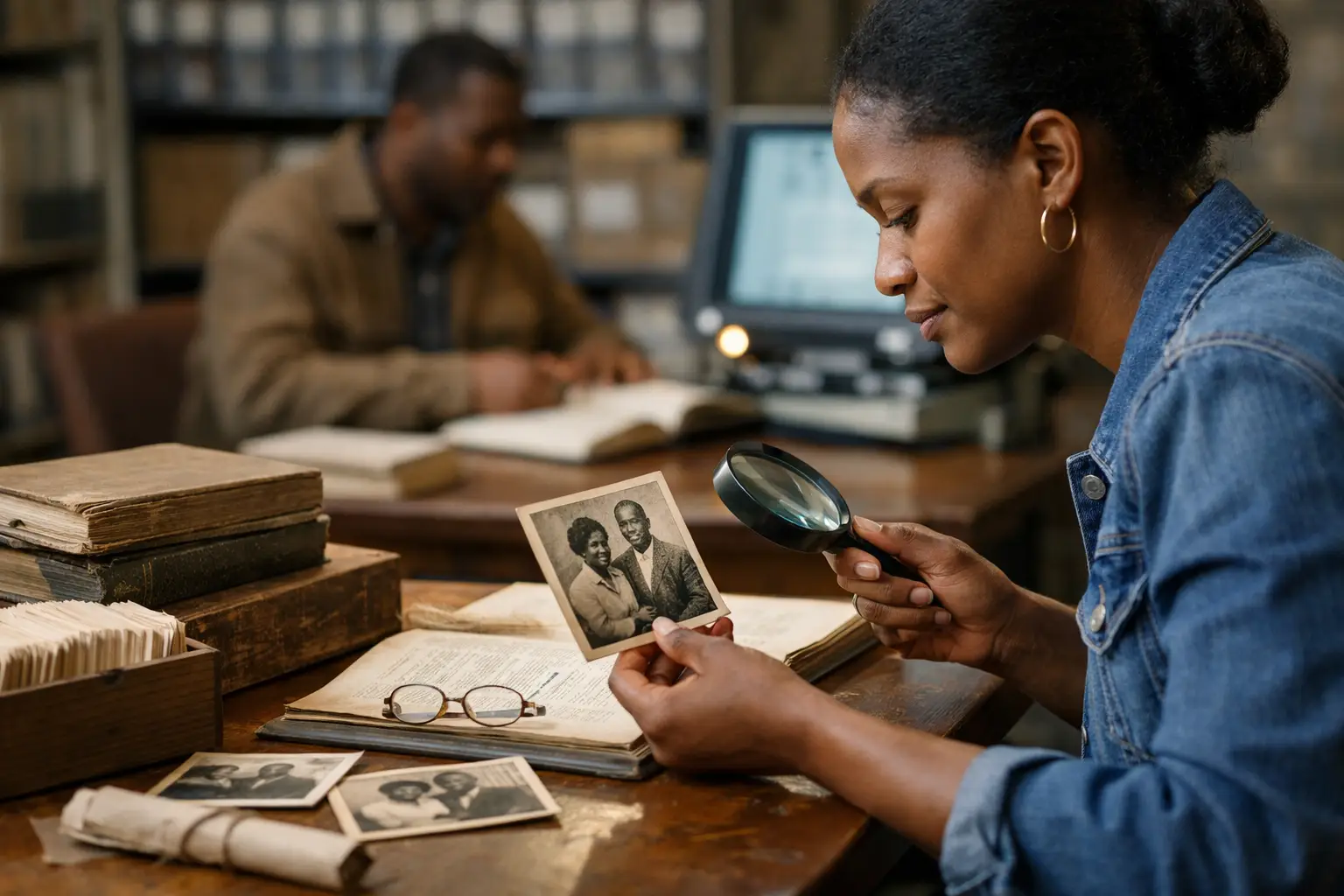
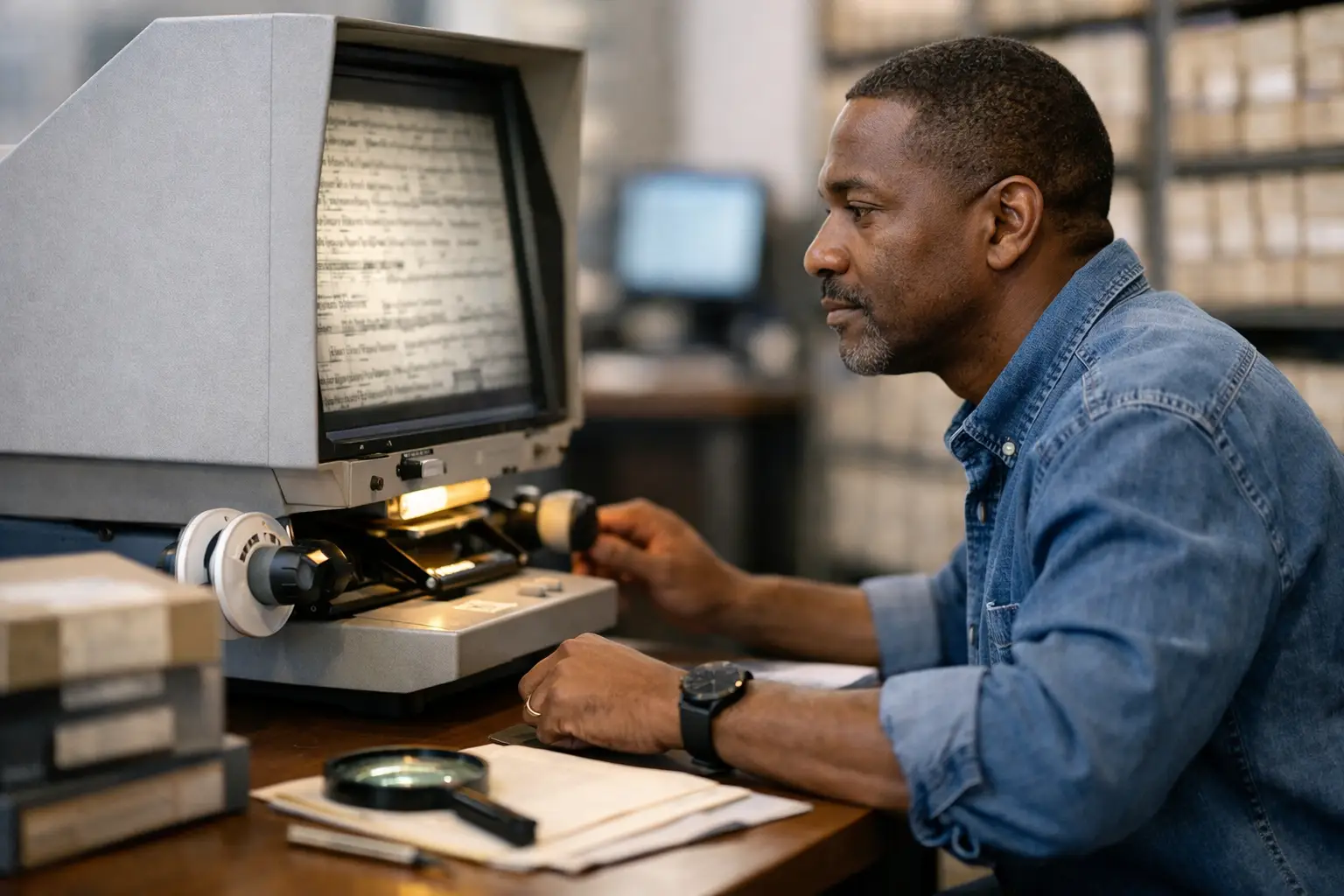
How to Trace Enslaved Ancestors Past 1870
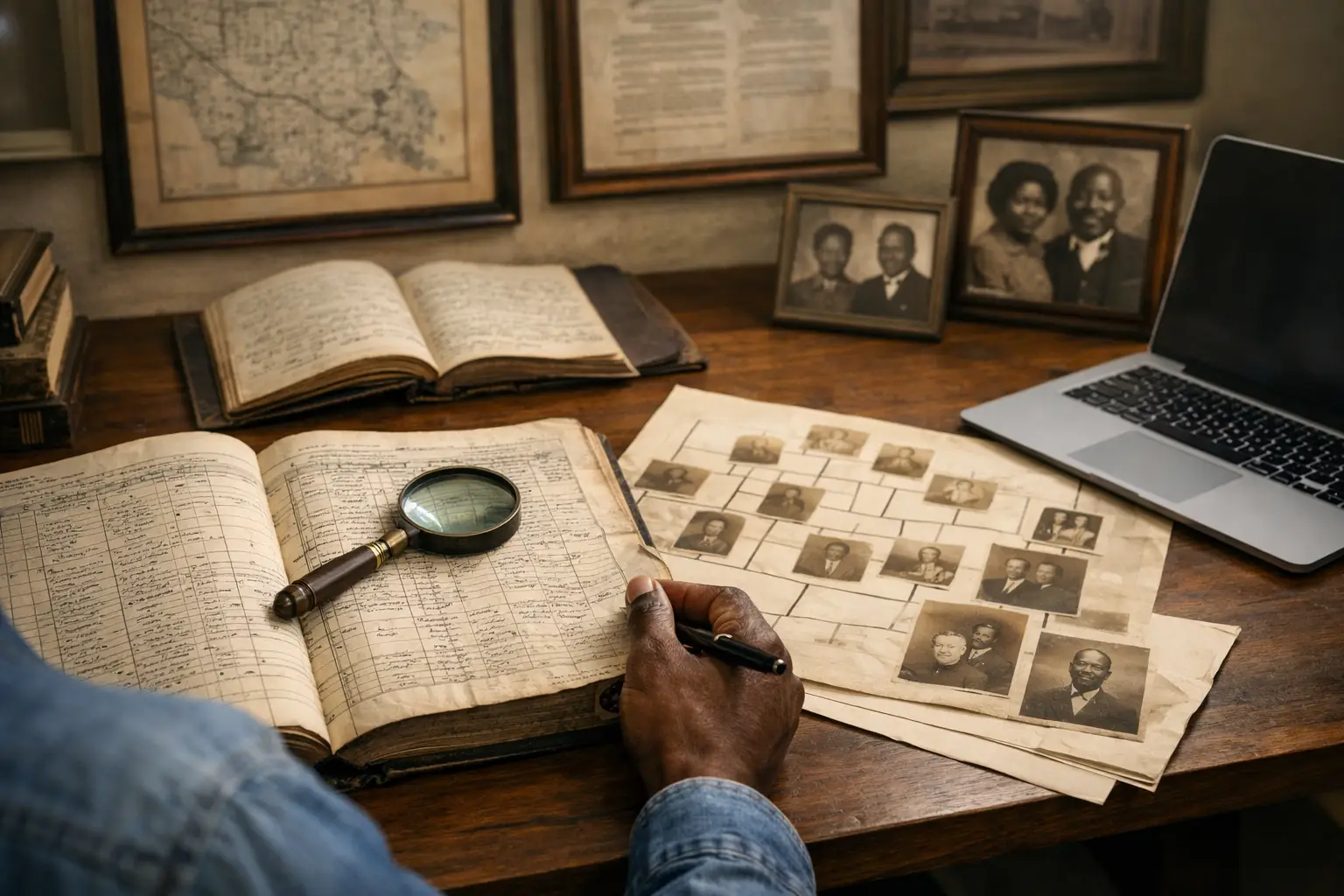
A person who appears in the 1870 Census was not born in 1870. They had parents, siblings, labor, faith, relationships, and a life that existed before the first federal census to name most formerly enslaved people. The challenge in learning how to trace enslaved ancestors is not a lack of history. It is that the history was recorded unevenly, often in someone else’s paperwork.
The way through the 1870 brick wall is to work backward with precision. Start with the family you can prove, identify the exact county and community they lived in, then follow the records created during emancipation and slavery. One document rarely solves the question. A cluster of records can.
Start with the family you can name
Begin with the most recent generation you know and document every step back to 1870. Do not skip this part because you are eager to reach the slavery era. A mistaken parent in 1880 can send years of research into the wrong county, the wrong surname, or the wrong enslaver’s estate.
For each ancestor, build a short timeline from 1870 through 1910. Capture their name, age, birthplace, spouse, children, occupation, neighbors, land ownership, church, cemetery, and every county where they appear. Census ages can shift and spellings can change, so look for patterns rather than perfect consistency.
The 1870 Census is your starting line, not your finish line. Pay special attention to the households immediately before and after your family. Formerly enslaved people often stayed near relatives, former enslavers, people from the same plantation, or members of the same postwar community. Those neighbors may become the clue that identifies a prewar location.
How to trace enslaved ancestors by county
County is often more valuable than surname. Before Emancipation, records were usually kept where property was owned, estates were settled, taxes were assessed, or legal disputes occurred. If your ancestor was in Lowndes County, Alabama, in 1870, the next question is not simply, “Who had that surname?” It is, “Which records in and around Lowndes County documented enslaved people before 1865?”
First, confirm the county boundaries for the period. Counties split, names changed, and families crossed state lines after the Civil War. Search adjoining counties as well, especially if your family lived near a county line or a major road, river, rail route, or plantation district.
Then create a research target: your ancestor’s 1870 name, estimated birth year, birthplace, known relatives, and county. That profile lets you judge whether an earlier record is plausible. A woman listed as Sarah Johnson, age 35 in 1870, may appear before freedom only as Sarah, Sally, or a first name with an age in an estate inventory. Her children may be listed separately. That is painful, but it is also a research reality you can work with.
Use postwar records to find the bridge backward
The most useful records are often those created between 1865 and 1870, when formerly enslaved people were building legal identities, reuniting families, claiming wages, marrying formally, and seeking help from federal agencies.
Freedmen’s Bureau records can name parents, spouses, children, former enslavers, plantations, employers, and places of origin. Look beyond labor contracts. Complaints, marriage records, hospital registers, school records, rations, letters, and court cases can preserve details no census captured. A labor contract may identify the plantation owner. A complaint about unpaid wages may name an entire family group.
Freedman’s Bank records are another powerful source. Depositors sometimes gave their birthplace, current residence, parents, spouse, children, siblings, and former owner. Not every family used the bank, and not every branch survived equally well, but a single entry can turn an unknown origin into a specific county and household.
Also examine 1867 voter registrations, state censuses, cohabitation or marriage registers, and records of Black churches and mutual aid communities. In some Southern states, cohabitation records documented couples who had lived as husband and wife during slavery and then legalized their marriages after the war. These can provide a rare statement of a relationship that predates Emancipation.
Find the enslaver through evidence, not assumption
A shared surname is a clue, not proof. Some formerly enslaved families adopted the surname of a former enslaver. Others chose the name of a parent, a stepfather, a respected leader, a previous owner, or a name entirely their own. Do not attach your family to an enslaver solely because the surname matches.
Instead, look for a documented connection. It may appear in a Bureau complaint, labor contract, bank record, military pension, probate paper, deed, plantation account book, or testimony from a relative. Neighborhood evidence also matters. If a formerly enslaved family lived beside the estate heirs of a plantation owner in 1870, that pattern deserves investigation, but it still needs support from records.
Once you have a credible enslaver candidate, search probate and land records first. Wills, estate inventories, appraisements, divisions of property, guardian records, deeds, and bills of sale may list enslaved people by first name, age, family relationship, skill, or monetary value. Inventories are difficult to read because they reduce human beings to property. Read them carefully anyway. A notation such as “Sarah and her three children” can be the connection that restores a family group erased from other sources.
Tax lists and plantation papers can help establish whether an enslaver held enough people, in the right place, at the right time. The 1850 and 1860 slave schedules do not name most enslaved people, but they can confirm counts, ages, sex, and location. Use them to test a theory, not to prove an identity by themselves.
Let military and court records do the talking
United States Colored Troops service and pension files are among the richest sources for formerly enslaved families. A pension application might include a soldier’s birthplace, age, wife, children, marriage history, physical description, prior owner, or testimony from people who knew him before the war. Widows and dependent children often gave detailed statements decades later, when they had every reason to identify family relationships clearly.
County court records can be just as revealing. Search for apprenticeship disputes, wage claims, criminal cases, lawsuits, estate settlements, guardianships, and petitions. During Reconstruction, formerly enslaved people used courts and federal offices to assert rights that had been denied to them. Their testimony can preserve names and events unavailable anywhere else.
Read every page around a promising record. A case may mention a parent, sibling, witness, landowner, or former employer whose name becomes your next search. This is where careful research beats a giant list of search results. The goal is always the next best action.
Use DNA to identify the right family cluster
DNA cannot tell you the name of an enslaver on its own. It can, however, help you test whether a suspected family, county, or plantation community is worth pursuing. Focus on matches who descend from people in the same place during the same period, especially matches with well-built trees extending into the 1800s.
Group matches by shared locations and surnames rather than chasing every distant cousin. If multiple matches trace back to one white landholding family in the county where your Black ancestors lived after the war, that is a research direction. Compare it against probate records, Bureau documents, age patterns, and known community ties.
The 1870 Project’s DNA Decoder is built for this exact problem: translating match patterns into practical archival leads, such as likely counties and the federal record sets to check. DNA is most useful when it narrows the archive search, not when it replaces documentary proof.
Preserve the living record before it disappears
Interview the oldest relatives now, even if they believe they “do not know much.” Ask where their parents and grandparents lived, which churches or cemeteries mattered, who was called Aunt or Uncle, and which family names were always mentioned. Ask about migrations, land, military service, schools, and family reunions.
Record exact words, nicknames, and place names. A story about “Grandma coming from the Jones place near the river” may sound incomplete today. Paired with an 1870 neighborhood and a probate file, it can become the missing connection. Family memory is not automatically proof, but it is often an exceptionally valuable map.
Keep a research log that separates facts, theories, and unanswered questions. Write down the source, page, county, date, and why you believe a record belongs to your family. When evidence conflicts, do not force a conclusion. Mark the conflict and search for the record that can resolve it.
Your family was here. The paper trail may be fragmented, misfiled, or buried in an estate record that never used their full names. But each verified county, neighbor, marriage, military file, and DNA cluster brings their life into clearer view. Keep moving one documented step at a time. That is how a wall becomes a path.