How to Use NARA Microfilm for Genealogy
You do not need to love old machines, spools, or cryptic archive codes to get real answers from federal records. If you are trying to learn how to use NARA microfilm, what you actually need is a clear path from a family question to the right roll, series, and frame. That matters even more when your search runs into the 1870 brick wall, missing surnames, county changes, or a paper trail that seems to vanish just when your family becomes hardest to follow.
NARA microfilm can look intimidating because it was built for archivists, not for families. The language is technical. The publication numbers can feel random. And if you order or open the wrong reel, you can lose an afternoon fast. But once you understand how the system works, microfilm stops being mysterious. It becomes one of the most precise tools you have.
What NARA microfilm actually is
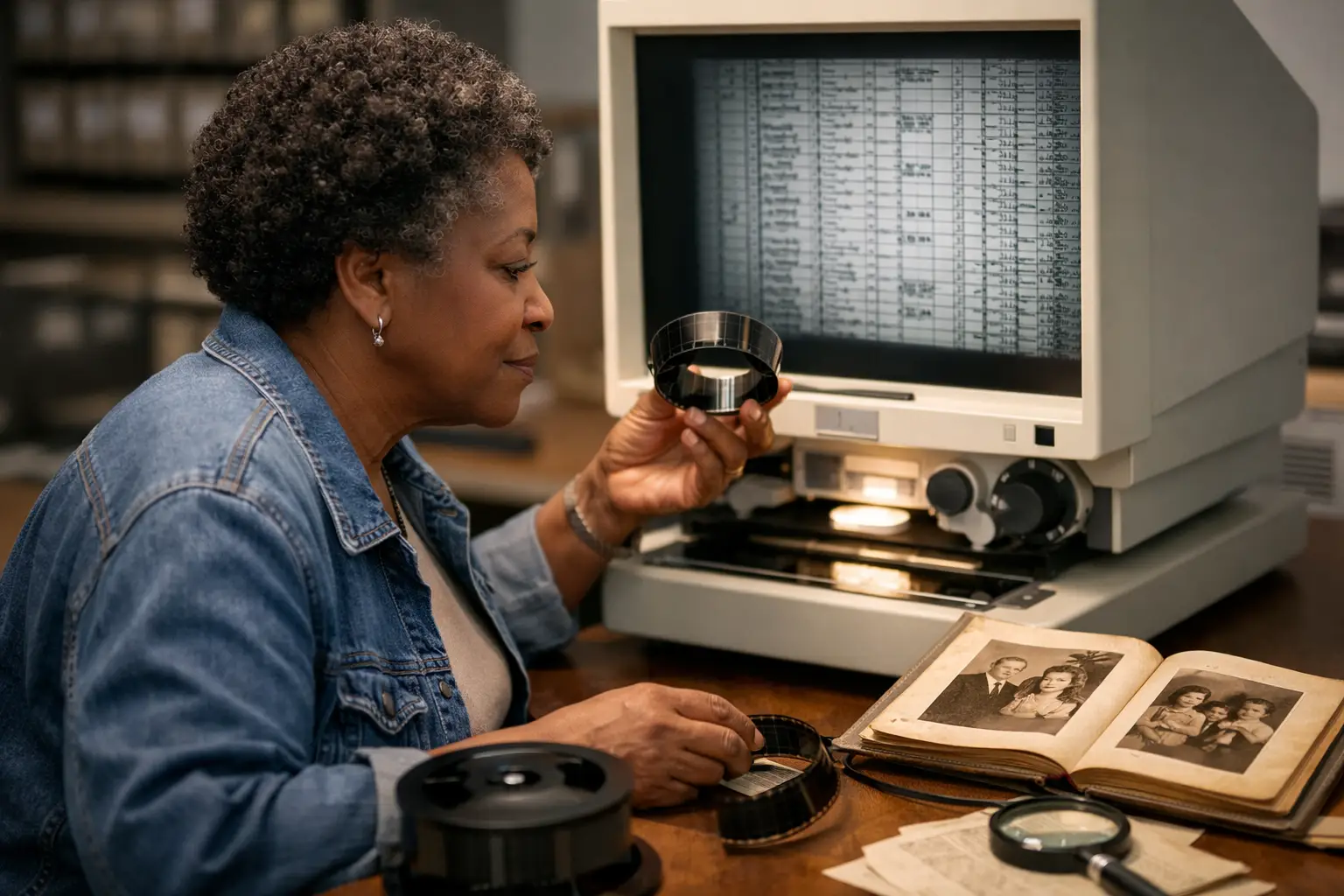
NARA stands for the National Archives and Records Administration. For decades, it preserved and distributed copies of federal records on microfilm - rolls of photographed documents that researchers could view on readers at archives, libraries, and some family history centers. Many of those same records have since been digitized, but the microfilm publication number still matters because it tells you exactly which record set you are dealing with.
That is the first shift to make. Do not think of microfilm as just a format. In genealogy, it is also a locator system. A citation like M432, T625, or M1909 is not archive jargon for its own sake. It points to a specific federal record publication, often narrowed further by roll number, state, county, district, regiment, or date range.
If you are researching African American ancestry, this is especially important. Freedmen's Bureau materials, military service records, census schedules, and postwar administrative records often lead to the names and places that help you move backward. A microfilm number is powerful because it removes guesswork. It tells you where your next answer is most likely to live.
How to use NARA microfilm without wasting time
The fastest way to approach this is to start with a question, not a reel. Are you trying to find a person in the 1870 census? Track a Civil War pension file? Identify a county named in a Freedmen's Bureau labor contract? The record goal determines the microfilm publication, and the publication determines the roll.
For most researchers, the sequence works like this: identify the record group, identify the microfilm publication number, narrow to the correct roll, then search by place, date, and name. If you skip that middle step and search loosely, you often end up buried in records that are technically relevant but practically useless.
Say you are looking for an ancestor in the 1870 census. You need the census publication for that year, then the state, then the county or parish, then the enumeration district if available. If you are looking for a United States Colored Troops service record, you need the military publication tied to that regiment or compiled service series. Different records use different logic. Census records are organized mostly by place. Military records tend to be organized by unit and soldier name. Bureau records can be organized by field office, state, and function.
Start with the place before the person
This is where many searches break down. Family historians naturally search for names first. Archives often work the other way around. Federal records were usually created by office, district, county, regiment, or agency. Names sit inside that structure.
If you know only that your ancestor lived "somewhere in Georgia" after the Civil War, that is not enough for efficient microfilm research. You want the county, nearby counties, and any migration clues. Tax records, marriage records, death certificates of children, cemetery records, and DNA match clusters can all help identify the right place before you ever touch microfilm.
This is also why guided research matters. A platform like The 1870 Project can help translate a DNA clue or family lead into a likely county and then into the federal record sets worth checking. That kind of precision is what keeps a hopeful search from turning into random scrolling.
How to read a NARA microfilm citation
A useful citation usually has four parts: the publication number, the roll number, the record description, and the geographic or organizational scope. For example, you might see a census publication number followed by a roll number for a specific county in Alabama, or a military publication linked to a regiment.
The publication number identifies the larger series. The roll number narrows it down. The description tells you what kind of records are included. The location or unit tells you whether you are even in the right neighborhood.
If one part is missing, be cautious. A citation that says only "NARA microfilm" is too vague to help. A good citation should let you retrace the path. That matters if you want to verify a family story, revisit a record later, or share your evidence with relatives.
Best records to find on NARA microfilm
Not every genealogy problem requires microfilm, but several major record categories still depend on it as a reference point. Federal census schedules are the obvious starting place, especially for 1850 through 1950 searches. Military records are another major category, including compiled service records, pension indexes, and draft registrations. Immigration and naturalization materials may also point back to specific microfilm publications.
For researchers facing the 1870 problem, post-Civil War federal records deserve special attention. Freedmen's Bureau records, Freedman's Bank materials, Southern Claims files, and labor or marriage records can surface names, kinship ties, plantation locations, and former enslavers. These records do not solve every case. Some counties are sparse. Some surnames changed. Some people moved quickly after emancipation. But when they hit, they hit hard.
Using digital copies still counts as using NARA microfilm
A lot of people hear "microfilm" and assume they need to sit at a machine in Washington. Sometimes you do need an archive visit for the best access, but often you do not. Many record sets have been digitized by archives, libraries, or genealogy services while still retaining the original NARA microfilm citation.
That means learning how to use NARA microfilm is still worth your time even if you never touch physical film. The citation acts like a map. It helps you search the right database, recognize the right record set, and avoid confusing one federal series with another. It also makes your notes stronger because you can record exactly what you searched.
There is a trade-off, though. Digitized collections are easier to access but sometimes harder to interpret because interfaces hide the archival structure. You may see a person-level search box and forget that the collection itself is organized by county or field office. When search results miss your ancestor, browse mode and the microfilm citation often become your best friends.
Common mistakes when learning how to use NARA microfilm
The biggest mistake is starting too broad. "Find John Williams in Mississippi" is not a workable microfilm plan. Too many men share that name, and too many counties fit the description. Narrow by place, time, family cluster, military unit, or associated surname first.
The second mistake is assuming the index is the record. Indexes are helpful, but they are abstractions. They can omit pages, mistranscribe names, or separate a person from the context that makes the record meaningful. Always push through to the image set tied to the correct publication and roll.
The third mistake is treating one miss as proof your ancestor is absent. Handwriting varies. Page order can be odd. Counties split. Clerks made mistakes. A failed search may mean the record was filed under a neighboring district, alternate surname, or different age estimate. This is where patient, targeted browsing beats repeated keyword searching.
A practical workflow that works
When you are ready to search, keep your workflow tight. Write down the exact question you are trying to answer. Identify the likely place and year range. Determine the federal record type most likely to answer that question. Then find the NARA microfilm publication number and roll details before you start browsing images.
As you search, log what you checked, even when you find nothing. Note the publication, roll, county, district, page range, and date. Negative searches matter. They stop you from circling back to the same dead end and help you see where the real gap is.
If a record mentions neighbors, witnesses, regiment members, employers, or former enslavers, follow them too. Genealogy is rarely a solo search. Families appear in clusters, and federal records often reveal those clusters more clearly than a simple name search ever will.
NARA microfilm is not glamorous. It is not designed to hold your hand. But it remains one of the clearest paths from family memory to federal proof. When you learn to read the citation, trust the place, and follow the record structure, the archive gets quieter and the story gets louder. Your family was here. The records are still there. The right reel is often closer than it looks.