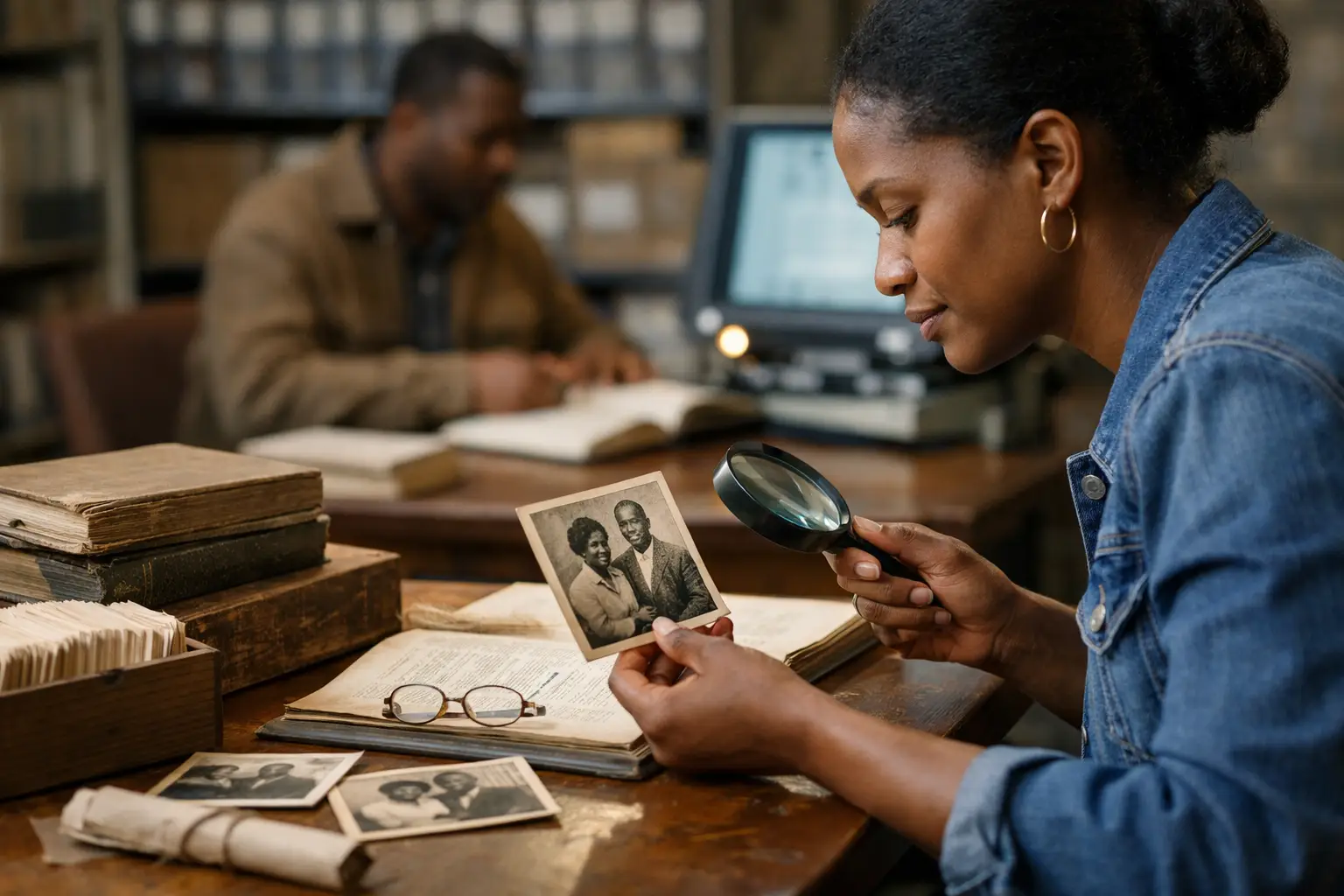
How Microfilm Clues Identified an Ancestral County
A faded entry may give you more than a name. The moment microfilm clues identified an ancestral county, your research changed from a broad hunt across a state to a focused search through one courthouse, one federal district, and one community. That shift matters most when an ancestor disappears before 1870, changes surnames, or appears in records that were never indexed well.
For families tracing formerly enslaved people, county is often the missing key. Enslavement records were commonly created and kept at the county level. So were probate files, deeds, tax lists, marriage records, labor contracts, and many Freedmen's Bureau records. A correct county does not solve every question. It does tell you where your family may have left a paper trail.
Why a Microfilm Reference Can Change the Search
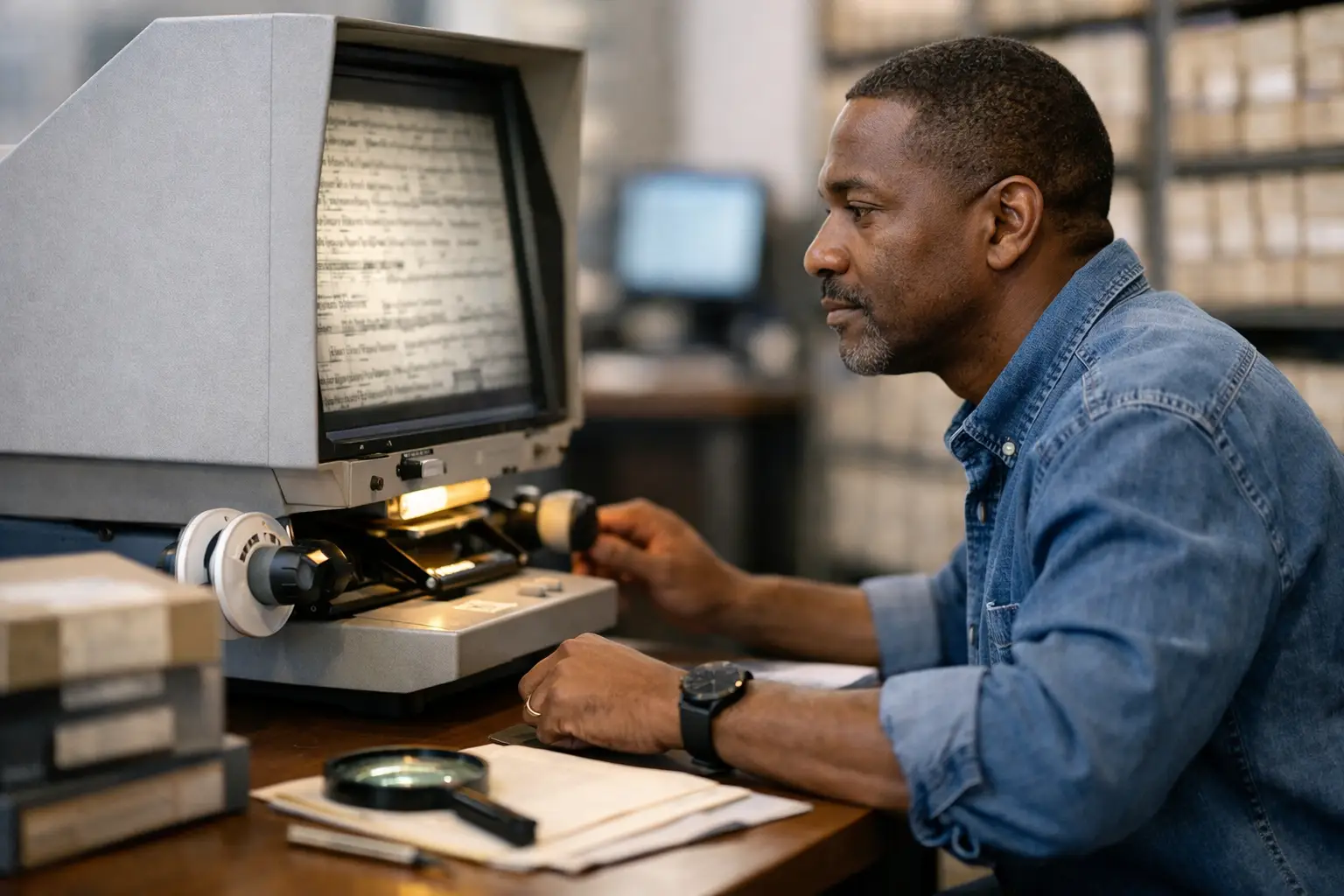
Microfilm is not magic. It is a format - filmed copies of original records held by archives, libraries, courts, churches, and federal agencies. But a microfilm citation can carry details that a database result hides: the creating office, date range, record series, roll number, geographic jurisdiction, and sometimes the exact volume or page.
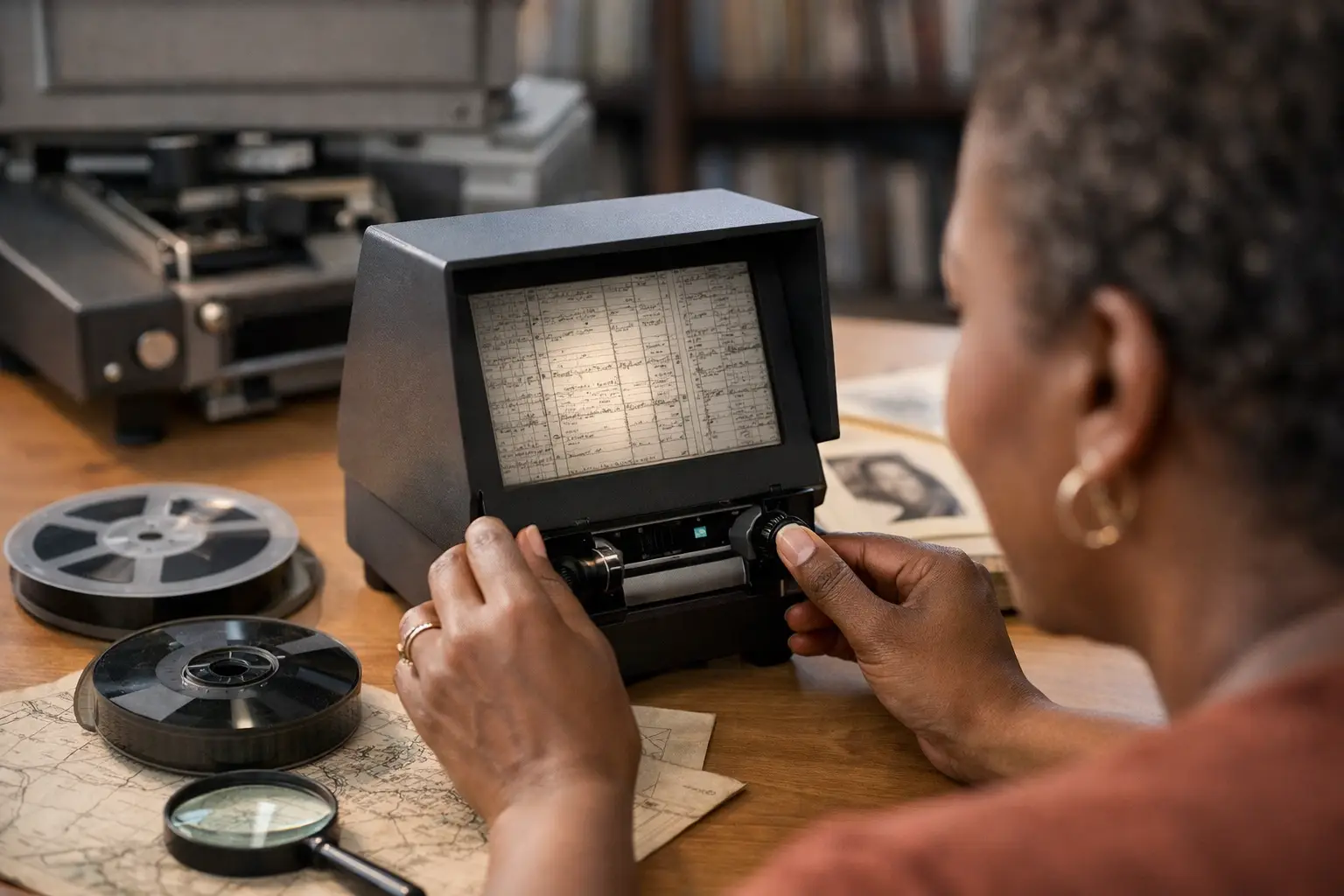
Those details are evidence. A reference to a register of marriages from a named county is stronger than a vague family story that says an ancestor came from "somewhere in Georgia." A Freedmen's Bureau field office record may point to the county where a family sought a labor contract, a ration, a school, legal assistance, or a reunion with relatives. A federal census microfilm roll identifies the county and enumeration district where a household was counted.
The goal is not simply to locate a roll. The goal is to ask what the roll proves about place, time, and relationships.
Start With the Clue, Not the County You Hope to Find
Researchers often make a costly mistake: they begin with the county where a family lived later and force every earlier record to fit. Families moved. County boundaries changed. A postwar employer might have lived in a different county than the enslaver named in a probate record. A city address could fall under a separate federal district or a renamed jurisdiction.
Instead, isolate what the microfilm clue actually says. Write down the record creator, date, place named in the record, roll or publication number, volume, page, and every person mentioned. Preserve unusual spellings. A surname may be misspelled, but the name of a plantation owner, a witness, a church, a military post, or a nearby town can be the detail that locates the family.
Then separate three kinds of place names. The place where the record was created may not be where your ancestor lived. The place where an event occurred may differ from both. And the place where the family later settled may only be a destination. Treat each as a hypothesis until multiple records connect it to the same people.
Read the Record Series as a Map
A record series tells you what kind of contact your ancestor had with government, law, work, property, or community. That context directs the next search.
If the clue comes from a Freedmen's Bureau labor contract, search the named county for the employer, the plantation location, local marriage records, and 1870 households with the same cluster of names. If it comes from a probate file, investigate the deceased person's estate in the county where probate was opened, then examine inventories, appraisements, distributions, and later deeds. If it comes from a military pension or service record, look for the enlistment place, regiment, dependents, witnesses, and postwar residence.
The record is not just an answer. It is a set of instructions for the next record.
When Microfilm Clues Identify an Ancestral County
A county becomes a credible ancestral location when the microfilm clue aligns with at least two other facts. That might mean a Bureau record names a county, the 1870 census places the family there, and a marriage register shows the same couple shortly afterward. Or a probate record names an enslaved person, an 1870 household contains that person's distinctive given name and age, and a deed connects the household to the same landowner.
One match can be coincidence. A cluster is a research direction.
Pay close attention to associates. For many African American families, the first usable pre-1870 evidence may sit in records created for someone else: an enslaver, employer, former neighbor, church leader, military officer, or white relative by marriage. This is not a detour from your family story. It is often the route into it.
A strong county conclusion can rest on indirect evidence, but it should be stated honestly. Say, "The evidence points to Madison County," rather than claiming certainty when the original document does not name your ancestor outright. Genealogy gains power when it records both what is known and why it is believed.
Turn the County Into a Narrow Research Plan
Once you have a likely county, stop running broad surname searches for a moment. Build a short timeline from the last confirmed record backward. Include every dated event: census appearances, births, marriages, land transactions, military service, voter registrations, school records, deaths, and oral-history details from relatives.
Next, look for the county's record ecosystem during the years that matter. County formation dates are crucial. If the county was created after your ancestor lived there, the earlier records may be held in a parent county. If the courthouse burned, substitute sources may survive in state archives, federal records, newspapers, church minutes, tax duplicates, or neighboring counties.
For the 1865 to 1875 period, prioritize records most likely to bridge emancipation and the first federal census after it. Look for marriage records, Freedmen's Bureau field office materials, labor agreements, bank records, cohabitation registers where available, state censuses, voter registrations, and local court files. The exact mix varies by state and county. That is why a named county is so valuable: it lets you investigate the records that actually existed there.
Do not ignore the 1870 neighborhood. Capture nearby households, not only your direct line. People frequently relocated with siblings, parents, former enslaved community members, and families connected through work or marriage. A neighbor in 1870 may appear as a witness in an 1866 contract or as a buyer in an earlier estate sale. The names around your ancestor can carry the county evidence further back than a surname search ever will.
Match the Microfilm Number to the Repository
A microfilm number is useful only when you know which institution assigned it. Federal publications, state archive reels, library catalog numbers, and local historical-society references can look similar but lead to different collections. Record the repository name exactly as it appears in the citation.
If a reference points to a National Archives microfilm publication, identify the record group and roll before searching. If it belongs to a state archive series, look for the series title and county coverage. Some film has been digitized, some must be requested, and some is indexed only by a catalog description. Availability changes, but the citation remains a durable lead.
This is where guided research saves time. The 1870 Project translates DNA matches and archival evidence into practical directions, including likely counties and the federal record sets to check, so you can move from a promising clue to the next record without guessing which collection matters.
Use DNA as Corroboration, Not a Shortcut
DNA can make an ancestral county more plausible, especially when several matches descend from families in the same place. But DNA alone rarely proves a county. Matches may connect through several generations, migration paths, or collateral lines that do not immediately reveal the shared ancestor.
Use DNA to test the paper trail. If a microfilm record points to one county and multiple relevant DNA matches trace back to families there, that county deserves deeper work. Build trees for the strongest matches, identify recurring surnames and places, and compare them to the people in your ancestor's 1870 neighborhood. When documents, geography, and DNA begin pointing in the same direction, you have momentum.
Protect the Story While You Build the Proof
The county you identify may hold painful records. Probate inventories and deeds can document human beings as property. Labor contracts can reveal exploitation after emancipation. Read them with care, preserve accurate citations, and give your ancestors the dignity of full context. They were not merely entries in someone else's records. They built families, moved for opportunity, served communities, and left traces worth recovering.
Before chasing the next roll, call the oldest relative who may know a church name, a cemetery, a nickname, a migration story, or the county "back home." Ask specific questions, then compare those answers with the evidence. A single remembered place can become the detail that confirms a microfilm lead.
Your family was here. When the records finally point to a county, follow that path patiently and precisely. The next document may not only extend your tree. It may return a place in American history to the people who lived it.