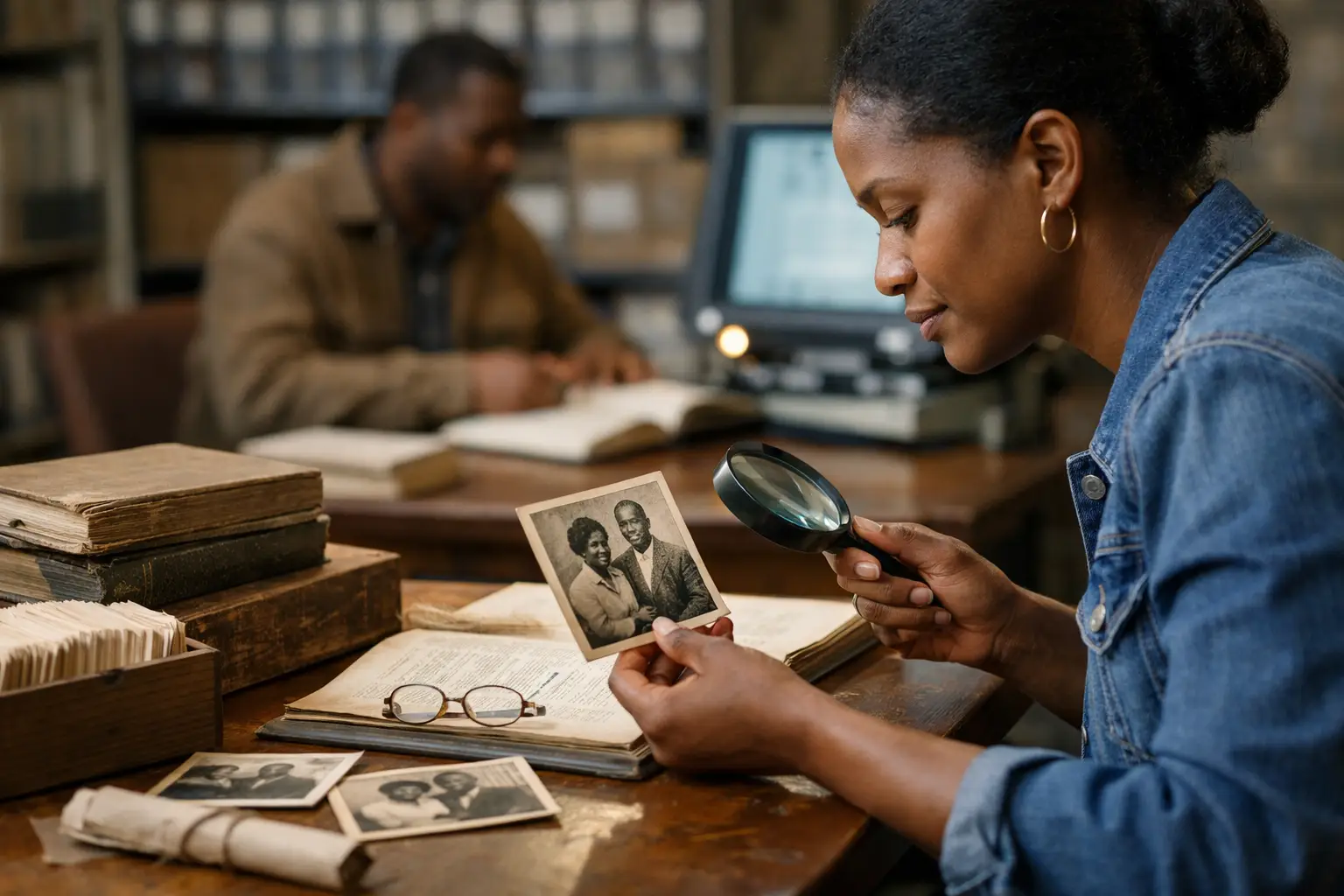
Privacy Genealogy: What to Share and What to Keep
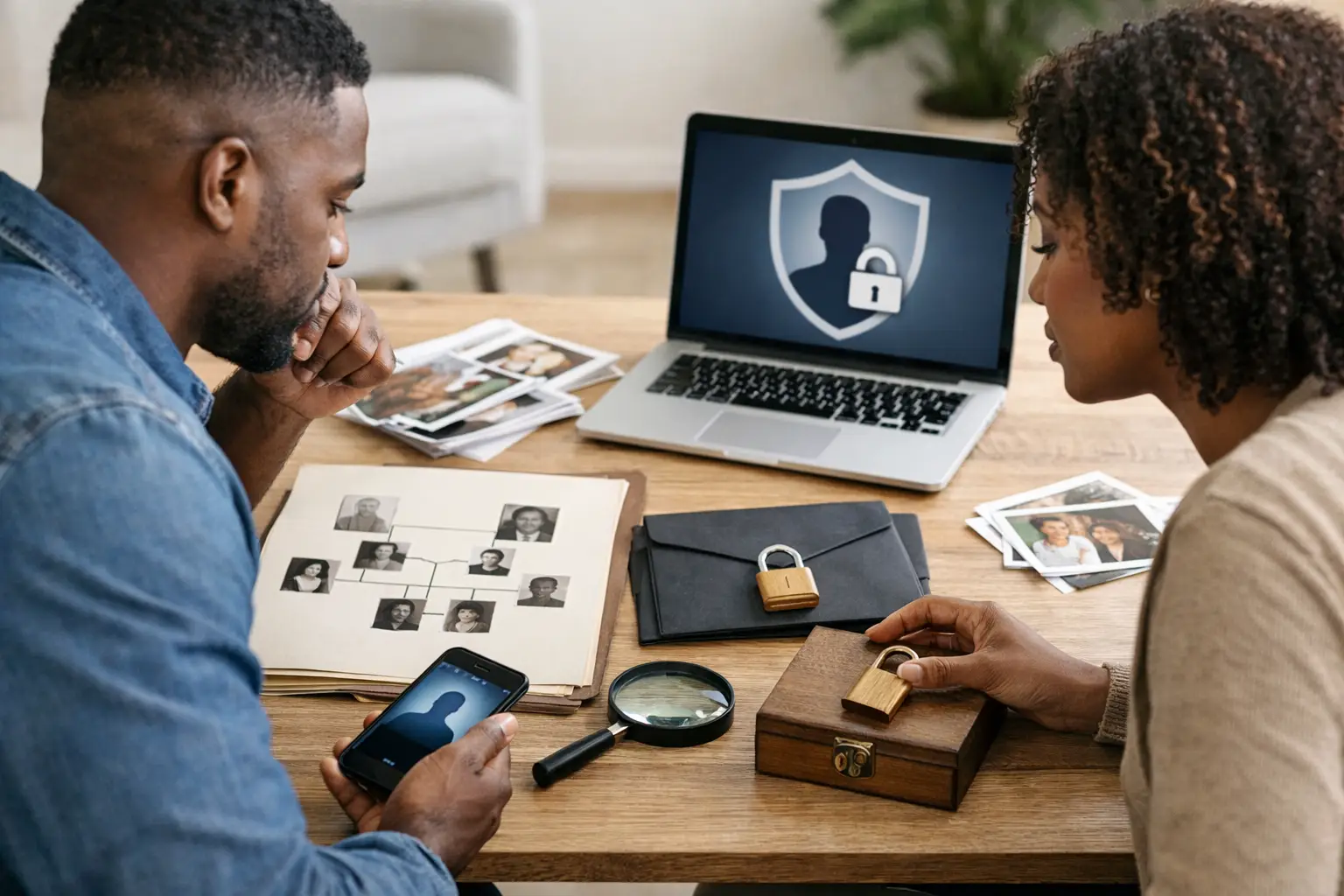
A family tree can answer questions that have sat unanswered for generations. It can also expose living people in ways they never agreed to. That tension sits at the center of privacy genealogy, especially when your research includes DNA, family interviews, adoption, incarceration, enslavement, or long-buried conflict.
Most genealogy platforms talk about discovery first and privacy second. That order is backwards. If you are building a tree, uploading DNA, or contacting relatives, privacy is not a side setting. It shapes what you collect, what you publish, and what kind of trust you build with the people who are still here.
For many families, this is not theoretical. A casual tree can reveal a non-paternity event, expose an address, identify a biological parent, or bring painful history into public view before a family is ready. For African American researchers, Native families, Latino families, and anyone tracing relatives through forced migration, state violence, or fractured records, the stakes can be even higher. Family history is personal history. Some of it needs care before it needs visibility.
What privacy genealogy really means
Privacy genealogy is the practice of researching family history without treating every record, DNA match, and living relative as public material. It does not mean doing less research. It means making sharper decisions about access, consent, and context.
That starts with a basic distinction. Dead ancestors and living relatives do not carry the same privacy expectations. A Civil War pension file or an 1870 census entry usually belongs in the realm of historical research. A living cousin’s date of birth, phone number, health clue, or unexpected DNA connection does not.
Genealogy gets messy because those two worlds overlap. A death certificate from 1921 may name children whose lines run straight into people living now. A DNA cluster can point to a grandfather who never publicly acknowledged a branch of the family. A newspaper clipping can preserve truth and still cause harm when reposted without explanation. Good research is not just about whether something can be found. It is about whether it should be shared, and with whom.
The biggest privacy risks in genealogy
Most privacy mistakes happen in ordinary moments, not dramatic ones. Someone uploads a GEDCOM without checking whether living people are hidden. Someone posts a screenshot of DNA matches in a Facebook group. Someone publishes an ancestor story that includes a living parent’s full name, city, and family conflict.
DNA is where the risk rises fastest. Genetic genealogy can reveal biological relationships that paper records never showed. That is powerful, but it can also rearrange a family in one afternoon. If you test, treat the results like sensitive medical-adjacent information. Even when a company is not testing for health, DNA data can still reveal intimate facts about parentage, kinship, and identity.
Family interviews carry another kind of risk. People often share stories casually because they trust the person asking. Later, those stories end up in a public tree, a memorial page, or an AI-generated narrative. That can feel like betrayal, even if the researcher meant well. Oral history is a gift. It is not a blank check.
Public records create a false sense of safety too. Yes, many records are legally accessible. No, that does not automatically make broad publication harmless. Addresses, signatures, criminal records, institutionalization, and financial distress can all appear in historical documents. Context matters. So does restraint.
Privacy genealogy and DNA: useful, but never neutral
DNA can break a research dead end that records alone cannot solve. It can also identify people who did not ask to be identified. That is the trade-off.
If you are using DNA for family history, start with the smallest necessary share. Keep your testing profile settings tight. Use initials or a shortened name if the platform allows it. Do not upload raw DNA files to multiple places just because it might produce more matches. More exposure is not always more progress.
Be careful with screenshots and match lists. A cluster chart that looks anonymous to you may be recognizable to the family involved. If you are working through an unknown parent, a pre-1870 line, or a newly discovered branch, assume there are living people on the other side of the result who may have no idea this history is surfacing.
This is where guided research matters. A strong genealogy tool should help you turn DNA into search direction, not pressure you into public exposure. The right move is often not posting more. It is identifying the right county, archive set, or federal microfilm series to search next.
How to contact relatives without crossing a line
Reaching out to relatives is often necessary. It is also where researchers can do real damage.
The first rule is simple: do not lead with the family secret. If a DNA result suggests an unexpected relationship, your opening message should be respectful, brief, and easy to ignore. Give the other person room. They may be interested, cautious, overwhelmed, or completely unaware of the history you are trying to understand.
The second rule is to separate your need for answers from their obligation to respond. No one owes you family knowledge because a database says you are connected. Ask narrow questions. Avoid guilt. Never post private messages publicly without permission.
The third rule is to be specific about what you plan to do with any information they share. Are you adding it to a private tree? Saving it for your own notes? Including it in a family narrative? People are more likely to trust you when they know the boundary.
A practical standard for what to share
If you want a clear rule, use this one: share more about the dead, less about the living, and almost nothing sensitive without consent.
That means you should usually avoid publishing full birth dates for living relatives, current locations, personal contact details, raw DNA results, private interview transcripts, or stories involving abuse, addiction, incarceration, infidelity, or disputed parentage unless the people affected have clearly agreed.
For recently deceased relatives, use judgment. A death does not erase family impact. A story about a grandmother’s migration may be welcome. A story about her institutionalization or hidden children may need a more careful audience.
Private trees have real value here. So do working notes that are not published. Not every discovery belongs on a public profile. Some belong in your research log until you can verify the facts, talk with family, or decide whether sharing would help anyone at all.
Why this matters even more for hard-to-trace families
When records are scarce, every clue feels precious. That is especially true for descendants of formerly enslaved people, where the paper trail can collapse before 1870 and families are forced to rebuild identity from fragments. But scarcity does not cancel privacy. If anything, it makes careful handling more important.
A Freedmen’s Bureau labor contract, a cohabitation record, a plantation document, or a DNA cluster tied to one county can carry enormous emotional weight. These are not just sources. They are evidence of survival, rupture, and stolen time. Publishing them without context can flatten the very history you are trying to honor.
The better approach is precise and deliberate. Find the right record set. Identify the right locality. Confirm the right family unit. Then decide what belongs in public view. At The 1870 Project, that is the standard we believe in: faster answers, tighter research paths, and privacy-first momentum.
How to practice privacy genealogy without slowing down
You do not need perfect rules to protect your family. You need disciplined habits.
Keep a private working tree for active research. Strip living people from anything public. Before you upload a file, check whether names, dates, and notes for living relatives are included. Before you post a document image, ask whether it exposes details that are irrelevant to the research point. Before you send a message, ask whether you would want to receive it yourself.
Use genealogy tools that make it easier to act on evidence instead of oversharing it. If a platform helps you move from DNA to county-level records, from surname clusters to exact archive references, or from family lore to a targeted search plan, that is not just efficient. It is safer. Precision reduces unnecessary exposure.
And when you find something sensitive, slow down. Verify it. Think about who could be affected. Ask whether the value is in proving it, preserving it privately, or publishing it. Those are three different choices.
Family history is not a scavenger hunt. It is stewardship. The names you recover belong to real people, and the living people connected to them still have something to lose. Research with urgency, because time does erase stories. Share with care, because trust is harder to rebuild than a missing branch.