What Is Freedmen's Bureau Records?
If you are stuck right before 1870, asking what is Freedmen's Bureau records is not a side question. It is often the question that moves a family line forward. For many people tracing African American ancestry, these records are one of the few places where formerly enslaved people appear by name in the years immediately after the Civil War, often with relationships, locations, labor details, and clues to life before emancipation.
That matters because the 1870 Census is usually the first federal census where formerly enslaved people were consistently listed by name. Before that, many families seem to vanish into slave schedules, estate papers, and records that rarely preserve full identity. Freedmen's Bureau records sit in that narrow but crucial window between slavery and the paper trail most researchers know how to use.
What is Freedmen's Bureau records?
The short answer is this: Freedmen's Bureau records are documents created by the Bureau of Refugees, Freedmen, and Abandoned Lands, a federal agency established in 1865 after the Civil War. The bureau operated mainly in former Confederate states, border states, and Washington, D.C., helping formerly enslaved people and poor Southern refugees with labor contracts, rations, medical care, schooling, legal disputes, military claims, and family matters.
The records left behind are not one single form or one neat database. They are a large collection of field office papers, hospital registers, school reports, marriage records, labor agreements, complaints, letters, and more. Some are highly detailed. Others mention a person only once. But even one mention can break a dead end.
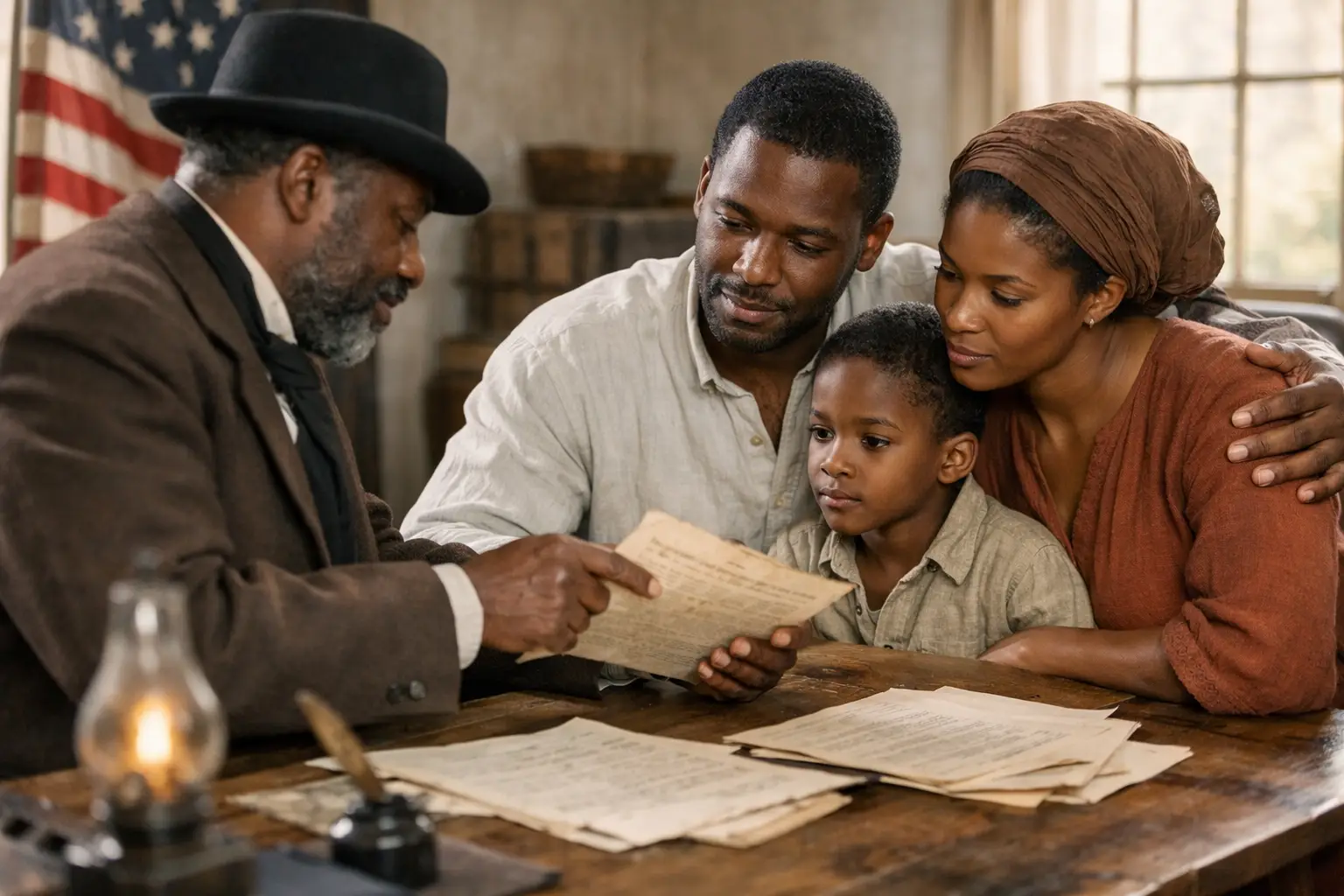
If you have heard someone say Freedmen's Bureau research is essential for the 1865 to 1872 period, this is why. These records catch people in motion - choosing surnames, reuniting with relatives, signing wages contracts, legalizing marriages, enrolling children in school, or petitioning for basic protection under the law.
Why Freedmen's Bureau records matter so much
For African American family history, these records can do something many other postwar records cannot. They connect identity to circumstance.
A census tells you who was in a household on one day. A bureau labor contract might tell you where that person worked, who employed them, who else in the family was included in the agreement, and what county to search next. A marriage record might name a couple, their children, and how long they had lived as husband and wife before legal recognition. A complaint register might reveal violence, unpaid wages, or disputes that identify former enslavers or plantations.
This is why the records are so powerful, but also why they require careful reading. They are not clean, modern forms built for genealogists. They were created for administration. Names may be misspelled. Ages may shift. A person may appear under a first name in one document and a full surname in another. That does not make the record weak. It means your research has to stay flexible.
What kinds of records are in Freedmen's Bureau records?
The bureau handled daily life after emancipation, so the records reflect daily life. You may find marriage registers, cohabitation records, and certificates that legalized long-standing unions. You may find labor contracts between freed people and landowners, often naming family groups and work locations.
There are also ration records, hospital and medical records, school records, apprenticeship papers, complaints and court-related records, transportation requests, and correspondence between local field offices and bureau headquarters. Some offices documented abandoned lands, housing issues, and disputes over children. Others preserved letters from people searching for separated spouses, parents, or children.
That range is the opportunity and the challenge. A researcher looking only for a marriage record may miss a labor contract that names the same couple and points to the county where they lived in 1866. The smartest approach is not to ask, "Is there one bureau record for my ancestor?" It is to ask, "Which bureau functions touched my ancestor's life, and where would that paper trail have been created?"
Where were these records created?
Freedmen's Bureau records were created through local field offices, not in one central place. That means geography matters a lot. Most records are organized by state, then by district, subdistrict, or field office. If you do not know the right county or nearest town, the collection can feel bigger than it is.
This is where many researchers lose momentum. They search a broad name index, find nothing obvious, and assume the bureau has no record of their family. Often the real issue is jurisdiction. Your ancestor may have lived near a county line, worked in one place, married in another, and interacted with a bureau office serving a larger district. The paper trail followed the office, not your modern assumptions.
When records seem absent, it usually helps to build place first. Start with the 1870 Census, then work backward through probable wartime and immediate postwar locations. Look at neighbors, employers, and migration patterns. A precise county is better than a broad state search. A field office is better than a county.
What can these records tell you about an ancestor?
Sometimes they confirm what a family already suspected. Sometimes they change the story.
A bureau record may show that a couple had lived together for ten years before their marriage was formally recorded. It may name children who do not appear together in the next census. It may identify a former enslaver by connecting a labor agreement to a plantation owner. It may show military service, school attendance, illness, poverty, land disputes, or efforts to reunite a family split by sale.
That last point matters deeply. Some of the most moving records are letters and petitions from people trying to find loved ones after emancipation. These can preserve names, places, and relationships that exist nowhere else.
Still, not every ancestor appears. The bureau did not record every freed person, and local coverage was uneven. Some offices were better organized than others. Some records are damaged, hard to read, or incomplete. So the right mindset is not certainty. It is leverage. Even a partial record can point you to the next source.
How to use Freedmen's Bureau records without getting buried
Start with a question that is narrow enough to test. Instead of searching a full collection for a common name, ask something like: was Sarah Johnson in or near Macon County, Alabama, between 1865 and 1868, and was there a marriage, labor, or ration record connected to her household?
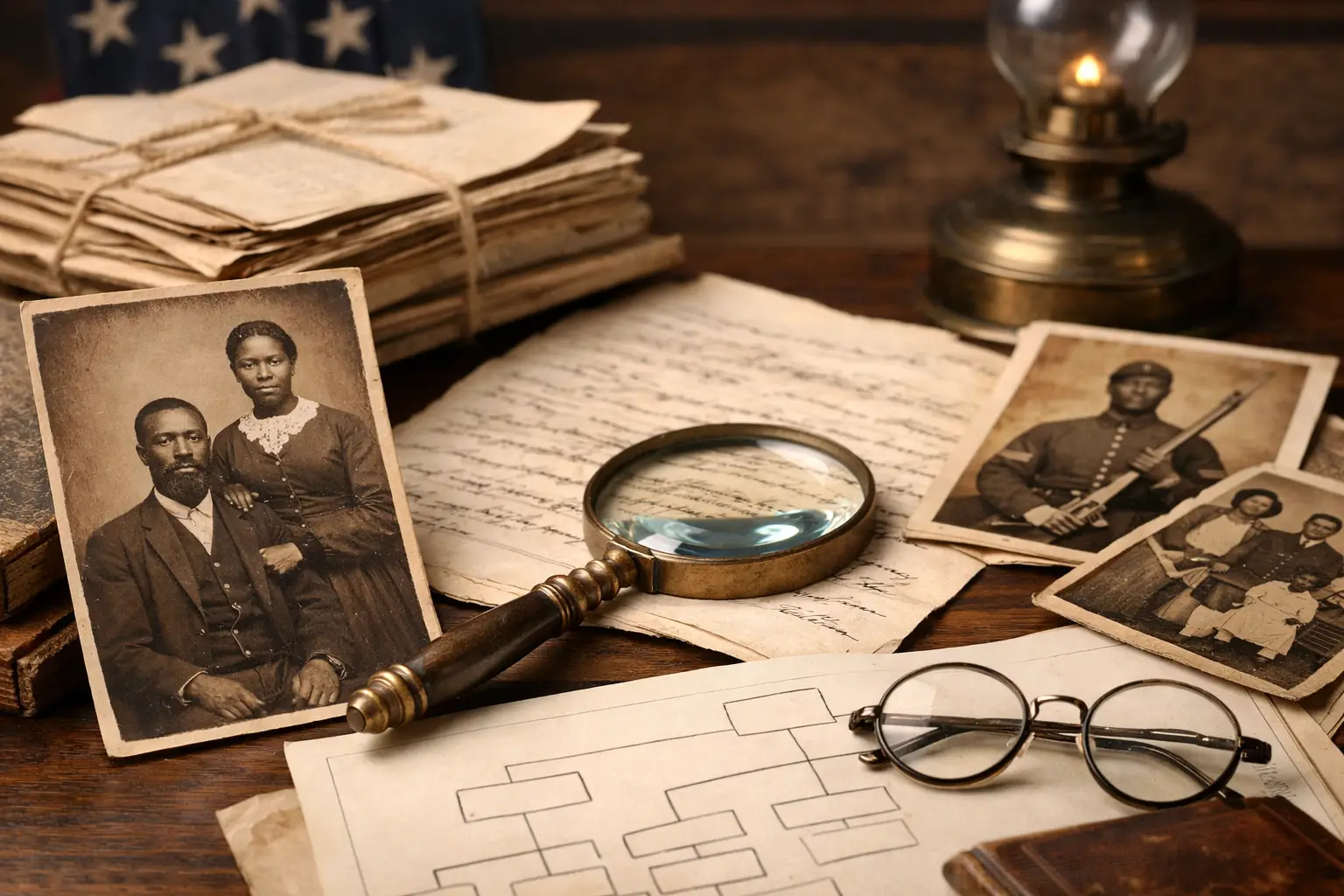
Then search for clusters, not just individuals. Formerly enslaved families often moved, renamed themselves, or appeared alongside relatives, neighbors, and former enslavers. If you cannot find your direct ancestor, search siblings, spouses, children, and possible employers. Search by first name plus place. Search by surname plus known associates. Search by the bureau office serving the area.
Most of all, read past the indexed name. Indexes help you find the page, but the page is rarely the whole story. A witness, employer, child, or adjacent family may be the real clue.
If you are using a modern genealogy platform, this is where guidance matters more than record volume. The difference between a dead end and a breakthrough is often one specific next step - the right county, the right field office, the right NARA microfilm series, the right cluster of surnames. That is the kind of precision The 1870 Project is built to provide.
Common mistakes when researching Freedmen's Bureau records
One mistake is expecting standardized personal details. Many records were created quickly, under pressure, by different officials with different spelling habits. Another is treating surname variation as a sign you found the wrong person. Right after emancipation, naming patterns were still settling.
A third mistake is stopping at the first relevant document. Bureau records work best in combination. A marriage register plus a labor contract plus the 1870 Census can tell a much stronger story than any one record by itself.
The biggest mistake, though, is giving up because there is no perfect match. Genealogy before 1870 is often built from fragments. The question is not whether every detail lines up on the first try. The question is whether the record gives you a stronger path than you had yesterday.
What is Freedmen's Bureau records really worth to your research?
For many families, it is the bridge between freedom and the deeper past. Not because every answer is there, but because identity starts to come into focus there. Names stabilize. Relationships become visible. Locations sharpen. A former enslaver's name may surface. A county line becomes a research plan instead of a guess.
That is why these records matter so much. They are not just postwar paperwork. They are some of the earliest federal traces of people rebuilding family life on their own terms.
Your family was here. The record trail may be scattered, but it is not gone. Start with the right place, follow every clue on the page, and let one documented moment lead you to the next.