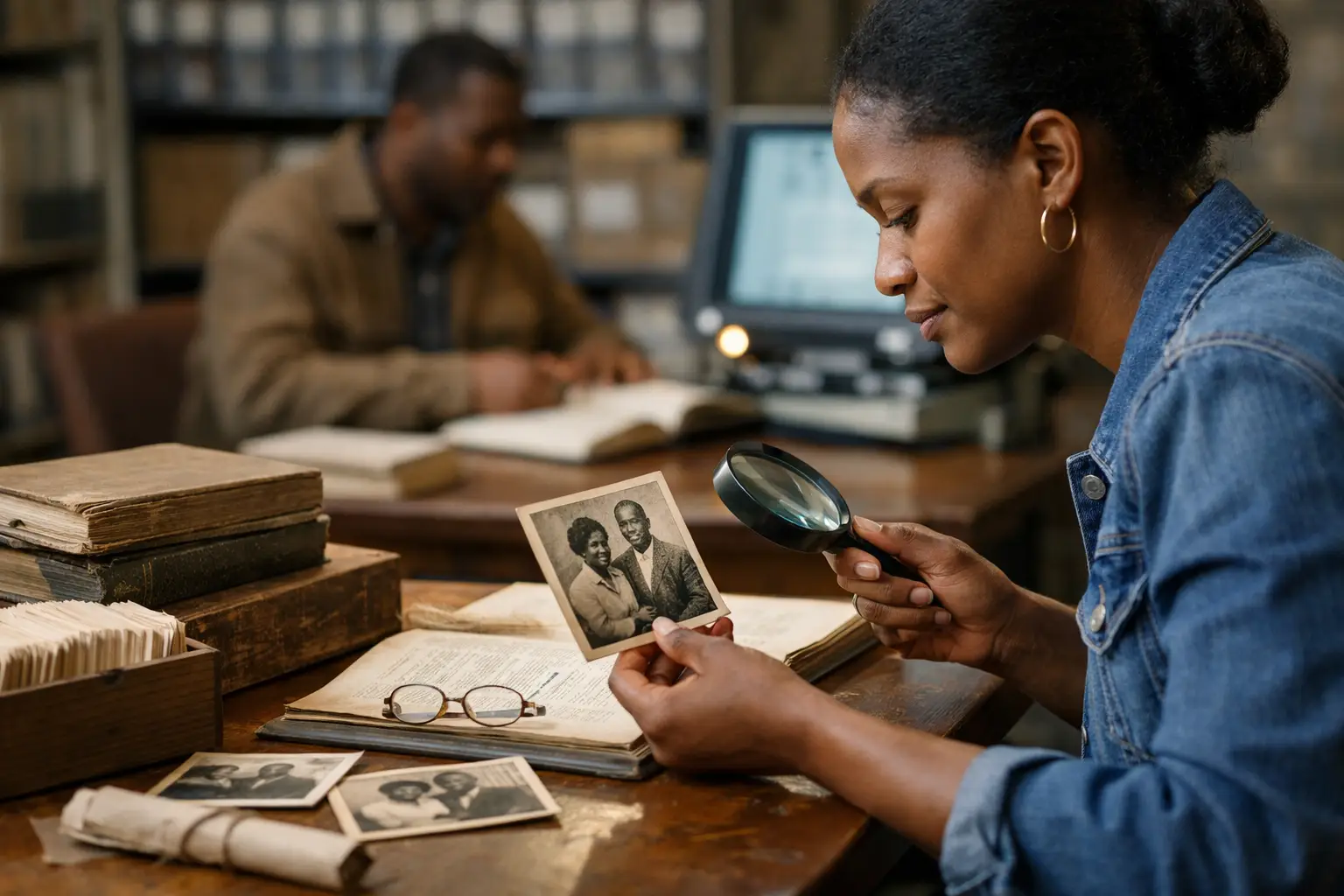
What Is the Best Free Genealogy Site?

If you have ever typed what is the best free genealogy site into a search bar, you were probably not looking for a lecture. You wanted one thing: a place that helps you find family without trapping you behind a subscription wall or sending you through 40 tabs with no clear next move.
That question matters because “best” depends on what kind of problem you are trying to solve. If you want a giant public tree, one site might help. If you need census records, another might be stronger. If you are trying to identify a Black ancestor before or just after Emancipation, the answer changes again. A free genealogy site is only useful if it turns your clues into progress.
What is the best free genealogy site for most people?
For most beginners, the best free genealogy site is the one that gives you immediate access to records, a practical search path, and enough context to know what to do next. That usually means a mix of large public databases and tools that narrow the search instead of dumping thousands of results in your lap.
The hard truth is that no single free site has everything. FamilySearch is often the strongest all-around free option because it offers a huge collection of records, a shared family tree, and broad US coverage. It is the first place many researchers should check.
But FamilySearch is not automatically the best answer for every family. Shared trees can introduce errors. Record indexing can miss names. And if your family’s paper trail gets thin around 1870, especially for formerly enslaved ancestors, the best “site” may be the one that helps you move from a broad search to the exact county, bureau office, military file, or microfilm series that matters.
That is where many free tools fall short. They help you search. They do not always help you decide what to search next.
The strongest free genealogy sites, and what each does well
FamilySearch
FamilySearch is the safest first answer if someone asks, what is the best free genealogy site for general research? Its coverage is wide, its cost is zero, and its record collections include census schedules, vital records, probate records, church materials, military collections, and more.
Its biggest strength is scale. You can build a tree, search indexed records, and often view digitized images without paying. For US researchers, that makes it hard to beat.
Its trade-off is quality control. Because the tree is collaborative, other users can edit it. Sometimes that creates breakthroughs. Sometimes it creates chaos. Treat the tree as a clue system, not proof.
Find a Grave
Find a Grave is excellent for locating burial information, family relationships, and memorial pages created by volunteers. It is especially helpful when you have a rough death date, a county, or the name of a cemetery.
It is not a full genealogy platform. It will not replace census work, land records, probate research, or pre-1870 reconstruction. Still, for death clues and family clusters, it is often one of the fastest free sources available.
USGenWeb and local genealogy projects
If your research has stalled, local volunteer projects can be surprisingly useful. County-level websites often contain cemetery transcriptions, marriage abstracts, old maps, court references, and local histories that larger platforms never surface well.
The weakness is inconsistency. One county site may be a gold mine. The next may look frozen in 2004 and offer almost nothing. But when you know the place, local projects can give you the kind of detail that broad databases miss.
National Archives resources and federal collections
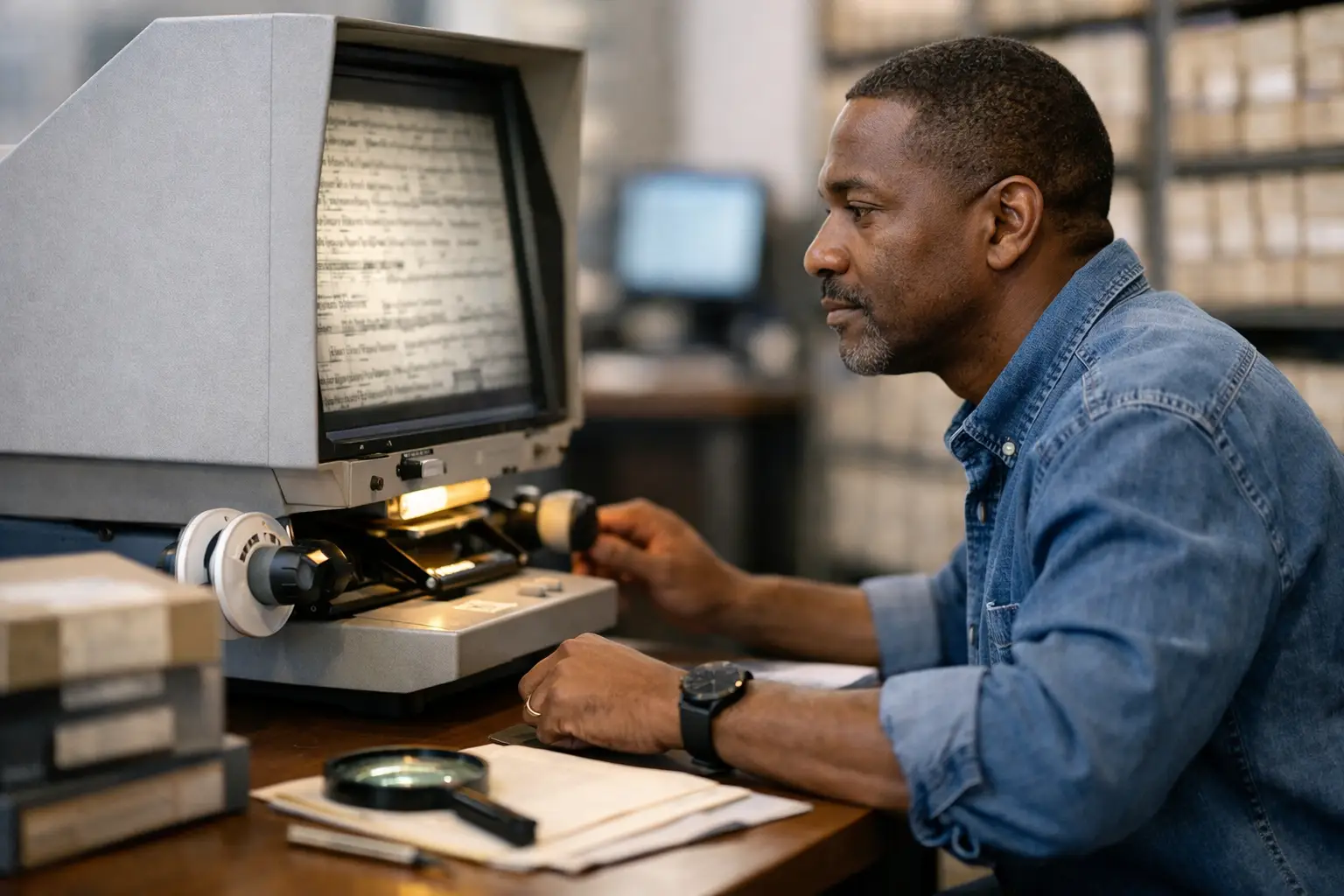
For military files, census context, Freedmen’s Bureau records, and federal-level documentation, archive-based resources matter. They are essential when you are tracing people through war, migration, emancipation, pensions, or land claims.
The problem is usability. Archives are powerful, but they are rarely beginner-friendly. You may find a catalog entry yet still have no idea which roll, office, county, or related record set you should pull next. Free access is valuable. Free direction is even more valuable.
What is the best free genealogy site if you are tracing African American ancestry?
This is where the usual advice gets too shallow.
If you are tracing African American family history, especially across the 1865 to 1875 period, the best free genealogy site is not simply the one with the most records. It is the one that helps you bridge the record gap between slavery and the first post-Emancipation census.
That gap is where many families lose momentum. A name appears in 1870, then disappears backward into county changes, labor contracts, bureau records, plantation papers, military service files, tax lists, or probate documents tied to enslavers rather than the ancestor’s own surname.
For this kind of research, broad search portals are still useful, but they are only part of the answer. You need tools that surface county-level strategy, Bureau field office relevance, migration patterns, and exact archival targets. A long list of vague matches is not enough.
That is why newer genealogy tools are starting to matter. A platform like The 1870 Project is built around a harder question than “Can we show you records?” The question is, “Can we tell you the next best move?” For families hitting the 1870 brick wall, that shift matters. It means less wandering and more directed research.
How to choose the right free genealogy site for your goal
The best free site depends on the kind of evidence you need.
If you are starting from scratch, use a broad record search site first. You want to anchor a person in time and place with census entries, death clues, and household relationships. That gives you a foundation.
If you already know the basics and your tree is getting messy, switch from tree-building to source-building. Search for records that prove residence, age, family group, military service, probate ties, and migration. Free trees are convenient, but records move your case forward.
If your research problem is specifically pre-1870 African American ancestry, judge every site by one standard: does it help you identify the right jurisdiction, archive series, and cluster of associated people? If not, it may still be useful, but it is not enough.
The real difference between free and useful
A lot of genealogy sites call themselves free because they let you search names. That is not the same as helping you solve a family mystery.
Useful free genealogy tools do at least one of three things well. They give you actual record access, they point you to the right local or federal source, or they reduce the guesswork between one clue and the next. If a site gives you a search box but no meaningful direction, you are doing the hard work alone.
This is why many researchers feel stuck even after visiting major platforms. They collect data without building a research path. They save names without resolving identity. They find a possible match but cannot tell whether it belongs to their family.
The best free genealogy site is the one that creates momentum. It helps you move from “maybe” to “check this county, this year, this collection.” That is a different standard than popularity.
A smart way to use free genealogy sites together
You do not need one perfect site. You need a practical sequence.
Start with a broad free search to identify your person in the census, in a cemetery database, or in a shared tree that gives you clues. Then verify those clues in actual records. After that, narrow by place. County research wins more cases than people realize.
Once you know the county, your questions get sharper. Which bureau office served that area? Which probate court held estate files? Which nearby counties might hold related records after boundary changes? Which military unit, pension file, or tax list might connect a family before a surname stabilized?
That is the point where general genealogy websites often become too general. The researchers who break through are usually the ones who stop searching everywhere and start searching precisely.
So, what is the best free genealogy site?
For general family history research, FamilySearch is usually the best free genealogy site to start with because it offers the broadest mix of records and accessibility at no cost.
But if your real question is, “Which free site will actually help me find my people faster?” the better answer is this: choose the site that matches your obstacle. A grave database will not solve a Freedmen’s Bureau problem. A public tree will not interpret a DNA match. A giant archive catalog will not tell you which microfilm series matters to your county.
Your family was here. The right genealogy site should do more than remind you of that. It should help you prove it, one record, one place, and one next step at a time.