What Records Help Before 1870?
If you have an ancestor who seems to appear fully formed in 1870 and vanish before that, you are standing at one of American genealogy's hardest breakpoints. The question is not just what records help before 1870 - it is which records can put a real person in a real place when the census stops being enough.
That matters for many families, but especially for those tracing African American ancestry. For formerly enslaved people, 1870 is often the first federal census where individuals were consistently listed by name. Before that, the paper trail can thin out, shift into someone else's records, or hide behind county lines, changing surnames, and damaged archives. The good news is that the trail usually is not gone. It is scattered. A smart search is about following people through the records created around work, land, war, law, church life, and family transition.
What records help before 1870 most often?
Start with the records closest to 1870, then move backward in tight, controlled steps. That approach sounds simple, but it saves people from a common mistake: jumping straight into pre-Civil War records without first proving where a family lived in 1870, 1880, and the years right after emancipation.
For African American research, the strongest starting points are often Freedmen's Bureau records, Freedman's Bank records, Civil War service and pension files, labor contracts, marriage records created during Reconstruction, and county court materials. For other families, probate, tax, deed, church, and guardianship records often carry the most weight. These are not glamorous sources. They are useful because they tie people to places, neighbors, heirs, employers, and property.
The real shift happens when you stop asking for one perfect record and start building a cluster of evidence. A deed that places a man in one county, a tax list showing when he first appears, and a probate file naming children can do more than a missing census ever could.
Freedmen's Bureau and Freedman's Bank records
If your family line includes formerly enslaved ancestors, this is often the first place to push hard. Freedmen's Bureau records can include labor contracts, rations, complaints, marriage registers, hospital records, apprenticeship disputes, and correspondence. Those records were created in the chaos of transition after the Civil War, which means they often contain the kind of detail researchers need most: names of former enslavers, plantations, counties, family members, ages, and work locations.
Freedman's Bank records are different, but just as valuable. Bank applications sometimes name parents, spouses, children, siblings, and birthplaces. Not every entry is rich, and some are frustratingly sparse, but when they are good, they are very good.
The trade-off is coverage. Some counties and field offices generated much more paperwork than others. If you do not find your ancestor immediately, that does not mean they were absent. It may mean their records were filed under a different spelling, associated with an employer, or created in a nearby office rather than the county you expected.
Probate, estate, and guardianship files
Probate records are among the most underused answers to what records help before 1870. Wills, estate inventories, estate sales, divisions of property, and guardianship cases can connect generations when nothing else will.
For free families, these records may directly name heirs. For enslaved ancestors, probate files can be painful but crucial because enslaved people were often listed in inventories, appraisals, estate distributions, and disputes among heirs. Sometimes a first name, age, skill, family grouping, or transfer to a specific child becomes the clue that links a person in 1870 to a household before emancipation.
This work requires care. You are often reading records that treated people as property. But those same records may preserve family groupings that survived into freedom. A mother and children sold together, inherited together, or assigned to one heir can become the bridge you need.
Deeds, land, and tax lists
Land records do not only matter for landowners. Deeds can mention neighbors, witnesses, tenants, former owners, and boundary markers that place a family in a specific community. For African American families after the war, the first deed or lease can show when a household gained economic footing and where to look next in local courts and tax books.
Tax records are especially strong for the years between census schedules. They can show when a man first appeared in a county, when he disappeared, whether he owned personal property or land, and whether two men of the same name need to be separated.
Tax lists are not perfect. Women, younger men, and the poor may be underrepresented depending on state law and period. But if your goal is to narrow a timeline, tax records are often faster than waiting for a census miracle.
Church records and cemetery evidence
Before civil registration became routine, churches often kept the records families needed most. Baptisms, marriages, membership rolls, burial entries, and disciplinary minutes can place several generations in one congregation.
This is particularly useful when surnames changed or when an ancestor moved only a short distance. Families frequently stayed within a church network even when county borders shifted. Black churches founded during and after Reconstruction can also preserve early community ties, while white churches may contain references to enslaved or free Black members in separate registers or minutes.
Cemetery records help when they are tied to church grounds, family plots, or funeral home records. A stone alone may not solve much, but a burial location plus church affiliation plus nearby family burials can tighten your map of the family.
Civil War records and pensions
Military records can break open a line that looked impossible. For Black ancestors, US Colored Troops service records and pension files are often central. Pension applications may include affidavits from spouses, children, neighbors, former enslavers, and fellow soldiers. They can reveal marriage dates, prior residences, disabilities, and exact family relationships.
White ancestors may also leave rich trails through Union or Confederate service materials, though Confederate pension systems varied by state and came later. The key is not just whether someone served. It is whether the pension trail brought in witnesses who knew the family across decades.
This is one of those areas where patience pays. A compiled service record might be thin. A pension packet might be thick enough to reconstruct half a life.
County court records, apprenticeships, and local law
County courts generated a huge amount of paper, and much of it is still ignored. Bastardy bonds, road orders, apprenticeships, licenses, court minutes, and criminal or civil cases can place people where the census does not.
For formerly enslaved children, apprenticeship records are especially important. After the war, many local authorities forced Black children into labor arrangements under the language of apprenticeship. Those records can name parents, ages, former enslavers, and locations.
Court minutes also help identify associates. If your ancestor appears beside the same witnesses, petitioners, or bond signers over several years, you may be looking at extended family or a migration cluster.
DNA can point you to the right archive
DNA does not replace records, but it can tell you where to search when paper trails go cold. A strong cluster of matches from one county, one surname group, or one migration path can narrow the field fast. That matters before 1870 because the right county is often more important than the right database.
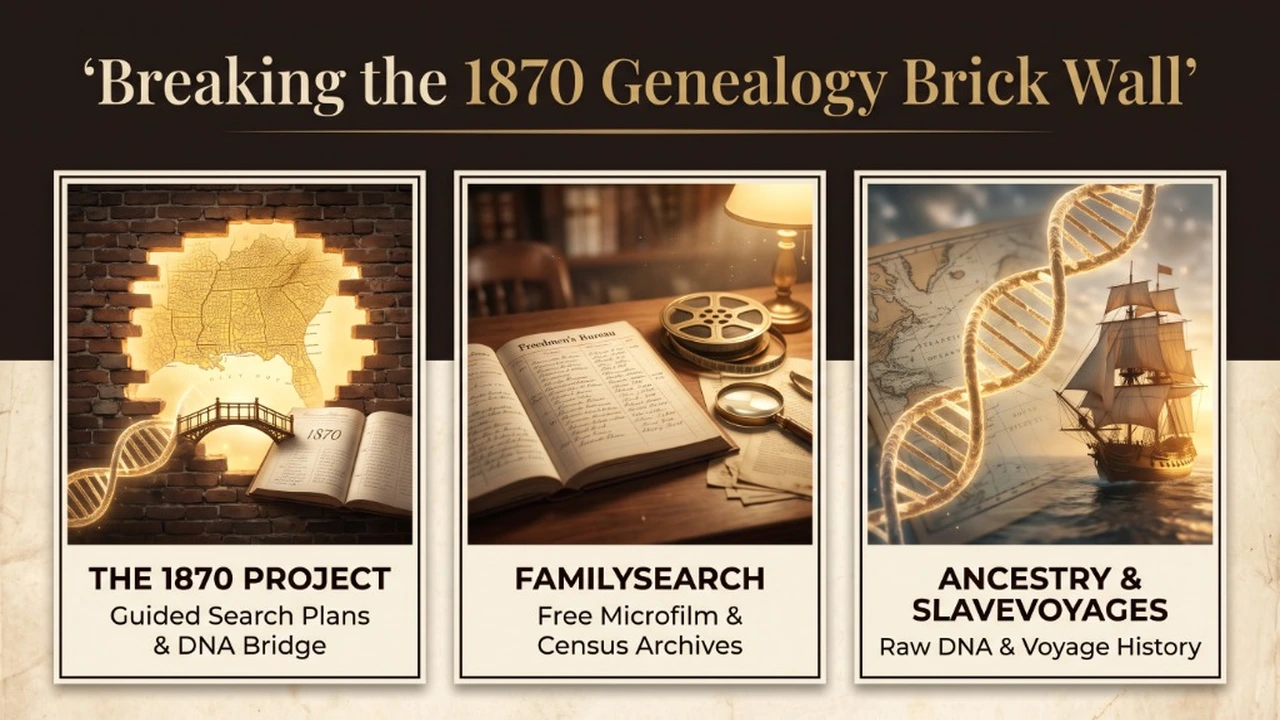
This is where people lose momentum with traditional genealogy tools. They give you more documents, but not always the next best move. A better workflow takes DNA clues, identifies likely hub counties, and then pushes you toward the exact probate set, tax district, or NARA microfilm series that fits that cluster. The 1870 Project is built for exactly that kind of problem - not endless hints, but the next precise search action.
How to decide what to search first
If you are wondering what records help before 1870 for your own family, begin with whatever can anchor a person in place between 1865 and 1880. Confirm the county. Study the neighbors. Track surname changes. Look for marriage, labor, military, and probate clues before reaching further back.
Then ask the harder but more productive question: whose records would have captured this person before they controlled their own paper trail? Depending on the family, that could mean a church clerk, county court, military pension office, former enslaver's estate, or a Freedmen's Bureau field office.
Your family was here. The records are rarely neat, and they are not equally preserved in every county. But when you work from place, cluster evidence, and follow the people around your ancestor instead of waiting for one perfect document, the years before 1870 stop looking blank and start looking searchable.