Why Are Census Records Missing?
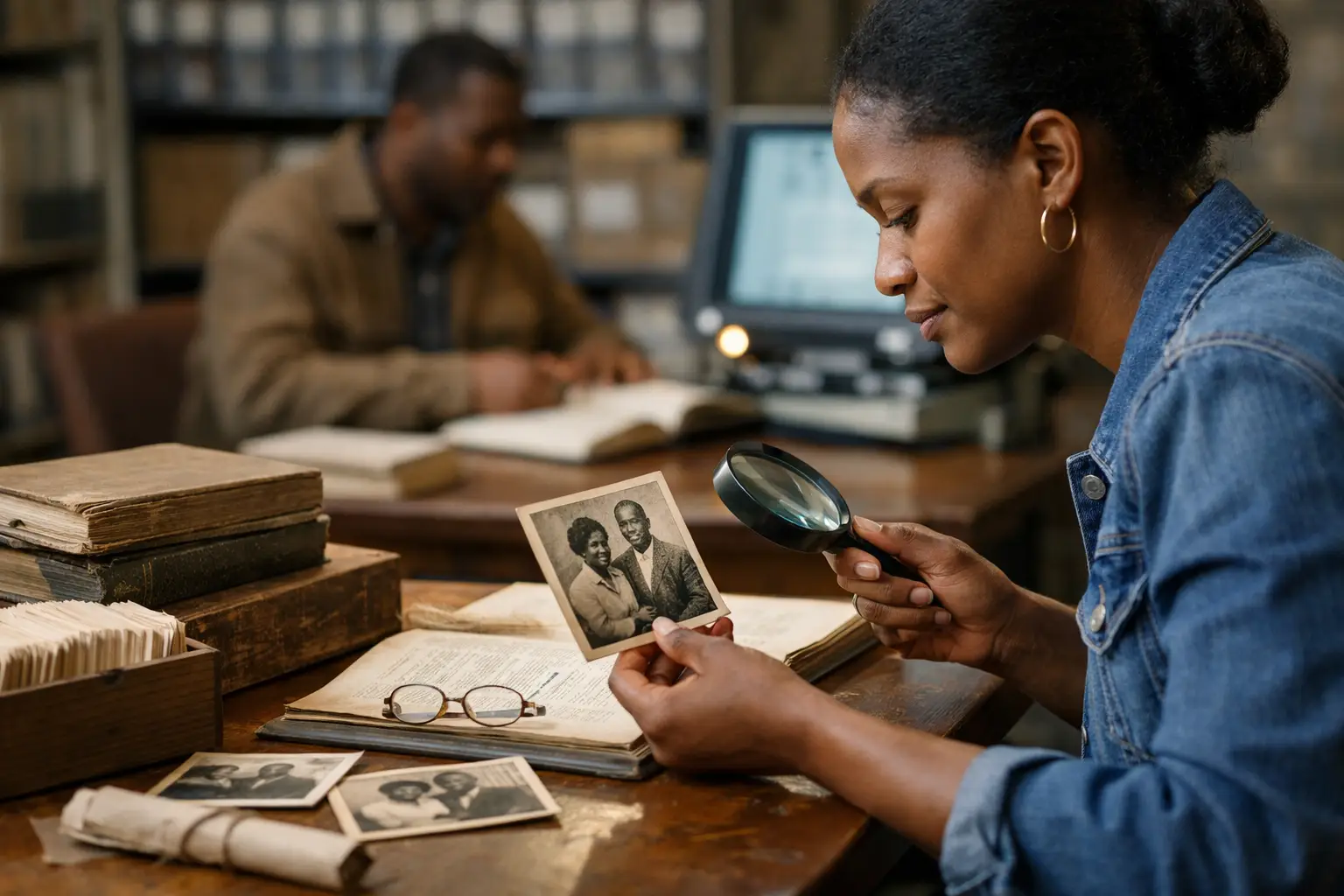
You find the family in one census, build the timeline, and then the trail just stops. If you have ever asked why are census records missing, you are not looking at a rare mistake. You are looking at one of the most common problems in American family research, especially for families pushed to the edges of the record system by poverty, migration, war, slavery, racism, or simple bureaucratic error.
Missing census records do not always mean your ancestor vanished. More often, the record was never created clearly, was damaged, was indexed badly, or is hiding somewhere you would not think to look. That distinction matters. A dead end feels final. A flawed paper trail is still a trail.
Why are census records missing in the first place?
The short answer is that "missing" can mean several different things. Sometimes the census page is truly gone. Sometimes your family was skipped. Sometimes the family is there, but under the wrong name, wrong age, wrong county, or wrong race classification. And sometimes the problem is not the original census at all. It is the modern index.
For genealogists, those are very different situations. A destroyed page calls for substitute records. A bad index calls for a page-by-page search. A skipped household calls for neighborhood reconstruction. The faster you identify which kind of missing you are dealing with, the faster you can make your next move.
Some census losses were physical
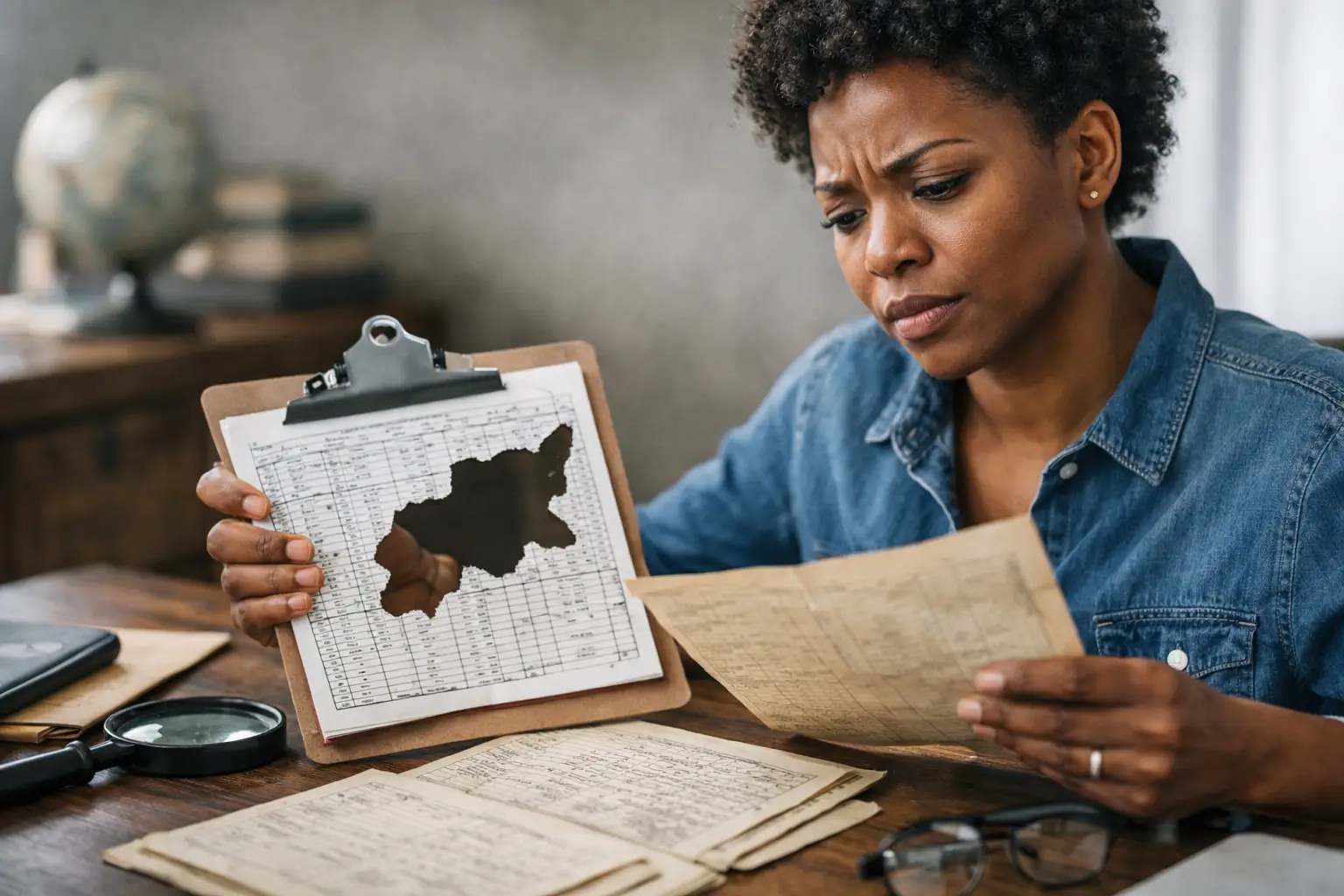
Not every federal census survived intact. The most famous loss is 1890. Most of the 1890 federal census was destroyed after a 1921 fire, along with additional damage from water and neglect. That single loss created one of the largest gaps in American genealogy. Families that appear in 1880 and 1900 often seem to disappear into a twenty-year hole, right when many African American families were building post-Emancipation households, and when immigrant, rural, and working-class families were moving constantly.
Other schedules and local copies were also damaged over time. Paper burns. Ink fades. Pages tear. Courthouses flood. Archives make preservation choices based on what survives and what can be read. Sometimes the census did its job in the moment, but history did not preserve the result.
Some people were never counted correctly
Enumerators were human. They worked fast, traveled difficult terrain, and wrote down what they thought they heard. If an ancestor was away for work, living in a boarding house, moving between counties, or staying temporarily with relatives, the household could be listed in an unexpected place or missed altogether.
This hits vulnerable communities hardest. Formerly enslaved people, tenant farmers, laborers, domestic workers, and multigenerational households often lived in arrangements that did not fit neatly into official categories. Native families, immigrant families, and families with language barriers were also especially likely to be mistranscribed or inconsistently identified. When the state looks at your family through a distorted lens, the paper trail inherits that distortion.
Names changed more than you think
A lot of "missing" census records are sitting in plain sight under altered names. Surnames shift. Given names shorten. Middle names become first names. A woman may appear under a former married name, a nickname, or a second husband's surname. Children may be scattered across households and recorded under different last names.
For African American research, this problem can be sharper after emancipation, when surnames were being stabilized across generations and not always used consistently from one record set to the next. For immigrant families, pronunciation and accent often shaped what the enumerator wrote. A German, Irish, Mexican, or Polish surname could mutate several times before it landed in a searchable index.
Indexing creates modern blind spots
Here is the part many researchers miss: the census image and the searchable database are not the same thing. Indexes are built later by people or software reading old handwriting. If the handwriting was poor, the page damaged, or the family listed out of order, the index may be wrong.
That means your ancestor can exist in the census but fail to appear in a standard search. A handwritten "Jas" becomes "Ias." A surname ending in "son" gets read as "ton." An age 31 becomes 51. If you only search by exact spelling, you can lose years of progress for no good reason.
The census gap that hits hardest: 1870 and 1890
If your family research runs into the years around emancipation, asking why are census records missing becomes more than a technical question. It becomes personal.
For many African American families, 1870 is the first federal census that lists formerly enslaved people by name. Before that, slavery-era federal censuses usually counted enslaved people only as tick marks in slave schedules, without names. So when a family is hard to find in 1870, the stakes are higher. You are not just missing one census. You may be losing the first named federal record after slavery.
Then 1890 disappears for most families due to the fire loss. That leaves a brutal stretch between 1870, 1880, and 1900 where names, locations, and kin networks can shift fast. A father dies. A widow remarries. Children leave home. Counties change boundaries. Families migrate for safety or work. Researchers are left trying to prove continuity with fewer anchors than they should have.
That is why this part of the timeline breaks so many family trees. It is not because your family was not there. It is because the record system around them was incomplete, unequal, and in some years physically destroyed.
What a missing census record usually means for your research
It means you need to stop treating the census as the only map.
The census is useful because it places a household in time and space. But when that placement fails, the next best move is to rebuild the family through surrounding records. City directories, tax lists, voter registrations, marriage records, death certificates, draft registrations, probate files, land records, church registers, school records, and Freedmen's Bureau or Freedman's Bank materials can all do part of the job the missing census cannot.
The real skill is not finding one perfect record. It is building proof from several imperfect ones. If a man is gone from the 1880 census but pays taxes in the same county in 1879 and appears on a marriage record there in 1882, that is movement, not disappearance. If a child appears with grandparents in one census and with a mother under a new surname in the next, that is a family transition worth tracking, not a contradiction to ignore.
How to search when census records seem missing
Start wider, not narrower. Search by first name only with an age range. Search by birthplace. Search by county without a surname. Search neighbors from the previous census, because families often stayed near kin or former enslavers, employers, or community networks. If the index fails, browse the enumeration district page by page.
This is also where precision matters more than volume. You do not need a thousand shaky hints. You need the next best research action. That may mean identifying the exact county where a family should appear, checking whether district lines changed, or using a DNA match cluster to point you toward a hub county where the missing household may have been counted under a distorted surname. That is the kind of problem The 1870 Project was built to solve - not by overwhelming you with lists, but by helping you decide what to search next and where.
Look for the reason before you look for the record
Ask a few grounded questions. Was the family migrating for work? Were they newly freed and changing surnames? Did they live near a county line? Did a parent die or remarry between enumerations? Was the household split across farms, employers, or relatives? Those questions tell you whether you should search neighboring counties, alternate surnames, or collateral relatives first.
A missing census entry is rarely random. It usually reflects a life event, a recording problem, or a structural gap in the archive.
Missing does not mean erased
That is the part worth holding onto, especially if you are researching ancestors whose lives were poorly documented on purpose. American records were never neutral. Some families were recorded carefully because the state valued their property and inheritance. Others were recorded carelessly, inconsistently, or only when labor, taxation, or control required it.
So yes, census records go missing. But your people did not. They married, worked, moved, served, worshiped, bought land, buried relatives, told stories, and left traces. The job is to follow those traces with enough patience and precision that a gap in one record set does not become a gap in memory.
When the census goes quiet, listen to the rest of the archive. Your family was here. The paper trail may be broken, but it is rarely the end of the story.