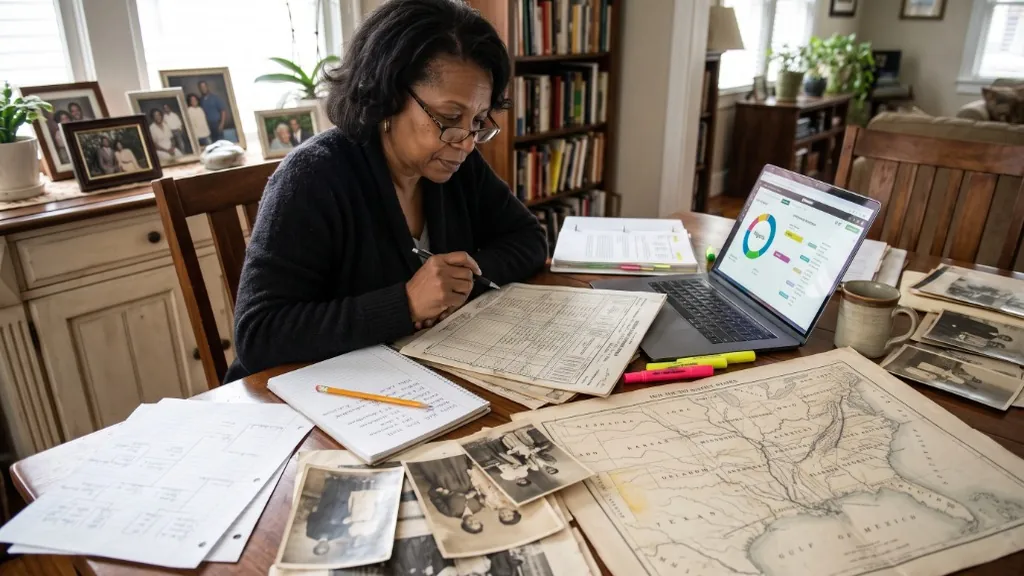
Can DNA Find Enslaved Ancestors?
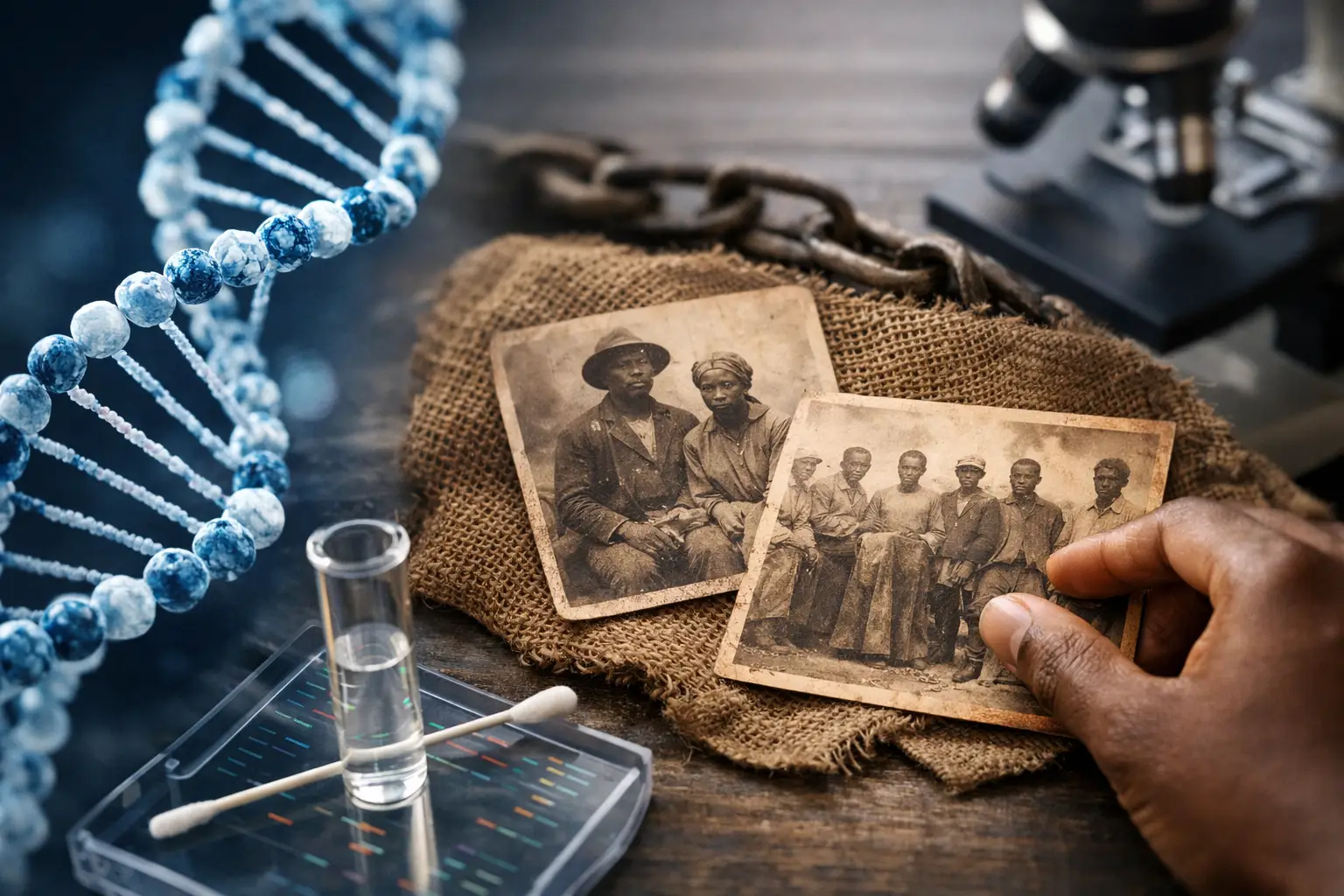
A DNA test can feel like a promise. You mail in a sample, wait a few weeks, and hope it will answer the hardest question in African American genealogy: can DNA find enslaved ancestors? The honest answer is yes, sometimes - but only when DNA is used as a guide, not as a shortcut. If your paper trail breaks before 1870, DNA can point you toward people, places, and families. It usually cannot hand you an enslaved ancestor's name on its own.
That distinction matters. Too many people are sold the idea that DNA will solve a history that slavery worked very hard to erase. What it can do is create momentum where records go silent. It can narrow counties, connect descendants of the same enslaver, expose hidden branches, and strengthen a hypothesis when documents are thin. For many families, that is the breakthrough.
What DNA can actually do for enslaved ancestry research
DNA is strongest when the question is about relationships, not identities in isolation. A match does not say, "this is your enslaved great-great-grandmother." What it says is that you and another living person likely share an ancestor, or ancestral couple, somewhere in the past. Your job is to turn that biological clue into a documented family line.
For descendants of enslaved people, that can be powerful because slavery fractured surnames, separated parents from children, and left many people unnamed in pre-1870 records. DNA can reconnect some of those fragments. If several of your strongest matches trace back to the same county in Georgia, Virginia, or Mississippi, that is not random noise. It may be a signal. If those matches also descend from a white family that held enslaved people in that area, or from multiple Black families living near each other after emancipation, you may be getting close to a real historical network.
DNA is especially useful for three things. First, it helps cluster relatives who descend from the same line when records alone are confusing. Second, it can reveal likely migration paths, such as a family moving from South Carolina to Alabama after the domestic slave trade. Third, it can point to communities where archival records are most worth searching, which saves time and money.
Can DNA find enslaved ancestors before 1870?
It can help you reach them, but usually by layers.
The 1870 census is the first federal census that lists most formerly enslaved people by name. Before that, many appear only as age, sex, and color marks in slave schedules or in estate inventories. DNA does not replace that gap. What it can do is help you identify the family groups most likely tied to your line before emancipation.
Say your known ancestor in 1870 is a Black man living in Halifax County, North Carolina, age 28, with a surname that may have changed after the Civil War. DNA matches might connect you to several Black families in the same county and to descendants of one white slaveholding family nearby. That does not prove ownership, parentage, or a surname origin by itself. But it gives you a focused research lane. Now you can examine probate files, wills, estate divisions, labor contracts, Freedmen's Bureau records, Freedman's Bank records, county tax lists, and plantation papers for that exact circle of people.
That is where progress happens. DNA narrows the field. Records make the case.
Where DNA falls short
This is the part many companies blur. Ethnicity estimates are not the answer to the question most people are asking. Knowing that your DNA includes West African regions, Scotland, or Indigenous ancestry may be meaningful, but it does not identify a specific enslaved ancestor. Ethnicity is broad. Genealogy is specific.
Close matches can also mislead if you do not know how to interpret them. A person who shares a substantial amount of DNA with you may connect through a recent line you already know, while a smaller match may be the key to the branch you are trying to prove. Endogamy, pedigree collapse, and generations of intermarriage in the same region can make matches look closer or more confusing than they are.
There is also the reality of testing gaps. DNA only works if relatives and collateral lines have tested. Some African American lines are underrepresented in databases compared with white colonial lines, and some families have understandable privacy concerns about testing. That means the evidence may be partial. Partial does not mean useless, but it does mean you need patience and method.
The method that works: DNA plus records plus living memory
The best research strategy is not glamorous. It is disciplined.
Start with your closest known relatives and build forward and backward at the same time. Identify your oldest confirmed ancestor in 1870 or soon after. Then sort your DNA matches into clusters based on shared matches, family trees, locations, and surnames. Look for overlap in counties, migration routes, churches, and postwar neighborhoods. If multiple matches point to the same place, that place deserves serious archival attention.
Then bring in records with intent. Search the county where your ancestor lived in 1870, but also the counties where their DNA matches' grandparents and great-grandparents lived. Read probate files line by line. Check estate sales and partition records. Look for labor contracts, cohabitation records, marriage records, and Bureau field office materials. Search white families not because they define your history, but because slavery put your family into their paperwork.
Do not skip living relatives. An aunt who remembers two unusual given names, a family nickname, or "they came from near Petersburg" may provide the bridge that makes a DNA cluster suddenly make sense. Oral history is not a substitute for evidence, but it often tells you where to point the evidence hunt.
What a strong DNA case looks like
A strong case is built from convergence, not wishful thinking.
You might have a 1870 household in one county, three DNA match clusters tied to neighboring communities, a Freedmen's Bureau labor contract naming a plantation, and a probate file from a local enslaver listing people with ages that line up with your family. None of those items alone may be enough. Together, they can become persuasive.
What you are looking for is repetition. The same county shows up in matches. The same surname appears after emancipation. The same white family appears in probate and tax records. The same migration route appears in Black households connected by DNA. When the pattern repeats across independent sources, your confidence rises.
This is also why a tool that translates DNA into search actions matters more than a flashy ethnicity chart. If your DNA results suggest a hub county, associated surnames, and the exact federal records to pull next, you move from curiosity to evidence. That is the difference between browsing and research.
How to use DNA without getting stuck
The fastest way to stall is to stare at a match list and wait for certainty. Genealogy rarely works that way.
Instead, treat every good DNA match as a research lead with a job to do. Ask where this match's people lived by 1870. Ask whether they descend from Black families, white slaveholding families, or both in the same area. Ask whether the shared DNA amount fits the generation range you are testing. Then build a working theory and try to break it. If it survives contact with records, keep going.
It also helps to focus on clusters, not single matches. One match can be a fluke, mistaken tree, or unrelated line. Five matches connected to the same county are harder to dismiss. When those five also connect to a paper trail, you are in business.
This is the problem The 1870 Project was built to solve. Not more noise. Not another subscription you forget to cancel. A clearer next move - the county, the archive, the microfilm, the family network most likely to matter.
So, can DNA find enslaved ancestors?
Yes, but not in the simplistic way people hope for.
DNA can find the living descendants of the world your ancestors were forced to survive in. It can identify kinship networks, narrow locations, suggest enslaver families, and reveal connections that no single census page will ever show you. But the ancestor is found when those clues are tested against records, timelines, and family memory.
That may sound slower than the marketing promises. It is also how real breakthroughs happen. If slavery scattered your family across surnames, counties, and documents, your research has to reassemble them piece by piece. DNA is one of the best tools we have for that work. Just not the only one.
Your family was here. The records are uneven, the names may be buried, and the path may zigzag through other people's paperwork. Keep going anyway. The right clue often does not look dramatic at first - just one more match, one more county, one more page that finally brings your people back into view.