Family Interviews Versus DNA Testing: Which Wins?
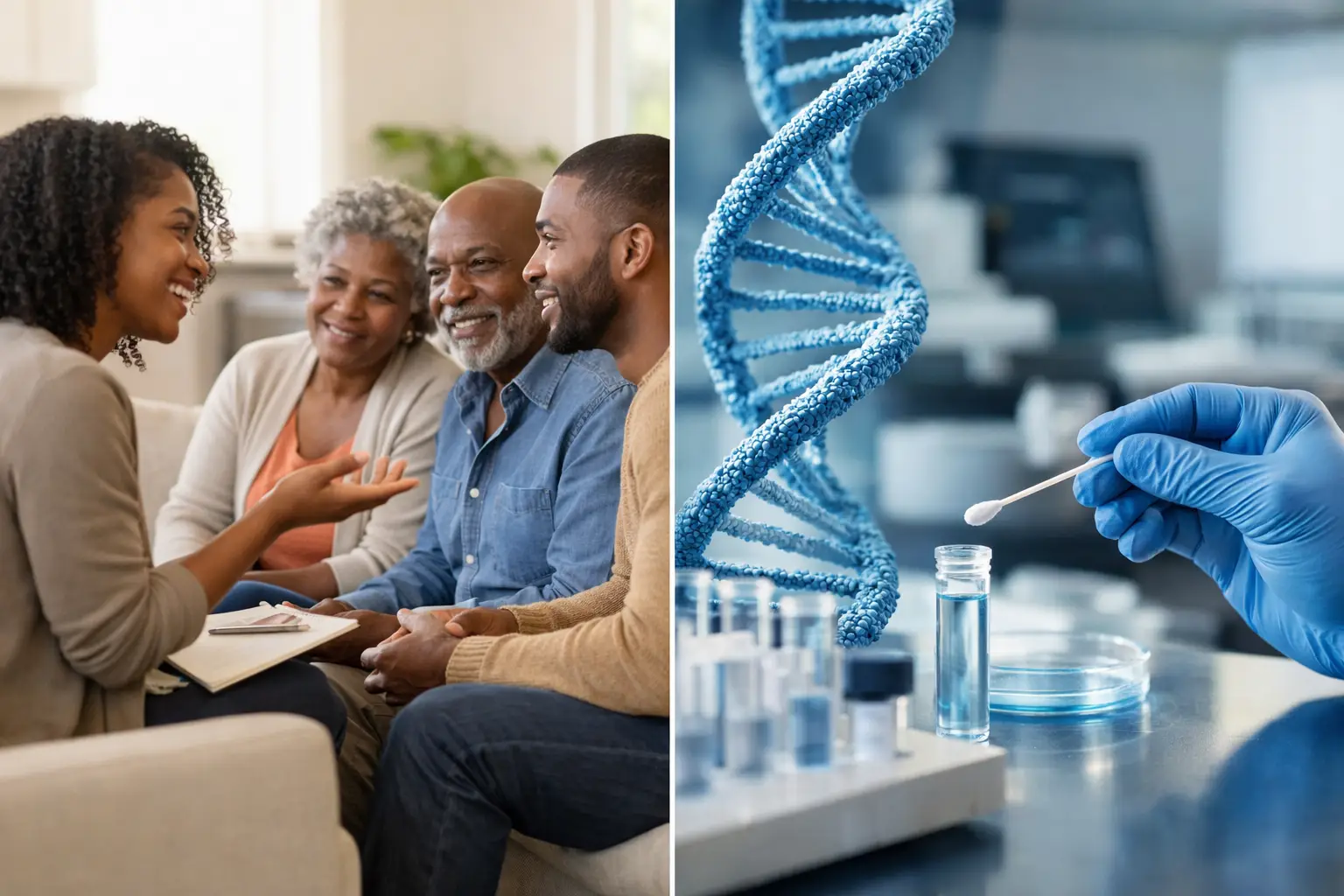
A DNA match can point toward an unknown branch. An aunt can tell you that branch was called by a different surname, lived near a particular church, and never appeared in records under the name your family uses now. That is why family interviews versus DNA testing is not really a contest. Each method recovers evidence the other cannot - and both can fail when treated as final proof.
For families facing an 1870 brick wall, especially descendants of people enslaved before Emancipation, the difference matters. DNA may connect you to living descendants of a shared ancestor. A family conversation may preserve the plantation name, a migration story, a nickname, or the county that turns a broad DNA clue into a specific archival search. The strongest research path uses both, in the right order, then tests every claim against records.
What family interviews can reveal that DNA cannot
DNA is biological evidence. It does not explain why a family moved, which surname a person used after freedom, or who raised a child after a parent died. Living relatives can sometimes supply those details in minutes.
An interview may reveal that "Grandma Liza" was actually Elizabeth Carter, that Carter was a stepfather's name, and that her people came from "outside Natchez." None of those memories is automatically a documented fact. But together they give you usable research leads: alternate names, a likely area, a timeframe, and a reason to look beyond one household or surname.
This is particularly valuable in African American genealogy. Before 1870, formerly enslaved people may be absent from standard federal population schedules by name. Family knowledge can preserve the last name of an enslaver, the name of a community, a cemetery, a church, a military service story, or a reunion location. Those clues can lead to Freedmen's Bureau records, labor contracts, cohabitation records, probate files, local newspapers, and the right county-level collections.
Interviews also capture meaning, not just data. Ask an elder why a photograph was kept, who was missing from holiday gatherings, or why nobody spoke about a certain town. The answer can protect a story that no census page will ever hold. Record the conversation with permission, preserve the original audio, and write down the date, interviewer, and names of everyone present.
The limits of memory
Family stories are priceless, but they are not immune to error. A relative may blend two people together, repeat a story they heard as a child, or use "aunt" and "cousin" as terms of affection rather than biological relationship. Dates drift. Locations get simplified. Painful history may have been intentionally withheld.
Treat an interview as a source with context. Ask, "Who told you that?" and "About when did this happen?" Instead of correcting someone during the conversation, let them finish. Follow up gently with details: spellings, nearby towns, siblings, churches, schools, occupations, and names on old documents. Then compare those details with records.
The risk is not that relatives are unreliable. The risk is losing their testimony while waiting for a perfect research plan.
What DNA testing can reveal that family interviews cannot
DNA testing can identify biological connections that no living relative knows about. It can expose an unknown parent, reconnect branches separated by migration, distinguish between two men with the same name, or confirm that a suspected line deserves deeper archival work.
For researchers who have reached 1870, DNA can be especially powerful because it works across missing records. A cluster of matches who all trace to the same county may point toward a shared ancestral community. If several matches descend from people with the same surname or from neighboring households after the Civil War, that pattern can tell you where to search next.
But a match list is not a family tree. A predicted relationship is a range, not a verdict. Second cousins may share surprisingly different amounts of DNA, and endogamy - generations of marriage within a small community - can make relationships appear closer than they are. Shared matches can suggest a network, but they do not automatically name the common ancestor.
DNA becomes useful when you turn it into a research question. Rather than asking, "Who is this 214 cM match?" ask, "Which ancestral couple could connect my grandmother's Mississippi line to this match's Arkansas line?" Then examine census households, death certificates, marriage records, land records, and migration routes.
DNA needs paper trails
A test can tell you that a connection exists. Records are what establish the who, where, and when. Without that work, it is easy to attach the wrong person to your tree simply because a name, age, or county looks plausible.
This is where many traditional genealogy tools create more noise than progress. They return hundreds of possible records and leave you to decide what matters. A better approach translates DNA evidence into a next action: identify the hub county shared across a match cluster, find the postwar community, and search the federal collection most likely to name the people involved. Sometimes the answer is not another hint. It is a precise archive target, down to the relevant NARA microfilm publication and roll.
Family interviews versus DNA testing: which should come first?
If an older relative is available and willing to talk, interview them first. DNA kits can be purchased later. A person's voice, memory, corrections, and explanation of a family photograph cannot be replaced after they are gone.
That does not mean you should postpone DNA indefinitely. If you are trying to identify an unknown parent, solve an adoption question, or locate a branch with almost no oral history, testing early may create the breakthrough that shapes every later interview. The best timing depends on your immediate question.
Start with an interview when you need names, places, photographs, family documents, cemetery knowledge, or context around a known line. Start with DNA when the central problem is biological identity, an unexplained close match, or a missing branch no one can name. In many cases, do both within the same month.
The key is to connect the two methods deliberately. Before an interview, review your match list and note places or surnames you want to ask about. After the interview, use the answers to build a small research plan rather than adding every story directly to your tree.
A practical workflow that creates evidence
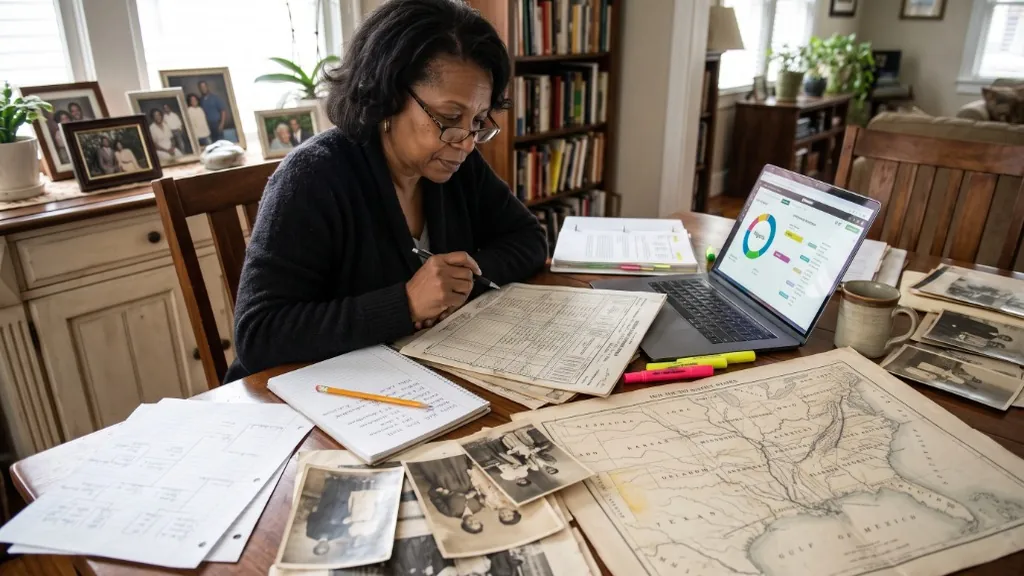
Begin by choosing one person or one question. "Who were the parents of my great-grandfather James Williams?" is far more workable than "Where did my family come from?" Gather what you already have: death certificates, obituaries, family Bibles, photographs, known census entries, and screenshots of relevant DNA matches.
Interview relatives with a clear purpose, but leave room for unexpected stories. Ask them to identify people in photographs and explain relationships in their own words. Ask where the family lived before the oldest census record you have. Ask about sibling names, maiden names, church affiliations, military service, and moves across county or state lines.
Next, create a research log. Separate what was said from what has been proved. A useful entry might read: "Interview with Denise Harris, June 2026: believes her grandfather's mother was named Lula and came from Wilkinson County, Mississippi. Needs verification." This protects the story without turning it into fact too soon.
Then examine DNA matches in groups, not one at a time. Look for shared matches who trace to the same counties, surnames, or post-1870 communities. Build small trees for the strongest matches, especially those with known ancestors. Your objective is to find repeated evidence, not a single seductive coincidence.
Finally, move from clues to records. If an interview names Wilkinson County and your DNA cluster repeatedly points to southwest Mississippi, search that location across the relevant years and record sets. The 1870 Project can help turn those combined clues into a focused archival direction rather than another stack of vague hints. Your family was here. The work is finding the record trail that proves where.
Privacy and consent are part of good genealogy
Both approaches involve living people, so handle them with care. Tell relatives why you are recording them and how you plan to preserve or share their stories. Do not pressure someone to discuss trauma, estrangement, adoption, or family secrets.
With DNA, understand that your results can reveal relationships you did not expect. Consider whether you want match visibility, how you will communicate with a possible relative, and what information belongs in a public tree. A careful first message should be respectful, specific, and free of assumptions: explain the shared match, name the common locations or surnames you are researching, and give the other person room to decline.
The point is not to force every mystery open. It is to pursue truth without treating living relatives as evidence machines.
A good family history is built from more than one kind of proof. Ask the questions while someone can still answer them. Test when biology can illuminate the gap. Then follow the evidence into the county, the household, the church, the bureau office, or the microfilm roll where your ancestors begin to come back into view.