DNA Testing vs Paper Trail for Family History
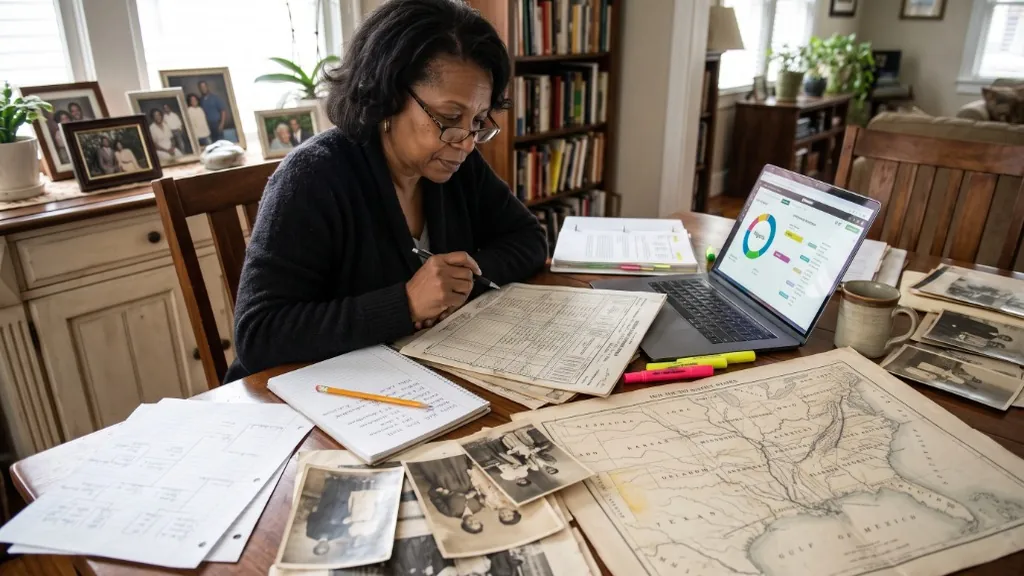
You get a DNA match with the right surname, the right region, and just enough shared centimorgans to make your pulse jump. Then nothing. No documents. No family tree you can trust. Or maybe you have the opposite problem: a stack of records that look promising, but no proof that the man in the county tax list is actually your ancestor. That is where DNA testing vs paper trail becomes a real research decision, not a theory.
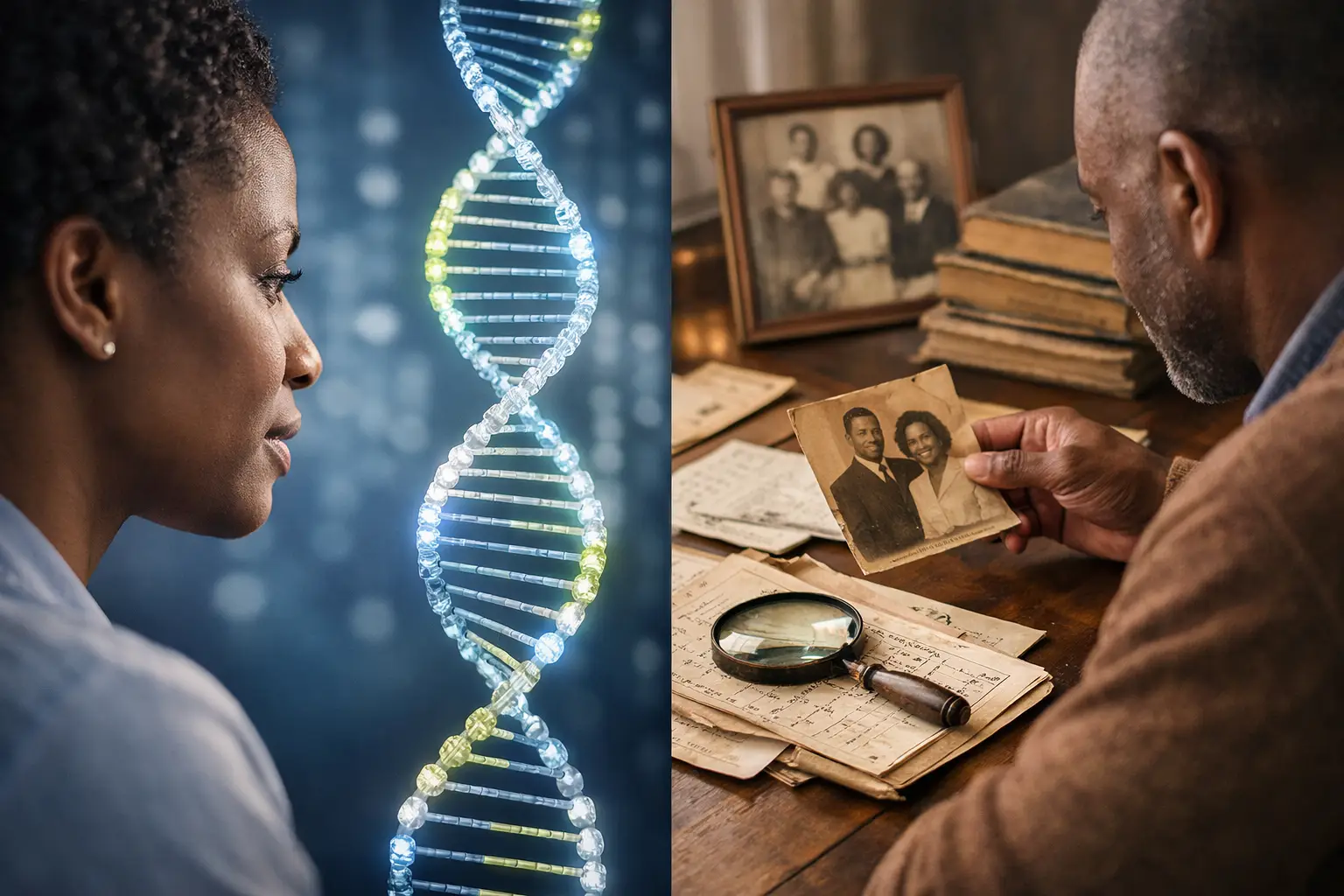
For most family historians, especially anyone working through Black ancestry before and after 1870, this is not a contest with one winner. It is a question of sequence, strength of evidence, and what kind of problem you are trying to solve. DNA can point. Records can prove. Sometimes records lead first and DNA confirms. Sometimes DNA is the only thing moving when the archive goes quiet.
DNA testing vs paper trail: what each actually does
DNA testing is strongest when you need to identify biological relationships that the records never stated clearly. It can reveal unknown parentage, separate men with the same name, and cluster you with cousins whose families stayed in one place long enough to leave a pattern. It is especially useful when surnames changed, fathers were omitted, or family lines were split by slavery, migration, adoption, or informal guardianship.
Paper trail research does something different. It places a person in time and space. Census records, marriage licenses, probate files, deeds, labor contracts, military records, church registers, city directories, and court papers create the context DNA cannot provide on its own. DNA might tell you that two people are related. A record tells you where they lived, who they lived near, what property they held, whether they served, whether they were free or enslaved, and which county office might hold the next clue.
That difference matters. If you want to know whether a match is from your maternal grandfather's line or your paternal grandmother's line, DNA can help fast. If you want to know whether your ancestors were in Halifax County in 1867 or moved there in 1872, records carry more weight.
Where DNA testing wins
DNA is often the better starting point when your family story has a missing name in a recent generation. If a parent, grandparent, or great-grandparent is unknown or uncertain, waiting for a perfect record set can waste years. Close matches can narrow the field quickly, especially when you group them by shared matches and compare where their documented families lived.
It also wins when the paper trail is broken by historical violence and administrative gaps. For descendants of formerly enslaved people, pre-1870 research can collapse because the records were never designed to preserve family connections in the way modern researchers need. Enslaved ancestors may appear without surnames, under the name of an enslaver, or only as age and sex marks in estate inventories. DNA can reconnect branches that the records separated on purpose.
Still, DNA does not arrive as an answer. It arrives as data. A match list without interpretation is just a crowded screen. Shared centimorgans can suggest relationship ranges, but ranges are not proof. Ethnicity estimates can be interesting, but they rarely solve a lineage question. The value comes from turning match patterns into researchable places, surnames, counties, and document sets.
Where the paper trail still wins
Paper records remain the backbone of serious genealogy because they can establish identity across time. A census household in 1880 can connect to a deed in 1874, a marriage in 1869, a will in 1891, and a death certificate naming parents years later. That chain is how you move from possibility to argument.
Records are also better at showing the full family, not just the biological link. Genealogy is not only genetics. Step-parents, informal kin, neighbors, witnesses, church sponsors, and the people who migrated together all matter. For African American research, the FAN method - friends, associates, and neighbors - is often what exposes an earlier enslaver connection or a move from one county to another. DNA rarely gives you that social texture on its own.
And there is a practical point many people learn the hard way: not everyone tests. Entire branches can be invisible in DNA results simply because the right cousins have not taken a test, do not reply, or tested at a different company. Records may be old, fragmented, and frustrating, but they do not depend on a living person checking their inbox.
DNA testing vs paper trail at the 1870 brick wall
This is where the trade-offs get sharp. If your line disappears before the 1870 census, a traditional paper trail often runs out before the family story does. You may know an ancestor's name in 1880 and still have no clean way to connect them to an earlier identity under slavery.
DNA can break that standstill by identifying cousin clusters tied to a county, a plantation network, or a surname that appears after Emancipation. But the breakthrough usually happens when DNA and records are forced to work together. A cluster of matches from one county is useful. A cluster of matches from one county plus a Freedmen's Bureau labor contract, a co-located 1870 household, and a probate file naming enslaved people is a research path.
That is why the smartest approach is not broad and vague. It is precise. Which county? Which household? Which bureau field office? Which NARA microfilm publication? Which nearby white family appears in probate and land records before 1870, then next to your ancestors after 1870? Those are the questions that move a case forward.
The real mistake: treating one method as proof by itself
Many beginners swing too hard in one direction. Some trust DNA because it feels scientific. Others trust documents because they feel official. Both instincts can mislead you.
A DNA match can be real and still belong to a different branch than you think. Endogamy, pedigree collapse, and cousin marriage can inflate relationships in some communities. Shared matches can look persuasive while still being ambiguous. On the records side, the wrong John Williams in the right county can derail an entire tree. Names repeat. Ages shift. Clerks misspell. Informants guess.
Proof in genealogy is usually cumulative. You build it by stacking independent clues until the explanation holds better than the alternatives. That is why the strongest family history work sounds less like certainty too early and more like disciplined comparison. This woman appears in the same county, same age range, same cluster of neighboring families, same naming pattern, and same DNA network. Now the case has weight.
A better way to choose your next step
If your problem is recent unknown parentage, start with DNA and organize your closest matches before chasing every record online. If your problem is identifying a known ancestor across censuses, migration, or county lines, start with the paper trail and use DNA to confirm the branch. If your problem is pre-1870 African American ancestry, do both, but do them in a tight loop. Let DNA suggest where to look, then let records test the idea.
This is where guided research matters. Most people do not need more documents dumped on them. They need the next best move. A good workflow turns a confusing DNA cluster into a county, then into a record group, then into an exact archive target. That is the difference between collecting hints and actually finding family. Platforms like The 1870 Project are built around that shift - not more noise, but sharper direction.
You do not have to choose between modern evidence and old records as if one cancels the other out. Your ancestors lived in bodies, families, courthouses, churches, plantations, neighborhoods, and migrations. Their history left traces in more than one system.
When DNA is loud and the records are quiet, follow the cousins. When the records are rich and the DNA is thin, follow the county. When both seem messy, slow down and force them into conversation. Your family was here. The proof is rarely in one place, but it is often closer than it looks.