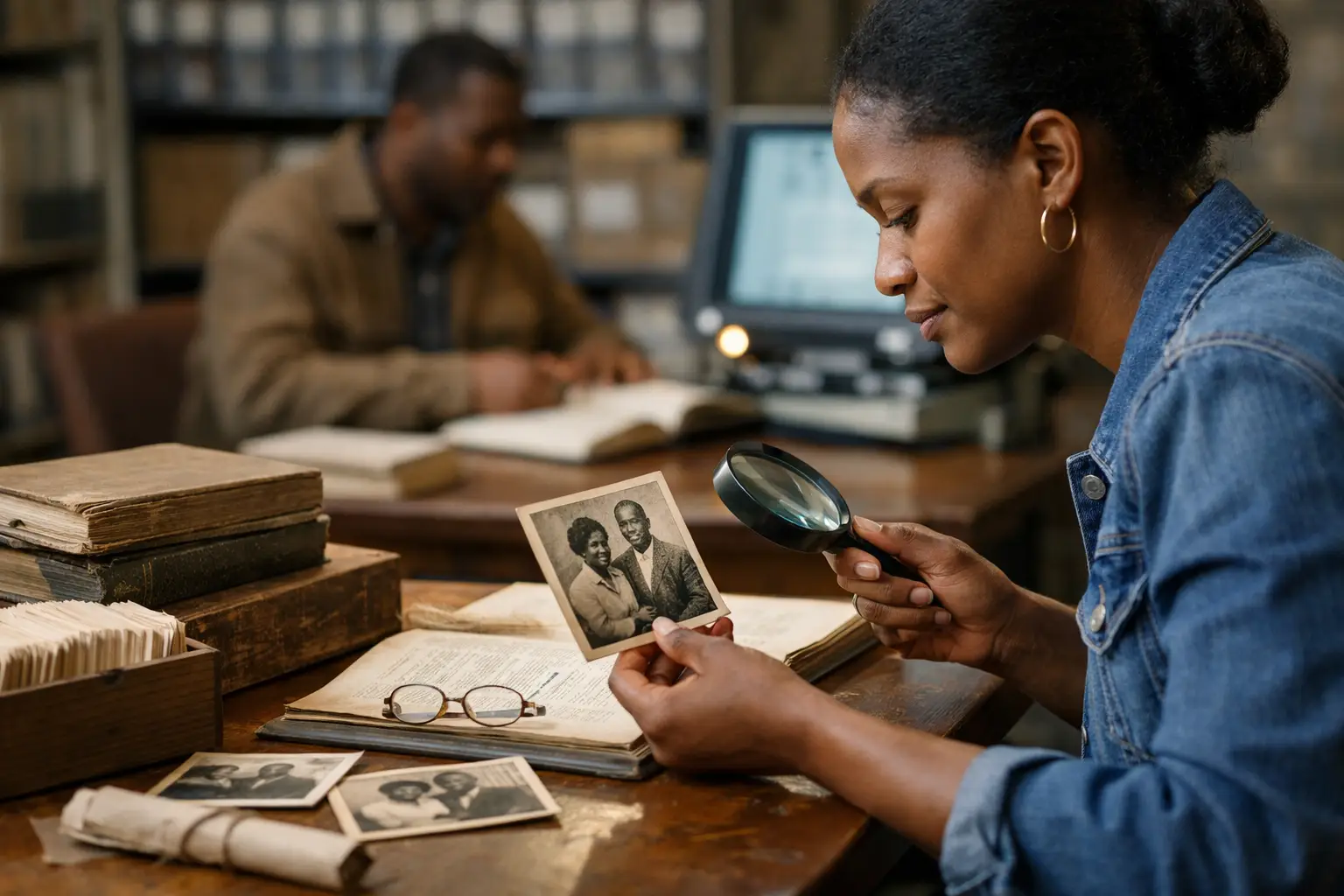
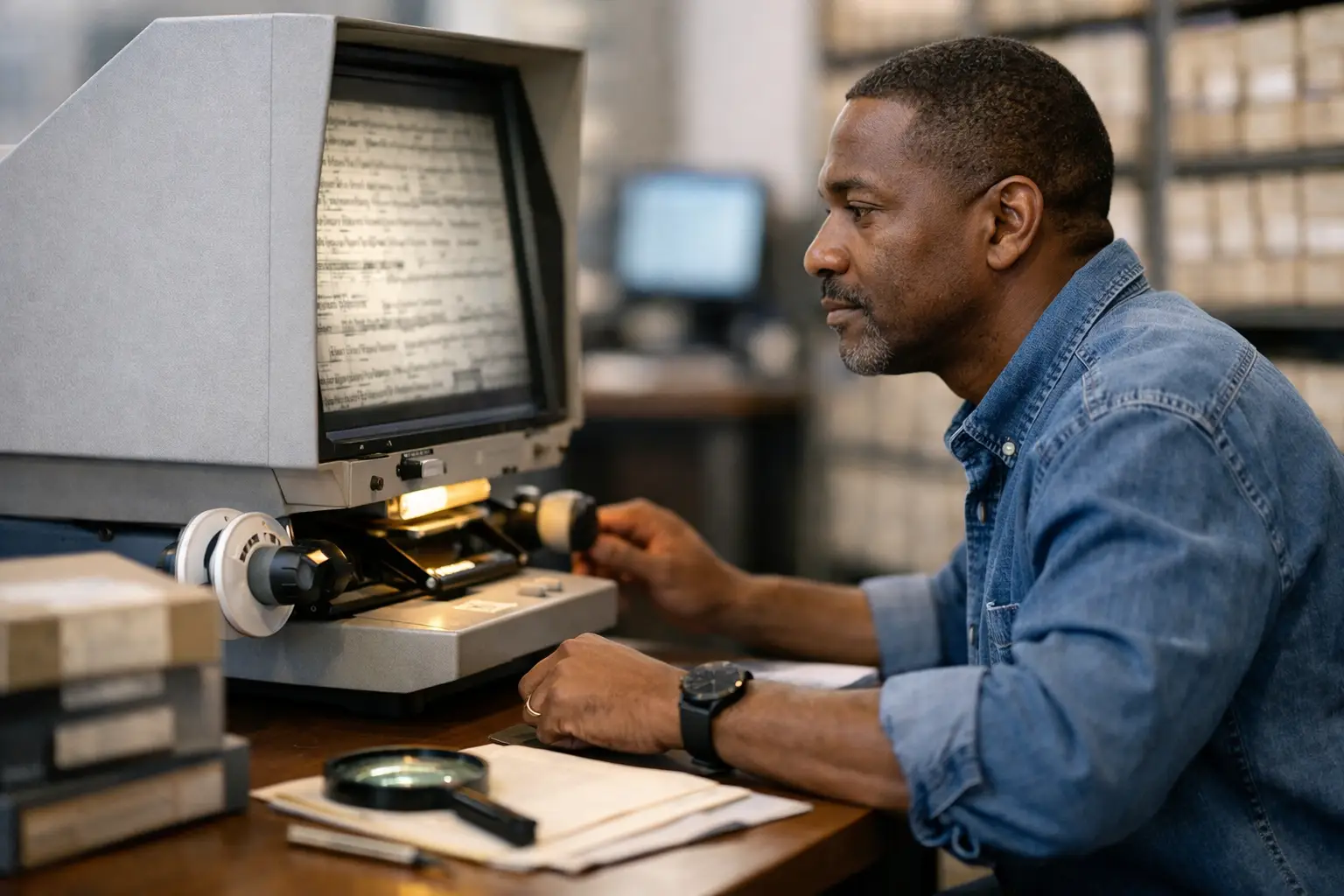
FamilySearch vs Ancestry Records

If you have ever clicked through twenty shaky-leaf hints, opened a census image, and still felt no closer to the person you are trying to prove, the familysearch vs ancestry records question is not academic. It is about momentum. It is about whether tonight’s search gives you a real lead or just another name in another tree.
For most researchers, both platforms matter. But they do not help in the same way, and they do not fail in the same way either. If you are tracing African American ancestry, especially around the 1870 line, those differences can save you time or waste weeks.
FamilySearch vs Ancestry records: the short answer
FamilySearch is usually the better place to start when you want free access, broad record collections, and a solid catalog of original sources. Ancestry is usually better when you want faster discovery, stronger hinting, easier tree-building, and a more polished search experience.
That sounds simple, but the real answer is about record behavior. Some databases are indexed differently. Some images are easier to reach on one site than the other. Some collections exist on both, but one copy is cleaner, more complete, or more searchable. And some of the records you need most - county records, probate packets, Freedmen’s Bureau materials, tax lists, and local schedules - still require knowing what to search next, not just where to type a name.
What FamilySearch does best
FamilySearch’s biggest advantage is cost. You can search enormous collections without paying for a subscription, and that alone makes it essential. For beginners, that matters. For experienced researchers, it matters even more, because serious genealogy often means checking the same family across many sources before you trust a conclusion.
It also has a deep catalog culture. FamilySearch often rewards researchers who think beyond a simple name search and who are willing to browse by county, record type, film, or locality. That is especially useful when your family appears inconsistently in indexed databases, or when clerks, census takers, and later indexers handled the names poorly.
For African American research, this can be crucial. A person who does not appear under the expected surname in 1870 may still surface in labor contracts, marriage registers, probate references, tax records, or county court books. FamilySearch can be excellent for that slower, source-driven work.
Its shared family tree is more complicated. Sometimes it helps because other users have attached records you would not have found quickly. Sometimes it creates a mess of merged identities, copied relationships, and wishful thinking. Use it as a research workspace, not as proof.
Where Ancestry feels stronger
Ancestry is built for speed. Its interface is easier for most people to use, its hints are more aggressive, and its trees often make early progress feel faster. If you are building out a family from the late 1800s into the 1900s, Ancestry can be very efficient.
That does not mean it is more accurate. It means it is better at surfacing possibilities. There is a difference.
Its user-generated trees can be useful when you are working collateral lines, migration patterns, or clusters of related families. They can also spread errors at industrial scale. A wrong mother on one public tree can show up everywhere by next week. Treat public trees as clues, not evidence.
Ancestry also tends to make DNA integration feel more central. If you are using match lists, shared matches, and family trees together, the experience is more cohesive. For many researchers, that makes Ancestry the better platform for identifying candidate relatives, likely counties, and family clusters before shifting back into archival work.
FamilySearch vs Ancestry records for hard cases
This is where the glossy comparison breaks down.
If your research problem is simple - a grandparent in Ohio, a marriage in 1928, a death certificate in hand - either platform may get you there. If your research problem is hard - a family that moved after emancipation, a surname change, missing fathers, inconsistent ages, plantation-era separation, or a county line shift - then neither platform is enough by itself.
FamilySearch often gives you a wider path into original records. Ancestry often gives you a faster path into probable identities. Hard cases usually require both instincts: broad source hunting and smart hypothesis testing.
For the 1870 brick wall, that matters. The first post-Emancipation census is often where formerly enslaved ancestors become visible by stable household name. But getting before that point usually requires connecting postwar records to local places, associated families, and federal collections. A platform can show you records. It cannot always tell you which county courthouse, Freedmen’s Bureau field office, or NARA microfilm series matters next.
That is the gap many researchers feel but cannot name. You are not failing because you missed one magic record. You are stuck because the platform gave you search results instead of a research strategy.
Coverage is not the same as access
One of the most common mistakes in the familysearch vs ancestry records debate is assuming that larger equals better. Record count headlines sound impressive, but they hide the real question: can you find the right record, interpret it, and connect it to the next one?
A collection may exist on both sites, but access can differ in practical ways. One version may have better indexing. Another may have cleaner image navigation. One may include image sets that are locked behind affiliate access or viewing restrictions. Another may have stronger search filters but weaker browse pathways.
This is why experienced researchers rarely stay loyal to one platform. They cross-check. They compare indexes. They browse manually when name search fails. They look at neighbors, witnesses, and nearby households. They care less about brand and more about getting one credible fact that moves the case forward.
The real trade-off: discovery vs control
Ancestry is discovery-heavy. It wants to show you likely matches, possible relatives, and related records quickly. That is useful when you are building breadth.
FamilySearch offers more control if you are willing to work for it. It is often better for researchers who already know the county, approximate date, and record type they need. That is useful when you are building proof.
Neither model is automatically better. It depends on where you are in the case.
If you are early in the search, Ancestry may help you identify the right family cluster faster. If you are deep into a disputed identity, FamilySearch may help you inspect the actual records with more discipline. Most family historians need both modes at different times.
What each platform misses
Both platforms can create a false sense of completeness. You search, you get no result, and it feels like the record does not exist. But many records are still unindexed, poorly indexed, locally held, or hidden behind place-based browsing.
This is especially painful in African American genealogy. The records are there, but they are scattered across labor contracts, military pensions, bank records, county court minutes, estate divisions, cohabitation registers, and federal bureau documents. A person may appear in five places without a single perfect name match.
That is why the best research often starts with a different question. Not “What database should I search?” but “What happened to this family in this place at this time?” Once you know that, the right records become more visible.
How to choose without wasting time
If money is tight, start with FamilySearch. Learn the catalog, use the image collections, and build a source-based timeline. If you want quick traction and can afford a subscription, Ancestry often helps you get oriented faster.
If your family line is straightforward, either can work well. If your line includes pre-1870 African American research, migration after the Civil War, surname instability, or unclear parentage, do not expect one website to solve it for you. You need records, yes, but you also need direction.
That is where modern genealogy should be better than legacy search. Instead of dumping thousands of hits on your screen, it should tell you what to do next: which county matters, which archive series to search, which relative to contact, which microfilm number to pull. That is the difference between browsing family history and actually recovering it.
Use FamilySearch when you need free depth. Use Ancestry when you need speed and discovery. Use both when the case deserves it. And when you hit the wall that records platforms cannot explain, use a tool that turns fragments into a plan. Your family was here. The right next step is how you find them.