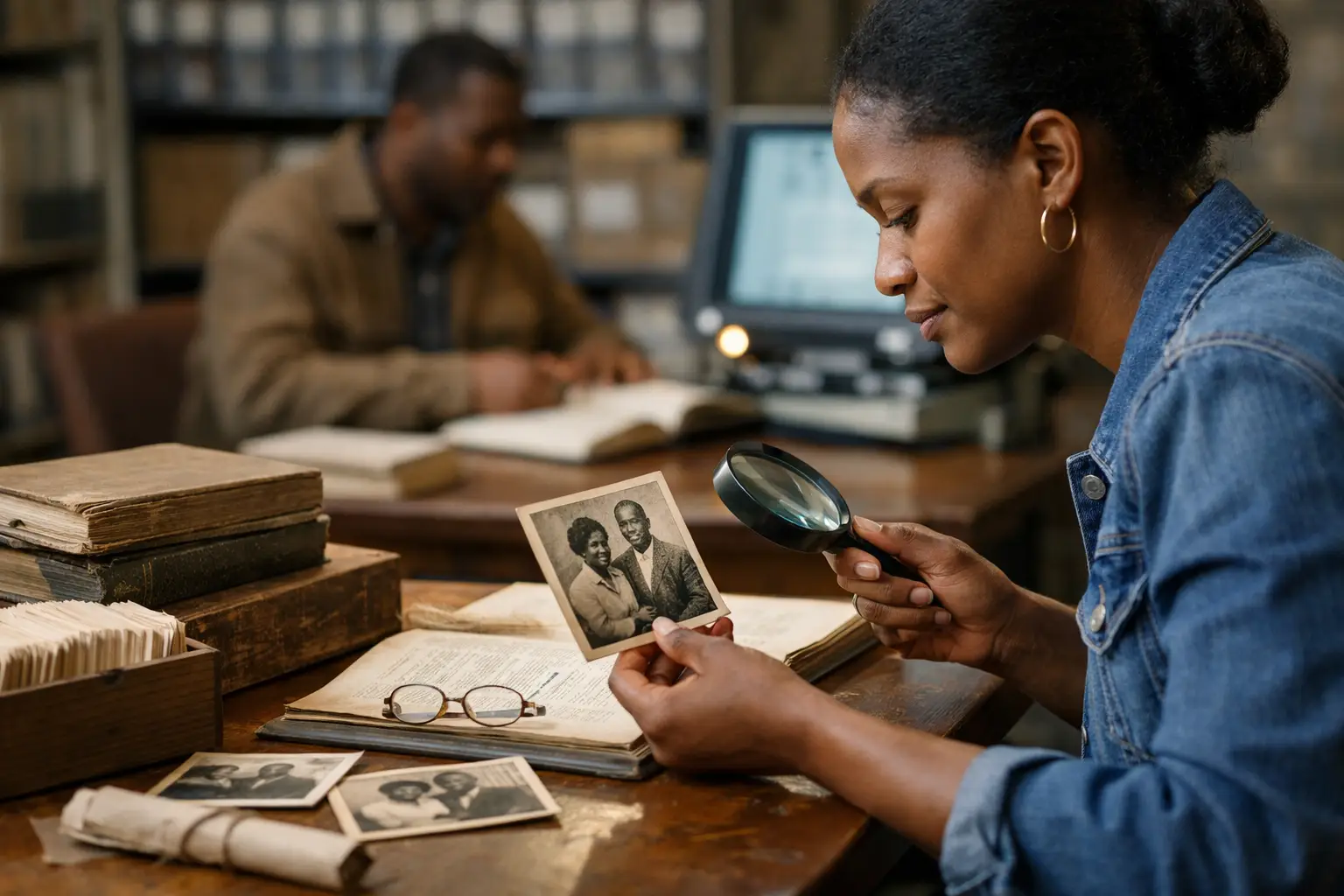
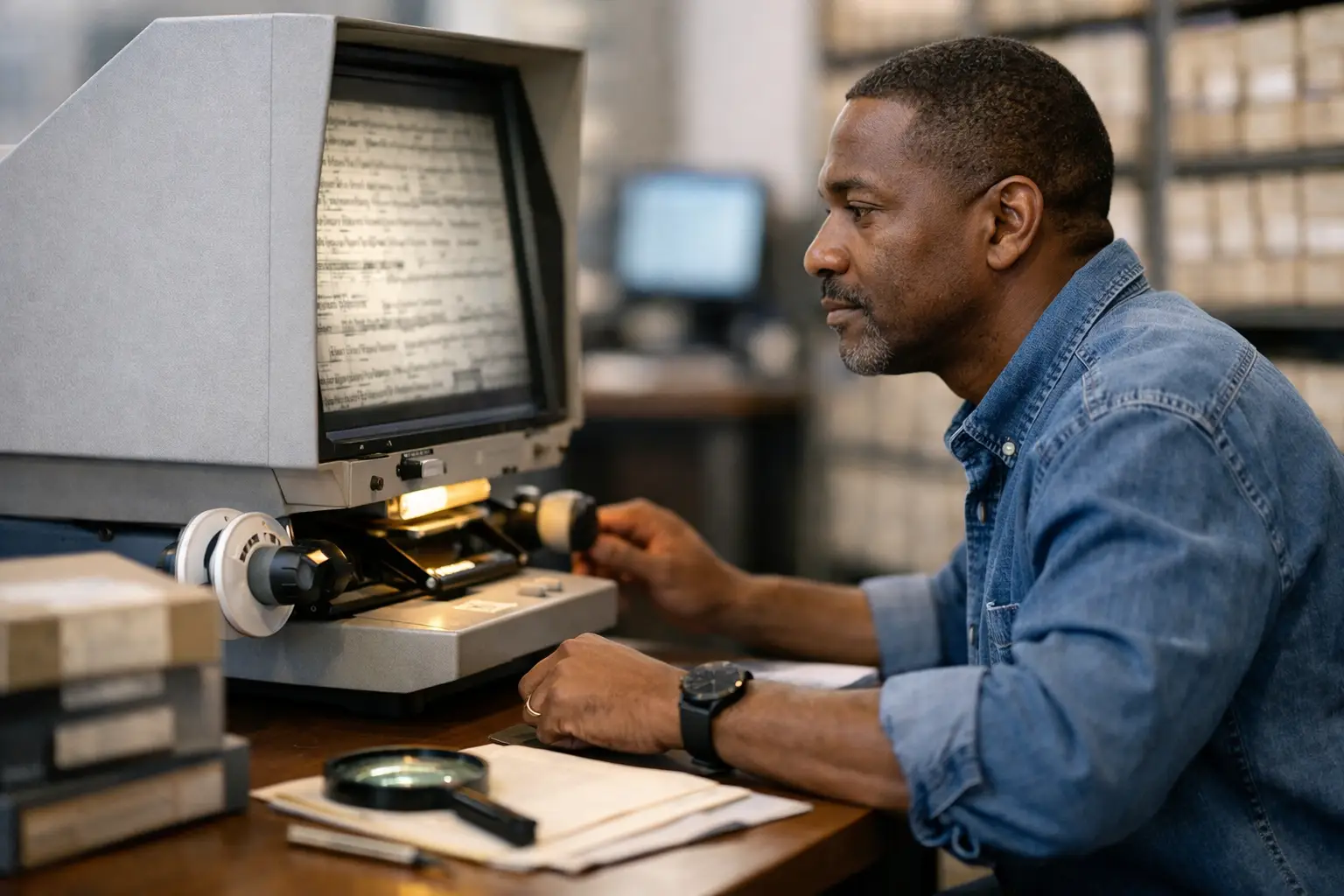
How NARA Microfilm Genealogy Still Works
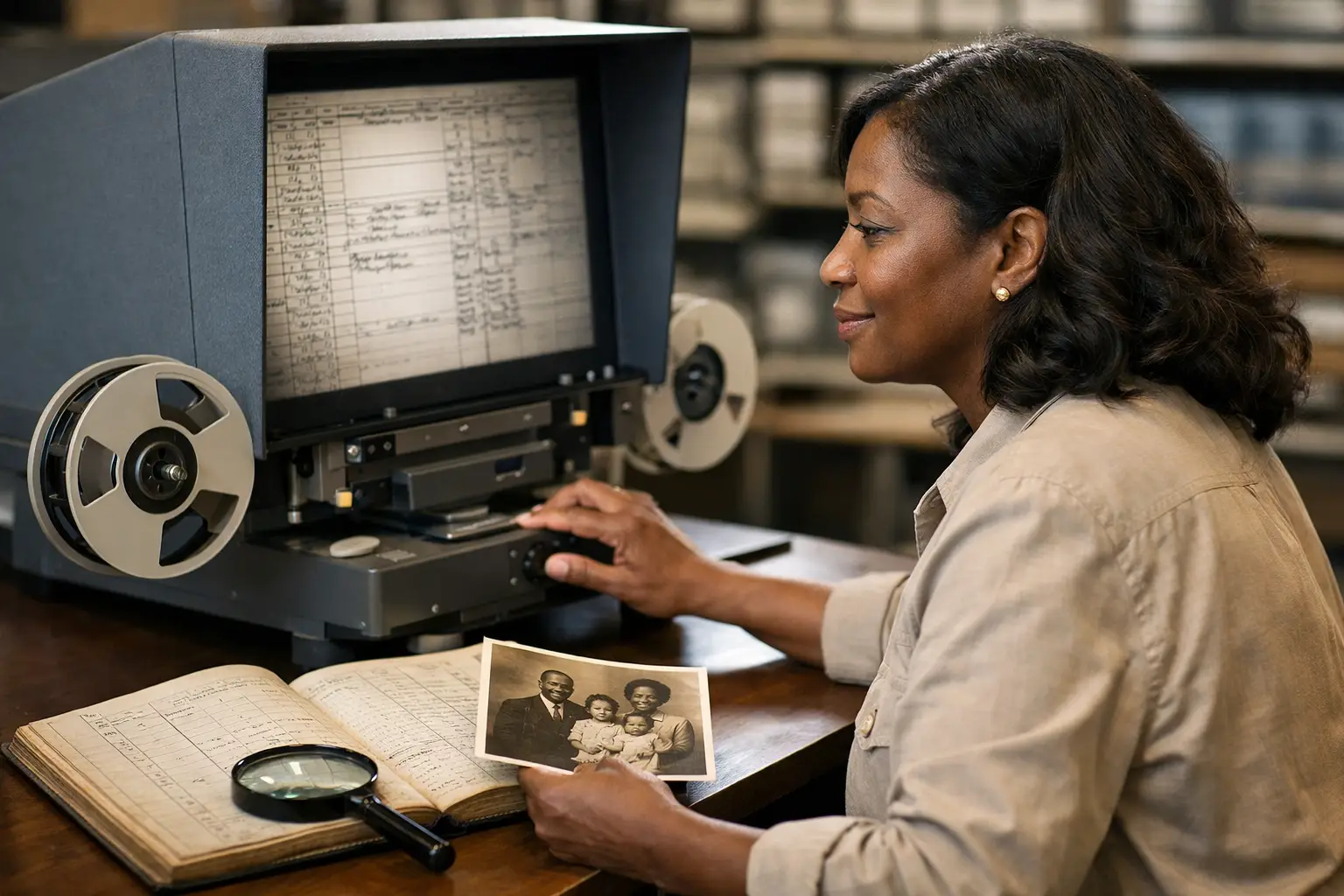
If your family trail goes cold in the late 1800s, NARA microfilm genealogy is often where the real work begins. Not because it is glamorous. Because when indexes fail, names are misspelled, and record hints stop making sense, federal microfilm can still point you to the person, county, regiment, or post office that moves your research forward.
For many families, especially those tracing African American ancestors through the 1870 barrier, that matters. A digitized search result might give you nothing. A microfilm publication can give you context, neighboring households, military service clues, labor contracts, pension trails, and the small details that prove you are looking at the right person instead of the wrong John or Mary with a familiar last name.
What NARA microfilm genealogy actually means
At a basic level, NARA microfilm genealogy refers to family history research that uses microfilmed federal records published by the National Archives and Records Administration. These are not random reels. They are organized record sets, usually identified by publication numbers, covering materials such as census schedules, passenger lists, military records, Native American records, and Freedmen's Bureau or Freedman's Bank materials.
The key point is this: the microfilm publication matters as much as the ancestor's name. If you know the right publication and the right place to look within it, you stop wandering through broad databases and start working from evidence.
That shift is especially useful when your ancestor sits inside a record system that was never built for easy modern searching. Many nineteenth-century records were handwritten, inconsistently indexed, and created by agencies that cared more about administration than future family historians. Microfilm preserves those records in organized form, but it does not simplify them for you. That is the trade-off. You get depth and fidelity, but you need a more exact research plan.
Why microfilm still matters when so much is online
A lot of NARA material has been digitized or indexed somewhere. That helps, but it does not eliminate the value of microfilm-based research. Digitization is not the same as interpretation.
Indexes miss names. Handwriting gets misread. Page order can matter. Margin notes get skipped. Families appear near former enslavers, labor contractors, military units, or migration clusters that only make sense when you look beyond a single extracted line item.
This is one reason experienced researchers still talk in microfilm numbers. The publication tells you what kind of record you are actually using, how complete it is, and what jurisdiction created it. That can save hours of wasted searching.
It can also keep you from chasing the wrong person. If you are researching a Black family in 1870 Mississippi, for example, a name match by itself is weak evidence. But a name match connected to the right county, a Freedmen's Bureau field office, a labor contract district, and later census placement becomes much stronger. Microfilm helps you build that chain.
The NARA microfilm genealogy records that solve real problems
Not every federal record set deserves equal attention. Some are useful only in narrow cases. Others break open entire lines.
Census microfilm is the obvious starting point, especially from 1870 forward, but it is rarely the whole answer. If a family appears in 1870 and disappears backward, military service records, pension indexes, southern claims material, post office records, and field office records can help place them in motion.
For African American genealogy, the most important microfilm-backed pathways often include Freedmen's Bureau records, Freedman's Bank records, and U.S. Colored Troops service or pension material. Those records can connect people to former plantations, spouses, children, and pre-1870 locations. They can also expose name changes, age shifts, and county moves that make ordinary searches look inconsistent when they are actually correct.
For immigrant lines, passenger arrival and naturalization-related records may matter more. For Native American ancestry, records tied to specific agencies, rolls, or federal oversight can become central. For white and European-descended families, military pensions, land-related federal records, and migration-linked census work often carry more weight.
The point is not to search everything. The point is to search the record system that fits your family's historical reality.
How to use NARA microfilm genealogy without getting buried
Start with the question, not the database. What exactly are you trying to prove? Identity, location, parentage, military service, migration, or status after emancipation are different problems. Each one points to different federal records.
Next, narrow the geography. County matters. District matters. In many cases, even the nearest town, post office, or military unit matters. Broad searches produce broad confusion. Precise searches produce useful misses and useful hits.
Then identify the likely federal record set before you search names. This is where many researchers lose momentum. They type a person into a giant site, get 4,000 results, and stall. A better method is to ask: which federal office or system would have had a reason to record this person at this moment in time?
If the goal is to trace a man who may have served in the Civil War, military and pension publications become more important than random census fragments. If the goal is to locate a formerly enslaved family right after the war, Freedmen's Bureau field office records and bank records may matter more than another spelling variation search.
Finally, track publication numbers and reel references as evidence, not side notes. A microfilm number is not trivia. It is part of your proof trail. When you come back to the case later, that number tells you exactly what you checked and what you still need.
Where beginners get stuck
The hardest part of NARA microfilm genealogy is not access. It is interpretation.
A record can be technically found and still functionally useless if you do not understand what agency created it, why it was created, and what details are likely to be reliable. Ages drift. Birthplaces shift. Surnames appear late. Clerks make guesses. Formerly enslaved people may be recorded under names that changed after emancipation or under labor arrangements that hide family relationships in plain sight.
That does not mean the record is bad. It means you need more than one record type speaking to the same identity.
Another common problem is overtrusting indexes. If an index says your ancestor was in one county, but every family connection points elsewhere, trust the evidence chain, not the first neat result. Microfilm research often rewards people who are willing to read sideways - neighbors, witnesses, employers, regiment members, and account holders - instead of staring only at a direct ancestor's line.
When NARA microfilm genealogy is the wrong first move
Sometimes microfilm is not your first step, even if it ends up being your best one.
If you have not interviewed living relatives, gathered death certificates, mapped known counties, or tested key DNA relatives, you may be trying to solve a federal archives problem before you have built the case properly. Microfilm is strongest when the search zone is already narrowed.
That is also where a guided approach helps. Instead of dropping you into endless record lists, a smarter workflow can translate scattered evidence into the next search action - county first, then record set, then exact microfilm publication. That is far more useful than another vague suggestion to "search more records."
This is especially true for the 1870 barrier. DNA can hint at family clusters and migration corridors, but it does not tell you which federal publication to check. Archive records can tell you where to look, but only if you know the likely county, bureau office, regiment, or labor network. Bringing those pieces together is where momentum comes back. The 1870 Project is built around that exact problem. The goal is a specific next record, not just another pile of hints.
A better way to think about federal microfilm
Do not think of microfilm as old technology. Think of it as structured evidence.
It is one of the clearest ways to move from family story to documented proof, especially when your ancestor lived in a time when records were fragmented, racialized, or badly indexed. It asks more of you than a shaky leaf hint ever will. In return, it can give you something much better: confidence that the person on the page is your person.
That is the real value of NARA microfilm genealogy. It does not promise instant answers. It gives you a disciplined path through hard records, which is often the only path that works when your family has been obscured by history.
Your family was here. The paper trail may be difficult, but it is not gone. Start with the right record system, follow the county, keep the microfilm number, and let the evidence bring them back into view.