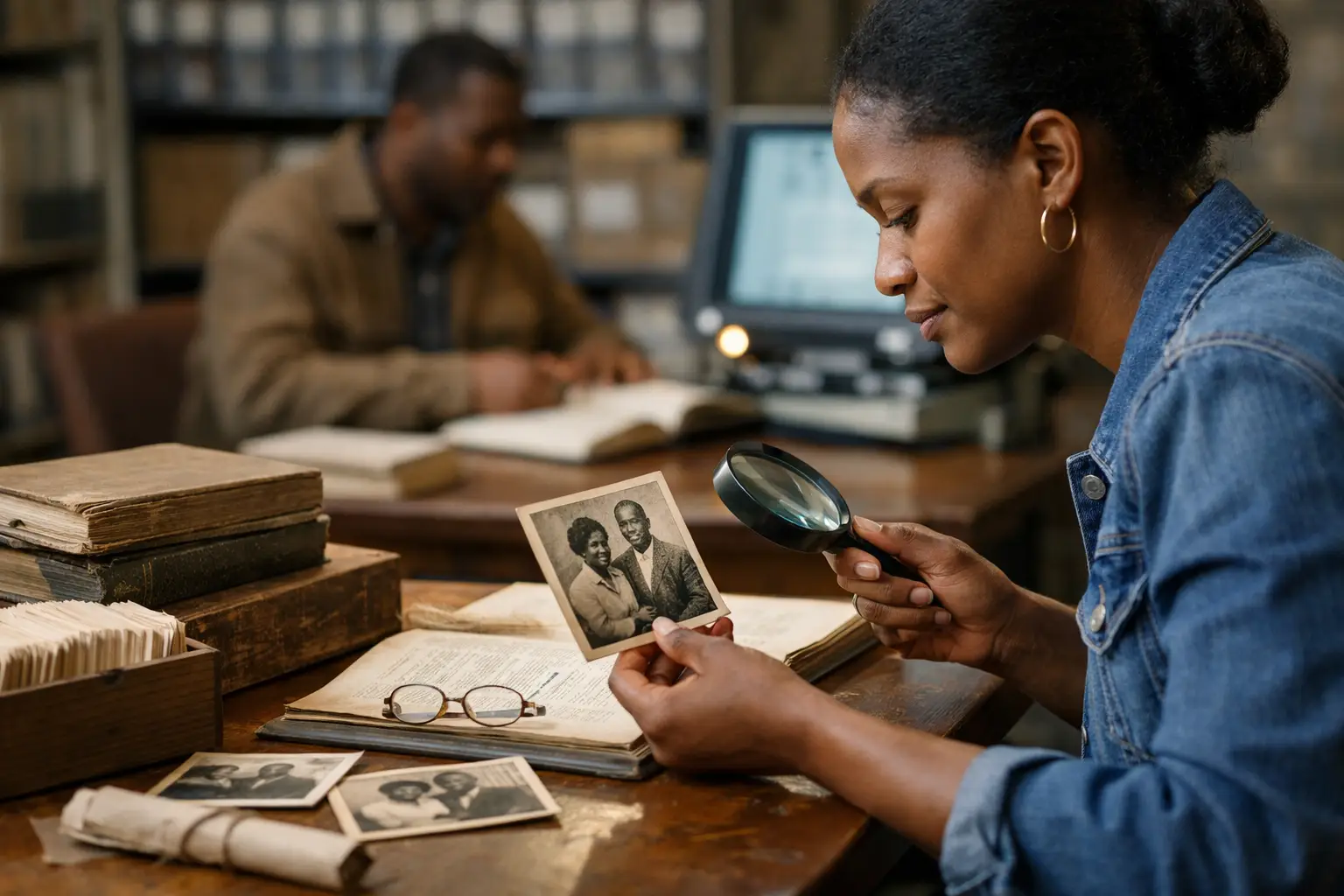
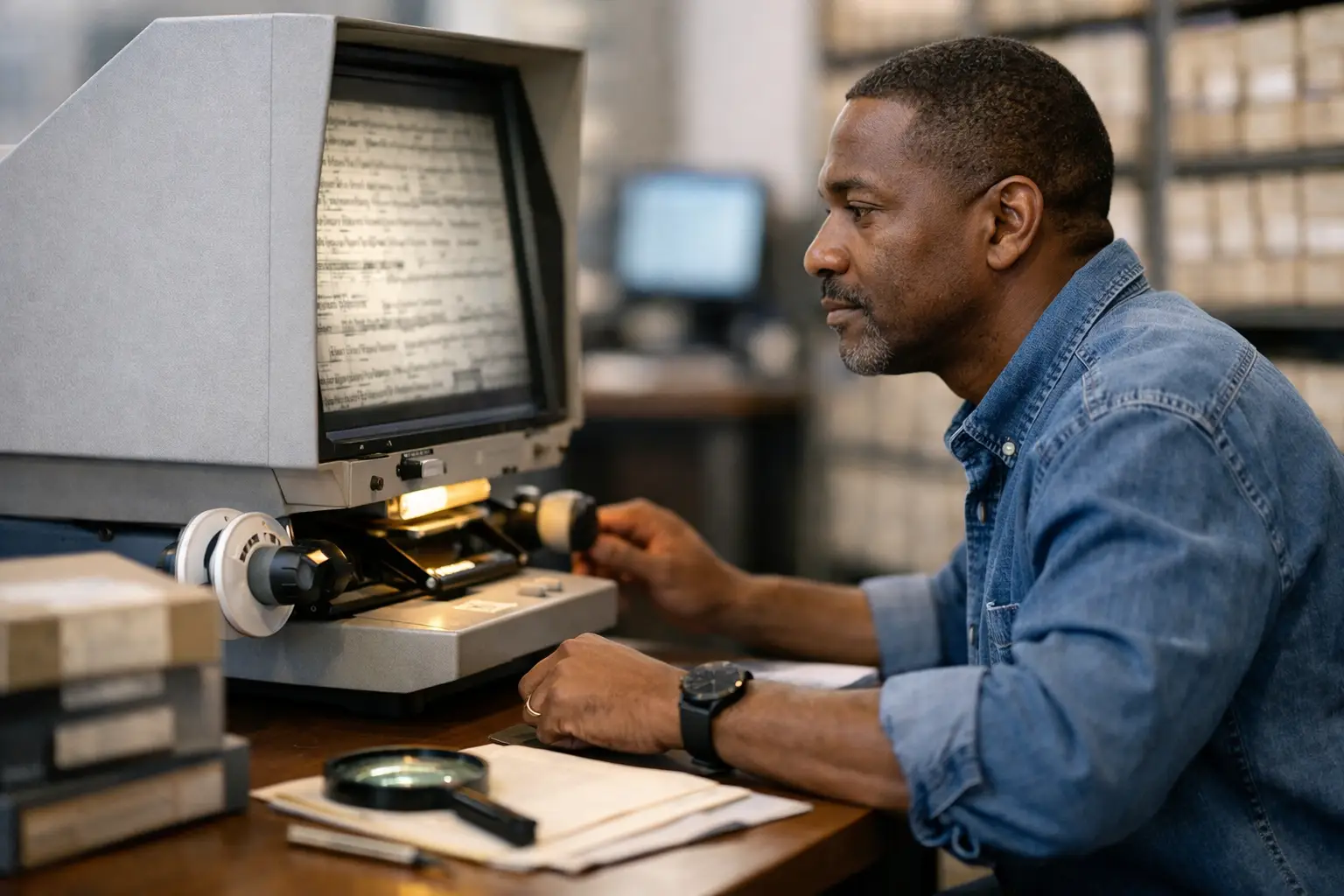
8 Top Genealogy Databases for Beginners

Most people start family research the same way: one name, one grandparent story, and one search box that returns 14,000 results. That is exactly why choosing the top genealogy databases for beginners matters. The right database does not just give you more records. It gives you the next useful record, which is a very different thing.
If you are new to genealogy, you do not need ten subscriptions and a color-coded spreadsheet on day one. You need a starting lineup that matches your family line, your budget, and the kind of records you are actually trying to find. That is especially true if you are tracing African American ancestry, where the trail often changes shape around 1870 and broad search sites can leave you stuck without context.
How to choose the top genealogy databases for beginners
Beginners usually make one of two mistakes. They either stay too narrow and search only one big commercial site, or they bounce across too many databases without a plan. A better approach is to choose databases based on record type.
Ask a simpler question: what are you trying to prove next? Maybe you need to confirm a parent-child relationship. Maybe you need to place a family in a county after the Civil War. Maybe you need an obituary, a draft card, a marriage record, or a clue from a DNA match. Different databases are strong in different places.
Cost matters too. Some platforms are worth paying for if they save you weeks of blind searching. Others are best used as free supporting tools. The goal is momentum, not volume.
1. FamilySearch is the best free starting point
For most beginners, FamilySearch is the strongest first stop. It has a huge collection of census records, vital records, probate materials, church records, and digitized images from the US and abroad. It is free, which lowers the pressure to "get your money's worth" before you even know what you are looking for.
Its biggest advantage is breadth. Its biggest drawback is that beginners often miss records because they rely only on the main name search. Many collections are image-based, partially indexed, or easier to find through the catalog than through a general search. That means FamilySearch can feel simple at first and surprisingly advanced a week later.
Still, if your budget is zero, this is where you start. Search broadly, then narrow by place and approximate birth year. If you find a county, keep it. County is often more valuable than a shaky exact date.
2. Ancestry is the easiest paid database for beginners
If you are willing to pay for one major platform, Ancestry is usually the easiest to learn. Its interface is beginner-friendly, its hints can help you move quickly, and its record coverage is broad enough to build an early tree fast. Census records, military records, city directories, immigration documents, yearbooks, and user-submitted trees all sit in one place.
The trade-off is that hints can create false confidence. A suggested record is not proof. User trees can be useful for clues, but they also spread errors at high speed. Beginners should treat Ancestry as a lead generator, not a final authority.
That said, for building out 20th-century families in the US, it is often the fastest option. If your family remained in one state for several generations, pair Ancestry with state archives and local newspaper collections for much better results.
3. National Archives resources matter earlier than most beginners think
Many beginners assume federal records are an advanced step. They are not. Census schedules, military service records, pension files, and select post-Civil War materials can change a stalled search quickly. The National Archives and its associated finding tools are not as polished as commercial sites, but they are essential once you move beyond surface-level searching.
This matters even more if you are dealing with the 1870 brick wall. Federal records can help you identify counties, military units, labor contracts, and migration patterns that do not appear clearly in standard family tree platforms. If you know an ancestor's state but not the exact county, federal material can point you in the right direction.
For beginners, the challenge is interpretation. A record may exist, but understanding what series to search next is where many people stop. That is why guided tools can make such a difference. A platform like The 1870 Project is built around that exact gap - not just showing records, but helping translate clues into the next archive, county, and microfilm trail.
4. Freedmen's Bureau and related Reconstruction-era collections are essential for African American beginners
If you are tracing formerly enslaved ancestors, this is not a niche database category. It is core research infrastructure. Freedmen's Bureau records, Freedman's Bank records, labor contracts, marriage records, rations lists, hospital records, and complaints can contain names, ages, relationships, former enslavers, and places of origin.
These records do not behave like a standard census search. Spelling varies. Names appear in fragments. Families are split across documents. But when these records hit, they hit hard. One marriage register or labor contract can do more than a hundred generic search results.
Beginners should know one thing immediately: the first successful search is often geographic, not personal. Find the county. Find the bureau field office. Then work outward. If your family story points to Mississippi, Georgia, Virginia, or the Carolinas after the Civil War, these collections deserve early attention, not later curiosity.
5. Newspapers.com and other newspaper archives add life and proof
Newspaper databases are often treated as bonus material. They should not be. Obituaries, legal notices, social columns, estate sales, school events, church announcements, and accidents can place a family in a town when other records are missing or late.
For beginners, newspapers are especially useful once you know a location. Searching a common name nationwide is usually a mess. Searching that same name in one county over a 15-year period is far more productive.
The limitation is coverage. Not every town paper survived, and not every paper is digitized. OCR errors also mean a name may be in the paper but not searchable in the obvious way. Try initials, surname-only searches, and addresses if you have them.
6. Find a Grave is useful, but only if you verify everything
Find a Grave can help beginners locate burial sites, relatives in the same cemetery, and possible birth and death dates. It is fast, simple, and often emotionally powerful. Seeing a memorial can make a person feel real in a way that a census line sometimes does not.
But memorials are user-generated. Some are excellent. Some are guesses stacked on guesses. Use it to gather leads, cemetery names, linked relatives, and photo evidence. Then verify those details with death certificates, obituaries, cemetery office records, or church registers when possible.
This is a pattern worth remembering across genealogy as a whole: convenient is not the same as correct.
7. State archives and local digital collections beat big sites more often than people expect
One of the best genealogy databases for beginners is not really one database at all. It is your state archive, county digital collection, local library portal, or university special collection. These sources often hold death indexes, marriage books, land records, tax rolls, probate packets, school records, and historical maps that never made it to the major genealogy brands.
This matters because genealogy is local. Families lived in counties, not in search bars. When a major site fails, local repositories often succeed because they preserve records closer to where your family actually lived.
If your ancestor stayed in Kentucky, Louisiana, Texas, or North Carolina for generations, local collections may be stronger than a broad national database for the exact question you need answered next.
8. DNA match databases help when the paper trail breaks
For beginners, DNA can feel confusing fast. But DNA databases become valuable when records run thin, names change, or family lines were obscured by slavery, adoption, migration, or informal households. The key is not just collecting matches. It is interpreting them.
A long list of cousins does not solve a research problem by itself. You need clustering, shared matches, likely counties, and a way to connect genetic evidence to archives. This is where many people spend money and still stay stuck.
Used well, DNA databases can point you toward the right surname group, migration corridor, or county courthouse. Used poorly, they create speculation. Beginners should treat DNA as directional evidence that becomes much stronger when paired with census, probate, and post-war records.
Which database should you start with first?
If you are brand new, start with FamilySearch for breadth and zero cost. Add Ancestry if you want a smoother interface and wider hint-driven searching. If you are researching African American ancestry around emancipation, move Freedmen's Bureau and Reconstruction-era records much closer to the front of your process. If your family line is recent and local, newspapers and state archives may outperform everything else.
The real answer is that the top genealogy databases for beginners depend on the question in front of you. There is no prize for searching the biggest site first if the record you need lives in a county archive, a field office register, or a newspaper notice no one else bothered to check.
Your family was here. Start where the evidence is strongest, not where the ads are loudest, and keep following the trail one solid record at a time.