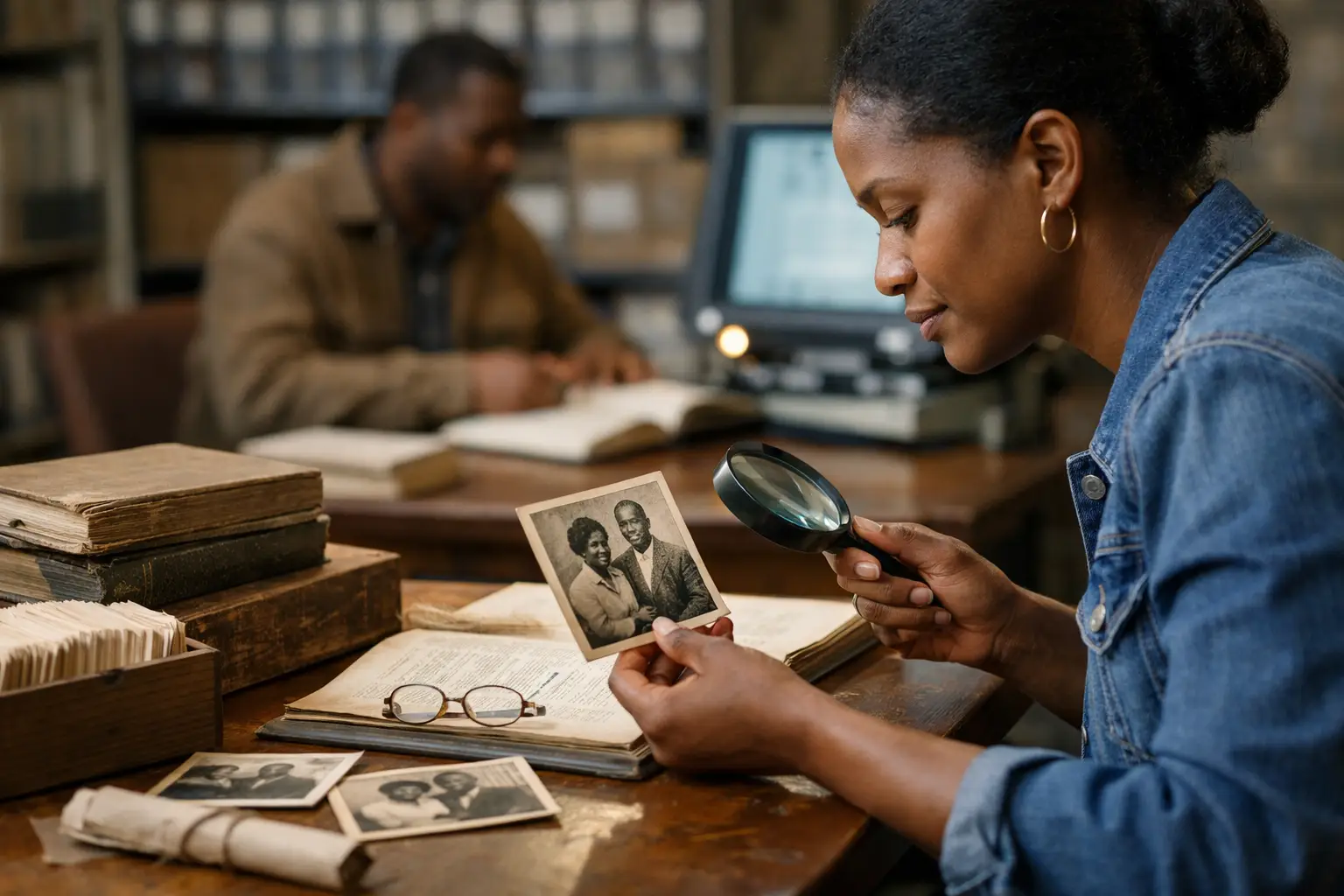
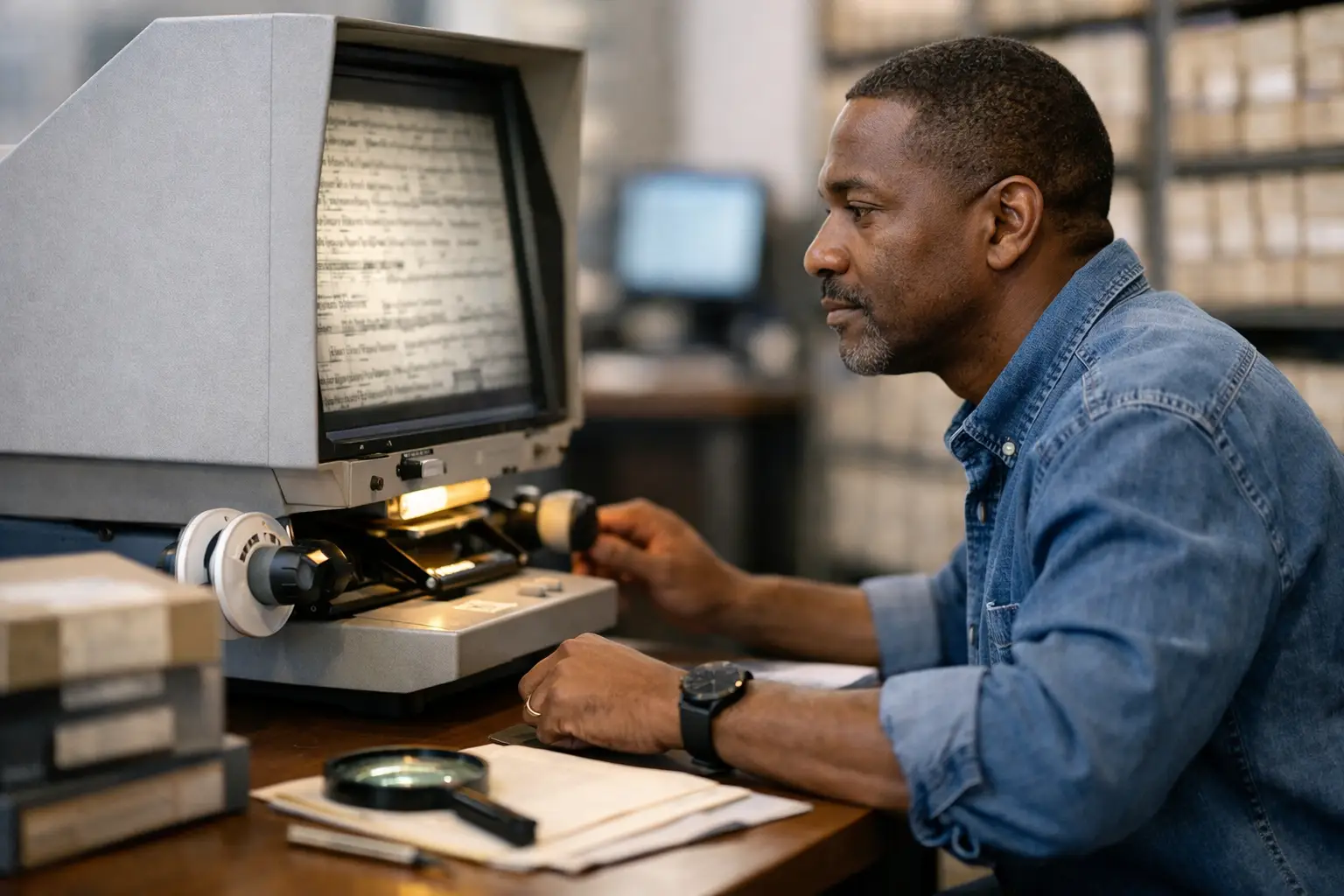
Where Are Plantation Records Kept?
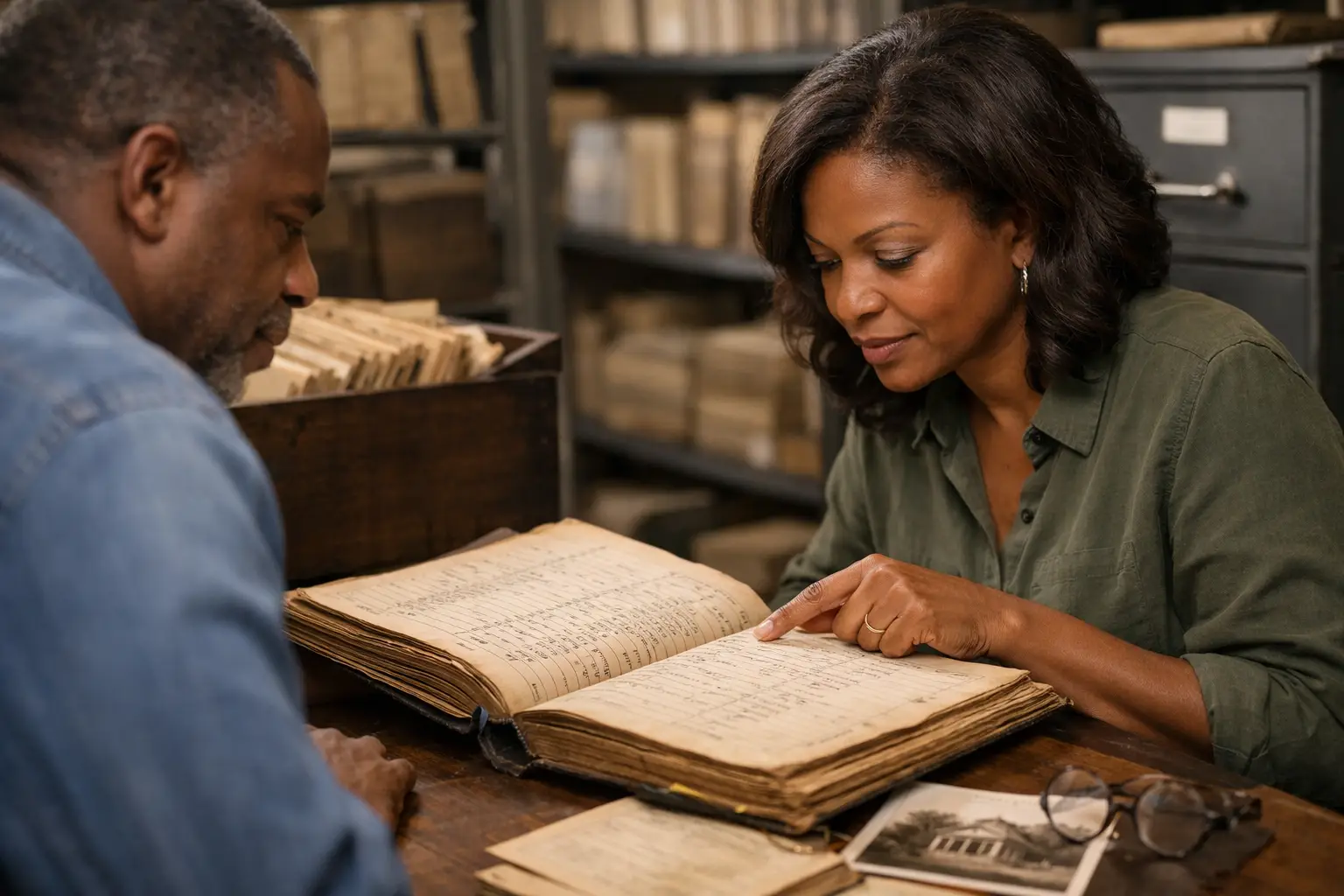
If you are asking where are plantation records kept, you are usually already past the easy records. The census went thin, family stories got fragmented, and now the trail seems to disappear behind a plantation name, a county line, or an enslaver’s surname. This is where many family histories stall. It is also where careful archive work starts to matter most.
Plantation records are rarely kept in one tidy place. They are scattered across county courthouses, state archives, university special collections, historical societies, federal repositories, and private manuscript collections. Some survive as business papers. Others show up sideways inside probate packets, deed books, tax rolls, lawsuits, estate divisions, and labor contracts. If you are tracing formerly enslaved ancestors, that scatter is frustrating - but it also means there are more entry points than most people realize.
Where are plantation records kept most often?
The short answer is this: plantation records are usually kept wherever the plantation owner did business, filed property transactions, settled estates, paid taxes, borrowed money, or donated family papers later on. That means the records can be local, state-level, or housed far from the plantation itself.
County courthouses are often the first stop. Land deeds, wills, probate files, estate inventories, guardianship records, court cases, and tax records were commonly recorded at the county level. If a plantation operated in one county for decades, the courthouse may hold the legal backbone of that operation. Even when a plantation ledger is gone, a probate file might list enslaved people by name, age, family grouping, or appraised value.
State archives come next. Many states absorbed older county materials, microfilmed them, or acquired plantation-related manuscript collections from prominent families. State archives may also hold agricultural reports, legislative petitions, chancery court files, and records from state agencies that touched labor, taxation, or postwar contracts.
University archives and special collections are another major source. Large plantation families often donated correspondence, journals, store accounts, labor books, and overseer records to universities. These collections can be incredibly rich, but they are not always indexed by the names of enslaved people. You may need to search by plantation owner, estate name, county, or family surname.
Historical societies and local museums sometimes hold materials that larger repositories do not. A small regional collection may preserve family bibles, plantation maps, account books, cemetery surveys, and oral histories connected to a specific area. These institutions can be uneven in cataloging, but they are often stronger on local context.
What kinds of plantation records survive?
When people picture plantation records, they usually think of a ledger with names written neatly across the page. Those do exist, but many do not. More often, plantation evidence is spread across several record types that have to be read together.
Business and plantation account books can include crop production, purchases, clothing allotments, medical expenses, births, deaths, and labor assignments. Overseer journals may describe daily operations and, sometimes, people by name. Estate inventories and probate divisions are especially important because they often list enslaved individuals, family groups, and transfers after an owner’s death.
Deed books may include bills of sale, trust arrangements, mortgages, and land transactions tied to plantation property. Chancery and civil court cases can be gold because disputes forced families to describe property, kinship, debt, and inheritance in detail. After the Civil War, labor contracts, wage disputes, and Freedmen’s Bureau records may connect a plantation site to newly freed families trying to stay, leave, or reunite.
There is a trade-off here. The most emotionally direct records are often the least likely to survive. The most legally detailed records are more likely to exist, but they may mention your ancestor indirectly. That does not make them less valuable. It means you build identity through clusters of evidence, not one perfect document.
County records matter more than many researchers think
If your question is where are plantation records kept, the answer is often more local than expected. Counties created the paper trail of ownership, taxation, inheritance, and dispute. That is why identifying the right county at the right time matters as much as identifying the right plantation.
County boundaries changed. A plantation may appear in one county in 1840 and another later without ever moving. Courthouse fires, war damage, and record loss complicate the search, but they do not end it. If one county lost probate records, neighboring counties may still hold deeds, chancery files, or copied volumes. State-level duplicates and microfilm may also survive.
This is one reason guided genealogy beats blind searching. You do not just need more records. You need the next best archive, county, and collection. That is often the difference between wandering and making progress.
Federal collections can point back to the plantation
Plantation papers are not usually federal records, but federal collections can still help you locate them. Freedmen’s Bureau records, Freedman’s Bank records, Southern Claims Commission files, military pension files, and postwar labor complaints can identify places, former enslavers, employers, and migration patterns.
For African American family history, this is often the bridge over the 1870 gap. A labor contract may name a plantation or landowner. A bank record may name parents and birthplace. A pension affidavit may identify neighbors who once lived on the same estate. Once you have that surname, place, or employer, you can turn back to county probate, deed, and manuscript records with much better aim.
That is why broad federal searching and local manuscript work should not be separated. One tells you who to look for. The other shows you where their lives were recorded, however imperfectly.
How to search when the plantation name is unknown
Many families do not know a plantation name, and that is normal. Start with what you do know: the ancestor’s location in 1870 or 1880, age, nearby households, possible former enslaver surname, and known relatives. Then work backward through landowners in that county who held substantial acreage or appear in probate and tax records before emancipation.
You are not trying to prove a plantation on day one. You are trying to narrow a research universe. Cluster research helps here. Study white families living near your ancestors in 1870, especially those with prewar property. Check whether those surnames appear in Freedmen’s Bureau labor records, deed transactions, wills, estate inventories, or manuscript collections.
DNA can also sharpen this step when paper records are thin. Shared matches tied to a particular county or slaveholding family can suggest where to search next. The point is not to guess. The point is to generate a precise archive target. That is the kind of momentum tools like The 1870 Project are built to create - not a giant pile of hints, but the next strongest place to look.
Where are plantation records kept if families donated papers?
This is where many important collections end up far from home. A plantation in Mississippi may have papers housed at a university in North Carolina because descendants relocated, married into another family, or donated collections to an alma mater. A Louisiana sugar plantation archive may sit in a state repository, a manuscript division, or a private university collection.
That means you should search beyond the plantation’s county and state. Look for the enslaver family’s surname in archive catalogs, manuscript guides, and special collections databases. Search by estate name, plantation name, parish or county, and related family names. If the collection description is vague, do not dismiss it. A folder labeled “family papers, 1820-1885” may still contain account books or correspondence naming enslaved people.
This is one of the hardest parts of plantation research. The records may exist, but the catalog language may center owners, not the people they enslaved. Researchers have to read against the grain and search through the structure that created the records in the first place.
What to expect when you finally find the records
Some plantation records are devastating to read. Some are sparse. Some are bureaucratic to the point of cruelty. And some contain brief, astonishing flashes of personhood - a first name, a family grouping, a note about illness, a skilled trade, a move from one county to another.
It helps to enter these records with two expectations at once. First, they may not give you immediate proof of a parent-child connection. Second, they may still give you exactly what you need next: a surname link, estate date, migration clue, or county shift. Progress in this part of genealogy is often incremental, but it is real.
When you find something, document the repository, collection name, box or volume number, and page image details immediately. Plantation research gets messy fast. Good notes preserve your momentum and help you return with a sharper question.
Your family was here. The records may be buried in probate volumes, hidden in university manuscripts, or misfiled under a slaveholder’s name, but that does not mean the trail is gone. It means the search has to get more precise, more local, and more relentless - and that is often when the story starts to come back into view.