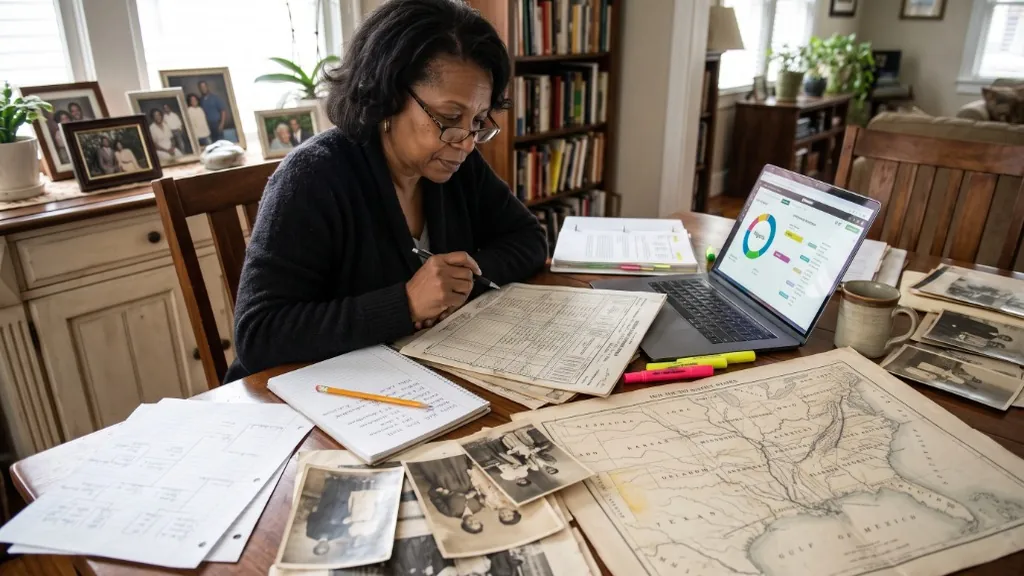
Beginner Guide to Cluster Genealogy
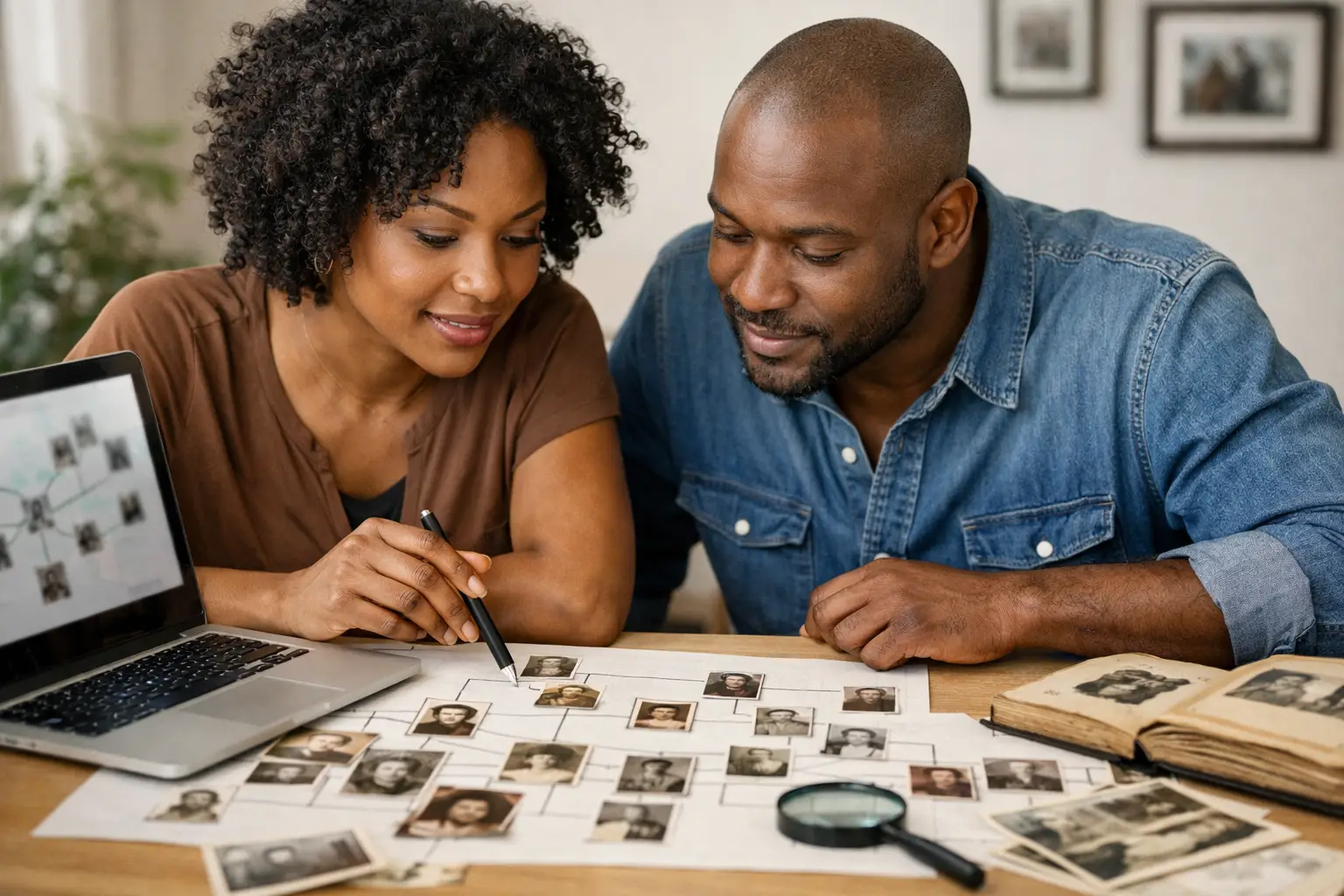
Most people hit a wall in family history the same way: one ancestor appears in a census, maybe in a marriage record, then seems to vanish. A beginner guide to cluster genealogy starts with a simple truth - your ancestor rarely moved through history alone.
Cluster genealogy is the practice of researching the people around your ancestor, not just the ancestor themselves. That includes siblings, in-laws, neighbors, witnesses, former enslavers, church members, military associates, and families who migrated together. When your direct line goes quiet, the cluster often keeps talking.
For beginners, this method can feel less intuitive than typing one name into a search box. But it is often the fastest way through a brick wall, especially for African American research before and after 1870, when names changed, families were separated, and records were created unevenly. If one person is hard to track, the surrounding network can show where they lived, who they belonged with, and which records are worth pulling next.
What cluster genealogy actually does
Cluster genealogy helps you replace guessing with context. Instead of asking only, “Where is my ancestor?” you ask, “Who was with them, who appeared near them, and whose records might mention them?” That shift matters because historical records were rarely built for modern genealogists. They were built for taxes, land transfers, labor contracts, military service, probate, and census counting. People often appear indirectly.
Say your ancestor Isaac Turner is missing between 1870 and 1880. A direct-name search may fail if his age changed, his surname shifted, or the census taker misspelled everything. But if you know he lived near a widow named Sarah Turner, served with two men from the same county, and had a daughter who married into the Jenkins family, those connected people create a stronger trail than Isaac alone.
This is why cluster research works so well in hard cases. It turns one fragile identity into a group pattern. Patterns are easier to recognize across damaged records, bad indexing, and county lines.
Beginner guide to cluster genealogy: who belongs in the cluster?
Beginners often make the cluster too small. They only look at parents and children. That is a start, but not enough.
A useful cluster includes relatives by blood and by circumstance. Siblings matter because they often moved together or witnessed each other’s records. In-laws matter because marriage bonds, probate files, and land sales often connect families more clearly than birth records do. Neighbors matter because census pages were organized by proximity, not by kinship chart. Witnesses matter because they were rarely random. If the same names keep showing up near your family, pay attention.
For African American genealogy, the cluster may also include former enslavers, nearby white households with matching surnames, Freedmen’s Bureau labor contract parties, USCT comrades, church founders, and families who appear in the same postwar county. That is not because those connections are always biological. It is because historical power shaped where records were created. If you want the trail, you have to follow the paperwork that existed.
The goal is not to collect everyone. The goal is to identify the people most likely to generate records that mention your ancestor.
How to start cluster genealogy without getting buried
Start with one known person in one known place. That place matters as much as the name.
Use a census record, marriage record, death certificate, draft card, or obituary you trust. Then build outward in small rings. Look at the household. Look at the names on the same census page. Look at the households before and after. Look for repeated surnames across ten years, not just one record.
Next, write down every associate who appears more than once. Keep it plain. Name, approximate age, location, relationship or possible relationship, and where they appeared. You do not need a perfect tree yet. You need a working map.
Then move from people to records. If a cluster family owned land, check deed indexes. If a cluster member died with property, check probate. If several people in the group served in the military, pension files or service records may mention widows, children, and county moves. If the family stayed in one church orbit, church minutes and cemetery patterns can be more revealing than a broad online search.
This is the part many beginners skip: cluster genealogy is strongest when you compare records side by side. One record gives a clue. Three records can establish identity.
What records are best for cluster work?
Census records are the usual starting point because they show households and neighbors in sequence. But census pages are only one layer. Cluster genealogy becomes far more powerful when you add local records.
Marriage records can reveal bondsmen, ministers, and witnesses. Deeds can show adjoining landowners and family sales for low amounts that point to inheritance. Probate can name heirs, guardians, and married daughters under different surnames. Tax rolls can keep a person in a county during years when no census exists. Court minutes can reveal apprenticeships, disputes, debt, and guardianship. Military records can tie men from the same county together across time.
For African American research around the 1870 barrier, Freedmen’s Bureau and Freedman’s Bank records can be especially valuable. So can labor contracts, cohabitation records, voter registrations, and county-level court papers from the Reconstruction period. These records often capture relationships that the federal census does not explain.
If DNA is part of your research, cluster thinking becomes even more useful. Shared matches are a living version of the historical cluster. A match list by itself can feel chaotic. A match group with a shared county, surname, or migration path can point to the right courthouse, archive series, or military unit.
Where beginners go wrong
The most common mistake is treating every same-surname person as family. Sometimes they are. Sometimes they just lived in the same county for thirty years. Similarity is not proof.
Another mistake is building too wide before building deep. If you chase twenty possible associates at once, you will end up with a mess of notes and no conclusion. It is better to work a small group thoroughly and look for repeated evidence.
Beginners also tend to ignore women in the cluster. That is costly. Sisters, widows, mothers-in-law, and remarried daughters often preserve the continuity a surname loses. A woman who appears under three different names across her life may still be the key person linking two generations.
And then there is the temptation to stop at a hint. Cluster genealogy rewards patience. A witness on one deed is interesting. The same witness on a deed, a marriage record, and a probate inventory is evidence.
Beginner guide to cluster genealogy in a brick-wall case
Here is what this looks like in practice.
Imagine you are tracing an African American ancestor named Eliza Brown in Mississippi in 1870. You know her approximate age, two children’s names, and the county where she appears after the Civil War. You do not know her maiden name, where she was before emancipation, or whether Brown was a prewar surname or a postwar choice.
A direct search for Eliza Brown before 1870 may give you nothing useful. Cluster genealogy gives you another route. You study nearby households in 1870 and find three Brown families living close together. One older man is listed as born in Virginia. Another household includes a woman named Millie who later appears as a godmother in Eliza’s church records. Then you find a labor contract in the same county naming several freed people working for a former enslaver whose plantation sat near those 1870 households.
Now the picture starts to tighten. The surname Brown may connect to a former enslaver, but the stronger lead is the group itself: repeated first names, shared geography, and a postwar labor pattern. From there, you can target probate, estate division, plantation records, county court papers, and federal microfilm tied to that county and those families. That is real momentum. You are no longer searching everywhere. You are searching where the evidence points.
This is also where a tool that translates DNA and record clues into specific archive actions can save time. The 1870 Project is built for exactly that kind of bottleneck - not just giving you more names, but telling you which county, which record set, and which archive trail to try next.
Why this method matters more than ever
Cluster genealogy is not a trick. It is how serious family reconstruction works when records are incomplete, identities shift, and history was unevenly documented.
That matters for every researcher, but especially for families whose paper trail was disrupted by slavery, displacement, war, language changes, border crossings, or clerical neglect. If your ancestor was overlooked by the record system, you may need to rebuild their world before you can fully see the person.
That can feel slower at first. In reality, it often saves months of random searching. More important, it produces better answers. You are not just collecting names. You are rebuilding community, movement, and kinship - the things that made a life legible in its own time.
Your ancestor may be hard to find on their own. The people around them can still lead you home.