How DNA Clustering Solved an Unknown Grandfather

A man appeared in the family story only as a blank: no name on a birth certificate, no photograph, no one left who could explain who he was. Then a cluster of DNA matches pointed to the same small group of cousins, the same county, and eventually the records that gave the unknown grandfather a name.
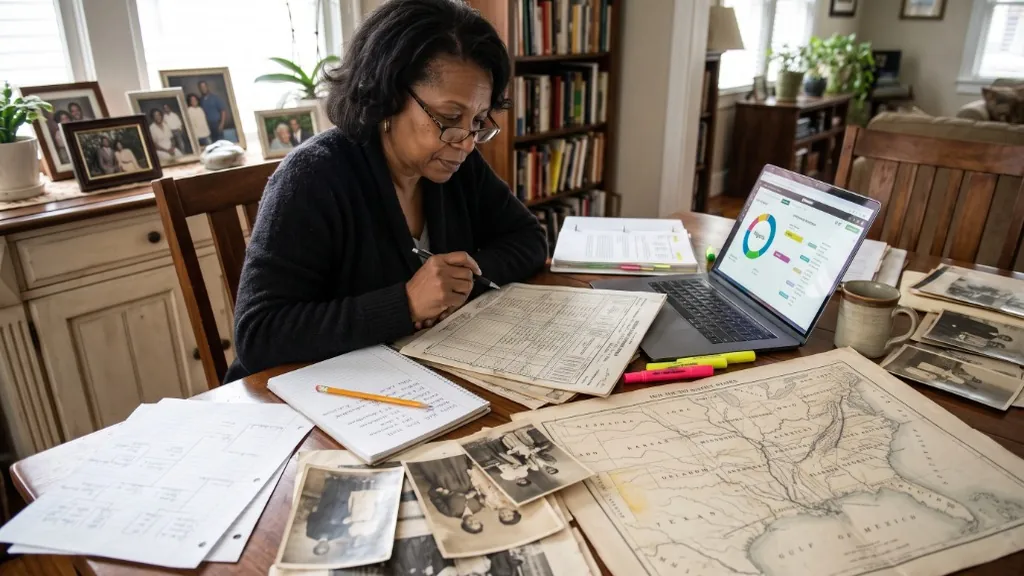
That is what people mean when they say DNA clustering solved an unknown grandfather. DNA did not hand over a birth certificate with every answer highlighted. It created a map. The real breakthrough came from reading that map alongside censuses, marriage records, obituaries, military files, probate records, and the memories still held by living relatives.
For families facing an unknown parent or grandparent, this work can feel intensely personal. It is not simply a puzzle. It may explain a surname that never made sense, reconnect descendants to a place, or restore a branch of the family that was lost through separation, adoption, migration, or the violence of slavery. The goal is not a clever guess. The goal is a defensible answer your family can carry forward.
Why an Unknown Grandfather Can Be Solved With DNA Clustering
A DNA match list is usually too noisy to be useful on its own. You may see hundreds or thousands of people, many with private trees, unfamiliar surnames, and no obvious connection to the person you are trying to identify. Clustering changes the question from "Who is this one match?" to "Which matches belong to the same ancestral family?"
A cluster is a group of people who match you and also match one another. When several of those people descend from the same couple, sibling group, or community, they can identify one side of an unknown grandparent's family. You are not looking for a single perfect cousin. You are looking for repeated evidence.
For example, imagine that your mother does not know her biological father. Her highest matches include three people who do not recognize her surname but all have roots in Lowndes County, Alabama. Two descend from the children of the same married couple. A third descends from a likely brother. That shared network suggests your unknown grandfather belongs somewhere in that family group.
The next step is not to declare the couple your grandparents. Their sons, grandsons, nephews, and cousins may all be candidates. DNA clustering narrows the field. Records, dates, geography, and family testimony sort the candidates into the right answer.
Start With the Right DNA Evidence
The strongest investigations begin by organizing the closest matches before chasing distant ones. Close matches usually carry enough shared DNA to establish a useful relationship range. A match around 200 centimorgans might be a half first cousin, first cousin once removed, or another relationship in that range. Context decides which possibility fits.
Separate known maternal and paternal matches first, if you can. If you have tested an older relative, such as a parent, aunt, uncle, or grandparent, their results can make this process much cleaner. Testing more relatives is often more valuable than buying another general record collection. An older generation holds more of the DNA from the ancestor you are trying to identify.
Pay special attention to matches who share DNA with each other. Build out their trees only far enough to find common ancestral couples, recurring surnames, and recurring locations. A family tree does not need to be large to be useful. A documented tree with names, approximate birth years, spouses, and counties is better than a sprawling tree copied from other users.
For African American research, do not discard a cluster because its members have different surnames. After emancipation, families chose, changed, or were assigned surnames for many reasons. Before 1870, the people you need may appear in probate inventories, labor contracts, Freedmen's Bureau records, plantation papers, cohabitation records, church registers, or the records of the enslaving household rather than under a consistent surname of their own.
Turn the Cluster Into a Candidate List
Once a likely cluster emerges, identify the couple or extended family at its center. Then list every man in the relevant generation who could biologically be the unknown grandfather. This is where many researchers make the costly mistake of stopping too early. A shared surname is not proof. Neither is a resemblance, a story repeated at reunions, or one DNA match with a promising tree.
Build each candidate's timeline. Where was he living during the likely conception period? Was he the right age? Was he married elsewhere? Did he serve in the military, move for work, or appear in a city directory that places him near the child's mother? Did he have brothers or first cousins who also fit?
Geography is often the deciding factor. A DNA cluster may point to a hub county rather than an immediate name. That county can lead you to the 1900, 1910, or 1920 census; marriage licenses; draft registrations; death certificates; local newspapers; and cemetery records. If the family was in a different county by the time a child was born, study the migration route. Families moved along railroad lines, agricultural labor routes, military posts, and kin networks. A short distance on a modern map can hide a very real historical connection.
This is the moment when an intelligent research path matters. The 1870 Project's DNA Decoder is built to translate match information into practical next actions, including likely counties and the federal record sets to check, with the state's Freedmen's Bureau microfilm number where it applies. Instead of leaving you with a screen full of cousin names, it helps turn genetic evidence into the next record to request or search.
Use Records to Eliminate, Not Just Confirm
A good case becomes stronger every time a competing candidate is ruled out. If one candidate was living 600 miles away during the relevant period, document it. If another was too young, record that. If a third had a documented relationship with the child's mother but the DNA points to his brother's line, do not force the story to fit. Let the evidence stay complicated until it is no longer complicated.
The most persuasive answer usually combines three kinds of evidence: a DNA cluster connected to a shared ancestral family, a timeline that puts one candidate in the right place at the right time, and records or testimony that distinguish him from close relatives.
Sometimes the answer remains a family rather than a single man. If the available evidence shows that the biological grandfather was one of three brothers, say exactly that. A careful conclusion is more valuable than false certainty. New tests, a newly located obituary, or a relative's memory can later resolve what the first round of research could not.
Ask Living Relatives Before the Trail Goes Cold
DNA can identify a family, but relatives may identify the detail that makes the record trail click. A name used only at home, a church attended by the family, a nickname, an old worksite, or the reason someone left a county can transform a broad cluster into a focused search.
Approach these conversations with care. An unknown grandfather may involve secrets, grief, assault, adoption, or relationships that earlier generations felt unable to discuss. Do not open with a demand for answers. Explain what you know, what the DNA suggests, and what you are hoping to preserve. Give people room to decline, correct you, or tell the story in their own words.
Write down the exact language they use. "He was from near Selma" and "he worked at the mill across the river" may sound vague, but those details can direct a search toward a county line, employer records, or a neighboring community. Family knowledge is evidence to investigate, not a substitute for documentation, yet it is often the clue no database can supply.
What a Solved Case Really Looks Like
When DNA clustering solves an unknown grandfather, the final result should be clear enough for someone else to follow. Preserve the match relationships, the cluster's shared ancestral couple, the candidate timeline, the records you found, and the reasons other candidates were excluded. Save copies of original documents whenever possible, not only screenshots of index entries.
Then tell the family story with honesty. You may find a loving connection, an unexpected branch, or a difficult truth. Your ancestor was still here. Their life still belongs in the record. Start with the matches you have, find the family behind the cluster, and let the next document carry you one generation closer.